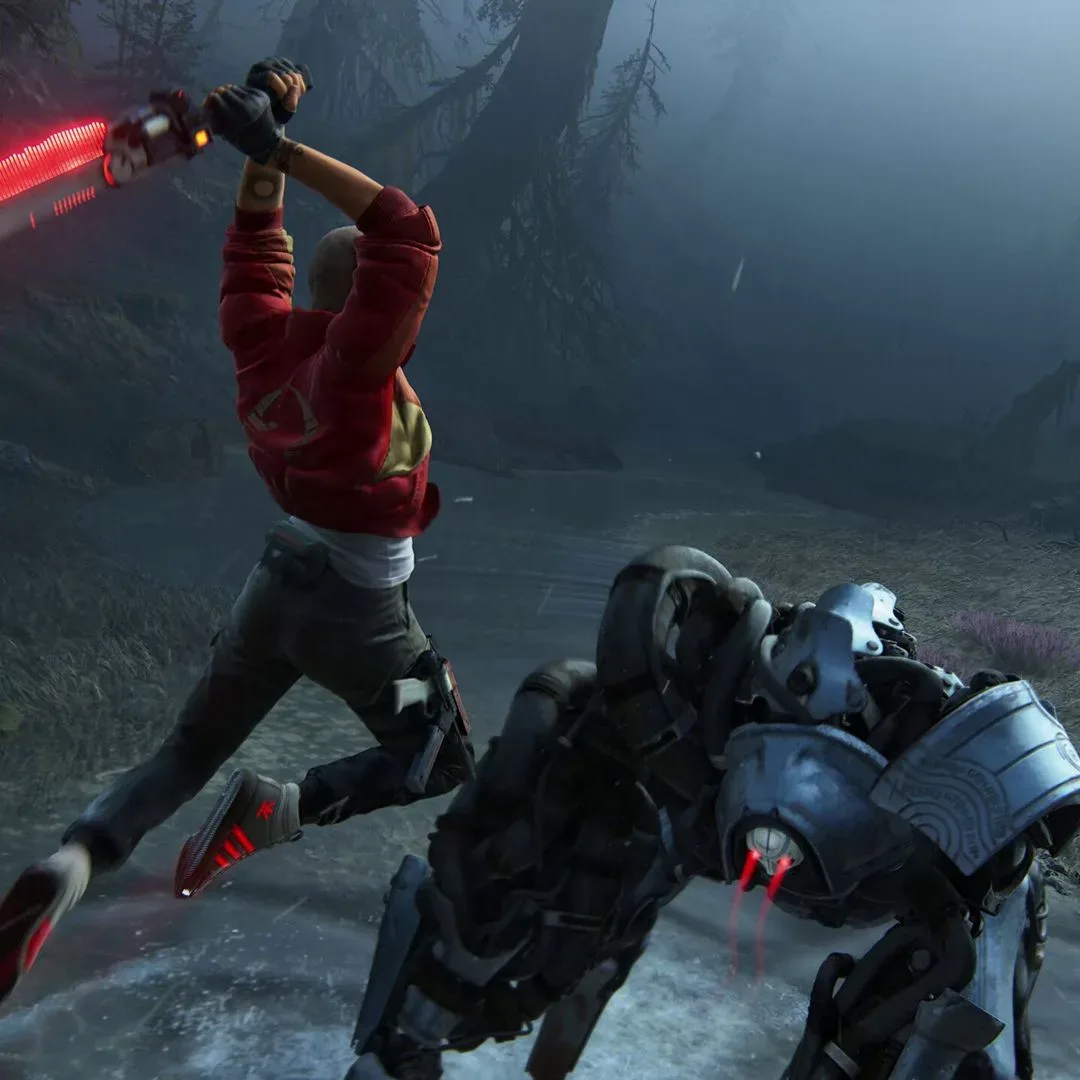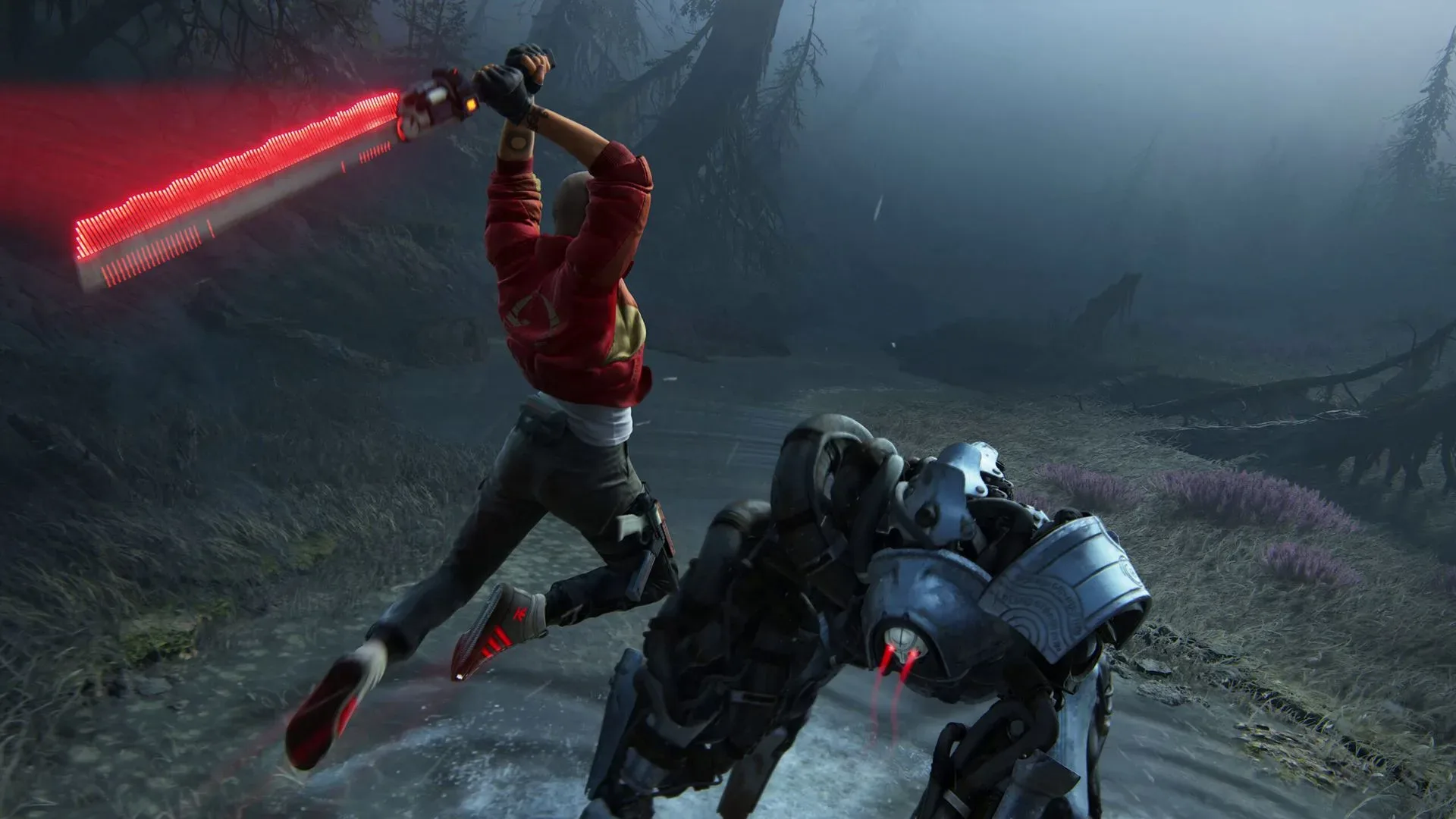
Neil Druckmann’s time working on the television adaptation of The Last of Us has not changed the way he approaches writing for games. It has, however, supplied production lessons that Naughty Dog is carrying into Intergalactic: The Heretic Prophet, the studio’s next game.
That distinction matters. It is easy to assume that a prominent move between game development and television would automatically reshape a creator’s storytelling style, especially when the two mediums are closely connected by the same franchise. Druckmann’s account suggests something more specific: the writing process for games remains grounded in the approach he already uses, while the experience of making television has broadened how he thinks about the many departments and practical details involved in delivering a finished work.
Lighting and makeup were cited as examples of areas that demand particular consideration in television production. Those are not one-to-one equivalents of game-development tasks, of course. A game does not have makeup artists preparing performers for a camera in the same way a live-action show does. But the larger lesson is readily understandable: visual presentation, character readability, mood, continuity, and the coordination of specialist teams all shape what an audience ultimately sees. For a game as ambitious-sounding as Intergalactic: The Heretic Prophet, that production awareness may be as important as any change in a script document.
Writing stays separate from production craft
Druckmann’s comments draw a useful line between storytelling decisions and the machinery required to make storytelling appear effortless. Game writing can involve character arcs, dialogue, pacing, worldbuilding, player context, and the relationship between story beats and interactive sequences. Television has its own narrative needs, but it also foregrounds an extensive set of physical and technical considerations: performers on set, shot construction, wardrobe, makeup, lighting, and the logistics of turning a written scene into an image.
His takeaway is not that games should mimic television, nor that Intergalactic is becoming a television-style project. There is no indication of that. Instead, the reported lesson is operational. Working across mediums can sharpen a leader’s appreciation for disciplines that may sit outside writing itself, and that perspective can be brought back to a game team without changing the underlying method used to write games.
It is a useful reminder that “cinematic” is often an imprecise shorthand in game discussions. A game can pursue carefully considered lighting, expressive character presentation, and detailed visual direction without giving up what makes it interactive. Production lessons can influence the way a project is organized and polished, rather than dictate its structure or turn its gameplay into a sequence of passive scenes.
For players waiting to learn more about Naughty Dog’s new project, the comments offer a small but concrete window into its development. They do not reveal mechanics, release timing, platforms, cast, setting details, or the game’s specific narrative direction. They do indicate that the studio is applying experience gained from another demanding production environment while building it.
Season 3 moves forward without Druckmann or Naughty Dog creatively shaping it
Druckmann was a writer and showrunner on the first two seasons of HBO’s The Last of Us. Ahead of the third season, he stepped away from the show to concentrate on production of Intergalactic: The Heretic Prophet.
For Season 3, Druckmann said he was not involved in setting the season’s creative direction, and that Naughty Dog did not have a creative role. That is an important clarification for anyone trying to read a direct game-studio intent into the coming season. The television production may continue to exist in the same broader franchise space, but its third season’s creative shaping is not being handled by Druckmann or Naughty Dog.
The situation also puts the earlier production lessons in perspective. They were gathered during the first two seasons, when Druckmann held a substantial role, then carried forward as he refocused on the studio’s next game. It is less a case of two projects being actively directed in tandem and more a case of experience moving with a creator from one production cycle to another.
Cross-medium work can have that kind of value even when it does not transform a creator’s voice. The benefit may be a clearer understanding of how departments communicate, how visual choices accumulate, or how much planning is needed to preserve a particular emotional effect. Those ideas are not exclusive to television. They can be useful to teams making interactive entertainment, animation, virtual reality, or any project where artistic departments must align around a common result.
That broader overlap has become increasingly visible across entertainment, even as the forms themselves remain distinct. The ongoing discussion around immersive media and the search for stronger collaborative storytelling formats is explored in this look at Venice Immersive’s focus on shared spaces and storytelling. Druckmann’s comments point toward a related idea on a smaller scale: lessons from one creative pipeline can be valuable elsewhere without erasing the differences between mediums.
What this does—and does not—say about Intergalactic
At present, the safest reading is narrow. Intergalactic: The Heretic Prophet remains Naughty Dog’s next game, and its production is benefiting from lessons Druckmann learned while working in television. The examples given center on lighting and makeup, which points to attention being paid to the complete visual and performance-facing presentation of the project.
Beyond that, speculation should stay speculation. The comments do not confirm how the game plays, whether its structure resembles any prior Naughty Dog release, how far along development is, or when the public will see it next. They do not establish that its writing will use television conventions, because Druckmann explicitly separated his writing approach from the production lessons he is bringing over.
That separation may actually be the most revealing part of the update. Games demand a different relationship with their audience. A television episode controls duration and viewpoint from moment to moment; a game has to account for the player’s movement, attention, repeated attempts, discovery, and agency. A writing approach built for games therefore has reasons to remain its own thing, even if a project’s lighting, performances, workflows, and visual planning are informed by experience elsewhere.
It also helps explain why a single production anecdote can matter without becoming a grand declaration about a studio’s future. Developers routinely accumulate techniques and working habits from past projects. Sometimes those lessons are technical. Sometimes they involve leadership or collaboration. Sometimes they are simply a sharper recognition of the practical work needed to support a desired atmosphere. None of that automatically provides a roadmap for the finished game.
Naughty Dog says it is not finished with The Last of Us
While his immediate priority is Intergalactic, Druckmann also indicated that Naughty Dog is not “done with The Last of Us.” That statement leaves considerable room for interpretation. No sequel has been announced, and it does not confirm The Last of Us Part 3.
“Not done” could ultimately refer to another full game, additional work in a different medium, or future projects connected to the franchise in ways that have not been disclosed. At this stage, the only firm takeaway is that the studio does not view its relationship with The Last of Us as finished. Treating that as a confirmation of a particular game would go beyond what has been said.
The uncertainty is especially worth emphasizing because the wait between Naughty Dog game releases has already been lengthy: more than six years have passed since the studio released a game. That reality naturally fuels questions about what comes after Intergalactic, but it cannot answer them. Development schedules, project scope, team priorities, and platform plans have not been laid out here.
For now, the clearest picture is a studio concentrating on its next game while leaving open the prospect of future The Last of Us work. Druckmann’s television experience is part of that picture, not because it has rewritten his game-writing method, but because it has added practical knowledge to the process of making Intergalactic: The Heretic Prophet.
There is something reassuringly unglamorous in that answer. Big franchises invite big theories: every adaptation must alter the games, every staffing change must foretell a sequel, every mention of production craft must conceal a revolutionary new direction. Sometimes the meaningful update is more grounded. A creator learned from another demanding medium, returned to a game in development, and is applying those lessons where they fit.
And while waiting for clearer details, it may be worth remembering that games and television can share storytelling DNA without obeying the same rules. For a lighter look at the social side of game design, the unwritten rules of couch multiplayer offers a reminder that the player’s presence changes the experience in ways no camera setup can fully replicate.