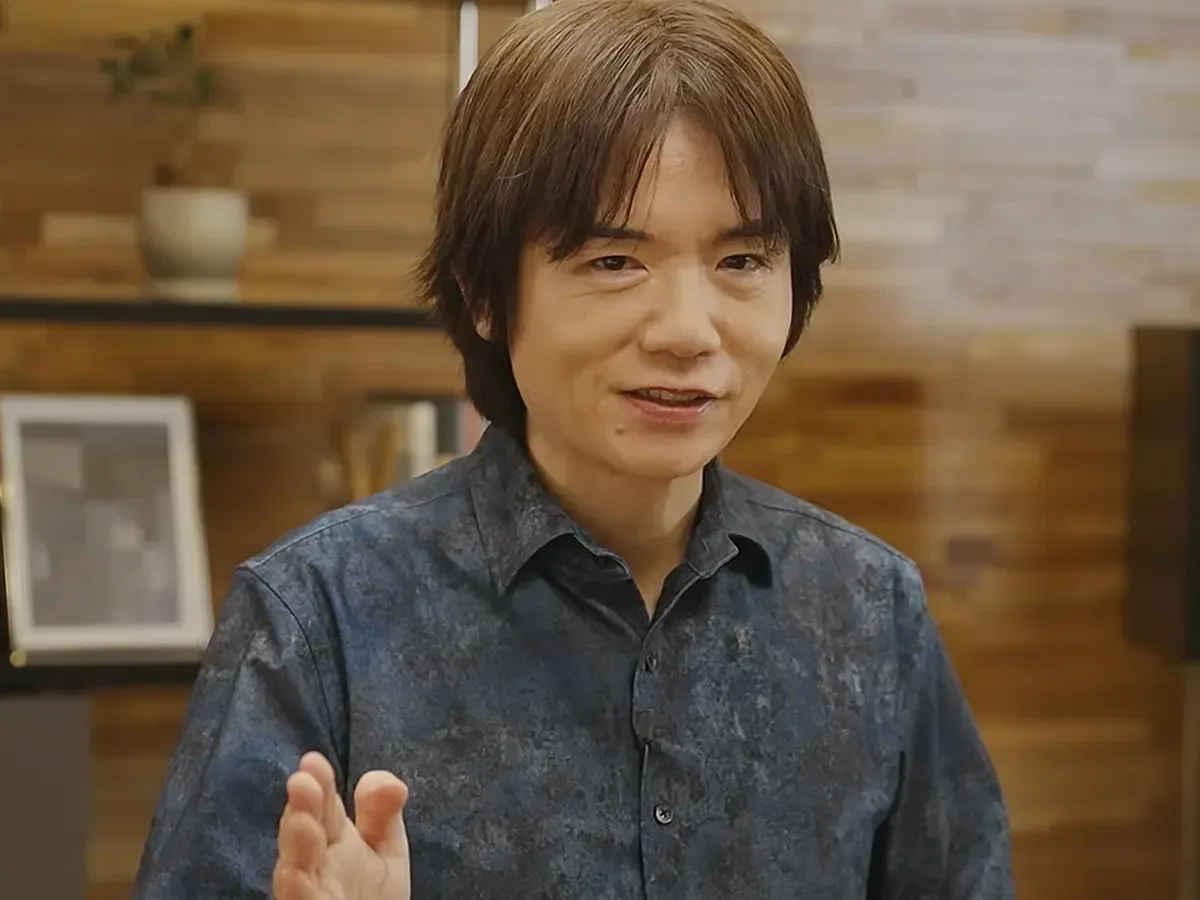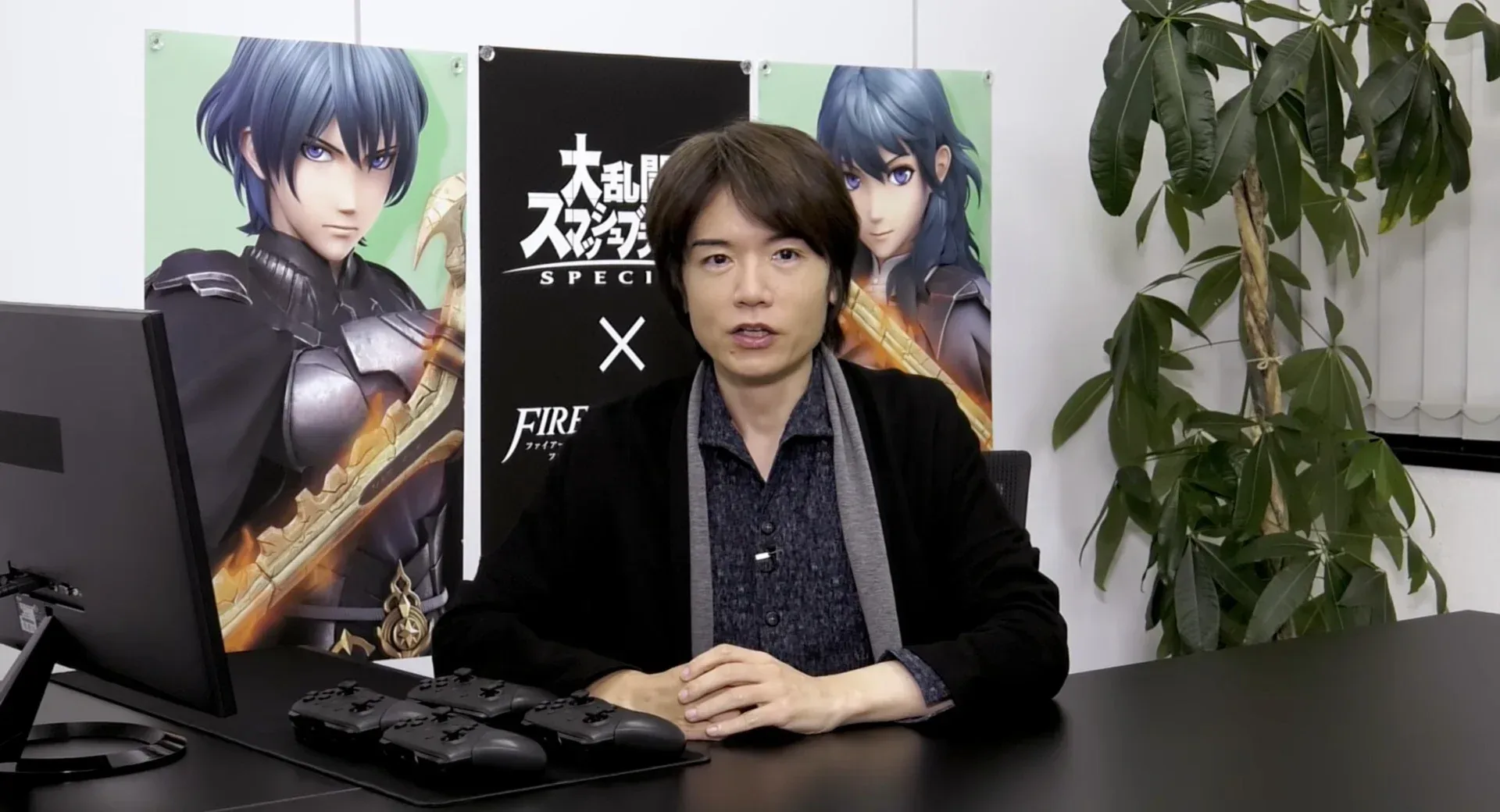
Masahiro Sakurai has offered a sober assessment of a business built on familiar genres, recognizable labels and easy comparisons: if games stop making room for original ideas, the industry risks “dying slowly.” The creator’s warning comes as his Game Designers Award reaches its final year after a 16-year run at Tokyo Game Show.
The award was deliberately built around game-design ideas rather than commercial performance. Its winners have included Life Is Strange, Mario Kart: Home Circuit, Viewfinder and Scribblenauts—projects connected less by genre or scale than by an attempt to give players a fresh way to interact with a game.
That distinction matters to Sakurai’s argument. Originality is not simply an unusual setting, a surprising art style or a premise that sounds strange in a trailer. In game design, it can mean creating a new system of actions, rules and responses: what a player can do, how the game reacts, and how those choices create enjoyment. A game can borrow a familiar genre and still be original in that practical, playable sense.
But Sakurai’s point is that this kind of design does not automatically produce the clearest sales pitch. In fact, he said originality may rank relatively low among many people’s purchasing priorities. Players often know what sort of experience they want, while publishers have to explain a project’s appeal to an audience before it has had a chance to play it.
A prize for ideas, not just results
For 16 years, the Game Designers Award made a case that a game’s design contribution deserved recognition independent of its sales. Its conclusion does not erase that record, but it gives Sakurai’s latest comments extra weight. He is ending an event devoted to rewarding design novelty while arguing that novelty is increasingly difficult to make, explain and sell.
The examples attached to the prize help clarify what is at stake. Scribblenauts is associated with its word-driven creation mechanic. Viewfinder is built around perspective-based visual puzzles. Mario Kart: Home Circuit connects a racing game to a physical, player-built course. These are not merely conventional games with a different coat of paint. Their identities depend on a central interaction that is easy to recognize once seen but was not necessarily obvious before somebody designed it.
Sakurai has framed his own work through a similar lens. The genres behind Kirby and Super Smash Bros. already existed: 2D platformers and fighting games were not new concepts. Their differentiation came from how players act and relate to the game’s systems. That is a useful corrective to the idea that originality requires inventing an entirely new genre from nothing. New play can emerge inside an established form.
Technical term: game system. A game system is the connected set of rules governing player actions and consequences. Movement, attacks, physics, objectives, items, opponents and feedback can all be part of that system. A new system is difficult because it needs to be understandable enough to learn, rich enough to stay interesting and coherent enough that a whole development team can build around it.
Related coverage includes Masahiro Sakurai Warns Games Industry Cannot Survive Without Original Ideas.
The difficult journey from idea to audience
Sakurai identifies several hurdles that arrive after the original idea itself. First, someone has to devise it. Next, the team must understand why it works and turn that understanding into the actual game. Then a publisher has to communicate the larger picture: what players do, why that activity is fun and what makes it worth choosing amid countless alternatives.
Those steps sound ordinary, but they expose why familiar comparisons are so common. Describing a game as “like” another game gives an immediate reference point. It tells potential players what broad experience they may receive and lets marketing communicate quickly. The shorthand is useful, but Sakurai’s concern is that it can also reward work that resembles what audiences already expect more than work that asks for a new expectation.
That does not mean every game with a comparison point lacks value, nor that every unfamiliar pitch is automatically good. Existing ideas can be expanded, refined or recombined effectively. Sakurai’s distinction is between improvement on a known foundation and the more difficult work of presenting a system without a simple comparison. The latter may be harder to fund, organize and market precisely because its strengths are not instantly legible.
For developers, that creates a practical communication challenge. If a project’s main appeal is a new player interaction, showing that interaction clearly becomes especially important. For publishers, it means the “selling point” cannot always be reduced to genre, aesthetic or a familiar template. And for players, it is a reminder that taking a chance on an unfamiliar idea can help sustain the conditions in which unusual games get made.
The financial pressures around development are part of a larger industry conversation. Questions over who receives the long-term value created by games also remain active, as seen in debate about developer royalties and re-releases. Sakurai’s comments focus more specifically on creative risk, but both discussions concern what the industry chooses to reward.
Why AI and volume sharpen the concern
Sakurai also connects the originality problem to a vast increase in the number of games reaching the market. When his award began in 2010, roughly 275 games were sold on Steam during a year. That annual figure is now above 19,000, while this month’s Steam Next Fest alone contains more than 8,000 titles.
Those numbers do not prove that games are worse, and they should not be used to dismiss small developers or a crowded PC marketplace outright. More releases can mean more opportunities for unusual work to exist. But they do make discovery harder: a player cannot realistically examine every release, and a distinctive project has to compete not only with major games but with an immense amount of incoming material.
Technical term: discoverability. Discoverability is the likelihood that people can find and understand a game among competing releases. It can involve storefront browsing, festival demos, recommendations, search results, trailers and social discussion. Discoverability is not the same as quality. A game can be excellent and still struggle to reach the people most likely to enjoy it.
In Sakurai’s view, AI could intensify the volume problem because it may lower the effort required to produce works closely modeled on existing games. He expects the total number of releases to grow, with many becoming difficult to track or even meaningfully sort through. His concern is not presented as a claim that AI will make every game identical; rather, it is that systems capable of pattern-based imitation make direct copying a tempting and comparatively easy path.
The term “vibecoded” appears in this discussion as shorthand for work produced through AI-led prompting or rapid generation, often with limited traditional coding effort visible to the user. Whatever tools are involved, Sakurai’s underlying point remains about incentives: if reproducing recognizable patterns is cheap and quick, markets can be flooded with familiar-looking projects.
Imitation can reproduce a premise, not the next leap
To illustrate the concern, Sakurai pointed to Librarian, a magical-world puzzle game about restoring books that have been mixed up. Its basic mechanical idea was simple enough that similar puzzle concepts soon appeared, including games called Supermarket Chaos and Needle in a Haystack Simulator. The lesson is not that simple mechanics are disposable. Simple mechanics can be powerful. It is that a visible premise can be imitated once someone proves there is an audience for it.
He extends the thought experiment to games associated with Fumito Ueda, such as ICO and Shadow of the Colossus. A system might analyze their atmosphere and produce something resembling that style, Sakurai suggests, but it cannot substitute for whatever Ueda himself chooses to make next. The meaningful distinction is forward motion. Replication works from what already exists; creative pioneers are valued for proposing the next thing that does not yet have a template.
There is an important nuance here. Originality is not a mystical property that appears without craft. It takes design judgment, iteration and a clear understanding of what the player will actually do. Sakurai emphasizes the problem of communicating why a new system is fun because the explanation must survive several translations: from the designer’s idea to the development team’s implementation, then from the finished game to an audience that may be seeing it for the first time.
That is why an industry that only chases the instantly recognizable may become creatively brittle even if individual releases still sell. Familiar products can satisfy current demand, but they do not necessarily establish the new forms that future games will build on. Sakurai’s slow-death language is deliberately severe, yet the argument is ultimately constructive: the business exists in its present form because creators repeatedly gave people new experiences to want.
What the warning asks of the industry
Sakurai is not claiming that all games must reject established genres, nor that sales success and originality are incompatible. His own examples make the opposite case: platformers and fighters could be rethought through player action and interaction. The call is for deliberate space for ideas that cannot be summarized solely through resemblance to a hit that already exists.
For development teams, that may mean identifying the actual system at the center of a project rather than relying only on its genre label. For publishers, it means recognizing that a game with no easy comparison may need more care in how its appeal is demonstrated. For storefronts and festivals, the scale of new releases makes curation and clear presentation increasingly important. And for players, trying projects whose mechanics cannot be explained by a single familiar reference can be a direct way to support design experimentation.
The Game Designers Award may be ending, but Sakurai’s broader case for it remains intact. Original ideas are harder to invent, harder to communicate and not guaranteed to dominate sales charts. In an era of more games, more imitation and more automated production possibilities, that difficulty is exactly why protecting room for distinctive design matters.