Masahiro Sakurai, the creator of Kirby and Super Smash Bros., has offered a sobering way to frame generative AI’s growing place in games: the ideas that are easiest for players to immediately recognize may also be the easiest for opportunistic developers to reproduce.
In remarks translated from a Japanese interview, Sakurai described a problem with no neat fix. Originality, in his view, is increasingly difficult to sell. A game that does not fit an established genre or communicate its appeal at a glance has a harder job attracting an audience. Yet leaning on familiar mechanics, themes and formats can leave a project more exposed to fast-following imitators, including work produced or accelerated with generative AI tools.
That tension matters because it shifts the AI conversation beyond whether a tool can make art, code or text. The concern here is discoverability: whether a developer that spends time finding an audience for a straightforward idea could soon face a wave of near-identical alternatives built around the same visible hook.
A difficult trade-off between novelty and clarity
Sakurai’s argument does not treat originality as a magic shield. Instead, it identifies an uncomfortable creative-business trade-off. A highly original game may be more difficult to imitate because its appeal comes from a specific combination of design decisions. But that same distinctiveness can make the game tougher to explain, market and persuade players to try.
By contrast, a familiar game pitch can be communicated quickly. Players understand the basic activity, the goal and often the expected tone without a lengthy introduction. That clarity can be useful to a small team trying to reach people in a crowded marketplace. It also gives imitators a clear template.
Sakurai’s concern is that generative AI intensifies the latter risk. His view is that the technology works from material that already exists rather than generating genuinely new ideas. Under that framing, projects built from widely understood mechanics are especially susceptible to imitation: their central loop can be observed, summarized and repackaged with comparatively little conceptual distance.
It is an important distinction. “Original” does not merely mean a game has a strange premise. In practice, it can mean that the game’s value rests on hard-to-copy choices: the feel of interaction, the exact relationship between its rules, the pacing of its challenges, or an unusual blend of systems. A description may explain the premise, but it may not capture why the experience works.
Why a simple premise can be vulnerable
Sakurai pointed to Librarian, released in April, as an example of a concept whose basic activity is simple to understand: tidying an old library. The point is not that simplicity is creatively lesser. A clean, legible idea can be the entire appeal of a game. The problem is that a clear premise can be easier to retool into an adjacent product when someone is pursuing a trend rather than developing their own design.
Related coverage includes Masahiro Sakurai Warns AI Could Make Copycat Games an Even Bigger Problem.
That makes “copycat” a more useful term than “competition” in this discussion. Competition can mean games that share a genre while still offering different systems, style, audiences or ambitions. A copycat instead seeks to benefit from a proven hook with minimal meaningful change. It relies on association—getting attention because players recognize something that looks close enough to another game.
Generative AI is not the beginning of that behavior. Sakurai’s comments place it alongside older practices such as asset flips and reskins. An asset flip generally refers to a game assembled heavily from readily available assets, often with limited original design work. A reskin changes the presentation of an existing structure while leaving much of that structure intact. Neither label automatically describes every game that uses purchased assets or shares familiar mechanics; the criticism is aimed at projects that primarily chase another game’s success without adding a substantial idea of their own.
What AI and so-called vibe-coding can change is the speed and volume at which people attempt that chase. In this context, vibe-coding refers to directing code-generation tools in broad natural-language terms rather than writing every part of the software conventionally. It can lower the barrier to producing a prototype or a functional-looking product. That does not establish that the result has good design, polish or a sustainable audience—but it may make it easier to flood attention channels with lookalikes.
The real contest is attention
Sakurai does not restrict the issue to independent developers or large publishers. Both can face a market in which the harder task is not simply making a game, but ensuring the right people can find it and understand why it deserves their time.
Steam is central to that practical concern. Sakurai noted the long-running challenge of breaking out when many new games arrive on the platform in a given day. In such an environment, being better is not always enough on its own. Players need a reason to click, watch, share or return. If multiple titles appear to promise the same thing, a smaller studio can struggle to make its work legible amid the noise—particularly if competitors borrow the most visible parts of its premise.
This is why the apparent contradiction in Sakurai’s argument is not really a contradiction. Originality can reduce the chance of being copied precisely while making the project more difficult to sell. Familiarity can help sell the first explanation of a game while making the game easier to mimic. Developers are therefore balancing two separate questions:
- Can potential players quickly understand what this game is?
- Once they understand it, can they see why this particular version is worth choosing?
The first question favors clarity. The second favors distinction. Strong games can answer both, but doing so is difficult, and it is not made easier by a marketplace full of projects attempting to ride the same wave.
Obscurity is not a full solution
Sakurai offered one limited reassurance: he expects many of the low-effort projects involved in this trend to disappear into obscurity. That may be true, especially when a game lacks the craft or lasting interest to build an audience. But obscurity is not a complete defense for original creators.
A short-lived imitation can still compete for attention at the moment a new idea is most visible. It can confuse searches, clutter storefront browsing, divide social-media discussion or make it harder for players to identify the work that originated a trend. The harm is not necessarily that every clone becomes a hit. The problem can be the cumulative cost of sorting through a larger field of superficially similar products.
For players, the useful response is not to treat every familiar-looking game as suspicious. Genres develop through shared language, and many excellent games build on existing conventions. The more practical approach is to look for signs of authorship and specificity: a clear developer identity, detailed descriptions of the game’s systems, footage that demonstrates how it plays, and distinctions that go beyond surface art or a one-sentence pitch.
Paying attention to who made a game and how its core loop is described can be more constructive than relying on a vague “AI or not” judgment. A small project may use common tools and still have a thoughtful, human-led design. Conversely, a project can be derivative without using generative AI at all. Sakurai’s warning is about the incentive structure that makes fast imitation attractive, not a claim that every familiar genre is creatively bankrupt.
What the warning means for developers
There is no simple prescription in Sakurai’s comments, and pretending otherwise would miss the point. Developers cannot guarantee protection by making games stranger, nor can they safely assume that copying established formats will solve the problem of reaching an audience.
His perspective instead suggests that differentiation has to reach deeper than a marketable label. A premise may get someone’s attention, but a game needs a recognizable point of view in its systems, presentation and overall intent. That is the part that cannot be reduced to “a game where you do X” as easily.
For teams working in recognizable genres, that may mean being especially clear about the decisions that make their version distinct. For teams doing something unfamiliar, it may mean finding a simple way to communicate the activity without flattening what makes it novel. Neither route is easy, but both acknowledge the same reality: visibility has become part of game development.
Sakurai’s comments also reinforce why players’ choices matter. Giving time and money to games with a visible creative identity is one way to reward work that takes risks rather than merely repackaging a trend. That does not require rejecting every familiar idea; it means recognizing the difference between influence and opportunism.
The industry has dealt with asset flips, reskins and trend-chasing before. The concern now is that AI-assisted production could make those practices cheaper and more plentiful. Sakurai’s framing is valuable because it avoids a shallow answer. Originality is not only a virtue. It is also a sales challenge. Familiarity is not only safe. It can also be an opening for imitation.
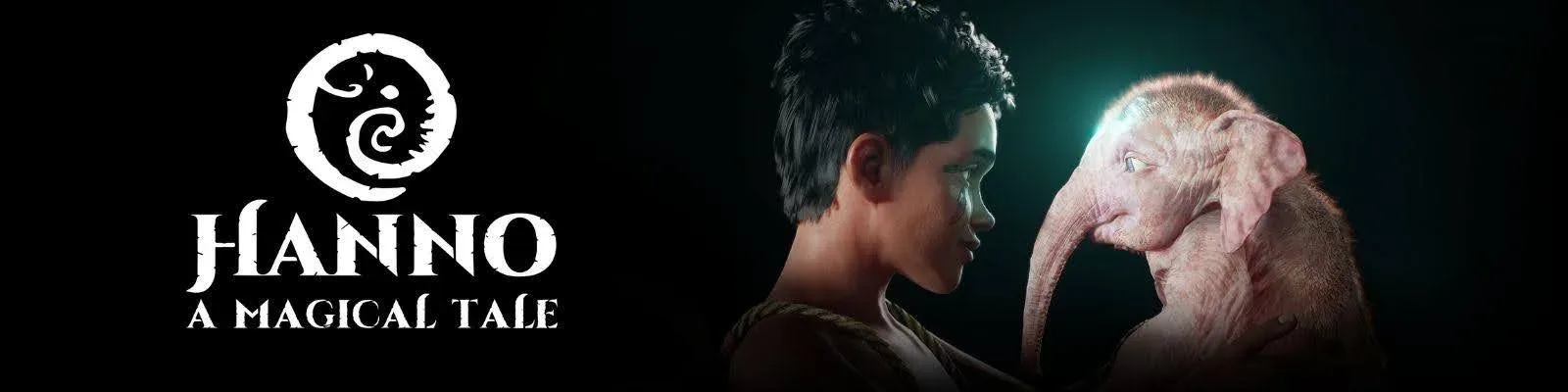
That is a tougher problem than any single tool policy can resolve. It is ultimately about how games are discovered, how creative labor is valued and whether audiences can still find the ideas that deserve to become more than a passing template. For a recent example of a game whose premise is immediately unusual, see Hanno: A Magical Tale’s baby-elephant-centered mechanic.