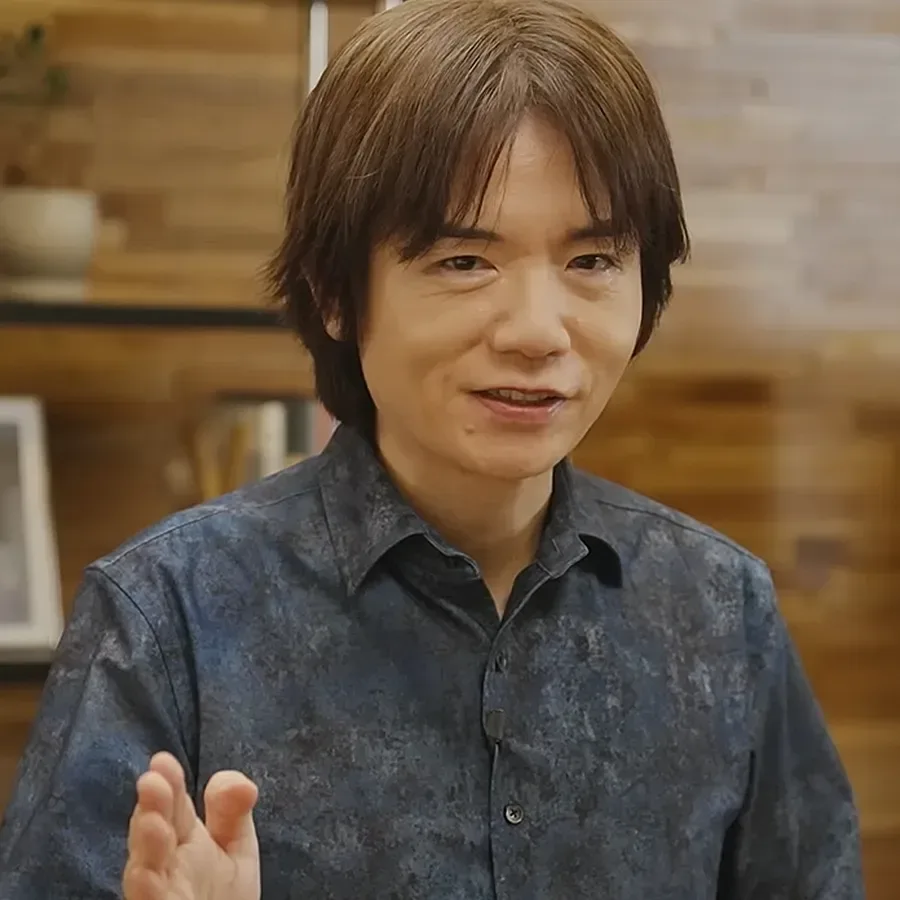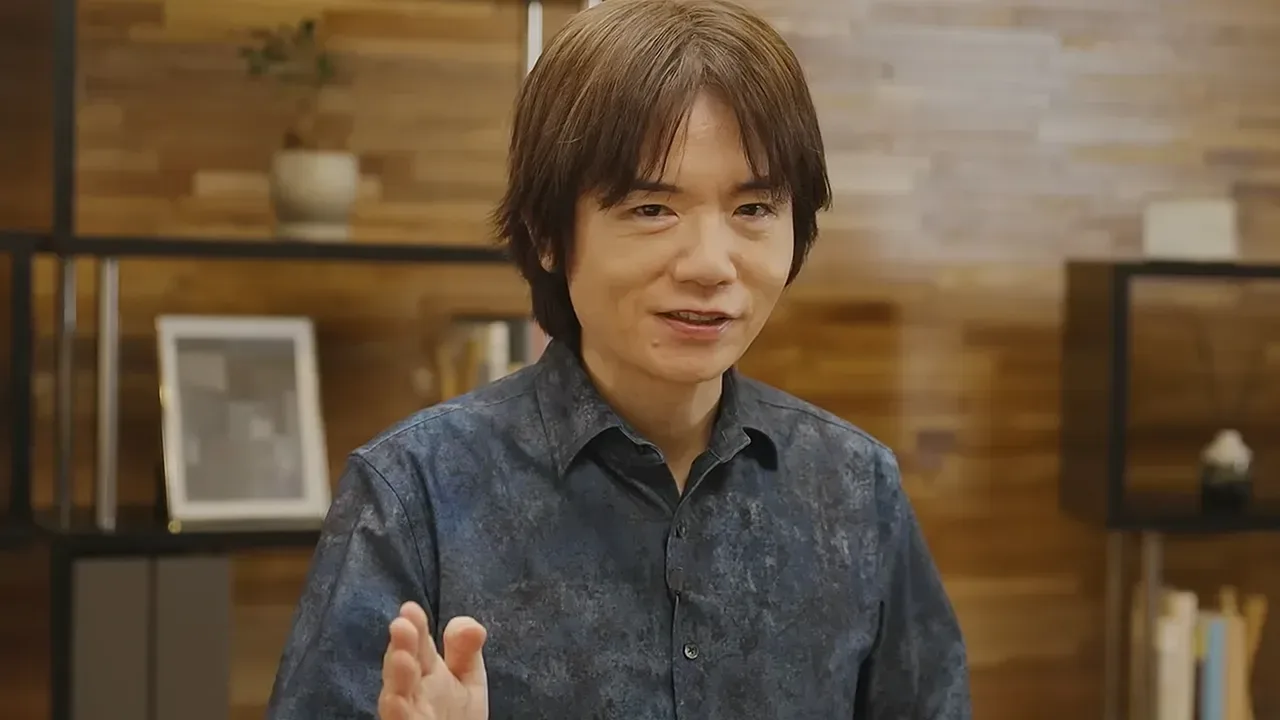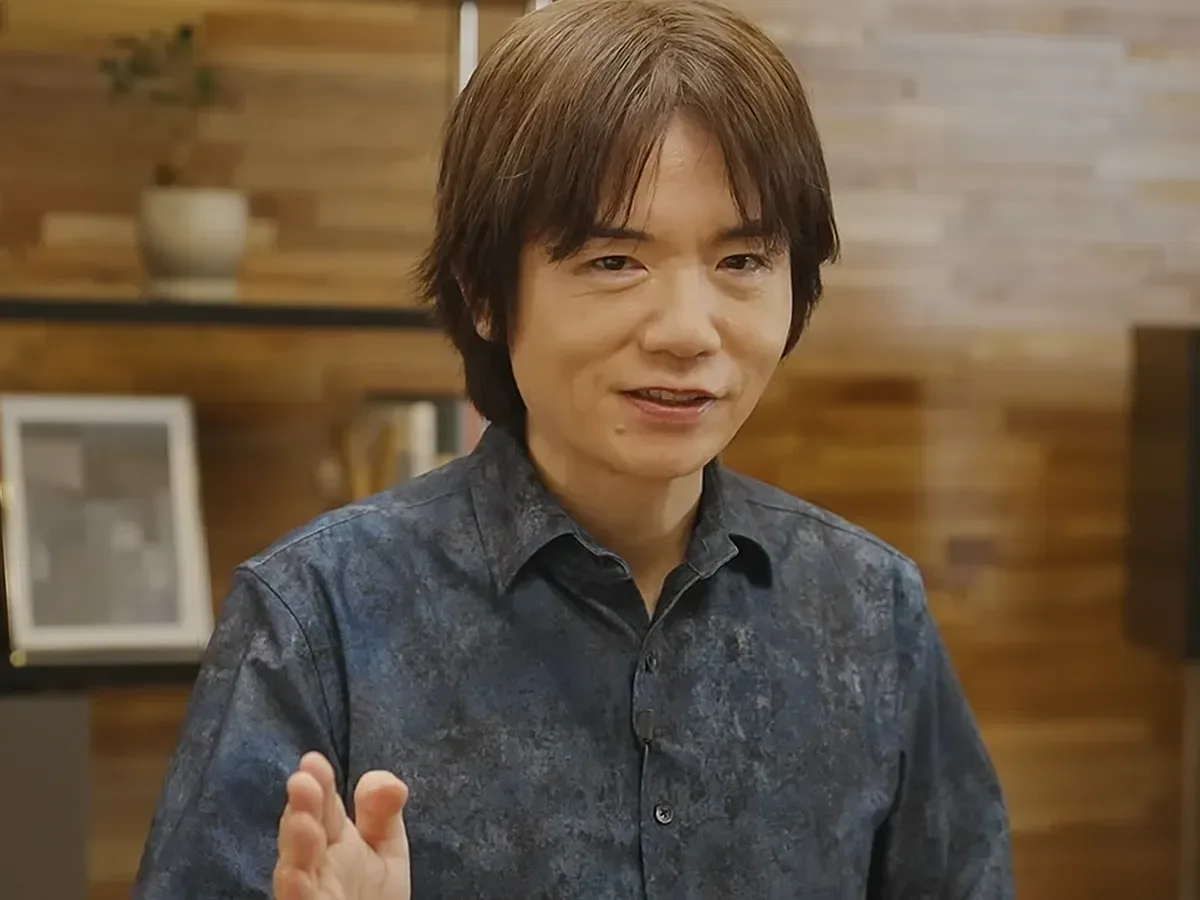
The Japan Game Awards’ Game Designers Award is ending with Team9’s Word Game as its final recipient. Masahiro Sakurai, the creator of Kirby and Super Smash Bros., said the accolade will not return because he was unable to find a replacement capable of taking on the role he believed it required.
It is a notable departure not because an awards program has run out of games to celebrate, but because this particular prize was built around a narrower and more demanding question than simple popularity: which game most meaningfully changed, broadened, or reimagined how people can play? Sakurai founded the Game Designers Award in 2010, and described this year’s ceremony as the award’s final year after 16 years.
That distinction matters. The loss is not of another general Game of the Year-style trophy, but of a dedicated platform for games whose central achievement is creative and structural invention—even when that invention does not arrive with the commercial certainty or familiarity that often drives the biggest audience response.
An award intended to reward new forms of play
The award’s stated criteria focused on creativity and originality. Eligible works were expected to contain ideas clearly different from existing games and to expand the medium by suggesting fresh ways for users to enjoy and interact with game software. The eventual winner was to be a title that reached a broad range of people, including people who do not routinely play games, and made a memorable achievement during the year.
Those terms are more specific than they might initially sound. Innovation, in this setting, does not merely mean a polished version of a known formula, a larger map, or more elaborate production. It refers to a game’s underlying play experience: its systems, its interaction, its framing, or its route into an audience that might otherwise not engage. Originality likewise is not just an unusual setting or visual style. The criteria point toward a meaningful departure in how the game functions as a game.
That is necessarily a harder achievement to judge than popularity alone. A widely recognized major award can consider overall accomplishment across many categories. A prize designed to foreground new ideas must decide whether an unfamiliar approach is genuinely useful, communicative, and compelling rather than simply different. It also must give proper attention to small projects, experiments, and games whose ambitions cannot be reduced to scale.
Sakurai’s comments make clear that he regarded the person overseeing that process as central to the award’s credibility. Through a live translator, he said a successor would need to be a director who had created innovative games and substantially changed gameplay. He said he had spent a couple of years scouting, pitching the role, and seeking somebody to take it up, but no one ultimately did.
“In order to keep this award something that is really convincing and fulfills the role, it needs to be given by somebody who's a director, who's come up with innovative games that have changed gameplay a lot,” Sakurai said through a live translator.
Related coverage includes Masahiro Sakurai's Game Designers Award Ends After 16 Years Without a Successor.
There were other judges involved, but Sakurai said none was able to assume that mantle. The result is that the award is ending rather than continuing under a looser definition of its mission or a replacement arrangement he did not consider adequate.
Why Word Game is a fitting final winner
Team9’s Word Game, a text-based puzzle game, received the final Game Designers Award. It was originally created in Traditional Chinese characters and was later localized for Japanese players. That linguistic transition was a major part of the judges’ admiration: a word puzzle can be inseparable from the structure, associations, and visual properties of the language in which it was made.
Localization is often understood as translating written text from one language into another. In a text-led puzzle game, however, it can demand something much more complex. The rules or solutions may depend on the specific characters used, word relationships, ambiguity, sound, or cultural context. A direct substitution of words may not preserve the puzzle at all. For a localized edition to work, the team may need to find a different but equivalent route to the intended idea and player experience.
The judging committee regarded Word Game’s Japanese version as evidence of particularly sophisticated problem-solving. It won by an overwhelming majority in the second round, after the field had been narrowed to individual titles. The committee’s assessment was that the game appeared as if it could only exist in Japanese, despite being adapted from a Traditional Chinese work. That quality made it both a demonstration of creative design and a demonstration of localization as a creative discipline rather than a clerical final step.
The win is especially apt for an award concerned with broadening play. A game made of language is not only asking players to solve a puzzle; it is asking how the materials of a language can become the puzzle’s mechanisms. Transferring that design into another language without losing its identity requires attention to how players read, infer, and recognize patterns. It illustrates the kind of game-making the award was designed to identify: a title whose defining idea is difficult to separate from the way people actually experience it.
Innovation and profitability are not the same measure
Sakurai also used the presentation to make a broader case for why creative recognition matters. He characterized game development as continual experimentation and a difficult process, then argued that innovation does not reliably lead to profitability. His analogy was that people commonly choose drinks they already know rather than automatically trying the newest unusual option.
The comparison describes a practical tension, not a dismissal of familiar games. Familiarity can be valuable to players: it helps communicate what a game is, reduces uncertainty, and can make a new release easier to approach. But it also means an inventive project may have to persuade players before they can even understand what makes it different. A conventional label, recognizable series, or known format can explain itself quickly. A new interaction or design structure may need discovery time that sales charts and early reactions do not always provide.
For this reason, innovation-focused prizes can perform a useful cultural job independent of whether they predict the biggest commercial hits. They make room to recognize work that expands the vocabulary of games. In Sakurai’s formulation, creativity and innovation are not optional extras for a healthy industry; they are what keep it from becoming stagnant.
“If the industry loses creativity and innovation, I think the industry as a whole will slowly die,” Sakurai said through a live translator, adding that new discoveries and innovations are needed to keep games fresh.
That argument also helps explain why the decision to retire the award is more consequential than the disappearance of a single name from an awards list. The Game Designers Award carried an institutional statement that design experimentation deserved its own lens. Future Japan Game Awards ceremonies may still honor inventive games in other categories, but this particular framework—one explicitly dedicated to game-changing ideas and led under Sakurai’s standard—will no longer be part of the program.
A record of spotlighting distinctive projects
The award’s final run reflects that remit. Its winners over the previous three years were Sad Owl Studios’ Viewfinder, Odd Meter’s Indika, and RPG Time: The Legend of Wright. With Word Game now closing the line, the recent recipients span projects defined by sharply individual concepts rather than a common genre, platform, or production scale.
That variety is itself revealing. A prize about creativity cannot be satisfied by finding one repeatable type of “innovative game.” Once novelty becomes a checklist, it risks becoming convention. The award instead placed its emphasis on games that departed from existing work and opened another avenue for play, whether through visual perspective, presentation, narrative framing, or, in Word Game’s case, a language-based puzzle design that survived an exceptionally challenging localization.
The end of the award should not be read as a declaration that inventive games have disappeared. Sakurai’s reasoning was about succession and stewardship: he did not find someone he felt could preserve the prize’s intended standard. He also expressed hope, via a second translator, that players will remain interested in creative games after the award is gone.
For players, that is the most immediate practical point. Awards can direct attention, but they do not create experimentation on their own. Seeking out a game that sounds unfamiliar, giving a small project room to explain its premise, and discussing the design choices that do or do not work are all ways audiences can make curiosity matter beyond a ceremony. Industry conversations around risk, production planning, and player feedback continue to matter too; those pressures are part of the wider backdrop explored in this look at production readiness and early player feedback.
There is no announced replacement award in the information available, and no suggestion that the decision is tied to Sakurai’s future game projects. Speculation about a possible new Smash Bros. game remains speculation. What is established is more specific: after an unsuccessful search for a successor, Sakurai has chosen to conclude a 16-year award intended to ensure that inventive games received recognition on their own terms. Word Game will stand as its last winner.