Not every failed game mechanic is a bad mechanic. Sometimes it is a good rule placed in a game that cannot properly show players why they should care about it.
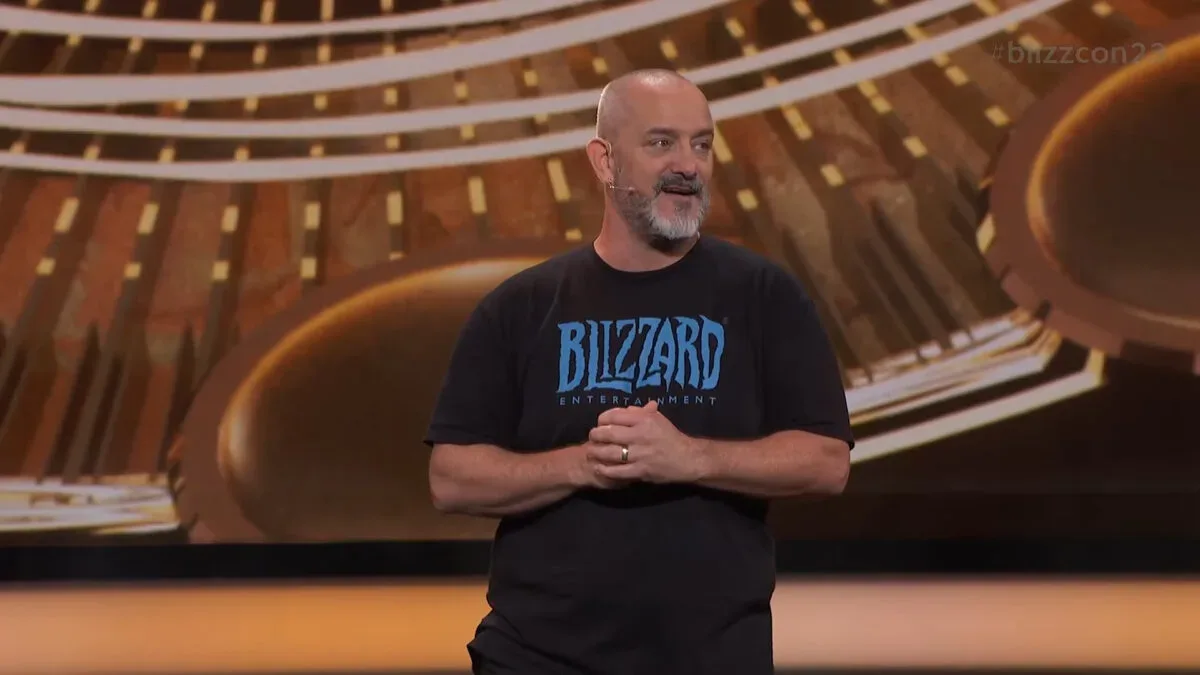
That is the central lesson behind a development story shared by former Blizzard game director Wyatt Cheng. An early Diablo 3 experiment involving a group of enemies that inherited one another’s powers was judged internally as unfun. Yet the essential idea later became a defining part of World of Warcraft’s Anubisath Sentinels encounter in the Temple of Ahn’Qiraj.
The change was not simply a matter of moving a concept between two famous games. The mechanic worked because the second game gave it a different pace, clearer stakes and a structure that asked players to study the enemies in front of them. In Cheng’s account, the journey from a discarded Diablo 3 prototype to a raid encounter is an unusually clean example of design context changing everything.
The Diablo 3 prototype: enemy “sets” rather than gear sets
In 2004, while working on Diablo 3, Cheng and the team explored an idea inspired by the logic of equipment sets. In role-playing games, a gear set commonly gives a character an added benefit for equipping multiple related pieces. The prototype applied that relationship to monsters instead.
The proposed enemy set would contain four creatures. Each one would begin with its own ability. When one died, its ability would be granted to the surviving members of the group. Killing one target, then, would alter the capability of the other three.
On paper, that has real tactical potential. A player could choose which ability to remove first, or discover that killing a particular enemy too early makes the survivors more dangerous. It is a system that creates consequences inside a single fight instead of treating every enemy as an isolated damage target.
But Cheng’s summary of the internal result was blunt: “We prototyped it internally. It was not fun.”
The reason was not necessarily that ability inheritance has no strategic value. The problem was that Diablo’s combat flow did not make that value easy to notice. Cheng explained that Diablo players often focus on killing quickly and pursuing better loot, rather than closely tracking the individual monsters on screen. If an ability moved from a defeated enemy to another creature during that rapid action, players could miss it entirely.
Related coverage includes How a Scrapped Diablo 3 Enemy Idea Became a World of Warcraft Raid Standout.
That distinction matters. A mechanic can be technically present and still fail as player-facing design. If players cannot reliably recognize a change, understand what caused it and respond before the fight is over, the system’s interesting decisions may become invisible. What was intended as a tactical twist can instead read as random noise or an unexplained jump in difficulty.
Why pace and attention changed the outcome
Diablo’s rapid, loot-driven fighting was the wrong setting for this particular prototype, by Cheng’s assessment. That does not mean fast action games cannot contain layered enemy behavior. It means this behavior needed more room than the prototype received.
The difference can be explained through three practical design questions:
- Can players see the state change? When an enemy gains an ability, the player needs a clear opportunity to recognize that something has changed.
- Can players interpret it? They need enough information to connect the death of one enemy with the new threat posed by another.
- Can players act on it? Recognition is only useful if players can adjust target priority, positioning or group tactics before the encounter ends.
In a fast-moving action RPG, a dense screen and a strong incentive to clear enemies as efficiently as possible can work against all three. Players may have little reason to identify a specific creature, remember which power belonged to it, or pause to inspect how that power is redistributed. The concept therefore asks for a level of observation that the surrounding loop does not naturally encourage.
That is a valuable distinction for anyone discussing “depth” in combat systems. More interactions do not automatically create better gameplay. Depth becomes meaningful when the game makes the interaction legible and provides players with viable decisions in response.
The move to World of Warcraft
After Diablo 3 was put on ice, Cheng moved from Blizzard North to help with the then-growing World of Warcraft team. His work included boss encounters, and the earlier enemy-set idea found a setting that better supported it: the Anubisath Sentinels in the Temple of Ahn’Qiraj.
The encounter involves four formidable foes rather than a disposable pack in the middle of a high-speed loot run. Cheng said that every reason the set-monster prototype had failed in Diablo was addressed there.
The core improvement was not just that the Sentinels were tougher. Their encounter framing made the individual enemies matter. A boss-style group encounter can ask players to assess threats deliberately. That gives the assignment and transfer of abilities a visible role in the fight rather than leaving it as a background calculation beneath a rush to eliminate targets.
Cheng also introduced variability. Each Anubisath Sentinel randomly selects from a pool of eight abilities. This is where the encounter’s repeat value and need for observation meet: players cannot assume the same exact configuration every time, so they need to evaluate the group they receive.
RNG, short for random number generation, is the common term for game systems that create randomized outcomes. Here, the randomness is not presented as an end in itself. Its design purpose is to make the encounter’s initial conditions vary. The Sentinels’ selected abilities change what players must pay attention to and how they approach that specific pull.
The key is that this RNG sits inside a situation where players are expected to inspect and react. Randomization can be frustrating when it produces effects that are unreadable or unavoidable. It can be compelling when it creates an understandable problem and leaves room for decisions. Cheng’s account suggests the Sentinels landed on the useful side of that line because players had to carefully assess the encounter.
Same ingredient, different game language
It would be easy to characterize the story as Diablo 3 rejecting a mechanic that World of Warcraft rescued. Cheng’s explanation points to something more precise: each game speaks a different combat language.
The Diablo 3 prototype placed interdependent enemy abilities in an environment where rapid killing and loot pursuit drew attention away from those relationships. World of Warcraft’s raid encounter gave the relationships prominence. The four enemies were not merely bodies to clear; they were a compact tactical problem whose properties had to be read.
That makes the Anubisath Sentinels a useful case study in information design—the way a game presents meaningful state to its players. A power-transfer system needs players to know who has what, what may change after a kill and why the altered state matters. The premise has much better odds when the encounter’s scale and tempo allow that information to be processed.
It is also a reminder that randomness needs boundaries. The Sentinels’ variation came from a defined pool of eight abilities, not from an unspecified limitless set. A bounded pool lets an encounter vary while retaining an identifiable structure. Players are solving different versions of the same kind of problem.
What the story says about prototyping
Cheng’s account is encouraging precisely because it does not romanticize the first version. The Diablo 3 prototype was built, tested and rejected. Calling the result unfun was not the end of the idea; it was evidence about where that idea did not belong.
Game development discussions often frame cut content as something lost. In practice, a cut mechanic can also be research. The prototype revealed that inheritance between enemies was not communicating effectively amid Diablo’s pacing. Later, in World of Warcraft, that same insight could inform a deliberately structured encounter with four key enemies and variable ability loadouts.
This is also why borrowing a mechanic across projects is more complicated than copying it. A system is intertwined with camera perspective, combat tempo, encounter length, visual clarity, player goals and the social expectations of the game around it. Change those conditions, and the same rule can produce a fundamentally different experience.
For players, the takeaway is a little less glamorous but more useful: when an encounter feels memorable, its appeal may not come from a totally unprecedented feature. It may come from a familiar feature being placed where players can finally perceive, understand and answer it.
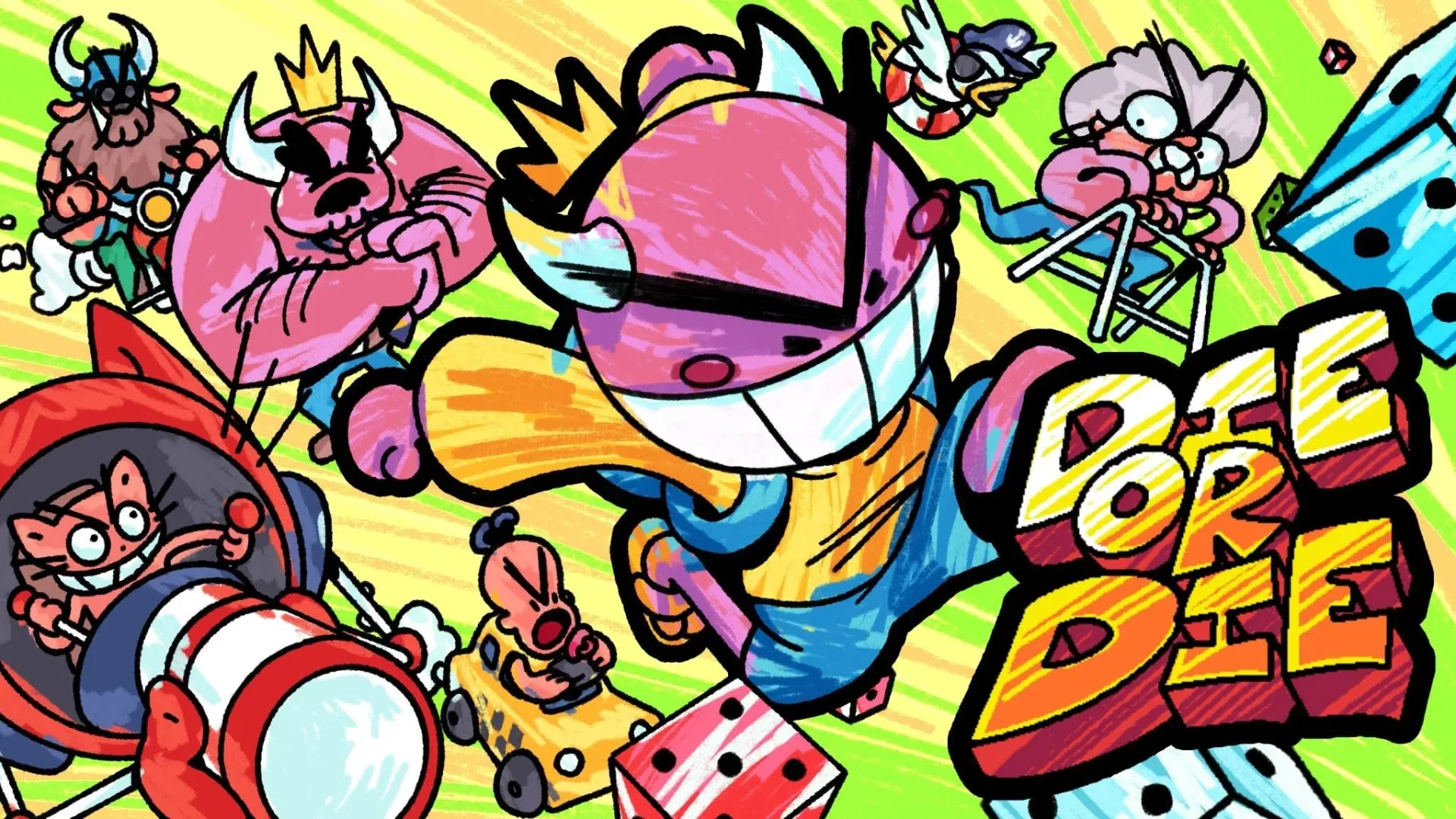
That broader question of how a game’s core loop shapes its mechanics remains relevant across genres, including newer PC projects built around repeated decision-making, such as Die or Die’s dice-driven roguelike shooting structure. Cheng’s story offers the enduring design principle: an idea is not only defined by what it does, but by what the rest of the game gives players time and reason to notice.