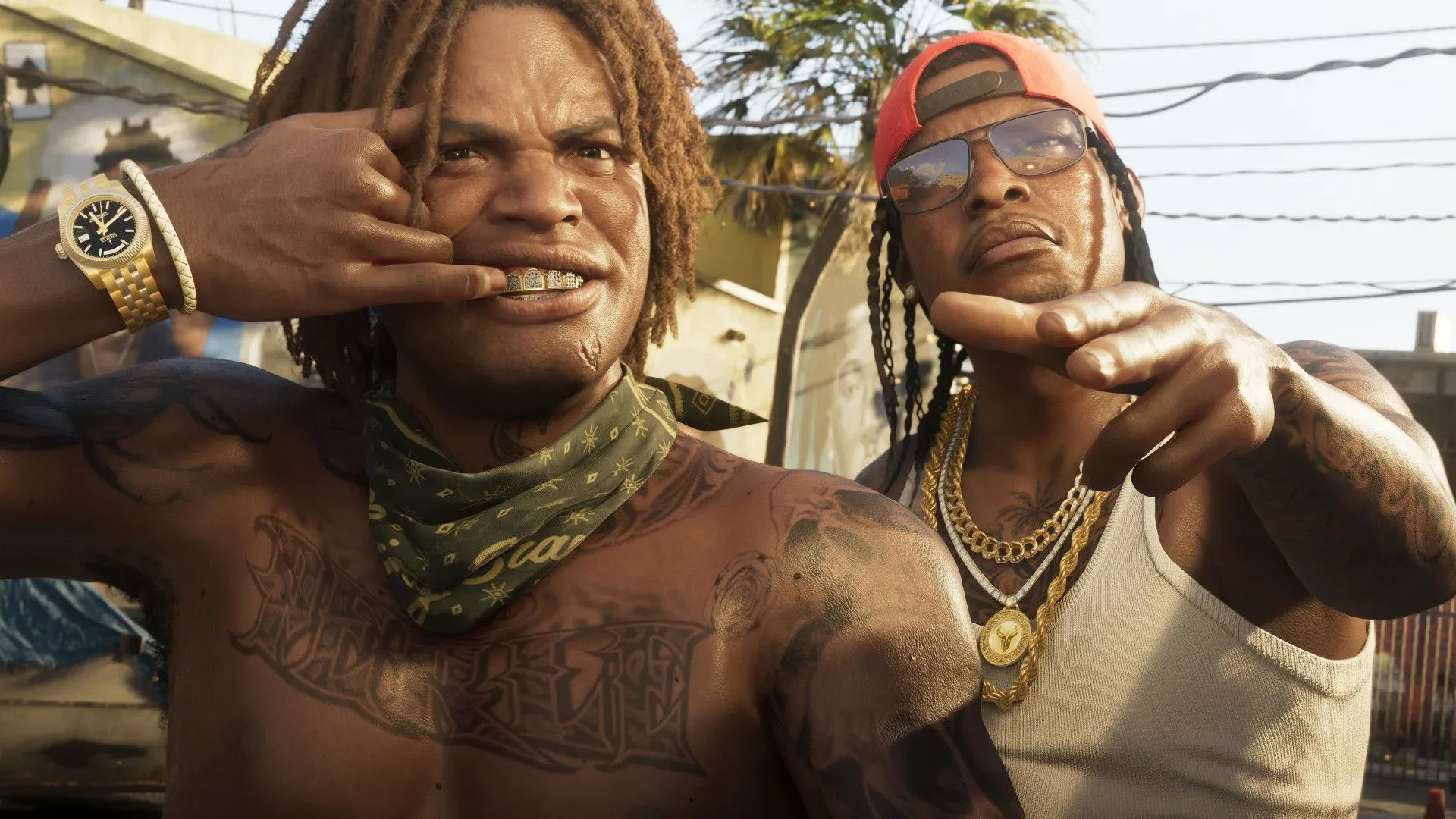
Grand Theft Auto 6 may be positioned to answer a business question far larger than one blockbuster’s launch: can a premium game move the standard price ceiling upward without putting players off? Martin Klíma, executive producer of Kingdom Come: Deliverance 2 and a co-founder of Warhorse Studios, hopes it can.
Klíma’s argument is not that every game has the same commercial leverage as Rockstar’s next open-world release. In fact, his comments rest on the opposite premise. Rockstar is one of the very few companies with an audience large and committed enough to take a pricing risk that smaller studios could not safely make. Yet if GTA 6 proves that an $80 base game can succeed, it could give the wider industry a precedent it presently lacks.
That idea arrives after Rockstar reportedly settled on an $80 price point for GTA 6. It is above the price long treated as the mainstream premium benchmark, but it is not entirely new territory: Nintendo introduced the same $80 tier with Mario Kart World at the launch of Switch 2. Earlier speculation had entertained a possible $100 base price for GTA 6, making the reported $80 decision consequential precisely because it is a rise that still sits below the most extreme prediction.
For players, the conversation is naturally about the immediate cost of a game. For developers and publishers, it is about whether the sticker price can better support the work required to make big-budget releases. Those are connected questions, but they do not produce an automatic answer. A price that a Rockstar or Nintendo release can command may not transfer cleanly to every publisher, genre, or new property.
Why Klíma sees Rockstar as the company that can move first
Klíma said he hopes GTA 6 will “blaze the trail” for higher prices. His reasoning is blunt: Rockstar is the developer he believes can afford to be the first to raise the ceiling, and one of the few able to take that chance. He described a higher game price as overdue and necessary to the business’s survival.
This is a classic price leadership argument. In practical terms, price leadership occurs when a particularly powerful seller makes a pricing move that rivals then use as a reference point. It does not mean competitors must follow. It means the market now has evidence—or a warning—about consumer tolerance at that price.
GTA 6 is an unusually visible candidate for such a test. The series comes with a lengthy wait, enormous public attention, and expectations of technical ambition. Klíma himself called the kind of games Rockstar makes “technological marvels,” even while saying the series has no personal appeal for him. That distinction matters. He is not making a case that every player ought to value GTA in the same way; he is making a case that its commercial weight could open space for the rest of the market.
“The reason why it is so popular—it beats me,” Klíma said, while still praising the scale and technical achievement of Rockstar’s games.
Related coverage includes Kingdom Come: Deliverance 2 Producer Hopes GTA 6 Can Push Game Prices Higher.
There is an irony in that position. The executive hoping GTA 6 changes game economics is also unconvinced by the specific cultural pull of the GTA series. But this may make his comment clearer rather than weaker: his focus is not fandom. It is the exceptional market confidence that comes from a franchise being able to attract a vast audience regardless of whether any individual developer shares its tastes.
$80 is a signal, not a universal mandate
The reported $80 GTA 6 price is important because premium game prices have symbolic force. A base price is the number consumers see first, before editions, add-ons, and any other purchase decisions. Raising it can affect whether someone buys at launch, waits for a sale, shares a game, or simply chooses another release.
But one game succeeding at $80 would not establish that every game is equally viable at $80. Rockstar and Nintendo are explicitly unusual examples in this discussion because both have major fanbases and brands with the ability to sustain a more ambitious price. The relevant lesson from their success would be limited: some releases can command more, not that the entire market has suddenly become indifferent to cost.
That limitation is central to the player-side concern. A broad increase in launch prices could make buying habits more selective. Players with fixed entertainment budgets may buy fewer new games, postpone purchases until discounts, or reserve day-one spending for only their most anticipated releases. That does not make Klíma’s sustainability concern disappear, but it does mean higher list prices carry risk for projects without Rockstar-scale awareness.
It also raises a practical question for publishers: what makes a higher price persuasive? Scale, technical presentation, a trusted series, and a recognizable studio can all influence perceived value, but none is a universal formula. A price is not merely a reflection of production cost; it is also a statement of what a company believes the audience will pay. The gap between those two things can be especially hard for games that lack an established franchise’s safety net.
The sustainability argument needs more than a larger sticker price
Klíma frames higher pricing as a way to help the business endure. That is a legitimate industry question, especially when developers are discussing the expense and risk involved in making large games. Yet raising the retail price is only one possible lever, and the supplied evidence itself points to the wider tension: industry sustainability cannot be treated as synonymous with charging players more.
The debate also has a labor and leadership dimension. The criticism attached to the discussion notes the contradiction in companies rewarding executives heavily after laying off the developers whose work generated that success. If a publisher argues that higher prices are needed to protect the business, players and workers may reasonably ask where the additional revenue goes and whether it improves stability for the people making games.
That is not a claim that GTA 6’s price will dictate any one company’s employment decisions. There is no evidence here for such a direct connection. It is instead the broader accountability test behind the pricing debate. A higher price may be easier to defend if customers can see a credible link to healthier development practices, better support for teams, and a more durable production model. Without that trust, “games need to cost more” can sound like an incomplete diagnosis.
The issue is also more complicated than treating games as a single product category. A major open-world blockbuster, a historical role-playing game, an experimental new release, and a smaller PC project do not face the same expectations or commercial conditions. The more the market’s price structure changes, the more important it will be to distinguish between a selective premium tier and a blanket assumption that all new games deserve the same increase.
What GTA 6 could actually change
If GTA 6 performs strongly at $80, the most immediate impact may be psychological rather than universal. Other companies would be able to point to a high-profile example when considering their own launch pricing. That can normalize the number in boardrooms and among consumers, even if it does not guarantee that players accept it across the board.
Nintendo’s use of the $80 tier for Mario Kart World already means Rockstar would not be creating the category from nothing. GTA 6 could nevertheless amplify it. The difference is reach: a game with extraordinary attention can make a price move feel like a new normal more quickly than a release with a narrower audience.
Conversely, a high-profile $80 launch would still not settle whether the industry’s financial problems are best addressed through prices. The evidence available here supports Klíma’s view that a few major companies can lead, and it supports the opposing concern that most players may not accept $80 for every game. Both can be true at once.
For consumers, the sensible reading is not that every upcoming release is destined to cost more tomorrow. It is that GTA 6 has become a highly visible test of what the premium market can bear. For studios, the result may influence conversations about budgets, perceived value, and launch strategy. For the industry, it will sharpen an argument that is ultimately about who absorbs the cost of making games—and whether a higher price meaningfully improves the conditions behind them.
That broader conversation sits alongside other debates about what the next step for games should be, including whether advancement is defined by technology alone or by the ideas it enables. The case for curiosity over graphics alone offers a useful counterpoint to a moment dominated by the economics of bigger productions.
Klíma’s stance is therefore less a prediction that every publisher can follow Rockstar than an appeal for a market-changing example. He does not need to understand GTA’s popularity to see its leverage. Whether that leverage becomes a broader $80 standard, remains a privilege of only the largest releases, or prompts tougher scrutiny of how game revenue is distributed will be the more meaningful story after the price tag itself.