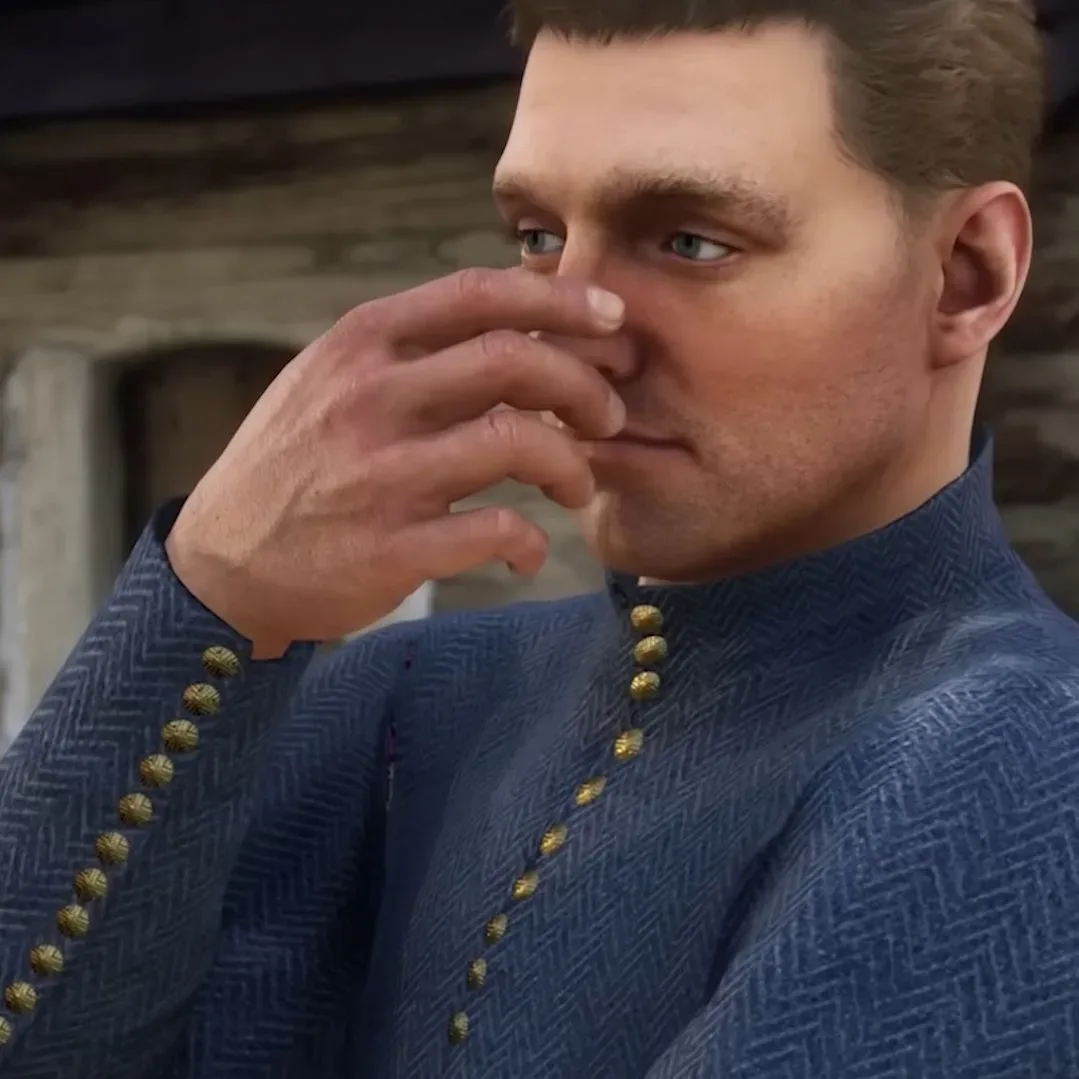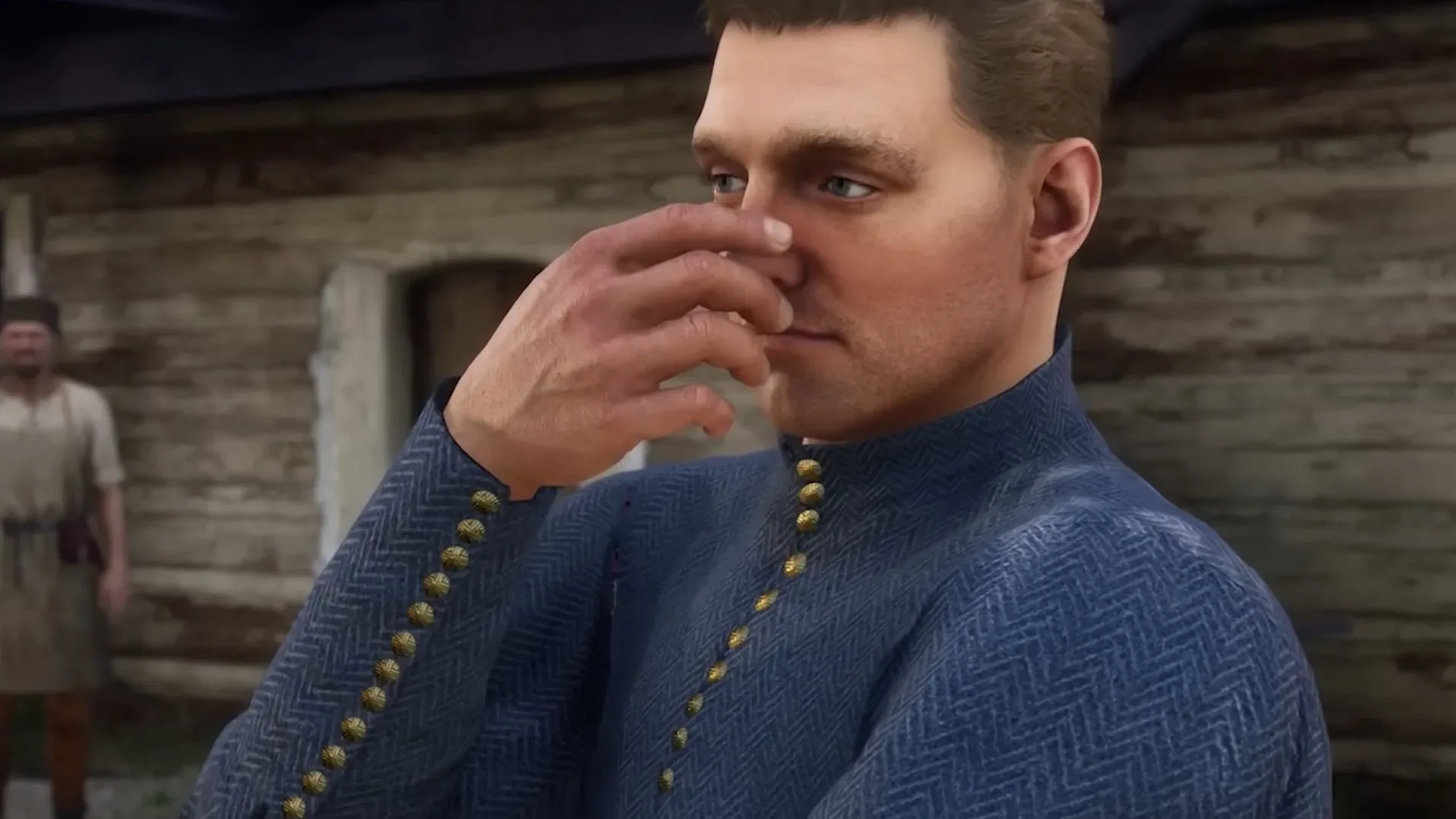
Martin Klíma, co-founder of Warhorse Studios and executive producer on Kingdom Come: Deliverance 2 and its predecessor, has set out a deliberately contrarian view of role-playing game design: not every RPG needs to turn its player into the universe’s appointed saviour.
Klíma says he has grown “bored and tired” of stories where a chosen protagonist receives an enormous mission to save everything. His objection is not that heroic power fantasies are inherently bad. Rather, he sees their ubiquity as a creative problem. A power fantasy can be satisfying, he says, but repeated use of the same structure can make it feel stale.
“It’s not that I think it’s somehow wrong in principle,” Klíma says of straightforward power fantasies. “There is nothing bad about a good power fantasy. It’s just, it’s so repetitive.”
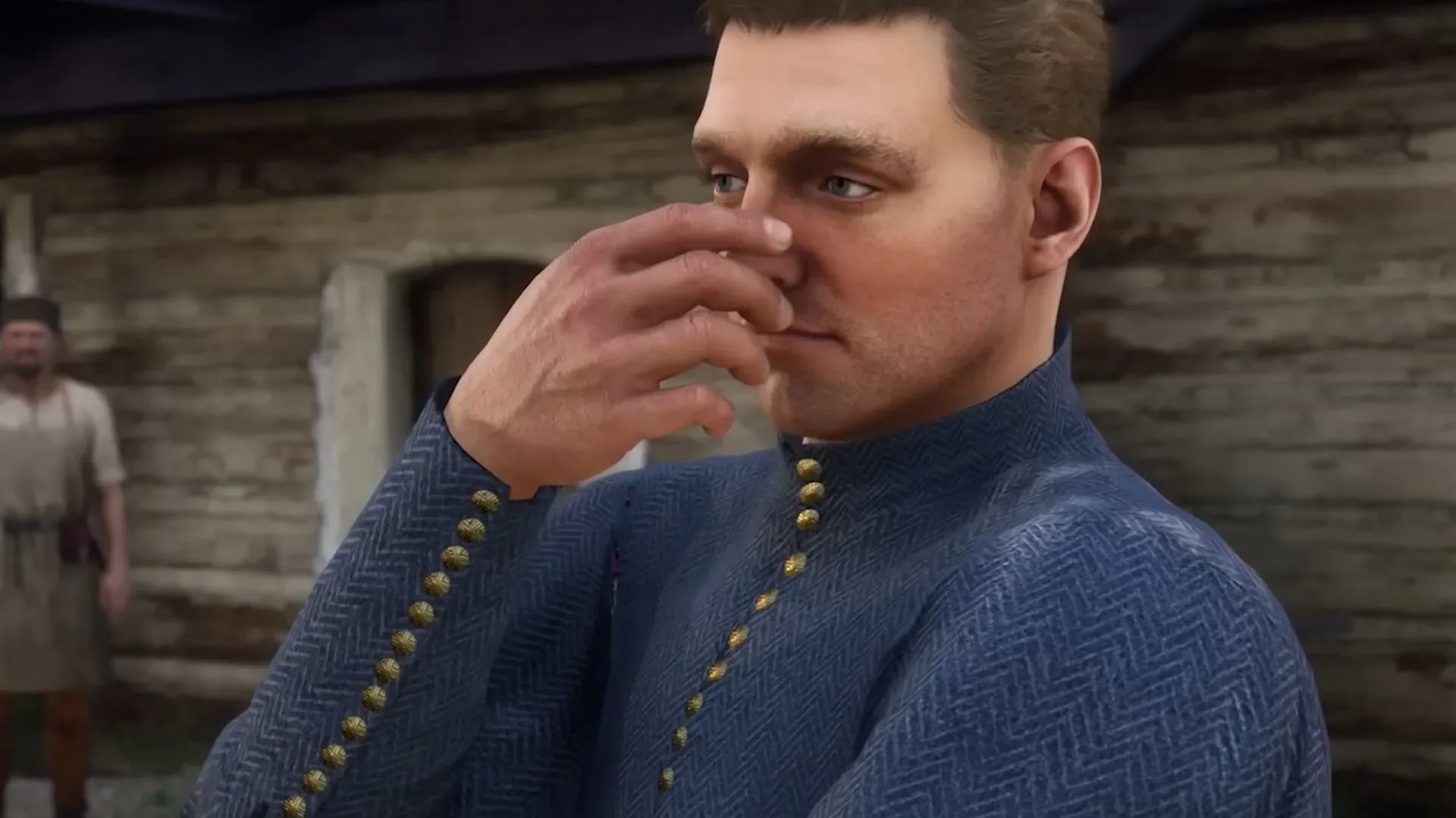
That perspective helps explain the identity of the Kingdom Come: Deliverance games. Warhorse’s series pursues historical realism as its particular form of escapism, rather than seeking the grand light-versus-dark drama associated with many fantasy RPGs. The distinction is not simply about whether a setting has magic, monsters or swords. It is about the scale of the player’s role, the kind of stakes a story emphasizes, and whether the fantasy being offered is dominance or immersion.
The criticism is about repetition, not the end of epic RPGs
It would be easy to read Klíma’s comments as a dismissal of every large-scale RPG narrative. They are more precise than that. He says he plays many RPGs and explicitly acknowledges that there is a place for power fantasy. His concern is the recurrence of a familiar package: a special protagonist, a monumental burden, an unmistakably evil adversary, and a journey that puts the fate of the world in the player’s hands.
That package appears across varied RPG traditions. Final Fantasy VII, The Elder Scrolls IV: Oblivion, and Clair Obscur: Expedition 33 are all cited as games whose stories can be understood through high stakes and a conflict of vast consequence. They differ greatly in mechanics, aesthetics and tone, but they illustrate why the chosen-hero framework remains so visible. It offers immediate clarity: the player knows why their actions matter, why they must become stronger, and why the final conflict is consequential.
That clarity is also why the structure endures. “Chosen one” is a shorthand for a protagonist whose importance is established from the outset or revealed over time. “Power fantasy” describes the pleasure of becoming exceptionally capable: gaining skills, overcoming threats that initially seemed impossible, and exerting decisive control over a fictional world. Neither term means a game cannot be emotionally nuanced or mechanically demanding. Klíma’s argument is instead that these tools lose some impact when they become the default answer.
In that sense, the issue is less a battle between serious games and escapist games than a question of variety. One player may want to bear impossible responsibility in a dramatic fantasy epic. Another may want the texture of a more grounded historical setting and a story that does not depend on being uniquely destined to rescue everyone. Plenty of players may want both experiences at different times.
Related coverage includes Kingdom Come: Deliverance 2 Producer Says RPGs Need More Than Chosen-One Power Fantasies.
Progress Quest gave Klíma a useful distillation
Klíma points to Progress Quest, a self-playing satire of EverQuest and comparable fantasy MMORPG conventions, as a moment that sharpened his thinking. The satire reduces recognizable role-playing patterns to an automated loop, making the familiar machinery of progression, combat and advancement visible by removing the player’s direct participation.
His takeaway was that there must be many people looking for something outside that common formula. Satire can have that effect: by exaggerating conventions, it reveals how readily audiences recognize them. That does not make the underlying conventions worthless. It does show how a genre can develop habits that remain commercially and emotionally effective while still becoming predictable to experienced players.
For RPG developers, the practical question is not whether to abandon advancement, quests, escalating challenges or memorable villains. Those are broad tools, not a single formula. The more useful question is what gives a game’s progression its meaning. Is advancement mainly about becoming powerful enough to defeat the ultimate threat? Is it about surviving in a setting that resists the player? Is it about social standing, personal obligation, exploration, or the consequences of choices? The supplied comments do not lay out a universal design blueprint, but they clearly argue for a wider range of answers.
A debate about audience, and a caveat worth keeping
Klíma also connects the issue to the age of the game audience. He argues that games have often been made as if their central audience were teenagers, and says that power fantasies can feel especially appealing at 16 or 17. In his view, the audience is older now, and developers should recognize that some players may seek different themes and modes of escapism.
That is a perspective, not a rule about what any age group should enjoy. Teenagers can appreciate grounded stories; adults can love saving worlds from overwhelming evil. A player’s appetite also changes from game to game. The strength of Klíma’s observation is not a rigid division between “teenage” and “adult” stories, but the reminder that a broad audience is unlikely to have one shared narrative preference.
It is also important that he does not position Clair Obscur: Expedition 33 as an enemy of his argument. Anticipating that interpretation, Klíma says he is not attacking that JRPG-inspired game. Its success, meanwhile, is a straightforward sign that ambitious, inventive games with epic stakes still have a substantial audience. The existence of enthusiasm for one model does not erase interest in another.
That coexistence is healthier than treating the conversation as a referendum on whether power fantasies are “out.” A genre does not become more interesting by replacing one mandatory template with a new mandatory template. Historical realism, intimate stakes, cosmic fantasy, political drama and classic heroic myth can all occupy the RPG space. The point is to give players genuine differences in perspective rather than merely changing the colour of the same progression loop.
Why historical realism can be escapism too
Escapism is often used as though it only means supernatural worlds and impossible powers. The Kingdom Come approach shows why that definition is too narrow. A historical setting can offer escape through atmosphere, social detail and a different relationship with the world. Instead of inviting players to become a near-mythic figure, it can invite them to inhabit circumstances that feel materially constrained and culturally specific.
That does not make historical realism automatically more mature, more difficult or more valuable than fantasy. It simply shifts the appeal. In one kind of game, fantasy may mean commanding extraordinary abilities and deciding the fate of civilization. In another, it may mean being absorbed by a place and its rules, then navigating a story that derives importance from human-scale pressures rather than a universe-ending threat.
This distinction also provides a useful lens for a related realism debate. Realism is a design choice, not an automatic virtue, and it can become burdensome if it asks players to perform chores without offering a compelling payoff. As a recent discussion of realism’s limits notes, the line is crossed when authenticity starts to feel like homework. Klíma’s comments suggest a different use of realism: not an obligation to simulate every inconvenience, but a way to create an alternative to the standard all-powerful hero fantasy.
The result is a useful challenge for players and studios alike. “More grounded” should not be confused with “more restrictive,” just as “epic” should not be confused with “unoriginal.” A design succeeds when its systems and story support the experience it is actually trying to create.
Franchise fatigue is broader than RPGs
Klíma’s criticism extends beyond strict RPG labels. He names Assassin’s Creed, Watch Dogs, and “Far Dogs” while discussing repetition; the supplied remarks also refer to Far Cry in the accompanying comparison. His larger point is recognizable regardless of taxonomy: long-running series can develop recurring structures that become overly familiar when players encounter them again and again.
“Once you play the same game for the 10th time, it sort of becomes stale,” Klíma says.
That does not mean every sequel must discard what made its series popular. Returning mechanics, settings and narrative rhythms are often part of a franchise’s appeal. But familiarity has a cost when it is not balanced by surprise, a new perspective or a meaningful evolution of the core idea. In Klíma’s framing, the danger is not the mere existence of recognizable formulas; it is letting formulas become substitutes for imagination.
For Kingdom Come: Deliverance 2, the stated philosophy makes the series’ contrast with blockbuster fantasy RPGs clearer. Warhorse is not claiming that players should stop wanting heroic adventures. It is betting that some players are ready for a different kind of role-playing fantasy—one shaped by historical realism and a rejection of the expected chosen-saviour arc.
Whether a player agrees will depend on what they want from their next RPG. The value of Klíma’s argument is that it makes room for the question. A genre as large as RPGs does not need to choose between grand spectacle and grounded immersion. It needs both, plus the willingness to keep finding forms that do not look exactly like either.