Grand Theft Auto games have long drawn their power from worlds that feel close enough to reality to invite comparison: familiar urban sprawl, recognisable social absurdities, and systems that suggest a place keeps moving even when the player is busy causing a traffic incident of their own making. But GTA 6 leadership is drawing a useful line between making a world believable and turning its daily maintenance into the player’s new unpaid job.
Rob Nelson, co-studio head of Rockstar North, has described the studio’s guiding priority as immersion rather than realism for realism’s sake. His explanation is simple, though the design challenge behind it is not: realistic details can help players feel present in a world, but a detail can become tedious when it creates friction without delivering enough drama, comedy, meaning, or choice in return.
“Sometimes you need things to feel realistic to help with that sense of immersion, and conversely, sometimes you need to forego realism in favor of what will be most convenient for the player,” Nelson said. “Realism can help greatly with immersion, but too much can feel tedious, so we try to find the right balance.”
It is an important statement for a game as scrutinised as GTA 6. Every reported system is likely to be judged against two competing expectations. Some players want an unusually dense simulation, one that makes its setting feel responsive and tangible. Others want an open-world crime story that keeps momentum, supports experimentation, and does not turn ordinary errands into mandatory chores. Those camps can overlap, but they do not always want the same mechanics.
Immersion is the objective; realism is one tool
The terms are often treated as if they mean the same thing. They do not.
Realism is resemblance to how something works in real life. A car needing fuel is realistic. Buying groceries and keeping a refrigerator stocked is realistic. Many real-life actions involve repetition, delays, costs, or obligations.
Immersion is the feeling that the player belongs in, understands, and remains connected to the game world. Realistic details can strengthen that feeling, but they can also damage it if they intrude at the wrong time. A player in the middle of a tense escape, an urgent mission, or a spontaneous chain of discoveries may not feel more connected to the setting because a routine interaction stops the action. They may simply feel interrupted.
Nelson’s comments point to a design philosophy built around that distinction. Real-world parallels may be valuable when they support the experience, whether the result is amusing, pointed, or emotionally useful. Other parts of real life can be omitted when they do not make sense for the intended experience. In this view, realism is not the finish line. It is material to be selected, reshaped, or discarded in service of the characters, narrative, and player’s sense of place.
Related coverage includes GTA 6 Leadership Says Realism Must Give Way When It Hurts the Player Experience.
That approach is especially appropriate for a series whose identity includes satire. A world does not need to copy every process of contemporary life to comment on contemporary life. Sometimes a heightened version of reality makes a sharper point; at other times, a mundane reality is just mundane.
Refueling is now the obvious test case
The principle is being tested by GTA 6’s reported refueling system. Fuel management is the kind of mechanic that immediately divides an audience because its value depends almost entirely on implementation. The broad idea signals that vehicles exist in a more materially grounded world. But players are understandably concerned that the system could turn travel into a sequence of enforced stops.
Nelson has previously characterised the associated refueling quick-time event as so brief that players would have little basis to complain, while also acknowledging that audience reaction remains to be seen. That caveat matters. A quick-time event, or QTE, is a short interaction asking the player to provide a timed or prompted input. It can make an action feel active rather than automatic, but it also risks becoming a repetitive toll if it appears too often or has little variation.
Whether refueling feels like atmosphere or busywork will not be settled by the mere existence of a QTE. Frequency, timing, consequences, and player control are the decisive questions. If the interaction is occasional, fast, and naturally spaced around other activities, players may treat it as a small ritual that gives driving additional texture. If it repeatedly interrupts missions or free-roaming without creating interesting decisions, the concern about tedium will be much harder to dismiss.
Nothing in Nelson’s remarks establishes the final feel, frequency, or wider rules of the fuel system. What they do establish is that Rockstar North is aware of the exact tension it creates. The team’s stated standard is not whether an idea is realistic, but whether it reinforces the larger experience.
The cut grocery system clarifies the boundary
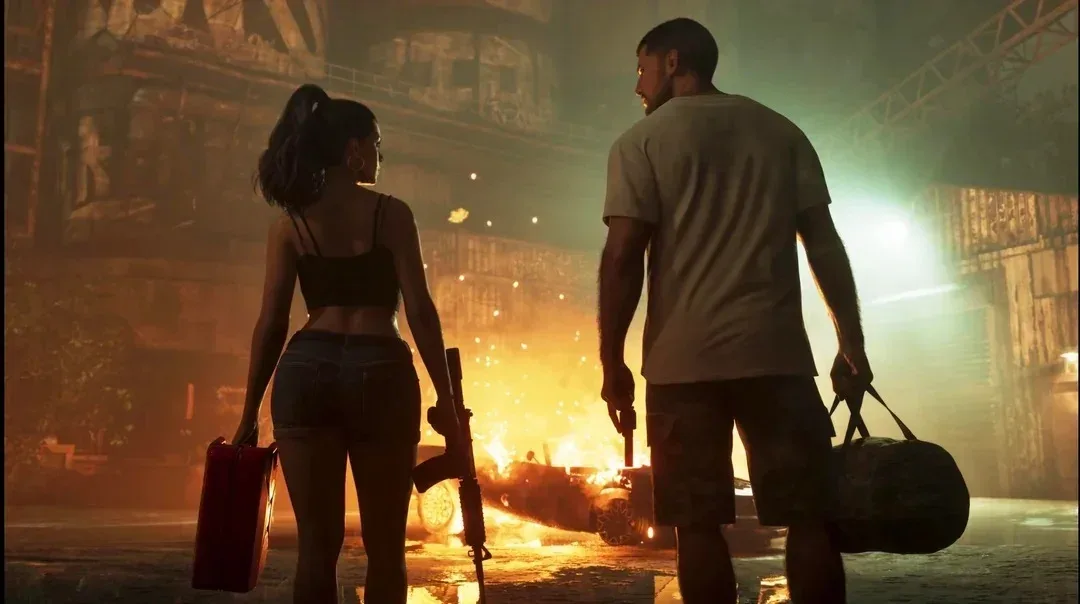
A previously discussed grocery feature offers an even cleaner illustration of where that boundary may sit. GTA 6 at one stage would have asked players to buy groceries and replenish the refrigerator used by Jason and Lucia. Nelson said the mechanic was simplified because it would have complicated the game’s systems.
That is not necessarily a rejection of domestic detail. Rather, it is recognition that domestic detail needs a strong purpose to justify becoming a recurring mechanic. A fridge can tell players something about characters, living arrangements, and the texture of a home. Requiring repeated shopping and restocking, however, introduces obligations. Once a system demands attention, it must earn that attention through meaningful gameplay, narrative payoff, or an enjoyable routine.
This is one of the most practical lessons hidden within the realism debate: a mechanic should not be defended solely because it exists in real life. Games are designed experiences with rhythms, incentives, and pacing. Players can appreciate a lovingly constructed world while still preferring it not to demand simulated household administration.
The grocery example also suggests that simplification should not automatically be read as a lack of ambition. Simplifying a system can be a deliberate act of prioritisation. It can preserve the impression of a lived-in world while keeping the player’s attention on the activities and relationships the game considers central.
What the comments say about GTA 6’s broader design
Nelson’s framing gives players a useful way to evaluate future GTA 6 details without treating every realistic-sounding feature as either automatically exciting or automatically alarming. The better question is: what does this system ask the player to do, and what does the game give back?
- Does it create a choice? A realistic constraint can be compelling when it makes planning, improvisation, or risk assessment interesting.
- Does it support character or story? Everyday actions can matter if they deepen the connection to Jason, Lucia, or their circumstances.
- Does it reinforce the setting? Some details work because they make places and activities feel distinct, even if they are not complex systems.
- Does it interrupt momentum? A routine action becomes harder to justify when it repeatedly cuts into missions, exploration, or player-driven chaos.
- Can it remain invisible when necessary? Convenience features and restrained use can let a simulation exist without constantly demanding attention.
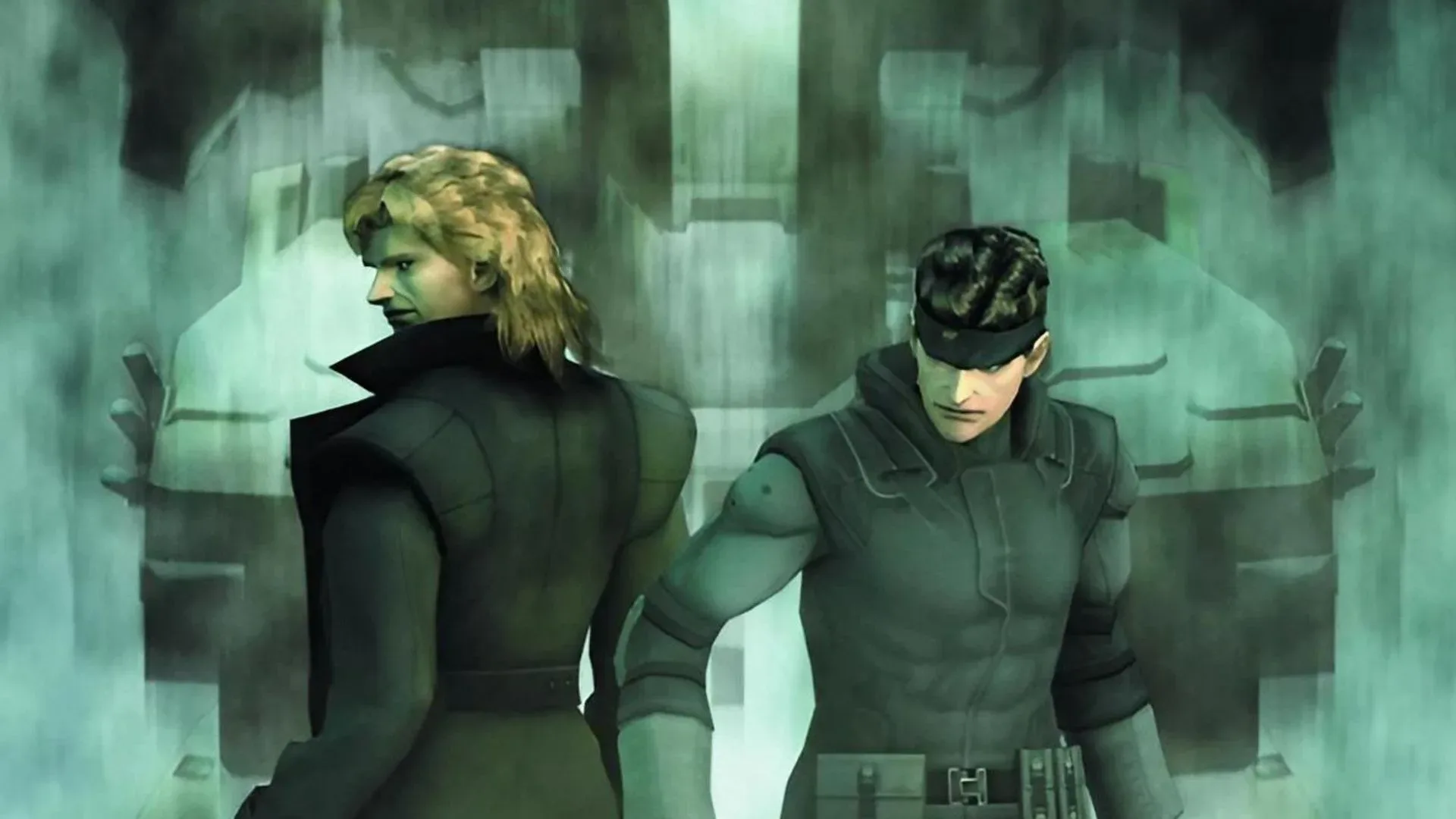
There is a broader industry angle here, too. Creative leadership often has to explain how a major franchise can preserve its identity while making choices that serve the present project rather than a checklist of expected features. That same kind of conversation about the role of key creative figures has surfaced elsewhere, including in discussions around whether Metal Gear can continue without Hideo Kojima. The specifics are very different, but the shared question is whether a series is defined by fixed surface details or by the underlying judgment that shapes them.
For GTA 6, Nelson’s answer appears to be that the right judgment is contextual. A real-world parallel may be worthwhile if it enhances satire or feeling. A familiar activity may be worth reducing when it burdens the player without advancing the experience. The stated goal is a world that feels inhabited and cohesive, not one that measures authenticity by how many tedious chores it can reproduce.
Graphic content ratings do not answer the gameplay question
Separately, a UK ratings-board description has highlighted graphic material in GTA 6, including detailed decapitation and the ability to snort cocaine directly from a hand. Those details speak to the game’s content classification and the intensity of some depictions, but they are not evidence that every aspect of its simulation will be equally granular.
That difference is worth keeping clear. Content descriptors explain the kinds of material a player may encounter. They do not map out the structure of missions, the frequency of systems such as refueling, or the amount of routine management required in play. GTA 6 can contain highly explicit content while still choosing streamlined interactions where a more literal simulation would slow the experience down.
For now, the most concrete takeaway is not that GTA 6 will be less realistic. It is that Rockstar North is openly defining realism as a means rather than an end. The pressure point will be execution: players will decide whether individual mechanics feel like convincing pieces of a larger world or tiny administrative penalties attached to it. Nelson has already identified the standard by which those choices will be judged—immersion, convenience, and the often precarious balance between them.