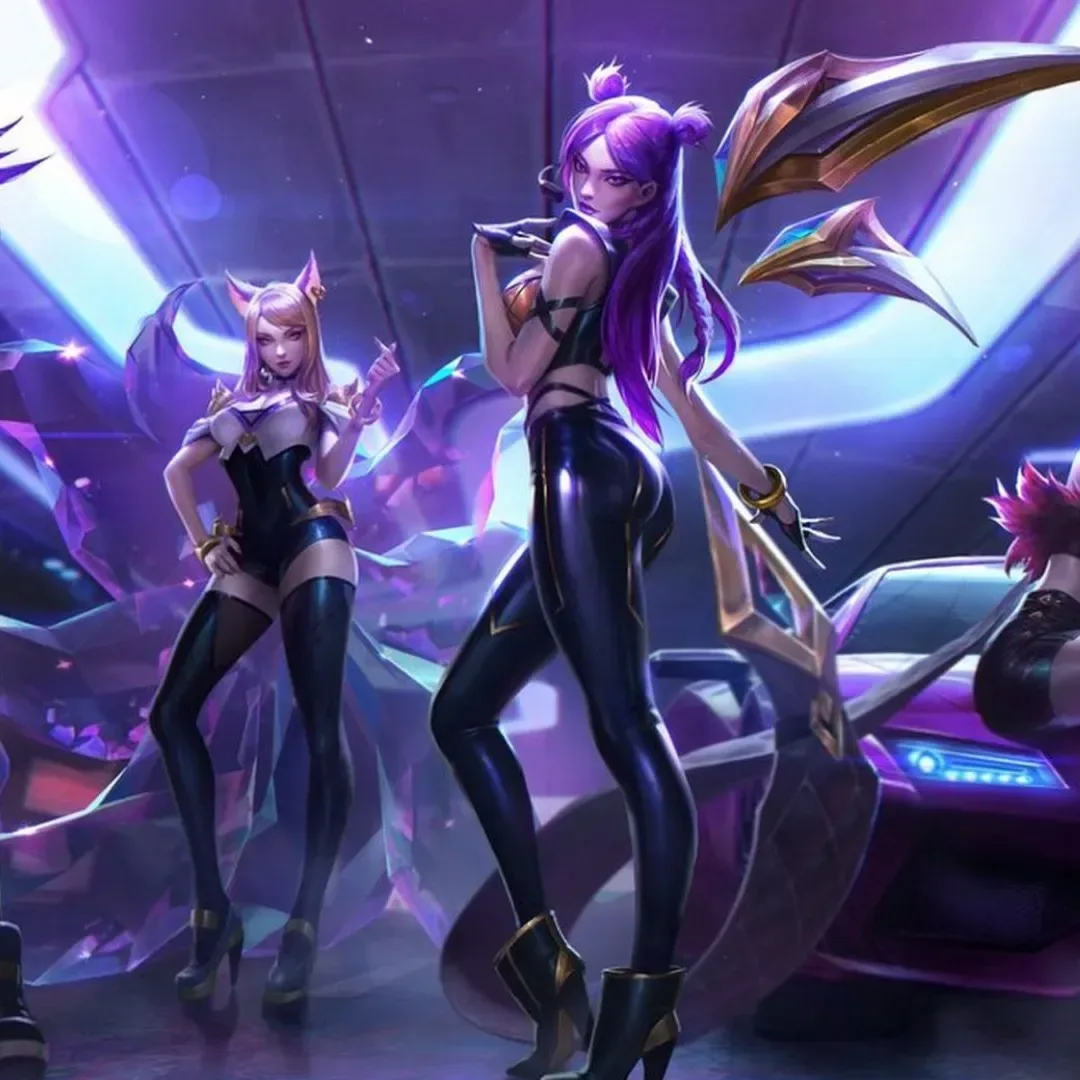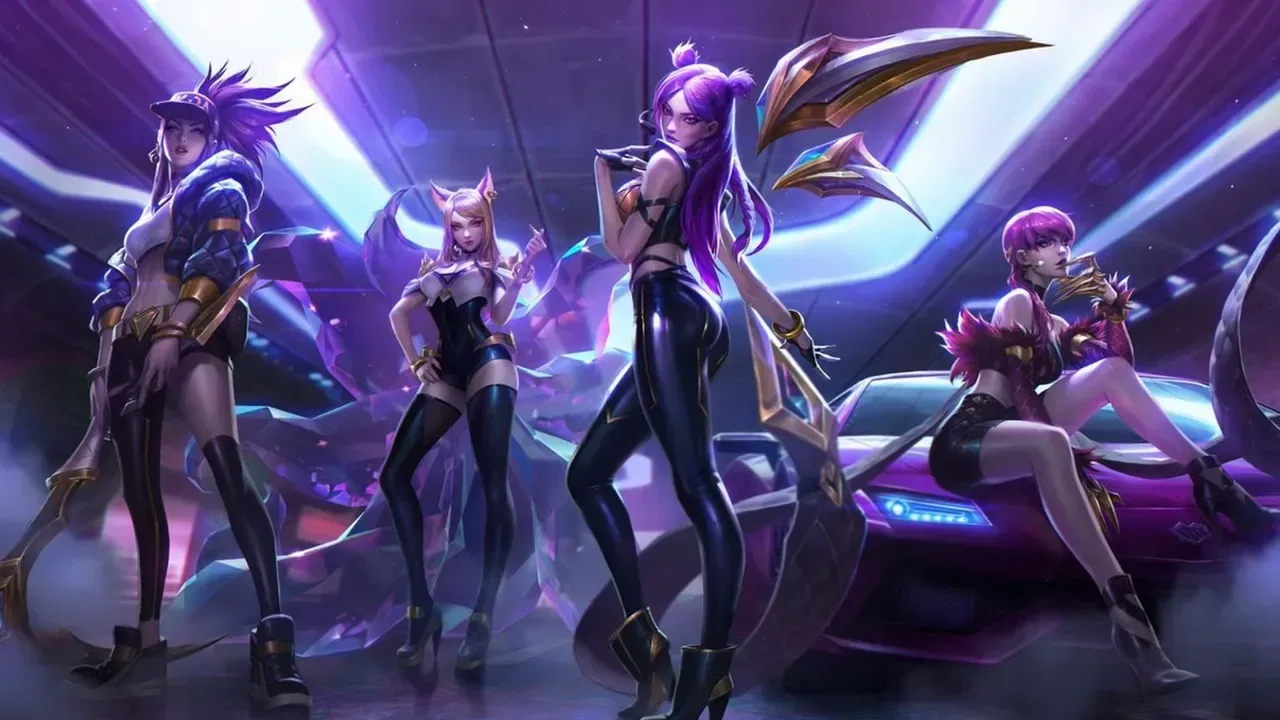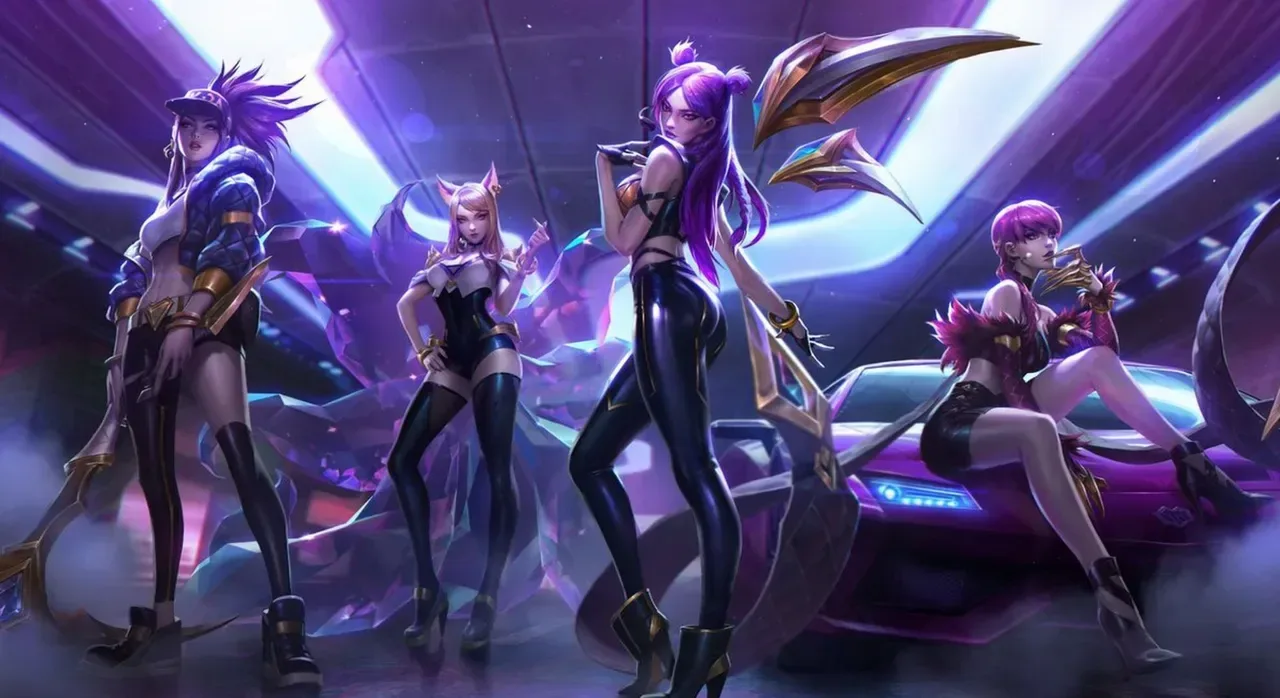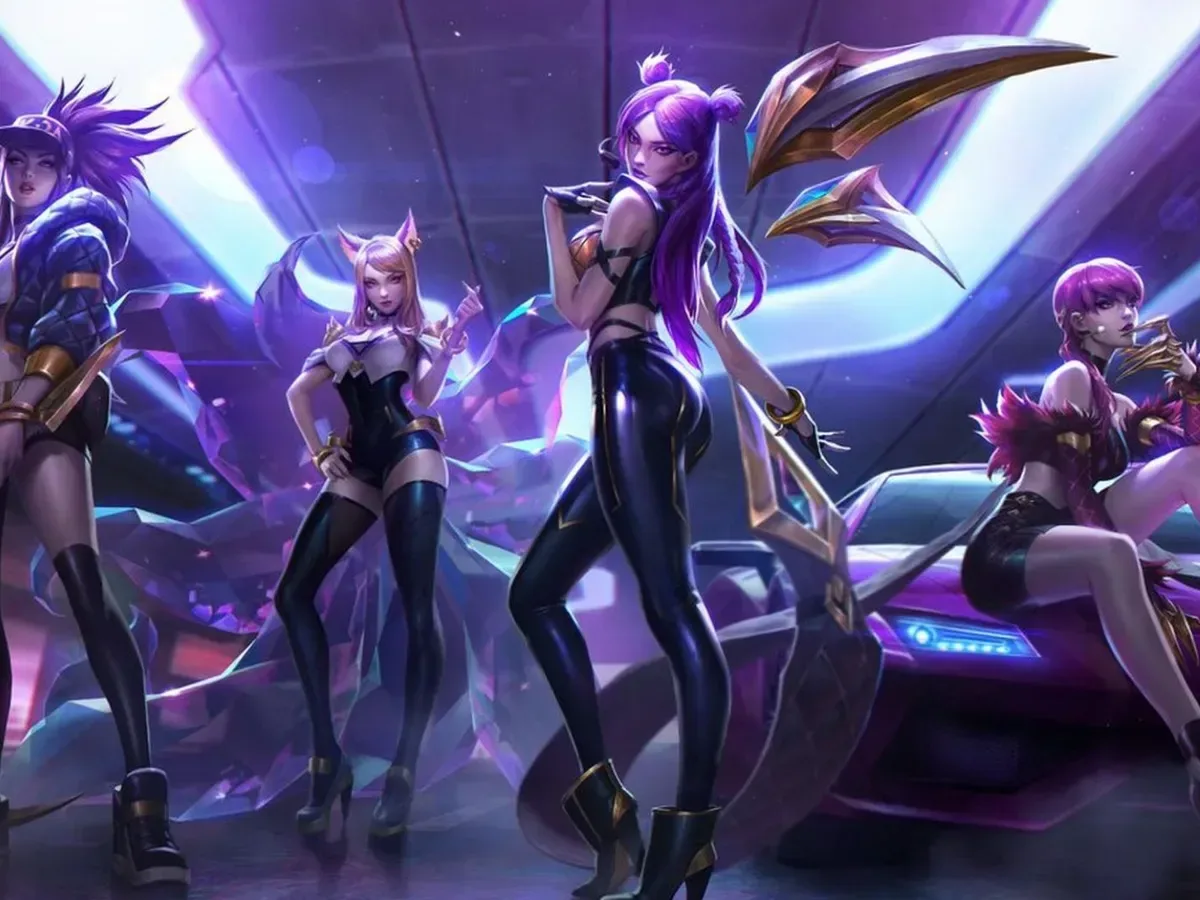
K/DA has returned to the timeline, at minimum. The virtual League of Legends pop group’s official social accounts have been refreshed for the first time in six years, with previous posts removed and profile imagery updated. The art is recognizably rooted in the All Out period, but it now has a new treatment: hot-pink and magenta flames curling around the familiar visual identity.
That is enough to create a great deal of noise, and for understandable reasons. K/DA is not merely a set of in-game cosmetics with a catchy theme song attached. It is a music project built around four League champions—Ahri, Akali, Evelynn and Kai’Sa—and associated with vocalists Madison Beer, Soyeon, Miyeon and Jaira Burns. Its 2018 debut at the League of Legends World Championship made the group a major example of a game using character fiction, music and esports spectacle as one combined event.
Still, the sensible reading is deliberately less dramatic than the fire effects. Fresh artwork and blank social feeds are clues, not confirmation. Riot has not announced a K/DA song, performance, skin line, roster, game collaboration or any other specific project. Until it does, the apparent revival is best understood as a carefully designed signal that has opened the door to speculation—not proof of what is behind it.
What changed on K/DA’s accounts?
The updated accounts retain promotional artwork from the All Out era. That matters because the visual does not introduce an unmistakably new costume, a new champion, a song title or an event logo. It looks back to K/DA’s most recent release cycle while altering it with vivid pink and magenta flames. The accounts have also had their existing posts wiped.
In entertainment marketing, clearing a social account can function as a reset: a way to make the next post feel like the first page of a new campaign rather than one more update in an old feed. But it is not a binding promise. A cleaned-up profile can precede anything from a major release to a smaller brand activation. The only firm fact here is the change itself.
The choice of All Out art does offer a little useful context. That 2020 EP followed the enormous reach of “POP/STARS,” K/DA’s debut single. “POP/STARS” became the first K-pop song by a girl group to earn RIAA Platinum certification in 2022. The group has remained present inside League through its existing skins, but there has been no announced run of fresh music or performances in the intervening years. That long silence is why a relatively modest profile update is being treated as a potentially important move.
The clues fans are connecting—and how much each can really tell us
Two earlier items have made the account activity feel less isolated. Data-mined material from a Wild Rift update pointed to a possible “Firestarter” skin concept, while a new song was registered in the ASCAP Repertory. Together with the flame imagery, those details make a music or skin-related K/DA return plausible. They do not make it confirmed.
Data mining is an early lead, not an announcement
Data mining means inspecting files or information present in a game update to find references that are not yet publicly explained. It can uncover names, placeholder text and unfinished material ahead of an official reveal. It can also expose work that changes, gets renamed, remains unreleased or has a different purpose than players assume.
Related coverage includes K/DA Social Revival Sparks Comeback Speculation Six Years After All Out.
That distinction is particularly important with “Firestarter.” The name naturally seems to match the newly added flames, but the available indication is only of a potential skin concept. It does not establish which champions would receive skins, whether the concept is final, whether it belongs to K/DA specifically, or when it might appear. It is a thread worth watching, not a release calendar.
A repertory listing identifies a work, not a launch plan
ASCAP is a performing-rights organization, and its repertory is a database of musical works and related rights information. A listing can be meaningful because it indicates that a song exists in the rights-management pipeline. It does not, by itself, tell listeners when the track will be released, who will perform it publicly, what project it belongs to, or whether it will receive a video, in-game debut or live stage.
In other words, a repertory entry is stronger than a color palette, but it is still incomplete evidence. Fans can reasonably place it beside the refreshed K/DA profiles and see a pattern. They cannot responsibly leap from that pattern to a confirmed album, a full EP or an exact Worlds performance.
The Fortnite theory is even less certain
Some players have read the purple-toned imagery as a sign of a Fortnite crossover, noting the similar colors used around Fortnitemares. At present, that is visual interpretation rather than a confirmed connection. Purple, pink and smoke-like effects are broad design elements, and K/DA’s newly updated imagery has its own obvious internal logic through its flame treatment.
A crossover would be a substantial claim because it would involve more than one company’s plans and rights arrangements. Nothing in the account refresh establishes that such an arrangement exists. It is best filed under fan theory, not forthcoming content.
The lineup question is bigger than a new logo
A K/DA comeback has an unusual extra layer of uncertainty because the project relies on both fictional champions and real-world vocal performers. Ahri, Akali, Evelynn and Kai’Sa form the core character lineup, but the singers associated with them have separate careers and schedules. A new K/DA campaign would therefore involve creative choices beyond game development: music production, vocal availability, representation of the champions, and the shape of any promotional performance.
The same broad connection between a character and the person helping define its voice can be central to a game audience’s attachment, as seen in this look at how a distinctive character voice helped a performer land a role in Metaphor: ReFantazio. For K/DA, that relationship is especially visible: the music is not peripheral marketing but the core of the group’s identity.
Recent online discussion included a rumor that Madison Beer might be leaving K/DA. There is no official confirmation of that claim. Beer has instead said she would love to return, while explaining that the decision is not hers and that a conversation about doing more with the project took place several years ago without an apparent result. Her comments are notable because they push back against any simple assumption that a performer’s interest is the obstacle. They do not verify a current production, a returning lineup or a finalized deal.
Nor has Riot clarified whether a future K/DA project, if there is one, would use the familiar quartet alone. The current banner art includes Seraphine, the guest artist connected to the All Out era and a champion newly released at that time, alongside the principal four. That may simply reflect the artwork being reused. It should not be treated as confirmation that Seraphine is joining a future permanent lineup or that any particular character is involved.
Why Worlds is the date to watch
K/DA first appeared at the 2018 League of Legends World Championship, so the present tournament naturally gives fans a meaningful point on the calendar. The 2026 event is being held across the United States, with its Grand Final scheduled for November 14. A Worlds reveal would fit the group’s history and give any new music or visual project an enormous stage.
But historical fit is not scheduling evidence. There has been no official statement tying K/DA to this year’s tournament. The right way to interpret Worlds is as the most logical near-term occasion for news, not an appointment for a guaranteed performance. A social refresh in October may be setting the table for something at the event; it may also be related to a different League or Wild Rift initiative entirely.
What is confirmed, what is suggested, and what remains rumor
- Confirmed: K/DA’s official accounts have been updated after six years, prior posts have been removed, and existing All Out-era art now includes hot-pink and magenta flame imagery.
- Confirmed: K/DA debuted at Worlds in 2018 and is built around Ahri, Akali, Evelynn and Kai’Sa. “POP/STARS” received RIAA Platinum certification in 2022, and All Out arrived in 2020.
- Suggested, not confirmed: Data-mined Wild Rift information has been interpreted as pointing to a possible “Firestarter” skin concept, while an ASCAP repertory registration has fueled talk of a new song.
- Unconfirmed: Any new K/DA music, skins, performance, release date, final singer lineup, character roster or connection to Fortnite.
- Worth watching: The League of Legends World Championship Grand Final on November 14, given K/DA’s original Worlds debut—but no K/DA involvement has been announced.
For now, the flames have done their job: they have reminded people how much demand still surrounds a project that has spent years dormant. The next meaningful evidence will need to be more concrete than a refreshed banner—an official song title, event billing, game reveal, roster statement or release information. Until then, K/DA’s return is a compelling possibility rather than a confirmed comeback.