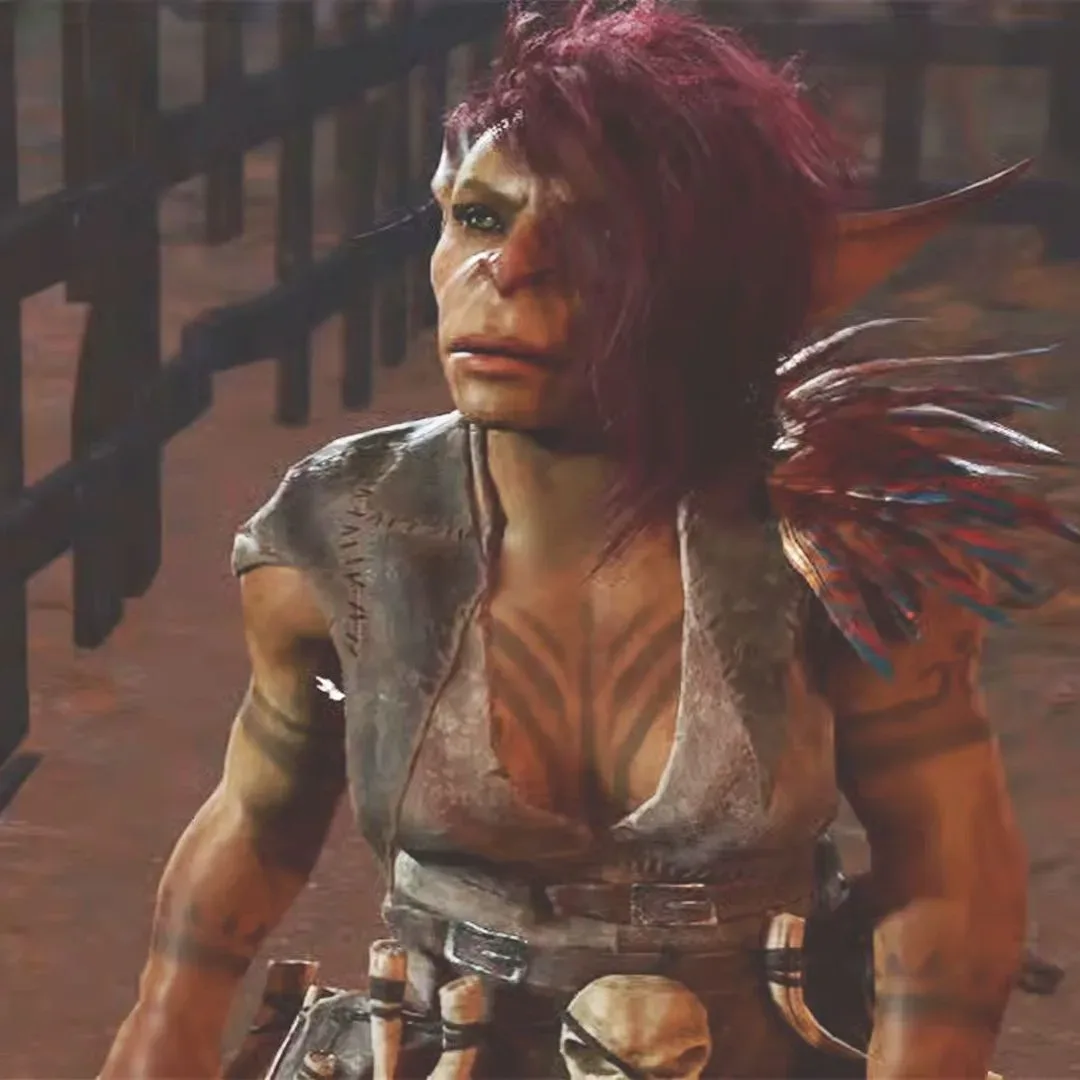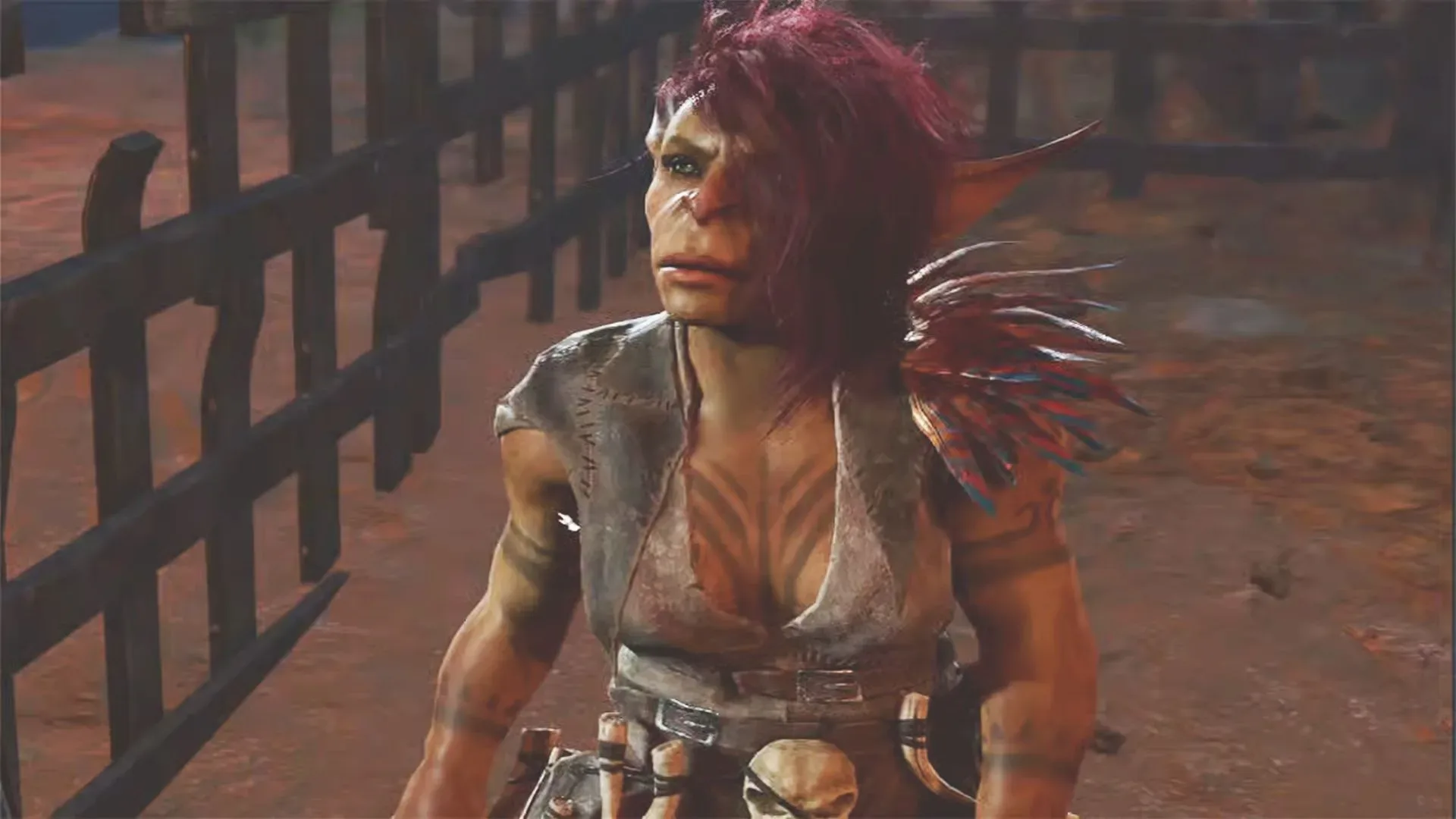
One sharply defined goblin voice can travel a remarkably long way. Actor Holly-Marie Michael has said that playing Sazza in Baldur’s Gate 3 helped her secure the role of Catherina in Metaphor: ReFantazio, connecting two major RPGs through a specific performance choice: the Cockney accent Michael used for Sazza.
Michael portrayed Sazza as a working-class goblin in Larian’s 2023 role-playing game. She later played Catherina, the pink-haired bounty hunter in Metaphor: ReFantazio. The characters occupy drastically different places in their respective fantasy worlds, but Michael says the audition opportunity grew out of the vocal identity she had already established with Sazza.
“Funnily enough, I got the role of Catherina by playing Sazza in Baldur’s Gate 3,” Michael said. For the English-language dub of Metaphor: ReFantazio, the team was using a range of regional accents and wanted a performer with a Cockney accent for Catherina. Michael had already been performing one for Sazza, and was invited to audition.
A role connection built on a vocal choice
It is tempting to frame the story simply as one hit RPG leading to another. That is part of it, but Michael’s explanation is more useful—and more specific—than the usual broad idea that a recognizable credit opens doors. The connection was not merely that she had appeared in a successful game. It was that casting personnel could point to a demonstrated character voice which matched an element they wanted for another part.
In voice performance, an accent is more than a matter of pronunciation. It can affect cadence, rhythm, attitude, perceived background and the way a character occupies a scene. A regional accent can help a large fantasy ensemble feel varied, especially in an English dub where performers need to distinguish characters without visual changes doing all the work. Michael’s account suggests that Sazza provided a ready-made example of how she could handle that particular vocal register in a game setting.
That does not mean Sazza and Catherina are interchangeable, nor does it reduce either performance to a single accent. Sazza is a goblin character in Baldur’s Gate 3; Catherina is a bounty hunter in Metaphor: ReFantazio. Their narrative functions, personalities and worlds are distinct. The significant detail is that a casting need aligned with a skill Michael had made audible in a previous role.
From goblin to bounty hunter
Michael has described her reaction to Catherina’s audition material in straightforward terms: she thought the character was “so badass” and wanted the part. At that point, she did not know that her prior work as Sazza had already put her in a strong position for the audition.
That makes the path from one game to the next especially neat. Sazza is the sort of supporting character whose appeal can encourage intense player attachment, while Catherina’s premise as a pink-haired bounty hunter signals a visibly different kind of RPG presence. The overlap is not the character archetype. It is the actor’s ability to bring a recognizable regional voice to a larger fantasy cast and then adapt it to a new role.
Related coverage includes Holly-Marie Michael Says Baldur's Gate 3's Sazza Helped Land Her Metaphor: ReFantazio Role.
For players, that is a reminder that casting continuity is often less obvious than it appears. Audiences may notice a familiar performer only after checking a cast list, or may hear a trace of vocal technique without immediately placing it. Casting decisions, meanwhile, can involve highly practical evidence: an actor has already shown they can deliver a required sound, sustain it in dialogue, and make it character-specific.
What “English dub” means here
An English dub is a version of a work performed in English rather than its original recorded language. In games, it is not simply a literal translation read aloud. Performers and localization teams have to make dialogue sound natural, preserve character distinctions and accommodate timing, tone and scene context. Choosing several regional accents can be one way to give an ensemble contrast and texture.
Michael’s recollection indicates that regional variety was part of the approach for Metaphor: ReFantazio’s English-language cast. Her Cockney work on Sazza made her a fitting person to audition for Catherina under that approach. It is a compact example of how an individual performance can become a calling card: not a guarantee of future work, but direct evidence that an actor can meet a particular casting brief.
Why Sazza remains a memorable part
Sazza has clearly inspired a lively response from a portion of the Baldur’s Gate 3 community. In 2025, Michael reacted in Sazza’s voice to players advocating for goblin romance, joking about how many fans there were and saying that she would be willing to record such scenes if Larian ever asked.
The exchange was playful, not confirmation of any planned content. No goblin-romance addition was announced through that reaction, and fans should not treat an actor’s humorous willingness to participate as evidence of development plans. Still, the moment says something real about the bond players can form with a well-performed supporting character. In a choice-driven RPG, even figures outside the central party can become favorites, subjects of jokes, or prompts for players to imagine paths the game does not offer.
That fan affection also helps explain why Michael’s career link between the two games is an appealing story. Sazza is not being remembered only as an item on a résumé. She is a character with enough player recognition that Michael can revisit the voice in a joke and immediately give the exchange a shared reference point.
The practical lesson for game casting
Michael’s account offers a grounded view of how game acting credits can lead to further work. High-profile projects can make a performer more visible, but visibility alone is vague. A specific performance can be more actionable: it lets a casting team hear an accent, delivery style and sense of character that are relevant to a new role.
- A previous role can function as an audition sample. Michael’s Sazza work demonstrated the Cockney accent sought for Catherina.
- Regional voice work can be a meaningful casting requirement. It can help shape a game’s English-language ensemble rather than serving as mere decoration.
- Similar vocal tools do not require similar characters. Sazza and Catherina have different roles and identities, even if the path to the latter began with the former.
- Fan enthusiasm is separate from production reality. The Sazza romance discussion was a humorous interaction, not a promised feature.
It also illustrates why credits in games matter beyond celebrity recognition. Long-form RPGs can give actors space to create memorable voices in richly populated worlds. When that work lands with audiences and demonstrates a useful range or specialty, it can make an actor easier to picture in a future production.
For anyone looking for another role-playing adventure after these two games, our guide to choosing a version of Final Fantasy Resonance covers platform, edition and feature considerations.
Michael’s next major game has not been identified. What is clear is the route she described: a Cockney goblin performance in Baldur’s Gate 3 gave her the opening to audition for Catherina in Metaphor: ReFantazio. It is an unusually direct line between two acclaimed RPG casts—and a strong argument for never underestimating what one memorable goblin can do for a career.