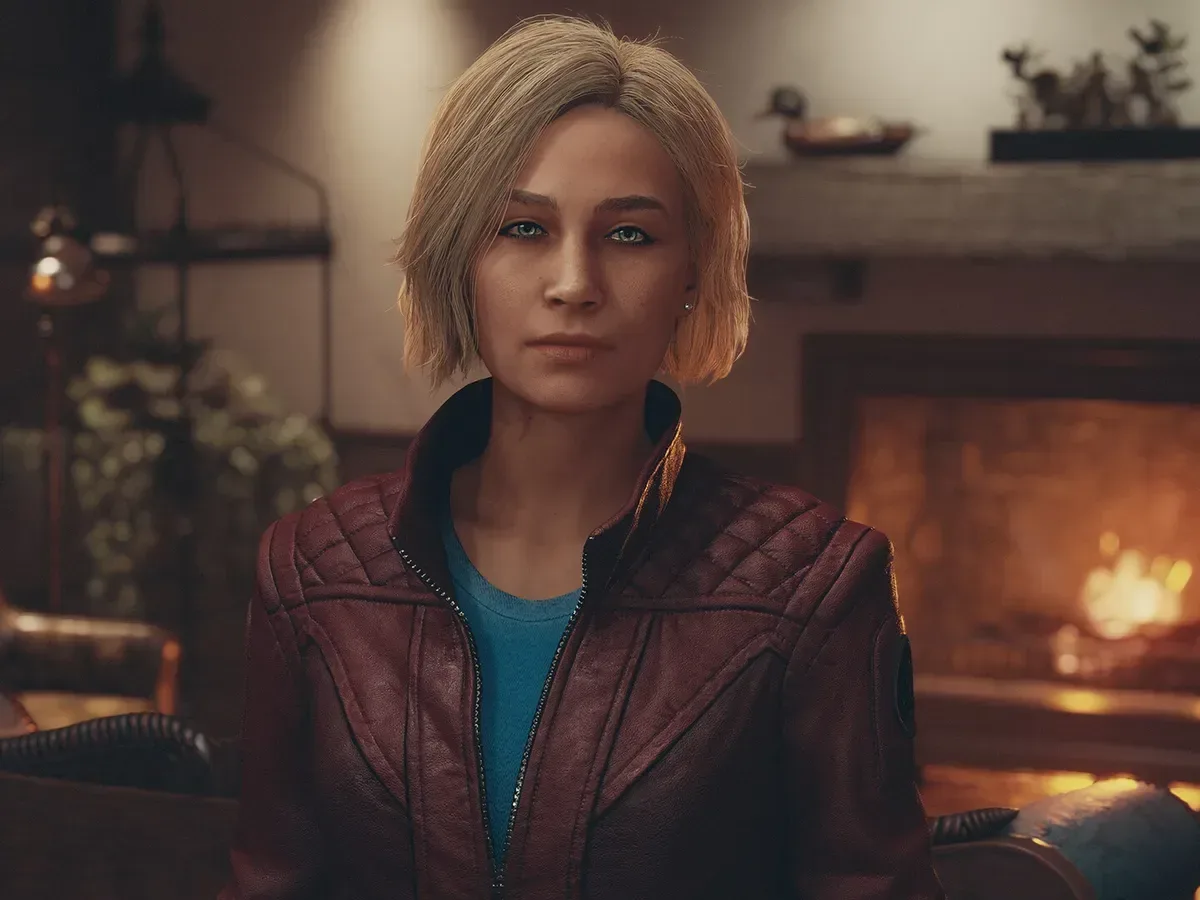
Cissy Jones has played characters across a striking range of games: Delilah in Firewatch, Katjaa in Telltale’s The Walking Dead, The Absolute in Baldur’s Gate 3, and Andreja in Starfield. Her perspective on the medium is therefore shaped by more than a list of credits. It is shaped by work in games that operate at radically different scales, genres and tones—and by a belief that the medium has an unusual willingness to take storytelling risks.
Jones says she is “a terrible gamer,” but that has not diminished her enthusiasm for what games can do dramatically. Quite the opposite: she is drawn to games because they tell stories that may not fit comfortably anywhere else. Her central point is not that every game must be solemn, cinematic or emotionally devastating. It is that games leave room for creators to try forms of personal expression that can be difficult to finance and produce in more traditional screen media.
“The willingness for people to tell stories in this space is so incredible,” Jones said.
A career spanning intimate dramas and enormous universes
The names attached to Jones’s work illustrate the range behind that observation. Firewatch is closely associated with an intimate relationship between its two central voices, with Jones playing Delilah. Baldur’s Gate 3 places her in a sprawling fantasy role as The Absolute, while Starfield puts Andreja within a science-fiction universe built on a far broader scale. Her role as Katjaa in Telltale’s The Walking Dead is part of an episodic series rooted in character drama and difficult decisions.
Those projects do not share a single production model, narrative structure or audience expectation. The common thread is that voice performance can be central to how a player encounters a game’s characters and stakes. A performer may be supplying a companion, a distant presence, a figure of menace, or someone bound to an intensely personal story. For players, a voice can become inseparable from a place, an emotional turn or a choice they remember long after the controller is down.
Jones’s work extends beyond games. Her background includes Silicon Valley startups and venture-capital firms, a recurring role on Disney’s The Owl House, and performances across more than 100 universes, ranging from Naruto to Texas Chainsaw Massacre. She also won a BAFTA for her Firewatch performance. That path gives her a useful vantage point on the creative and technological pressures now meeting around voice acting.
That Dragon, Cancer as an example of games’ expressive range
To explain the kind of creative freedom she values, Jones pointed to That Dragon, Cancer, which arrived in the same year as Firewatch. The game chronicles parents dealing with their young child’s cancer and was made as a way for them to process grief. Jones highlighted its small team and modest budget, as well as its aim to honor the creators’ son.
It is an important example because it describes a game created not simply to deliver a familiar genre fantasy, but to work through an experience of loss. The subject is inherently difficult, and the fact that it could be approached through a game is the point Jones is making. Games can encompass action, competition and escapism, but they can also give form to reflection, remembrance and a creator’s attempt to communicate something deeply specific.
Related coverage includes Cissy Jones Celebrates Games' Appetite for Bold, Personal Stories.
That does not mean interactive storytelling is automatically more powerful than film, television, books or theatre. Each medium has its own strengths. Jones’s argument is more practical: games can offer a route for a small group to make something personal and distinctive, even when that story is not an obvious fit for a conventional commercial package.
What “interactive storytelling” means here
Interactive storytelling is a broad term, and it does not only mean a game with branching endings or a visible morality meter. At its simplest, it means that the audience’s engagement is shaped by play rather than passive viewing. The player moves through spaces, listens at their own pace, undertakes tasks and inhabits a role. A game may be tightly authored or offer substantial player freedom; either way, the act of participation changes the texture of the experience.
For a personal work, that participation can make the subject feel immediate without making any sweeping claim that games are uniquely capable of empathy. The important distinction is structural. A player does not merely watch the work unfold from a distance. They spend time inside its systems, environments and rhythms. That can make games a useful form for stories that invite contemplation as much as spectacle.
Why production realities matter to the stories that get told
Jones contrasted games with the financial demands often associated with film and television. Major screen productions may carry huge budgets, need recognizable stars to unlock funding, and require long filming schedules. Those pressures can affect which projects are viewed as viable before audiences ever get to see them.
Games have their own expensive, demanding productions—Jones’s credits make that obvious—but the space also contains projects made by smaller teams with more focused ambitions. Her emphasis was on this ability to “play”: to experiment with subject matter and presentation, not merely to play games in the literal sense. A smaller production can potentially pursue a story that is too unusual, too personal or too difficult to be treated as a conventional mainstream screen project.
The practical implication for players is that a healthy games culture is not defined by one scale of release. Big-budget games can deliver large worlds and expansive casts. Smaller projects can take risks that may be less feasible within a major production. The medium’s storytelling breadth depends on both, and it depends on audiences being willing to encounter stories that do not arrive with the same marketing machinery or familiar formulas.
Hollywood’s interest does not erase what games do differently
Jones also sees the growing movement of game stories into television and film as evidence of how strong those stories can be. Adaptations can introduce characters and settings to people who do not play games, but an adaptation is not a replacement for the original interactive form. A screen version changes the relationship between audience and story: viewers follow a fixed performance and sequence, while players engage with a game through action and presence.
That difference matters when discussing why games are attracting attention beyond their own medium. A game’s setting, plot and characters may transfer well to another format, yet its original identity can also be tied to how the player inhabited it. Jones’s praise is ultimately for games as games—not simply as an incubator for future television or film.
Her point also arrives as voice work faces questions that extend beyond individual performances. Jones founded Ethovox, an AI company whose stated mission is to establish ethical coexistence between AI and voiceover. The word ethical is significant here: it frames artificial intelligence not as a purely technical issue, but as one involving performers, creative labor and the conditions under which voices are used.
Discussion of AI-assisted media is already reaching other parts of entertainment; for example, AI-assisted family-film plans are becoming part of the wider production conversation. Jones’s stated focus places voiceover within that broader debate while keeping the concern specific: how new technology and human performance can coexist responsibly.
Voice acting remains part of how games take creative risks
It is easy to discuss games’ storytelling ambition in terms of writers, directors, branching systems or visual design. Jones’s career is a reminder that performers are equally important to that process. Voice acting can establish intimacy in a small character piece, give scale to a role in a fantasy epic, or help a player understand a character who is met only through audio and dialogue.
That contribution is particularly meaningful in a medium with such different kinds of games. Some performances must support long-running player relationships. Others are designed to make a brief appearance resonant. Some characters communicate from outside the player’s immediate view, while others are constant companions. The craft changes with the project, but the goal remains similar: making a fictional person feel present within an interactive world.
Jones’s own credits show that this work is not confined to one kind of game, and her comments explain why that range matters. The medium can hold a private story of grief alongside a huge role-playing epic; a tense character drama alongside a science-fiction adventure. Its potential is not located in one genre or budget tier. It is in the continuing readiness of teams and performers to make room for stories that may be vulnerable, strange, ambitious or intensely personal.
For Jones, that openness is one of games’ defining strengths. The business realities are complicated, and the technology surrounding voiceover is changing quickly. But the creative possibility she identifies is straightforward: games can be a place where people attempt stories they might not be able to tell in quite the same way anywhere else.