Rob Minkoff, the filmmaker who co-directed The Lion King and directed Stuart Little, is in advanced discussions to join Particle 6’s in-development family film Storm Dogs. The project would place an experienced director of memorable animal-led stories at the creative center of a production designed around a mixture of performers, conventional filmmaking techniques and AI-assisted character creation.
If the discussions result in a deal, Minkoff will be the film’s creative lead, developing its story, characters and script alongside Particle 6 founder and CEO Eline van der Velden. Storm Dogs is currently targeting a 2027 start of production. That target is not a release date, and the project remains in development.
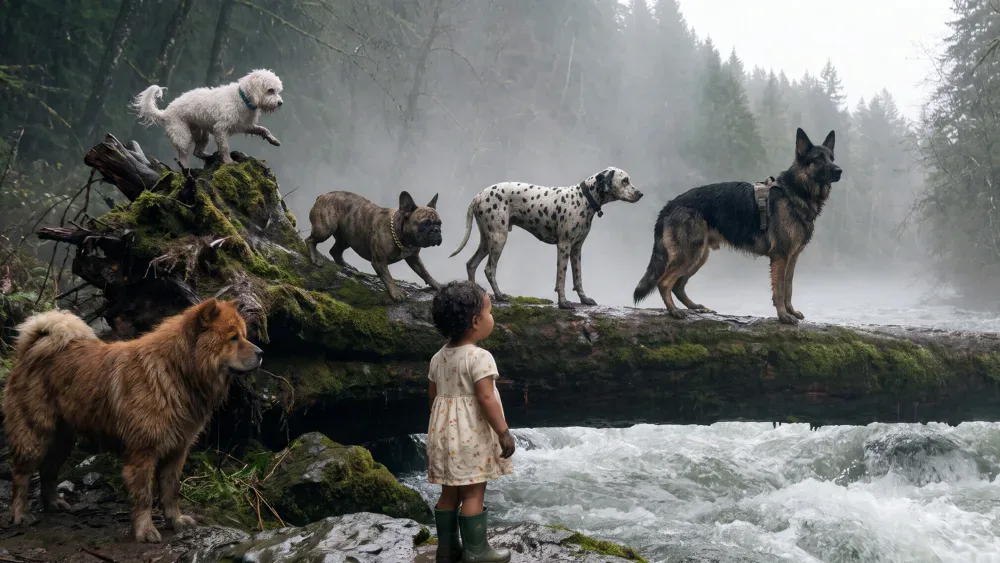
The premise has an appropriately storybook-sized protagonist and a much bigger weather problem. Poppy, a toddler living in an English village, is separated from her adult caretaker when a storm strikes. She then joins forces with a group of dogs in an effort to find her way home. Particle 6 describes the film as a family comedy-drama, with the setup leaving room for peril, emotion and, presumably, a canine navigation committee whose meetings could have used a little more barking order.
Why Minkoff is a particularly direct fit
The connection between Minkoff’s past work and Storm Dogs is not merely that both involve animals. His films are closely associated with animal characters that have to carry comedy, feeling and narrative momentum. That is precisely the difficult assignment Particle 6 has set for itself: convincing audiences that digital, photorealistic animals are characters rather than impressive moving furniture.
Van der Velden highlighted Minkoff’s background in character, comedy and emotional storytelling when discussing the potential collaboration. Minkoff, in turn, said his career has repeatedly focused on finding ways to make animal characters funny, emotionally truthful and fully alive. He described his visit to Particle 6’s London operation as an encounter with filmmakers focused on story, character and performance, while also investigating production methods that might give filmmakers more freedom in realizing what they imagine.
That emphasis is meaningful because Storm Dogs is not being framed as a film in which technology replaces performance. Particle 6’s stated plan is to combine live-action performances with photorealistic animated characters. Minkoff’s proposed role covers the most basic storytelling foundations: the script, the personalities involved and the shape of the journey. In other words, the technology is intended to serve the movie’s human-made creative decisions, not become the plot’s substitute for them.
What “AI-assisted” means here
AI-assisted filmmaking is a broad label, and it can mean very different things from one production to another. Particle 6 has provided a more specific outline for Storm Dogs: the film will use a blend of AI tools, traditional methods and human actors. The toddler and dog characters will be created through a mixture of live-action performances and AI.
Most importantly, the company says an actor’s expressions, physicality and inflections will be applied to the animated characters, rather than limiting the performer’s contribution to voice work alone. Physicality means the body-based component of a performance: movement, posture, timing and gesture. Inflections are the variations in a performer’s voice that communicate emphasis, mood or intention. A character can say the same words in several ways; inflection helps establish whether the moment is scared, playful, determined or exhausted.
In the terms supplied for this production, the live performance is therefore part of the character’s expressive foundation. The company is not simply describing a process in which an actor records dialogue and a separate animated figure speaks it. Its proposed workflow seeks to carry more of a performer’s acting into a photorealistic animated result.
Photorealistic, meanwhile, refers to imagery intended to resemble live-action reality rather than visibly stylized animation. That choice raises the creative bar. The closer characters are meant to look to real dogs and a real toddler, the more closely audiences may judge their motion, expressions and interaction. For a story built around a young child and a pack of dogs, maintaining that sense of emotional life is central to whether the premise lands.
The practical production question at the heart of the film
Particle 6 has pointed to a pragmatic reason for this approach: toddlers and animals do not need to spend long hours on set. A company spokesperson called that a real advantage of using AI in the creation of Poppy and the dogs. Van der Velden also said the nature of the project would be extraordinarily difficult to achieve through conventional production alone.
That is a concrete explanation of what the tools are being asked to solve. Storm Dogs requires a very young central character, several animal characters, a storm-driven separation and a journey toward home. The reported plan is to use performances and production technology to pursue that story without relying on toddlers or animals being present for lengthy shoots.
It also establishes a clear distinction worth keeping in view as the film develops. Particle 6’s stated approach does not present AI as the sole author of the images or performances. The company describes human actors as inputs to the animated characters and says filmmakers retain creative control. Van der Velden said every creative decision would remain in human hands, adding that she does not view AI as a replacement for human creativity.
“Storm Dogs is a wonderful opportunity to develop that approach together in the service of a story with real jeopardy, heart and humor,” Minkoff said.
The phrase “pioneering phase” is also an important qualifier. It signals that Particle 6 sees this as an evolving process rather than a settled, routine filmmaking model. The project’s eventual result will depend on choices that have not been detailed publicly, including how the performances are translated to the characters and how the film balances its technical ambition with the straightforward emotional demands of its family-story premise.
Particle 6’s next projects and the wider context
Storm Dogs follows Particle 6’s work around Tilly Norwood, an AI-generated performer the company has been presenting publicly. The company previously said that Tilly Norwood would star in its first feature-length project, Misaligned, which began production earlier this month. Tilly Norwood’s recent media appearances also drew attention after an interview moment in which the character unexpectedly switched from English to Cantonese.
That backdrop makes Storm Dogs more than a conventional attachment story. Minkoff’s possible involvement would connect Particle 6’s AI-centered production ambitions with a director whose body of work is directly relevant to the project’s combination of animal characters, comedy and family-scale emotion. It is a notable creative match on paper, though it remains subject to the advanced discussions becoming a finalized arrangement.
For audiences, the useful distinction is between what has been announced and what has not. The film has a premise, a proposed production method, a targeted 2027 production start and a filmmaker in advanced talks for a creative-lead role. It does not yet have a confirmed production start, release date, cast list or finished footage. The story to watch is not whether a tool can be attached to a movie’s marketing language; it is whether the filmmakers can make Poppy and her dogs feel like a cohesive ensemble with stakes viewers care about.
The topic also sits within a larger creative-technology conversation that is reaching game-facing industry spaces as well as film production discussions. Game Industry Conference 2026’s planned sessions and summits are one example of how broad industry events continue to make room for evolving production and creative questions.
For now, Storm Dogs is an ambitious early-stage project with a simple, durable family-film engine: a child needs to get home, a group of dogs can help, and a storm has made the route much harder. Particle 6’s wager is that its blend of human performance, traditional techniques and AI tools can tell that tale at a scale it considers difficult through conventional means alone. Minkoff’s prospective role suggests that character and story, rather than the novelty of the production process, are meant to be the film’s north star.