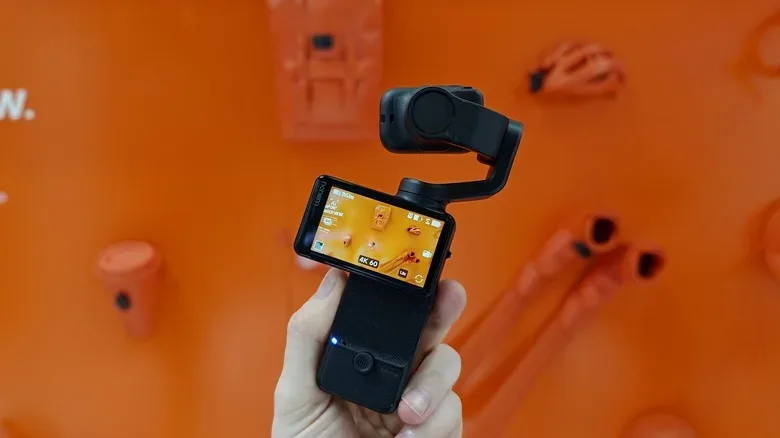
There are plenty of compact cameras built around one simple promise: point them at the thing happening, trust the stabilization, and worry about editing later. Hohem’s newly shown Eyepic adds a second promise that is considerably more ambitious: when the gimbal is no longer the right tool, take the camera off it.
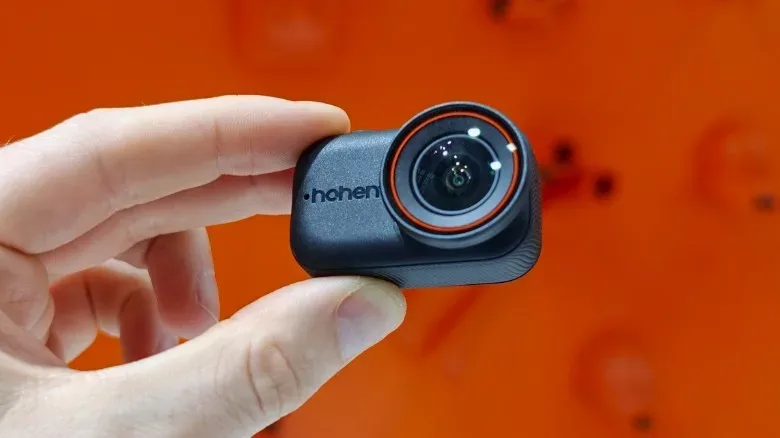
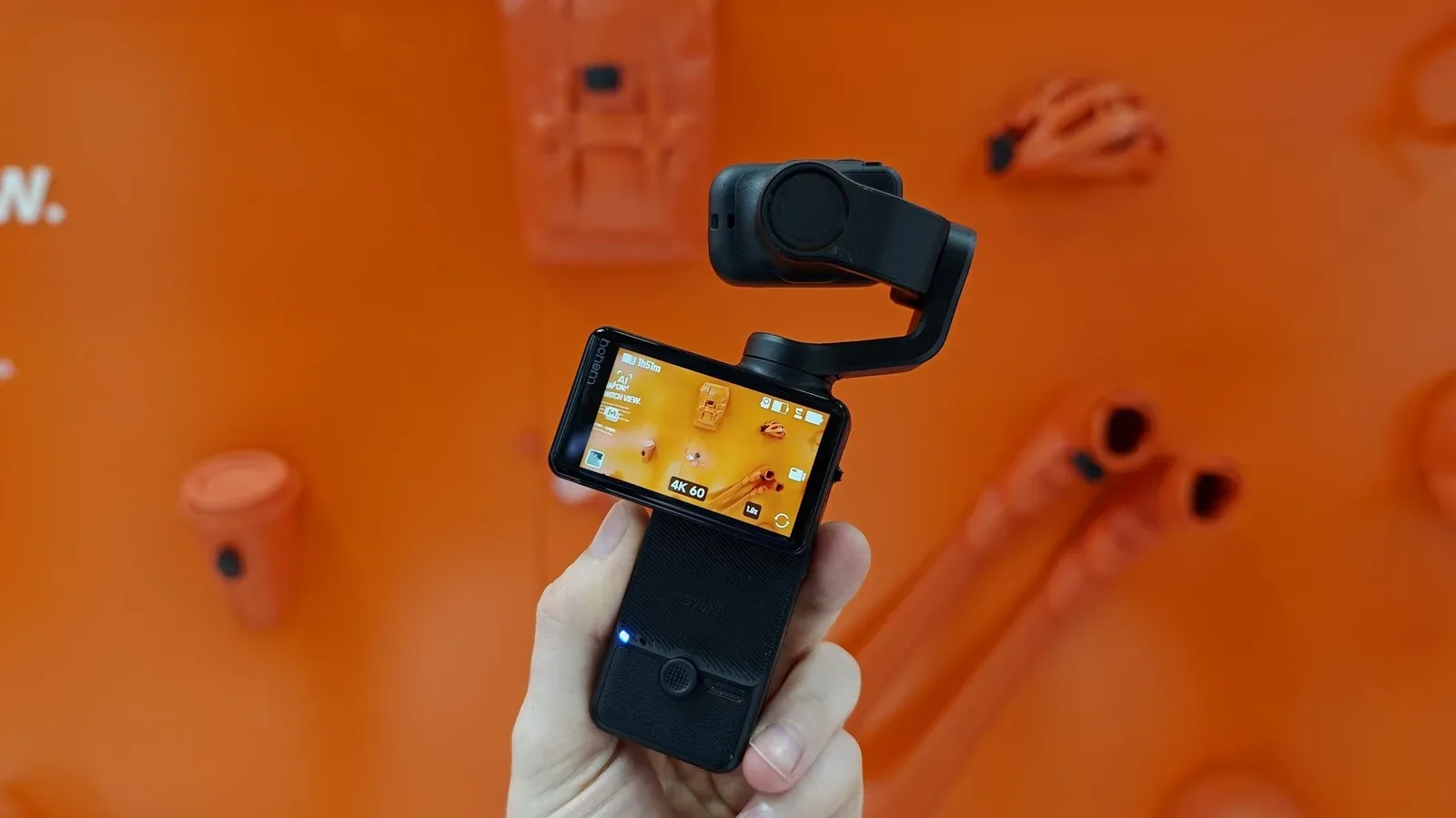
The Eyepic is a two-part camera system. Its small camera unit sits on a gimbal for stabilized shooting, but can be removed and used separately. Hohem is positioning the device around vlogging and quick sharing, with the detached module designed to be worn or mounted in places that a handheld gimbal camera cannot comfortably follow. That makes the Eyepic less a conventional pocket camera with accessories and more a compact camera that changes its job mid-shoot.
It is an intriguing approach for creators who regularly move between walking footage, point-of-view shots and hands-free clips. It is also a product with several important questions still unanswered. Hohem has not yet supplied the full technical specification, final price or release date. Those details are expected in early 2027, potentially around CES.
A camera that can leave its gimbal behind
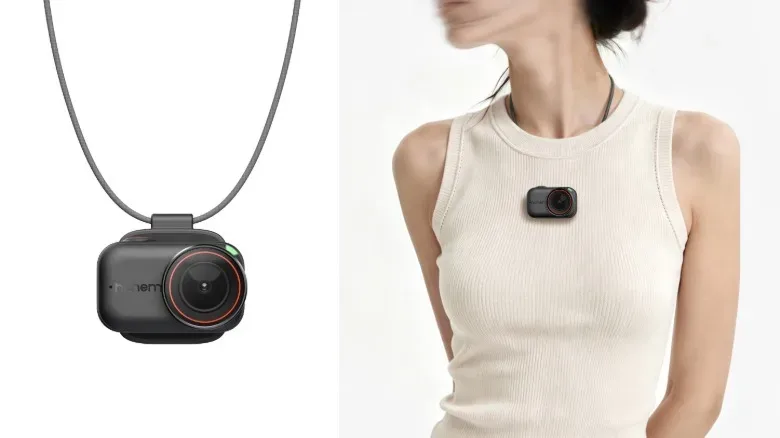
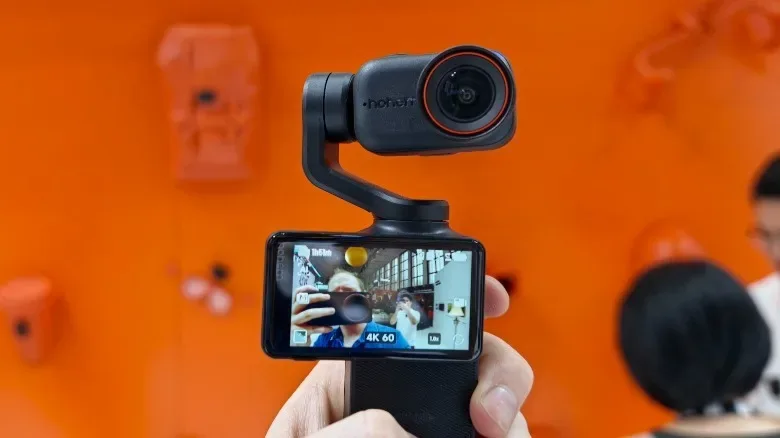
On the gimbal, the Eyepic is expected to record at up to 4K resolution and 60 frames per second, with three-axis stabilization handling movement. The detachable camera is the central feature, however. Hohem says the unit can be worn around the neck or attached to a helmet or cap, and it will ship with a hat clip and lanyard.
That flexibility places the Eyepic in an increasingly busy hybrid-camera conversation. Action cameras are great at being strapped to things; small gimbal cameras are great at smoothing out handheld footage. A removable unit attempts to cover both jobs without forcing someone to carry one device for every angle and another for every movement.
Hohem’s design also includes magnetic connections on the camera itself, allowing it to attach to metal surfaces. The practical appeal is easy to understand: a quick temporary mount could be useful when filming a repair, recording a solo presentation, setting up an unusual angle, or simply avoiding the ritual of unpacking yet another clamp. Of course, magnetic mounting will only be as useful as the available surface and the conditions of the shot, but it is a meaningful addition to a camera built around placement options.
The unit is rated waterproof to 32.8 feet. That does not automatically answer every durability question a potential buyer may have, but it means the camera is intended to be taken beyond dry indoor recording. Hohem has also described mounting scenarios involving bags, bicycles, helmets and skis, which gives a clear indication of the active, portable use cases it is targeting.
Native horizontal and vertical capture
One of the Eyepic’s clearest creator-friendly features is its rotating 2.5-inch touchscreen. Turning the display switches the camera between landscape and portrait orientation while maintaining full resolution rather than cropping the image into a vertical frame.
That sounds like a small mechanical flourish until one considers how many videos now have two possible lives. A landscape clip may be intended for a longer upload, while a vertical clip might be planned for a short-form platform. Cropping afterward can be perfectly workable, but it also means deciding in advance which part of a scene can be sacrificed. Native portrait capture offers a cleaner route for people who know the final destination before pressing record.
The Eyepic is also expected to include slow-motion recording. Hohem has not provided the complete list of recording modes, sensor details, lens specifications, battery information or image-quality claims. As a result, it would be premature to treat the feature list as a complete comparison against established gimbal cameras or action cameras. The broad strokes are compelling; the fine print is still on the way.
Detaching the module changes the filming routine
The removal process is deliberately integrated into the device rather than requiring a lengthy reconfiguration. A double press of the record button is used to begin the sequence, then two connectors are pinched to free the camera from the gimbal head. Once the camera is released, the gimbal shuts down and folds away.
That behavior matters because the whole concept depends on speed. If switching to a wearable camera means navigating menus, dismantling a rig and finding a storage case for a still-powered handle, the versatility becomes less persuasive. Folding the gimbal away while the camera continues independently is a sensible division of labor: the stabilizer is there when it helps, then gets out of the way.
Notably, the gimbal screen can still display a feed from the detached camera at distances of up to 33 feet. For solo filming, that could be one of the Eyepic’s most useful capabilities. A creator could set the camera on a magnetic surface or wear it in a less visible location while using the gimbal display to check framing from nearby. It is the sort of function that will depend heavily on connection reliability and real-world range, but the underlying idea is strong.
The design naturally brings to mind the wider shift toward cameras that blur categories. Rather than trying to turn every product into a fully featured action cam, a drone substitute and a stabilized pocket camera at once, manufacturers are experimenting with modularity and alternate mounting. The Eyepic’s removable module is Hohem’s particular answer: keep the smooth handheld option, but let the imaging unit become a small standalone camera when the scene asks for it.
What remains uncertain
Hohem has indicated that the Eyepic is intended to come in below the cost of existing gimbal-camera rivals, but there is no confirmed price. There is also no final availability date. Until both are announced, it is impossible to judge whether the product’s modular design will represent a bargain, a niche alternative or a camera aimed at a more familiar premium bracket.
Performance remains the bigger unknown. Early demonstrations revealed occasions where the gimbal could spin unexpectedly, struggle to stabilize or become stuck. Since the Eyepic is not yet at its final-specification stage, those issues may be addressed before release. They are still worth noting because three-axis stabilization is not a side feature here; it is one half of the device’s identity.
Image quality is equally unresolved. The promised 4K/60 capability, slow motion and full-resolution vertical shooting form a credible baseline, but video quality depends on far more than resolution and frame rate. Sensor performance, lens behavior, stabilization tuning, low-light results, audio options, heat management and recording limits all influence whether a camera becomes a daily carry or stays in a drawer between novelty shoots.
There are also deliberate omissions from the apparent strategy. The Eyepic does not include built-in zoom or a dual-camera setup. Hohem appears to be prioritizing a detachable single-camera concept rather than attempting to match every feature found on larger or more established alternatives. That could keep the system simpler and potentially less expensive, but it puts extra importance on the quality and usability of the one camera module it does include.
Hohem’s broader camera and audio push
The Eyepic was not the only product in Hohem’s orbit. The company also showed two smartphone gimbals: the iSteady V4 Ultra, which has a detachable touchscreen and native Apple DockKit tracking through the iPhone camera app, and the iSteady X4, which also supports native Apple DockKit tracking and includes an integrated touch-control panel.
Hohem is extending its accessories lineup into audio as well with the Mic 2. The wireless microphone system is planned with one receiver and support for up to four transmitters, positioning it for interviews, podcasts and meeting recording. Prices and launch dates for these products have not been shared.
For gamers and creators who already document setups, events and collection finds, compact filming gear is increasingly part of the hobby’s tool kit. A device that can move from stabilized walkthrough footage to a helmet or bag mount without becoming a totally separate camera could have real appeal. For a different angle on the wider technology reshaping how people experience digital spaces, see our coverage of Venice Immersive’s evolving focus on shared XR spaces and smart glasses.
For now, the Eyepic is best understood as a promising concept rather than a finished verdict. Its detachable camera, magnetic mounting, waterproofing, remote preview and orientation-switching display collectively make a convincing case for versatility. Whether that versatility can overcome open questions about stabilization, final video quality, price and launch timing will not be clear until Hohem provides the remaining details in 2027.