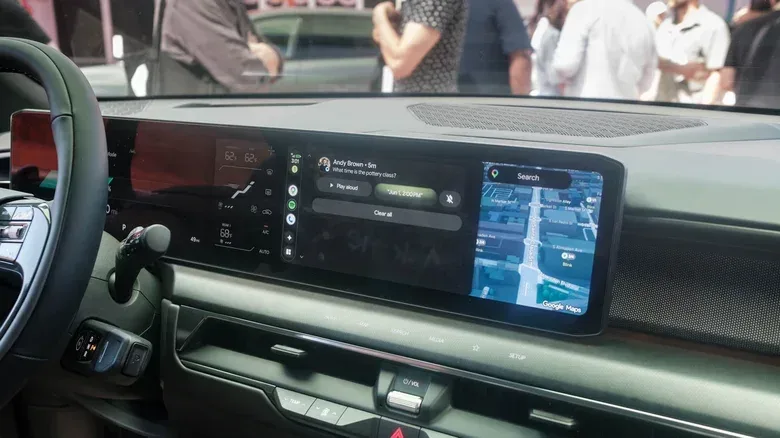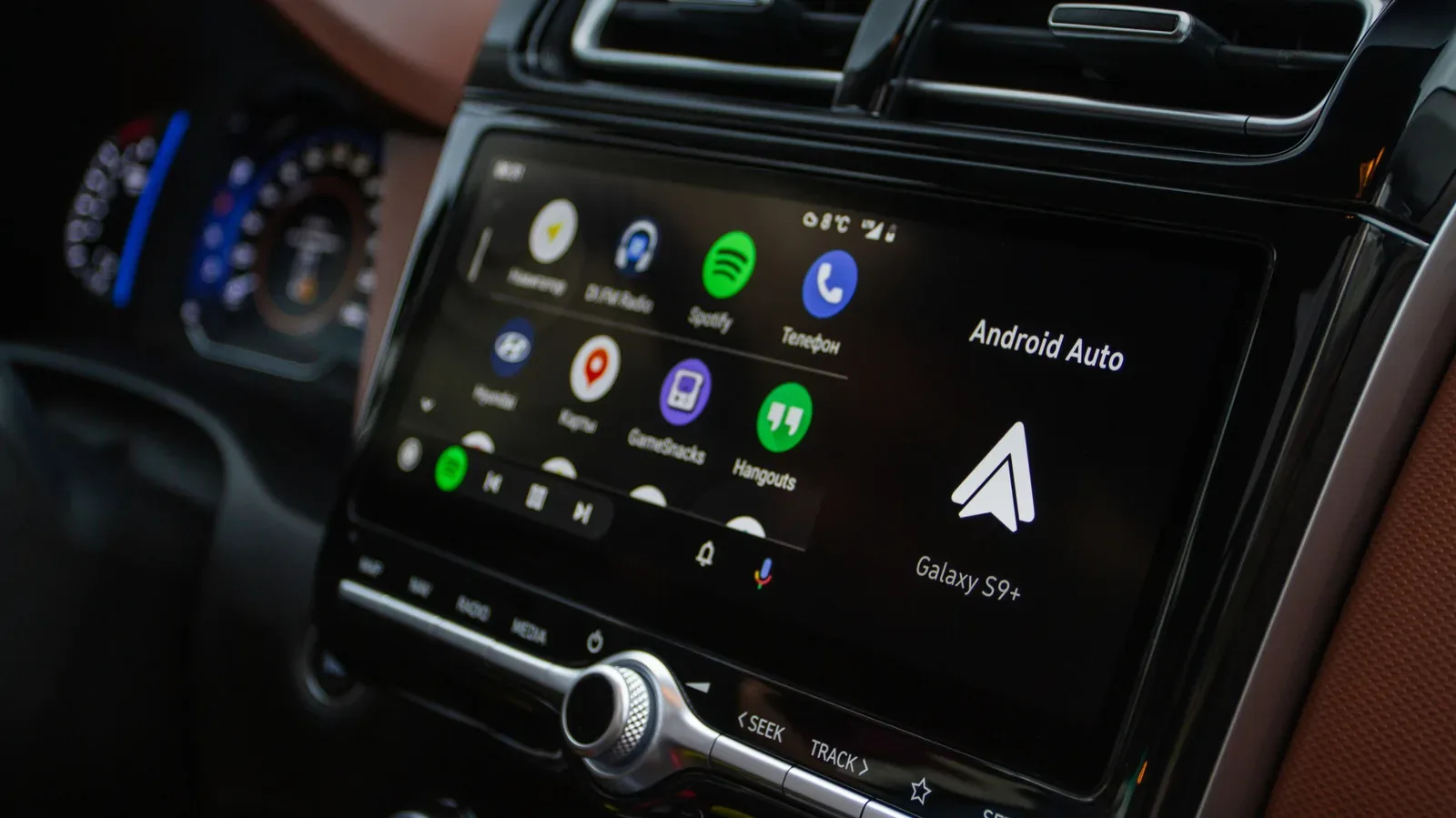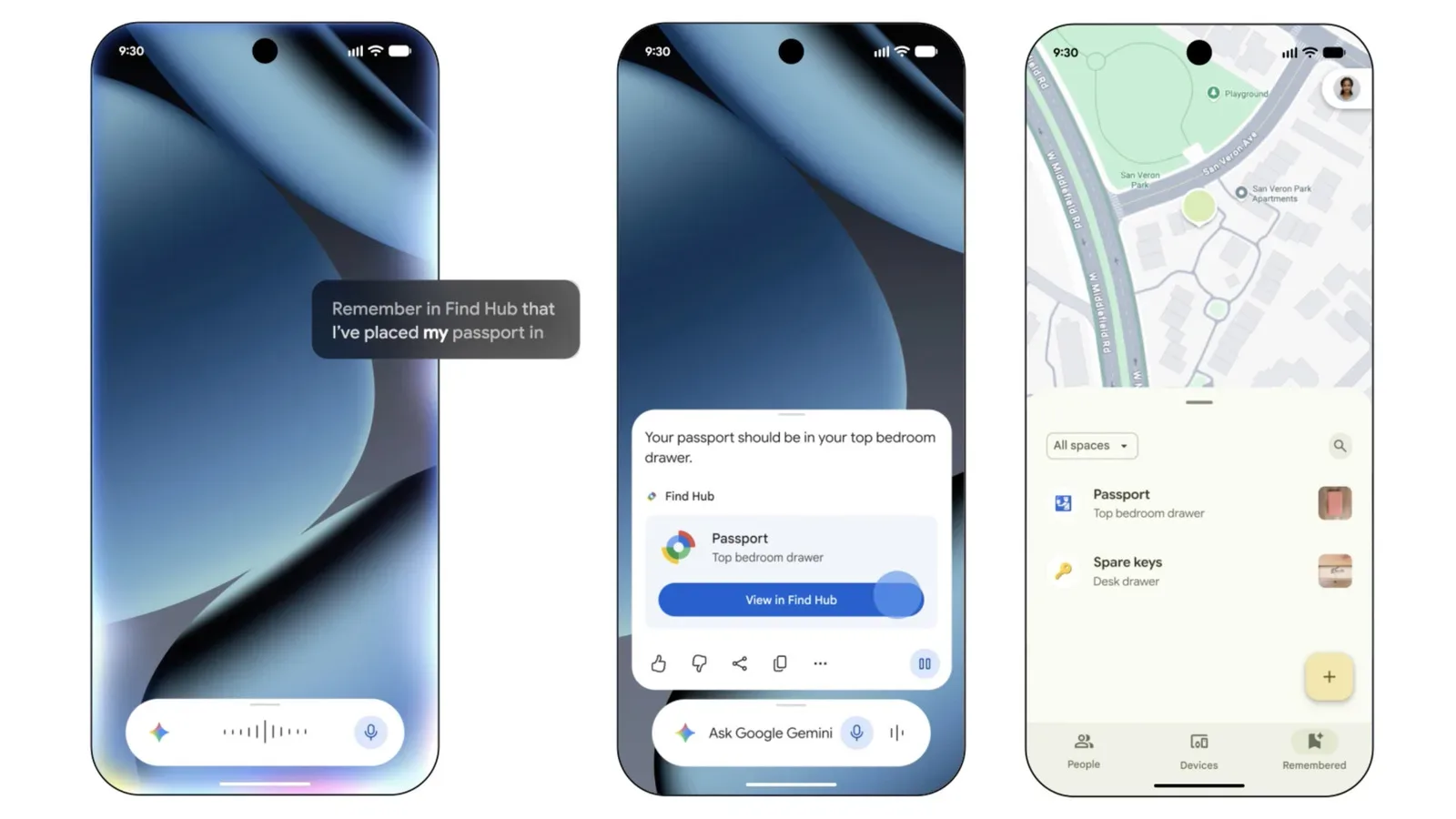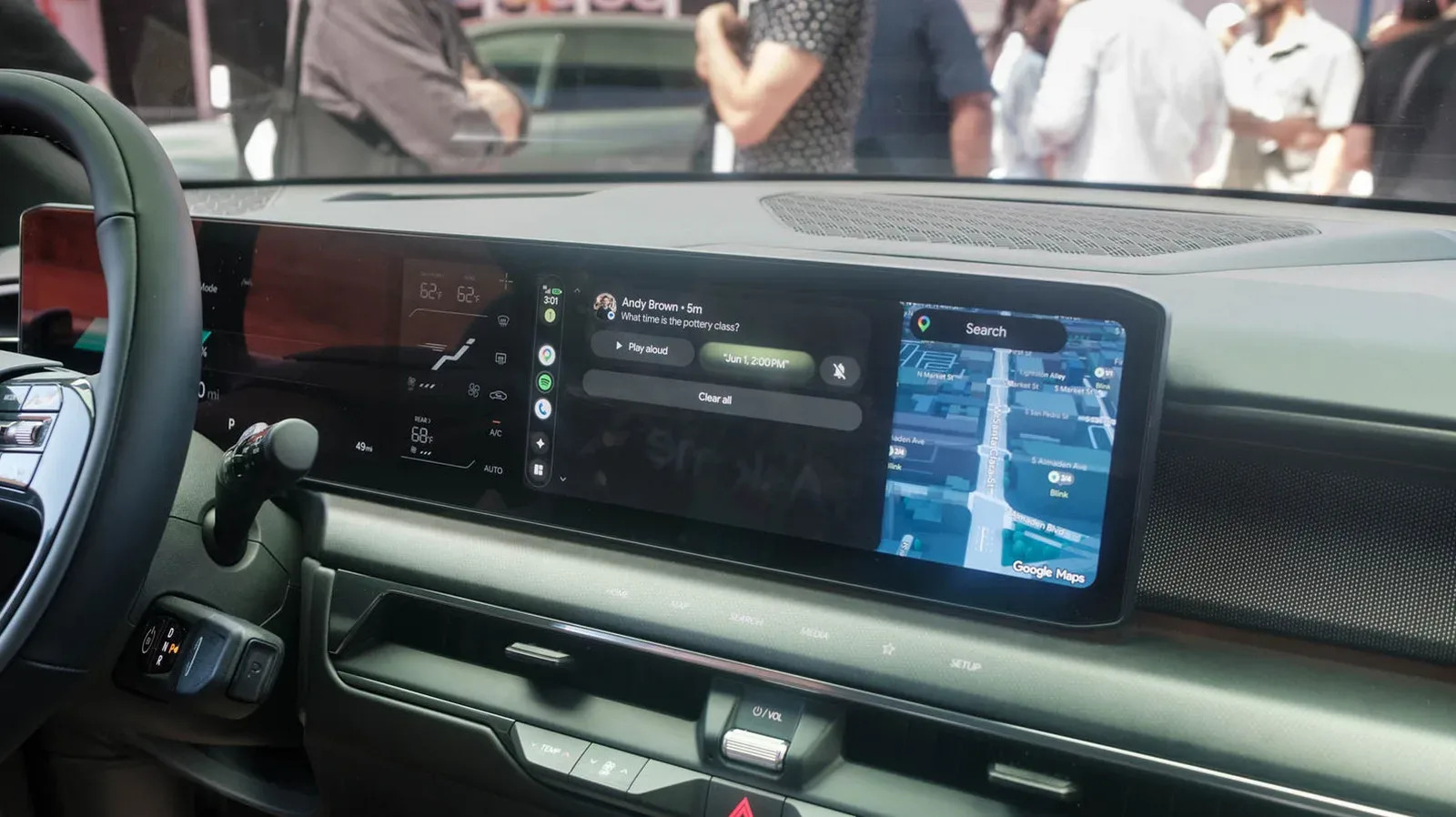
Google has begun rolling out Personal Intelligence for Gemini in Android Auto, extending an optional feature designed to make the in-car assistant more useful when a question depends on information already held in a person’s Google apps.
The practical pitch is straightforward: rather than forcing a driver to remember an address, dig through an email, or state every detail of a request, Gemini can use connected information to provide a more specific response. Google’s examples include asking for an airport flight gate or whether a flight is on time after linking Gmail, and requesting directions by saying, “take me to my doctor’s appointment.”
That is a notable expansion for Android Auto because the dashboard is a setting where convenience and distraction are in immediate tension. A voice assistant that can retrieve the right itinerary detail could spare a driver from handling a phone. But it also requires users to make a deliberate decision about how much personal information they want their assistant to access.
What Personal Intelligence means in Android Auto
Personal Intelligence is a Gemini capability that draws on information from other Google apps to tailor answers. It debuted earlier this year, initially for Google AI Pro and Ultra subscribers, before becoming available to free accounts in March.
On Android Auto, the idea is not merely that Gemini can answer general questions. The assistant can potentially connect a request to personal context. “What’s my flight gate?” is not a useful question to a generic chatbot unless it knows which flight the driver means and can locate the relevant travel information. With a linked Gmail account, Google says Gemini can provide those details without requiring the driver to stop and search a confirmation message.
In this context, reasoning refers to Gemini interpreting the relationship between a spoken request and relevant information available through connected apps. It should not be confused with a guarantee that every answer will be correct, current, or complete. Flight details can change, emails can be ambiguous, and a conversational request may not always identify the intended event. The feature’s value is in reducing the number of explicit details a person has to provide, not in removing the need to use judgment.
More natural requests, less dashboard scripting
Traditional car-assistant interactions can feel like miniature voice-command manuals. A driver may need to say a business name, city, street address, or a tightly structured instruction before navigation can begin. Google says Personal Intelligence lets users phrase requests in a more natural way when the needed context exists in connected services.
The doctor’s-appointment example illustrates the shift. Instead of reciting a location, the driver can ask to go to the appointment. If the relevant detail is available through the apps Gemini can access, the assistant can infer the destination.
Google also says the update improves recommendation requests. A driver in an unfamiliar city could ask for dinner suggestions along the route, with Gemini factoring in stated preferences or restrictions such as vegetarian eating. “Along the route” matters: it describes a request shaped by the trip already underway, rather than a broad list of restaurants in an entire city.
That could be useful for drivers who prefer to decide on a stop without pulling out of navigation. It is still worth treating generated suggestions as suggestions. Restaurant suitability can hinge on factors that vary rapidly, including operating hours, menus, reservation availability and the details of an individual dietary need. A voice response can help narrow choices, but it is not a substitute for checking essential information when it is safe to do so.
Privacy controls are central to the feature
Google says Personal Intelligence remains optional. Users can turn it off and can control which apps Gemini is allowed to access. Those two controls are the key distinction between a generic in-car assistant and one that can answer personal-context questions.
Linking information from Gmail, for example, can make travel and appointment requests more convenient. It also means the assistant’s usefulness depends on access to data that may include sensitive correspondence. The appropriate setup will differ from person to person. Someone who only wants better routing may decide not to grant Gmail access; someone who frequently manages itineraries by email may find the trade-off worthwhile.
A practical approach is to enable only the app connections that serve a clear driving use case, then reassess after using the feature. Users should also remember that a request spoken in a car may be audible to passengers. Even with app permissions configured carefully, the question itself can reveal information about appointments, travel plans or preferences.
Questions worth considering before switching it on
- Which app access is actually useful? Enable connections based on the tasks Gemini needs to handle, rather than granting access by default.
- How sensitive are the likely requests? Travel and calendar-style questions can be convenient, but may involve private details.
- Who is in the vehicle? Spoken results may be heard by passengers.
- What needs verification? Time-sensitive information, particularly travel details and venue choices, can change.
- Can the task wait? A hands-free answer may reduce phone handling, but drivers should still keep their attention on the road.
Availability and the next expansion
The Android Auto rollout begins globally on October 20, 2026, with exceptions for Switzerland, the European Economic Area, the United Kingdom and Nigeria. Google has not provided a timetable beyond “the coming months” for its next step: bringing Personal Intelligence to vehicles with Google built-in.
The distinction is important. Android Auto is the phone-connected experience projected into a compatible vehicle interface. Cars with Google built-in have Google services integrated into the vehicle’s own system. The announced Android Auto availability therefore does not automatically mean every vehicle with Google built-in receives the feature at the same time.
The staged rollout also means that an eligible Android Auto user may not see the capability immediately. Google describes the process as beginning rather than completing on October 20, and the supplied details do not specify a universal completion date.
Why this matters beyond a smarter route prompt
Personal Intelligence moves the dashboard assistant toward a model where navigation, communication and planning information can be used together. The useful part is not simply asking an AI a question; it is asking it a question without reconstructing all the context a phone, email inbox or other connected app may already contain.
For players and tech users accustomed to platform features becoming increasingly modular, permissions-based choices are likely to feel familiar. The broader services landscape is also evolving, as seen in reports around possible separate multiplayer and cloud-gaming additions to Xbox Game Pass. In Android Auto, the equivalent choice is less about a subscription configuration and more about data access: extra capability arrives only when a user elects to connect the relevant information.
Google’s update is therefore best understood as an opt-in convenience layer for Gemini in the car. It may make routine requests less rigid and eliminate some email searching at inconvenient moments. Its success will depend on whether its answers are reliably relevant, whether drivers can use it without diverting attention, and whether the personal-data trade-off feels acceptable for each individual user.