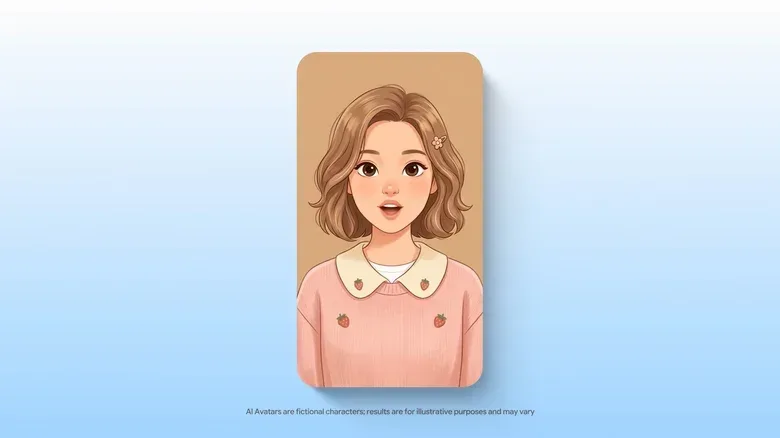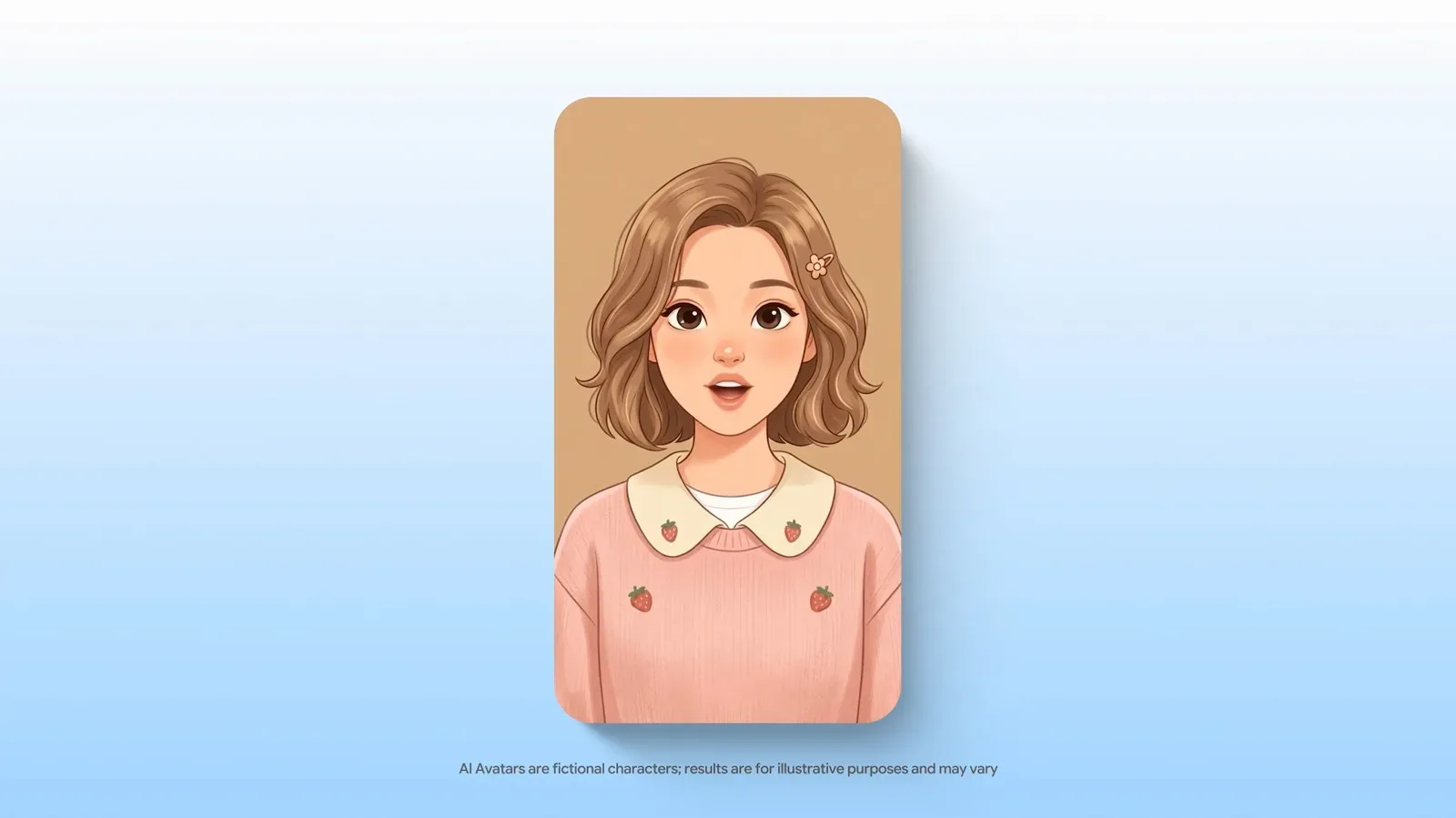
Google is extending its Gemini 3.8 Live models from voice conversation into something more visibly person-shaped. The new Gemini 3.8 Live with Live Avatar system combines near-real-time dialogue with an on-screen animated persona that can listen, look, speak and respond with facial expressions.
The intended destination is not a consumer novelty app. Live Avatar is aimed strictly at Gemini Enterprise customers, with likely uses including customer-service and sales-support interactions. In practical terms, a future support chat may not just be a text box or a disembodied synthetic voice: it could be a cartoon or realistic-looking character talking back from a phone or computer screen.
That prospect will land very differently depending on the person in front of the screen. A visual agent could make an automated interaction feel easier to follow, particularly when it is explaining a process across voice and video. It could also make a routine interaction feel needlessly theatrical—or more unsettling—if the avatar appears convincingly human without offering genuinely useful help.
Google’s pitch is that Live Avatar adds visual presence to Gemini 3.8 Live and Live Extended Thinking, models introduced as building blocks for reliable, production-ready voice agents. The company says the underlying live dialogue capabilities are intended to make voice commands more natural and able to handle more complex tasks. Live Avatar takes that spoken exchange and gives it a face, expressions and conversational timing.
What Gemini Live Avatar is meant to do
Live Avatar is described as a multimodal system. Multimodal means it works across more than one type of input or output. Here, that means an avatar can participate through speech, visual expression and its ability to look and listen during a conversation rather than operating only as a text-based bot.
Google has shown realistic and cartoon-like examples. The demonstrated capabilities include lip-syncing, natural expressions and fluid turn-taking. Lip-syncing is the coordination of visible mouth movements with generated speech. Turn-taking is the less flashy but crucial conversational behavior of recognizing when someone has finished speaking, when to answer and when not to interrupt.
Those details matter because people are unusually sensitive to timing in conversation. A support agent that talks over a customer, pauses at strange points or responds with facial expressions that do not fit the moment can make an interaction feel less natural rather than more natural. A polished avatar therefore is not only an animation problem; it depends on the dialogue system understanding the flow of a live exchange.
Google also says the avatars can continue an active conversation while Gemini handles background work, including tool calls and data retrieval. A tool call is when an AI system uses a connected capability to perform a task or obtain information rather than merely generating a response from its model. In a business-support context, that could mean looking up relevant data while keeping the conversation moving. The supplied details do not specify which tools, datasets or business systems will be available, so the practical scope will depend on how each enterprise implementation is configured.
The real product is the agent, not simply the face
An expressive avatar is the most immediately noticeable part of this launch, but the underlying value proposition is broader: an AI agent that can hold a spoken conversation while retrieving information or triggering actions in the background. The avatar serves as the visual interface for that agent.
That distinction is worth keeping in mind. An avatar’s friendly expression cannot compensate for a wrong answer, incomplete data retrieval or a failure to resolve an issue. Conversely, an organization may decide that a less human-like visual style is better suited to a reliable service experience. Google’s inclusion of both realistic and cartoon-like examples leaves room for businesses to make that design decision themselves.
For users, the key question is likely to be whether the system saves time and communicates clearly. In some situations, a speaking visual guide may be useful: it can signal whose turn it is to talk, offer nonverbal cues and keep a person engaged through a multi-step process. In others, people may prefer a plain interface with a quick route to the answer or to a human representative.
This is especially relevant as AI systems become more active rather than merely conversational. A model that fetches data or invokes tools is taking on a more agent-like role. That can reduce friction when it works well, but it also raises the importance of knowing what the system is doing, what it can access and whether its response can be trusted. Google’s announcement emphasizes active dialogue and background tool use, while leaving implementation details to enterprise deployments.
Preset personas and custom likenesses
Google plans to provide a library of preset avatars. Organizations can also create customized versions from high-quality reference images, with the goal of preserving a reference likeness, brand styling or character identity. Custom avatar access is limited through enterprise allowlisting.
That customization option has obvious branding appeal. A company could select a character consistent with its existing visual identity instead of placing a generic virtual representative in front of customers. But the same flexibility makes identity handling central to the product. A reference likeness is not simply a color palette or logo; it can involve a recognizable person or a character whose identity carries meaning for the audience.
Google says the feature has strict safeguards intended to respect identity and keep AI-generated content transparent. Each avatar is also watermarked using SynthID. A watermark in this context is an embedded provenance signal designed to indicate that content was generated by AI. That is different from a visible badge placed next to an avatar, and the announcement does not detail exactly how an end user will encounter or verify the watermark in every deployment.
Still, the presence of a watermarking measure is a meaningful part of the design. When an enterprise deploys a human-like talking agent, clarity about its artificial nature is not a cosmetic issue. People need to understand whether they are speaking with a person, an automated system, or a hybrid workflow where an AI is handling the early stages of a conversation.
Why the reception may be complicated
Google’s system arrives amid widespread skepticism about low-quality AI-generated material, sometimes dismissively called “AI slop.” That label is broad, but it points to a tangible user concern: generated content can feel generic, unconvincing or excessive, particularly when it seems to replace a simpler, clearer way of communicating.
Live Avatar may face that reaction if its visual layer appears to be decoration placed on top of a frustrating support workflow. A customer seeking an order update or a straightforward answer may not welcome a smiling digital salesperson if the interaction takes longer than a conventional support page or a human handoff.
On the other hand, the system is not framed as an attempt to replace every interface with an avatar. It is an enterprise feature built around live dialogue, visual interaction and agent capabilities. The usefulness of each deployment will likely hinge on a basic product-design question: does a visible persona make this particular task more understandable and efficient, or does it simply make the automation more conspicuous?
Businesses considering visual AI agents will have choices beyond technical performance. They will need to decide how clearly to disclose automation, what style of persona fits their audience, when a customer should be transferred to a human, and whether the avatar has a substantive role in helping someone complete a task. The source material confirms watermarking and identity safeguards, but it does not establish how individual customers will be routed, what escalation rules will apply or how organizations will present disclosure in their own products.
Enterprise-only for now, with consumer-facing implications
Live Avatar is currently restricted to Gemini Enterprise customers, so it is not presented as a broadly available consumer Gemini feature. Yet enterprise tools often show up in consumer experiences indirectly. If organizations adopt it for support or sales, customers could encounter these avatars inside websites and apps without needing to sign up for the underlying platform themselves.
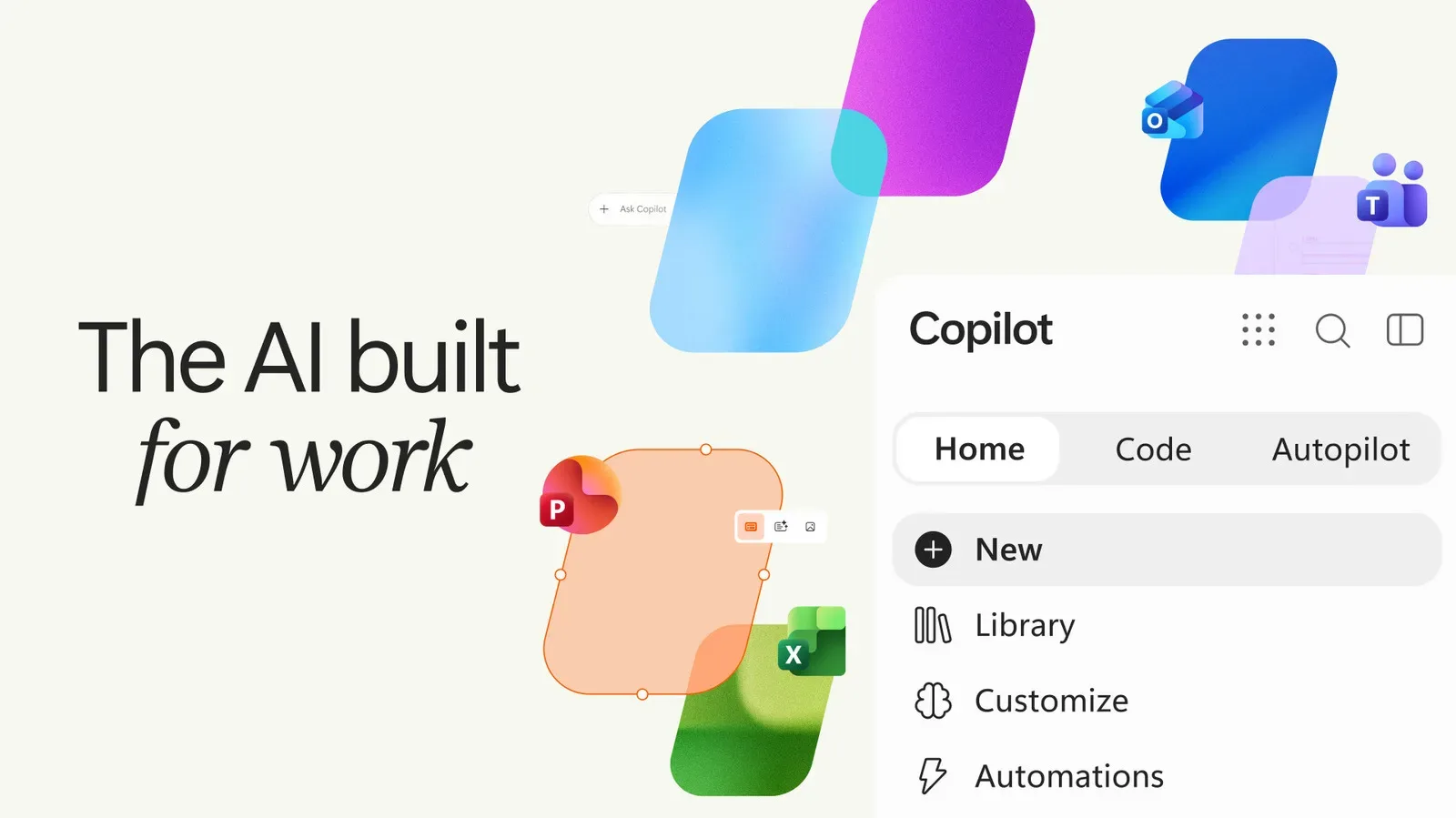
That broader shift fits with the direction of AI software toward systems that do more than answer one-off prompts. Recent enterprise AI development has emphasized voice interaction, coding assistance and automated tasks; for example, Microsoft’s Copilot app has added Office integration, natural-language coding and Autopilot tasks. Gemini Live Avatar applies a distinct visual layer to a similar interest in making AI systems more active inside everyday digital workflows.
For now, Google’s announcement establishes the ingredients rather than proving the outcome: Gemini 3.8 Live dialogue, visual personas, background tool use, customization controls and SynthID watermarking. Whether that combination becomes a useful service interface or an unwanted digital greeter will depend on how enterprises deploy it—and whether the avatar helps people get something done faster than the alternatives.