Online retailers can spend heavily to get a shopper from a social post, search result, game-community recommendation or wish list all the way to checkout. But a new set of payment figures suggests the final step may be where a growing number of those sales disappear. For Gen Z in particular, the absence of a preferred digital wallet or payment service is not necessarily a minor inconvenience. It can be enough to end the purchase.
In a recent PYMNTS Intelligence survey, 36% of Gen Z shoppers said they had abandoned an online cart in the previous 30 days because they could not pay the way they wanted. That is 1.7 times the overall average reported in the study. Millennials were not far behind at 31%, while the rate fell to 15% for Gen X and 8.3% among baby boomers and seniors.
That gap matters for any retailer trying to serve younger customers, including stores selling games, hardware, accessories, trading cards, merchandise or digital-adjacent products. A clean storefront, the right item and a competitive price are not always sufficient if the checkout flow does not support the option a shopper already expects to use.
The finding does not mean every shopper needs the same payment rail. It does suggest that payment choice has become a meaningful part of the shopping experience, rather than a purely back-end operational decision.
Digital wallets are becoming part of the expected checkout flow
A digital wallet is a payment service that stores or accesses payment credentials through a phone, browser or account, allowing a buyer to approve a transaction without manually entering card details at each store. Apple Pay and Google Pay are prominent examples. They are distinct from a traditional card form at checkout, even when the eventual payment is charged to a linked card.
Digital-wallet use has already moved beyond novelty. Separate figures from Global Payments put wallets at 40% of online purchases in 2025 and 17% of in-store spending. PYMNTS Intelligence found that 87 million consumers, approximately one-third of US shoppers, had used a digital wallet online during the 30 days before its survey.
Gen Z was the most likely group to report online digital-wallet use, at 47%, followed by millennials at 44%. Those numbers help explain why a missing wallet option can prompt a sharper reaction from younger shoppers than from older groups accustomed to keying in a card number or using another checkout route.
For retailers, the important distinction is between offering a way to pay and offering the way a customer is prepared to use at that moment. A conventional card field may technically allow the transaction to happen. But a shopper who has selected a wallet for speed, account convenience or access to a particular financing option may view the absence of that wallet as a reason to pause, browse elsewhere or drop the purchase entirely.
Related coverage includes Gen Z Cart Abandonment Shows Why Digital Wallet Choice Matters.
The projected scale of the shift is substantial. Digital-wallet spending in the US is expected to reach $4.1 trillion by 2030, a 64% increase from 2025. Gen Z’s spending power is also projected to grow to $12 trillion by 2030. These are forecasts, not guarantees, but together they frame checkout flexibility as a potentially durable retail issue rather than a passing preference.
Why payment preference can be more than convenience
The survey results also point to financial pressure as a major factor. Among consumers living paycheck to paycheck and struggling to pay bills, 29% said they abandoned a cart when their preferred method was unavailable. The comparable rate for people who do not live paycheck to paycheck was 11%.
That difference is important because payment methods can serve different budgeting needs. A digital wallet may save time, but it can also be tied to a service a person tracks closely, a saved account balance, or a financing arrangement. In other words, the checkout choice can affect not just friction but whether a planned purchase fits a buyer’s immediate finances.
This has particular relevance to Gen Z. The supplied data puts the group’s unemployment rate at 8.3%, described as double the national average, while 42% of Gen Z consumers are living paycheck to paycheck. Those conditions do not apply to every young shopper, and age alone does not determine a person’s finances. Still, they help make sense of why payment flexibility may carry more weight in this segment.
Buy Now, Pay Later, commonly shortened to BNPL, is one such option. These services generally let a buyer make a down payment and divide the balance across later payments. The mechanism can make an item’s upfront cost easier to manage, but it is still financing rather than a discount: the consumer remains responsible for the subsequent payments under the service’s terms.
In the survey, 17.7 million customers reported abandoning a purchase in the previous 30 days because PayPal was unavailable. Of those, 11.1 million specifically cited the lack of PayPal Pay Later. PayPal Pay Later was preferred by 20% of consumers, ahead of Klarna at 12.4% in the figures provided.
That does not establish that one provider is universally necessary for every retailer. It does show the risk of treating all wallets and pay-later offerings as interchangeable from the customer’s perspective. If someone arrives intending to use a particular service, a different financing product may not solve the problem.
Cart abandonment is a checkout problem, not automatically a demand problem
Cart abandonment is often discussed as if it means a customer changed their mind about the product. Sometimes that is exactly what happened. But the payment data makes a more specific case: at least some abandoned carts represent purchase intent that broke down at the point of payment.
Across all US consumers surveyed, 21% had abandoned an online purchase during the previous 30 days. Of that group, 47% wanted to use a digital wallet. PYMNTS Intelligence calculated that this equated to 26.3 million lost customers. Separately, the study estimated that 40 million Gen Z and millennial consumers collectively walked away from intended purchases in a single month when they could not pay as they wished.
For a retailer, the practical implication is that an abandoned-cart total alone cannot identify the cause. A store may be tempted to focus on product pricing, shipping costs or discount reminders. Those can all influence completion, but the payment screen itself deserves scrutiny—especially if a business is actively targeting younger customers.
There is also a broader relationship cost. Thirty-three percent of digital-wallet users said they would delay a purchase, switch merchants or skip it if their wallet was not accepted. Among Gen Z, nearly half said they would change merchants or abandon the transaction. A buyer who leaves may not merely wait until later; they may form a new purchasing habit with a competitor that has the checkout setup they prefer.
What retailers can take from the numbers
The figures are not an instruction to add every payment service without considering cost, implementation or customer demand. They do support a more deliberate approach to checkout design. Retailers should understand which payment methods their actual shoppers try to use and where those shoppers leave the process.
- Measure payment-stage exits separately. A shopper who quits after seeing payment options may have a different concern from someone who leaves before adding an item to a cart.
- Match checkout options to the audience. Stores with a younger customer base have a clearer reason to assess digital-wallet coverage, given the 36% Gen Z cart-abandonment result.
- Distinguish wallets from BNPL. A store can accept one and not the other, while some shoppers may be specifically looking for a wallet-linked pay-later option.
- Keep the choice legible. Payment methods need to be visible early enough in checkout that customers are not surprised at the final step.
- Avoid assuming card entry is an equivalent fallback. The reported abandonment behavior indicates that many buyers do not regard it that way.
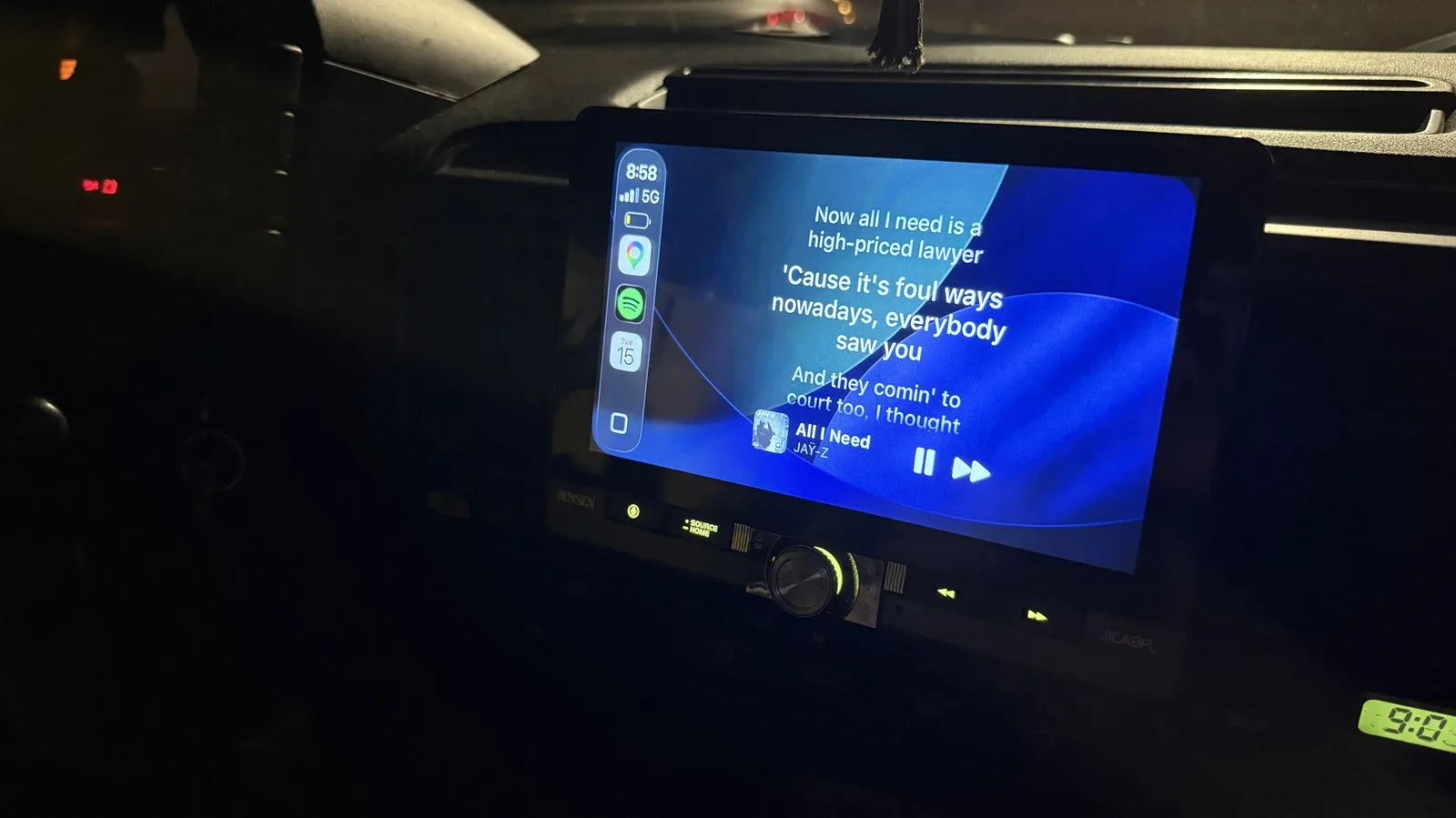
There is a useful parallel in other consumer technology: features that feel secondary to one user can be central to another user’s routine. Apple’s products, for example, span services beyond payments, as seen in Apple CarPlay’s time-synced lyrics feature. The wider lesson for retailers is not about a single brand; it is that customers increasingly arrive with established digital habits and expect the services they use to carry across contexts.
The key issue is choice at the finish line
Checkout comes after a retailer has already earned attention and persuaded a shopper to select an item. That makes it a costly place for avoidable friction. The survey’s strongest signal is generational: younger consumers, especially Gen Z, are more likely to abandon a purchase when the preferred way to pay is unavailable.
Digital wallets are becoming more common online and in stores, while wallet-linked BNPL options can matter to consumers managing tight budgets. For retailers, the value of broader payment support is not simply a more modern-looking checkout page. It is the chance to preserve a sale that may otherwise be lost in the final seconds of the transaction.