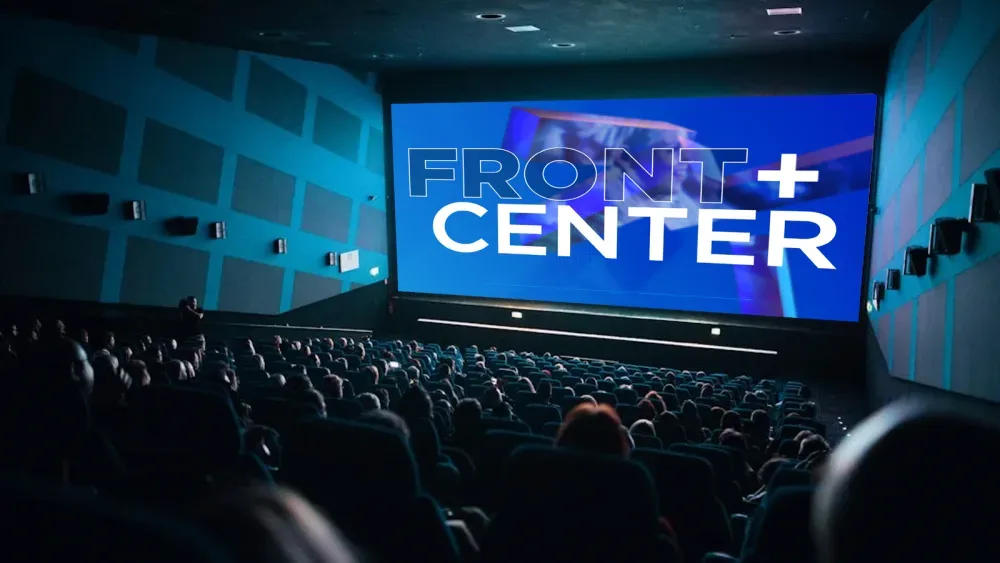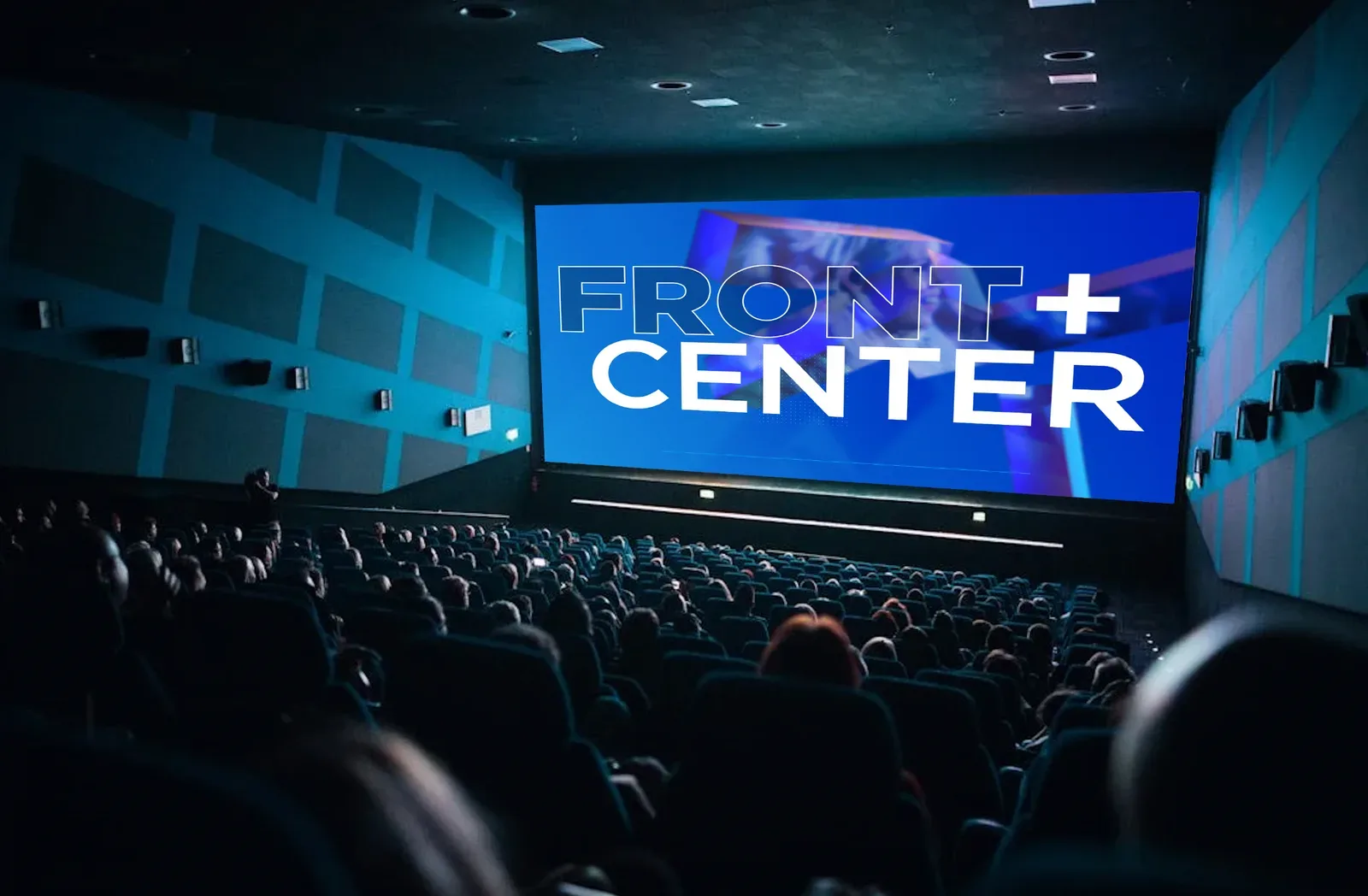
The minutes before a film begins have long been cinema’s strange little waiting room: a mix of commercials, trailers, trivia slides and behind-the-scenes material watched by people checking their phones, guarding snacks and wondering whether the advertised start time means the movie or merely the beginning of the long runway before it. Screenvision is preparing a substantial rethink of that space with Front and Center, a new pre-show scheduled to begin a soft launch in October before expanding to more theaters by the holiday period.
The basic change is straightforward. Rather than centering the familiar puzzles and trivia, Front and Center is intended to package short-form editorial video around subjects including food, sports and fashion. Video from Eater, Complex and NowThis is among the planned programming. Advertising remains part of the approximately 28-minute presentation, but the company’s stated aim is to make the programming feel like a show that includes ads instead of a string of ads lightly connected by filler.
That distinction will determine whether the overhaul feels like an improvement to ticket buyers or a more sophisticated way to occupy their attention. The pre-show is not optional for viewers who arrive early, and its length is considerable. An entertainment-first approach could make that time feel more purposeful. But a media-brand clip, even one matched to a moviegoing crowd, still has to justify being played on the biggest screen in the building before the feature people actually paid to see.
A new use for the pre-feature window
Screenvision’s leadership is framing the shift around the makeup of its audience: roughly half is said to be Gen Z. The strategy follows from the idea that viewers accustomed to a constant stream of niche, personality-led and short-form video will respond better to current culture coverage than to a generic quiz asking them to identify an actor or film still.
There is an important difference between those formats. Trivia is designed to be broadly recognizable and easy to enter at any point; it asks almost nothing of the audience beyond a glance at the screen. Curated editorial video, by contrast, arrives with a point of view. A food recommendation, fashion segment or sports discussion has a specific subject and audience. That may create stronger interest for people who care about it, while also making a weak fit more obvious for those who do not.
In practical terms, the new format treats the auditorium not simply as a place where advertisements are shown before a movie, but as a distribution venue for publishers and video brands. Eater can put food discovery material in front of a crowd that is already making choices about dinner, snacks and outings. Complex can reach consumers drawn to pop culture and entertainment. NowThis adds a different type of short-form video to the mix. The planned blocks also give the pre-show a clearer structure than a run of unrelated prompts.
The company has indicated that material tied to current or upcoming movies could still be part of the value proposition, including cast interviews. That is likely to be the most naturally compatible kind of programming. People in a theater have already expressed an interest in filmgoing, so content that extends the experience without duplicating a trailer may have an advantage over a segment that could just as easily play anywhere else.
The real challenge: attention without captivity
Movie theaters offer advertisers an unusual proposition. The lights are down, the screen is large, the audience is present in a shared physical setting and the environment has fewer distractions than most forms of digital video. At the same time, that attention is not infinitely patient. A seated audience cannot easily scroll past a commercial break, which makes the tone and pacing of a pre-show especially important.
Front and Center is therefore a test of a simple but difficult premise: can useful or entertaining programming improve the audience’s relationship with advertising? Screenvision’s leadership has explicitly acknowledged the risk of making patrons feel held in place for an extended promotional stretch. The preferred model is to earn interest through entertainment, then incorporate the ads, rather than treating content as camouflage between ads.
That framing is sensible, but execution matters more than the slogan. Viewers can tell the difference between a segment built because it is genuinely engaging and one designed merely to hold them until the next brand message. Relevance, editing, repetition and frequency will all matter. A tightly made cast conversation or food-focused clip could be an enjoyable part of a night out. A poorly targeted segment could make people wish the old trivia screen had stayed.
It also means the pre-show will face a different standard from the feature itself. Nobody expects a pre-roll segment to deliver the emotional payoff of a film. They may, however, expect it not to feel like time lost. The opportunity is less about turning every cinema arrival into must-watch programming than about making the wait feel intentional and occasionally enjoyable.
Why publishers and marketers are interested
The planned initiative gives participating publishers an additional route to audiences at a moment when distribution is increasingly fragmented. A clip made for web or social video can have another life in an auditorium, where viewers encounter it in a communal setting rather than among endless feeds. That does not necessarily mean every short-form idea suits a theatrical screen, but it does create a new context for programming already made around recognizable subject areas.
The business case for cinema advertising is also being supported by growth projections. PwC expects cinema advertising to rise from $2.4 billion in 2026 to $2.7 billion in 2030. Over the same period, box-office revenue is projected to increase from $34.6 billion by the end of this year to $39.5 billion in 2030. Those figures are forecasts rather than guarantees, but they help explain why companies are looking harder at the theater as a space for more than standard on-screen spots.
The backdrop is a film business still contending with the fact that major titles eventually reach home screens through premium subscription services. Yet the supplied examples of recent strong theatrical performers, including The Odyssey, Backrooms and Spider-Man: Brand New Day, point to continued demand for moviegoing when audiences see enough value in the trip. Later releases in the Dune and Avengers franchises are also positioned as major draws toward year’s end.
For a marketer, a movie ticket signals something useful: this is an audience that has chosen an out-of-home activity, often in proximity to retail, dining and other entertainment. Screenvision sees room to connect that moment to purchase decisions through tools beyond conventional commercials, such as coupons, product samples and scent-based activations. These are possibilities the company wants to develop, not a confirmed standard feature of Front and Center.
That distinction is worth keeping clear. An ad on a theater screen is a familiar part of the experience. Sampling or other in-person promotional activity changes the nature of the venue experience and may be welcomed or disliked depending on how it is handled. The closer any activation gets to interrupting the night out, the more carefully theaters and advertisers will need to consider audience comfort.
Live watch parties point to a broader theater strategy
Screenvision is also looking beyond movie pre-shows toward theater-based watch parties for live events. Earlier this year, it worked with the BET Awards on viewing events in Atlanta, New York and Philadelphia that included red-carpet interviews, DJs, step-and-repeat photo areas and fan engagement alongside the streamed program.
A watch party is more than putting a live broadcast on a large screen. Its commercial logic depends on adding an in-person layer that viewers cannot get at home: other fans in the room, themed activities, photo opportunities and a feeling of occasion. In that respect, it shares DNA with the Front and Center idea. Both approaches try to make the physical setting meaningful rather than assuming the screen alone is enough.
For theaters, the appeal is apparent. A live-event concept can potentially bring people into auditoriums around programming other than a conventional film release. For advertisers, it can create more direct sponsorship possibilities, especially when a gathering has identifiable fan interests and on-site activity. The broader push resembles the growing demand to make live-event sponsorships more accessible to brands, a trend also reflected in new efforts to simplify how advertisers find and buy live-event sponsorships.
Still, a successful watch party depends on the event, city and audience. It cannot be assumed that every broadcast becomes a compelling theatrical gathering merely because it can be streamed. The BET Awards experiment demonstrates the kind of programming Screenvision has explored, while the company’s interest in expanding the model signals where it believes additional advertising and promotional spending could go.
What moviegoers should actually expect
The immediate takeaway for theater patrons is not that commercials are disappearing. Screenvision has said Front and Center will still include them, and the full pre-show is expected to run about 28 minutes. The change is in the connective tissue around those commercials: less reliance on old-style trivia and behind-the-scenes features, and more programming from editorial partners arranged around contemporary interest areas.
- Timing: A soft launch is planned for October, followed by a wider rollout in more theaters by the holiday period.
- Format: The pre-show remains roughly 28 minutes long and still contains advertising.
- Programming: Food, sports and fashion are among the subject areas, with video planned from Eater, Complex and NowThis.
- Audience focus: The overhaul is designed around Screenvision’s view that about half of its audience is Gen Z.
- Future ambitions: The company is also considering more live watch parties and other promotional opportunities connected to theater crowds.
There is no promise that every theater, every showtime or every audience will see identical material during the transition. The plan describes an expanding rollout following the initial launch, so the practical experience may vary as it reaches more locations.
The larger industry implication is that the pre-feature slot is being reconsidered as a piece of programming in its own right. That may be a necessary adjustment as younger audiences expect entertainment to be more tailored to their interests and as publishers seek new screens for their video. But it will only work if theaters preserve the fundamental bargain: people came for a movie, not an endlessly optimized marketing funnel.
Front and Center has a reasonable opportunity to make the wait before a film feel less stale, particularly when its segments connect to the feature, the night out or the interests of the crowd in the room. The toughest job will be restraint. Cinema’s scale can make good video more engaging, but it can make a bad or overly long pre-show impossible to ignore.