Advertisers can buy plenty of familiar media placements through established systems, but live-event sponsorships are often a different proposition. A brand interested in appearing at a food festival, a bar promotion, a pickleball event, a stadium activation or a college coffee shop may still need to identify the opportunity, locate the relevant organizer, establish the available inventory and negotiate the practical details itself.
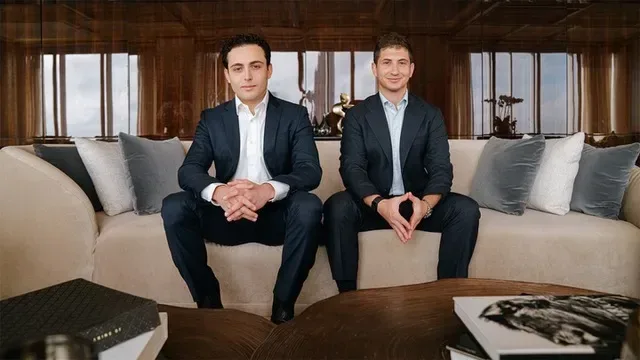
Anvara, a company co-founded by Andrei Stenmark and Nick Khalili, is attempting to reduce that friction. Its proposed answer is a marketplace for in-person promotional opportunities: a place where marketers can discover potential sponsorships across events and venues, then move more quickly toward arranging them.
The pitch is not that live sponsorship is new. It is that the buying process for many smaller, local or otherwise less visible opportunities remains fragmented. Anvara’s intended role is to make that fragmented inventory more legible to brands that might otherwise lack the time, contacts or local knowledge to pursue it.
What Anvara is trying to organize
Stenmark frames the addressable space as an “IRL,” or in-real-life, economy: commercial opportunities where people are physically gathered rather than simply reached through a screen. The examples are deliberately broad. A marketer could be considering a music festival or sports venue, but it could also be looking at a much smaller on-the-ground promotion such as a campus coffee-shop presence.
That breadth matters because the most visible events are not necessarily the entire market. Major sporting occasions and large festivals may already be familiar to national advertisers. The harder-to-find possibilities can be localized, temporary and run by organizers with widely varying sales processes. A centralized listing model could therefore be useful not just for surfacing marquee events, but for bringing less obvious inventory into a form marketers can evaluate.
In this context, inventory does not mean a physical product. It means promotional capacity: the sponsorship, placement, activation or other commercial opportunity an event organizer can offer. Anvara is positioning itself as an intermediary that exposes that capacity to prospective buyers and helps the parties handle the arrangement afterward.
Stenmark’s core criticism is a lack of transparency. From the buyer’s side, an event opportunity can require considerable manual work before anyone knows whether it is relevant, available or practical. From the organizer’s side, viable potential sponsors may never hear about an event at all. A marketplace does not eliminate the need for event planning, but it may reduce the search and initial coordination burden that sits before planning can begin.
Why the in-person pitch may resonate
The company is entering a sizable advertising segment. Out-of-home advertising revenue rose 3.6% in 2025 to $9.46 billion, based on figures from the Out of Home Advertising Association of America. “Out of home” commonly describes advertising encountered away from a consumer’s residence. The supplied revenue figure provides a useful measure of the broader commercial backdrop, although it should not be read as a measure of Anvara’s own business or of event sponsorship alone.
Event sponsorship is adjacent to, but not identical with, conventional out-of-home media. A static display is one kind of away-from-home message; a brand at a live gathering can involve a physical setup, a sampling program, a partnership with the event or venue, and face-to-face interaction. The company’s thesis is that this kind of appearance may stand out when people are routinely surrounded by advertising across many other channels.
That is a practical distinction for marketers. A live setting can offer relevance tied to the audience and occasion: a restaurant brand at an appropriate local gathering, for example, or a consumer-product company presenting a new item where people can try it. But relevance is not automatic. The useful question for a buyer is whether the event’s audience, place and timing fit the brand’s objective, rather than whether the event is merely busy or well known.
Anvara’s approach also places value on speed. An advertiser that can find an opportunity and establish the basic details without a prolonged scavenger hunt may be better able to use local moments that would otherwise fall outside its planning cycle. That advantage is especially meaningful for companies whose marketing needs are ongoing rather than limited to one major annual campaign.
The brands most likely to benefit first
Stenmark identifies “always on” brands as a natural fit for the company at its current stage. In marketing language, always on refers to a continuing presence rather than a campaign that appears only around a single launch. Consumer-product companies and restaurants are examples because they may need regular customer contact, local relevance or product sampling throughout the year.
Sampling is particularly suited to an in-person environment, at least in principle. A brand hoping people will taste, try or otherwise encounter a new product needs a setting where that action can happen. A marketplace cannot determine whether the product will resonate, but it can aim to make the search for a suitable setting less difficult.
One concrete user is Kalshi, which has used Anvara for sponsorships connected to World Cup and football events. Kalshi events lead Jake Khorozian said the service provided access to smaller and more localized opportunities that would have been hard to find independently. That use case captures the marketplace’s potential value: not replacing every direct relationship an advertiser may have, but widening the set of events it can realistically consider.
For an organizer, the same system could create a more direct route to brands that are actively looking for activations. The eventual value will depend on the quality and clarity of listings, as well as whether buyers can understand what each opportunity involves before investing substantial time. Those specifics were not detailed, so it remains unclear exactly how Anvara standardizes listings or manages each part of an agreement. Still, the broad aim is clear: make a decentralized sponsorship market easier to search and transact within.
A possible opening for entertainment campaigns
Stenmark also sees a potential use case for movie studios, which do not often sponsor live events. The obstacle, in his view, is partly scheduling. A studio promoting a film may operate around a short release window and may not have the lead time or staff capacity to build a longer-term event plan.
That is where pre-packaged venue availability could matter. Stenmark offered the hypothetical of a sports team listing a six-week rotation at its stadium or facility. In other words, rather than requiring a marketer to create a deal structure from scratch, the venue could state that a defined promotional period is open. A studio, or another time-sensitive buyer, could judge whether that ready-made window aligns with its campaign.
The distinction is between a bespoke sponsorship process and a more product-like listing. Bespoke arrangements can be valuable, but they can require more back-and-forth and longer lead times. A standardized rotation may lower the effort required to explore participation. It would not erase the importance of branding, staffing, timing or contractual detail, but it could bring a live-event buy within reach of teams that cannot commit to extended negotiation.
This is also why a marketplace could matter beyond its immediate clients. If venues and organizers start presenting their opportunities in clearer, more comparable terms, it may expand the kinds of advertisers that consider live activity at all. That remains an ambition, not an established outcome, but it is central to Anvara’s model.
Agency relationships are the next important test
Anvara hopes to build closer relationships with large media-buying agencies. Such partnerships could expose its available opportunities to a wider group of marketers while also drawing more event inventory into the marketplace.
A media-buying agency is a firm that helps advertisers plan and purchase media or marketing placements. For a marketplace focused on many different live-event opportunities, agencies could be consequential because they work across multiple clients and campaign needs. One agency relationship could create visibility among brands with very different audiences, budgets and promotional calendars.
There is a broader industry logic to that goal. Agencies often need to translate a campaign brief into actionable placements. A searchable pool of local, venue-based and event-led options could make it easier to determine whether an in-person component belongs in that plan. Conversely, events that are not connected to agency workflows may remain harder for major advertisers to discover, no matter how attractive their audiences are.
The effort arrives as marketing partnerships continue to matter across entertainment and media. Distribution and partner-marketing roles are also evolving elsewhere in the sector, as seen in this recent partner-marketing leadership move. Anvara’s focus is narrower: helping brands locate and execute physical-world sponsorship opportunities rather than overseeing a broad content-distribution strategy.
What to watch as the marketplace expands
There are several straightforward questions around Anvara’s development. The first is coverage: how broad and how varied will its listed event and venue opportunities become? Its appeal to marketers will depend in part on whether the marketplace can offer relevant choices across local, regional and larger settings.
The second is consistency. In a market described as opaque, details are the product. Advertisers need enough information to decide whether a sponsorship suits their goals, while organizers need a process that does not impose more administrative work than the deal is worth. Anvara’s ability to make those details easier to assess will be central to its claim of reducing friction.
The third is adoption beyond brands already accustomed to experiential marketing. The company sees room to bring in marketers, including film studios, that may not traditionally regard live-event sponsorship as an accessible channel. Defined, readily available rotations at sports facilities and other venues could help, particularly where a campaign must move quickly.
For now, Anvara’s proposition is a focused one: turn a sprawling network of real-world promotional opportunities into a more discoverable marketplace. If it can connect brands with suitable local events, venues and audiences without forcing every deal to begin as an extended search, it could make in-person marketing less of a specialist exercise and more of a repeatable media option.