Movie theaters across North America have invested $2.7 billion in upgrades and new attractions over the past two years, a spending push centered on making a trip to the cinema feel meaningfully different from pressing play at home. The reported total spans premium large-format auditoriums, reclining and heated seating, motion-seat systems, immersive sound, expanded food and beverage service, arcades and other entertainment offerings.
In the most recent year alone, theaters spent $1.2 billion on what the industry describes as premium entertainment experiences. The eight largest domestic circuits accounted for $840 million of that figure, following a collective three-year pledge of $2.2 billion for theater modernization and upgrades.
The timing matters. A strong 2026 summer box office has given exhibitors an encouraging backdrop for an investment strategy that is not simply about showing films, but about improving the surroundings, the technology and the range of things guests can do before and after a screening. As the continuing case for moviegoing as a shared experience makes clear, the communal side of cinema remains a central part of its appeal. Theater operators are putting money behind that premise in increasingly tangible ways.
A premium experience means more than one thing
“Premium” can be a catch-all term, so the individual projects are more revealing than the label. Some investments are designed to make the movie itself look or sound more imposing. Others focus on comfort. Still others expand the venue into a broader entertainment destination.
Premium large format, or PLF, generally refers to a high-end auditorium presentation designed to distinguish itself from a standard screen. It can involve a larger screen, specialized projection, upgraded audio or a combination of those elements. Individual chains may use their own brand for these auditoriums, meaning the experience and technical specification can differ from one circuit to another.
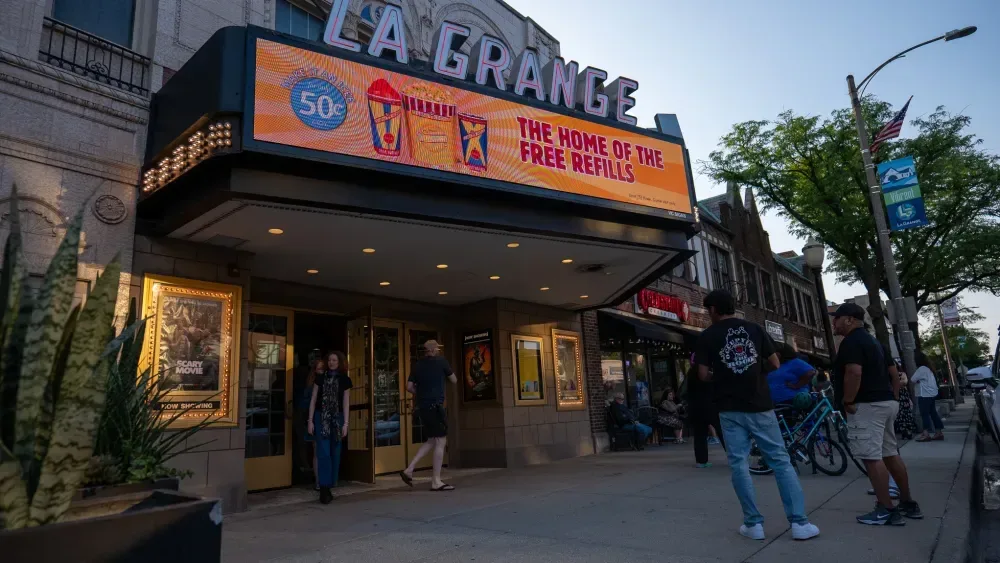
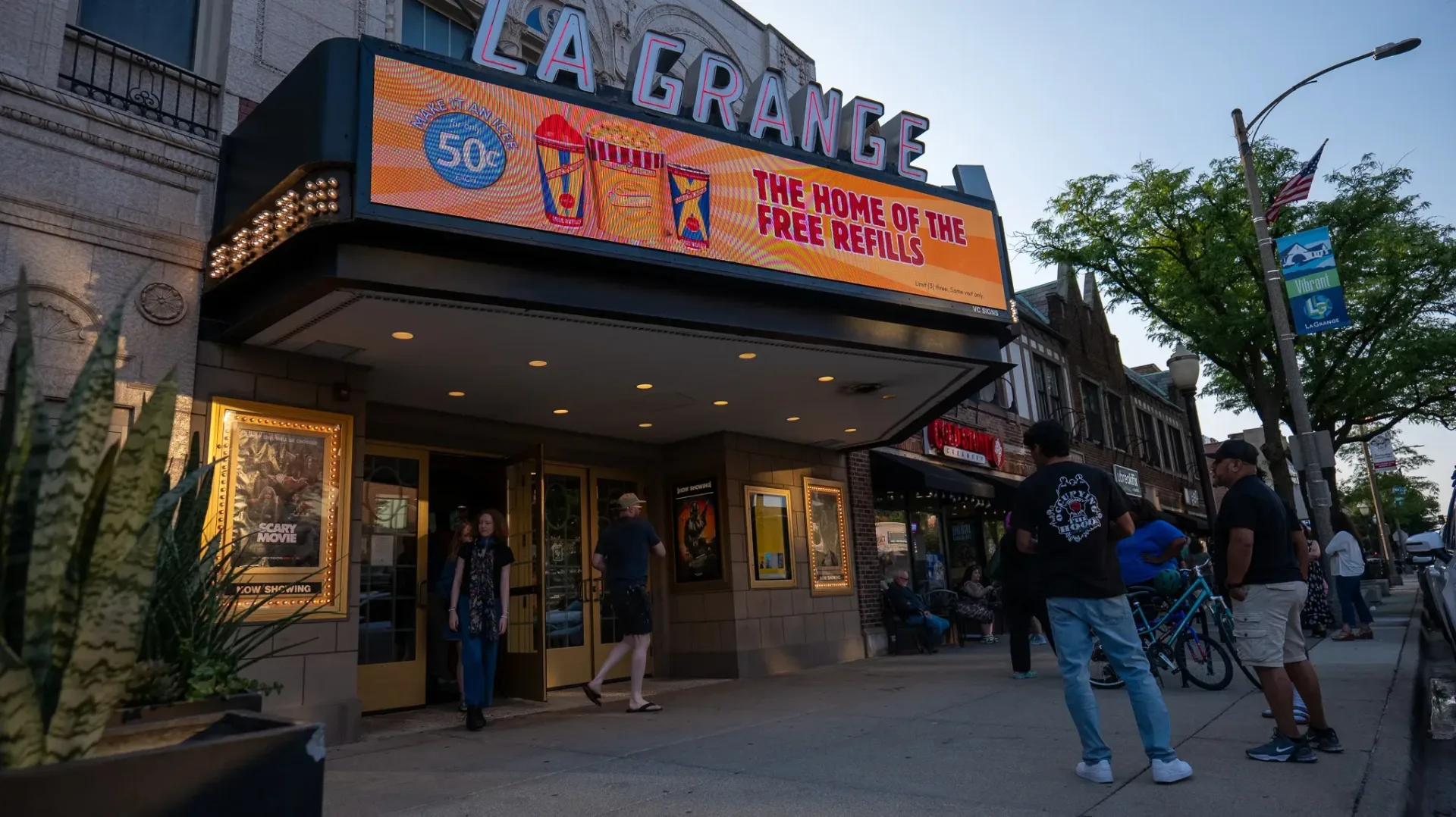
Immersive, object-based sound is another part of the upgrade mix. Rather than limiting a soundtrack to fixed channels, an object-based system can place and move discrete sounds through a compatible speaker layout. Classic Cinemas, for example, updated its century-old LaGrange, Illinois multiplex with DTS:X immersive object-based audio, alongside heated recliners. The point is not merely volume; it is to provide a more deliberate sense of where a sound is positioned in the room.
Comfort upgrades are equally conspicuous. Cinemark reports that 72% of its seats recline, the highest concentration among major U.S. exhibitors. That is a major operational statement: reclining seats turn comfort from a special-auditorium benefit into something available across much of a circuit. Classic Cinemas’ heated recliners offer a more specific variation on that same idea.
Motion seating moves in a different direction. Cinemark has 650 auditoriums equipped with D-Box motion seats. Those seats are synchronized with a movie to add physical movement. Florida-based Epic Theatres has added Luma 4D E-Motion recliner seats, combining reclining comfort with an effects-driven presentation approach. The names should not be treated as interchangeable technical standards, but both examples show theaters pursuing experiences that ask the chair itself to become part of the presentation.
What individual chains are building
The investment report highlights a wide range of approaches rather than one uniform theater redesign. Epic Theatres has added proprietary premium large-format projection with augmented audio, full bars and arcades in addition to its Luma 4D E-Motion recliners. The combination is notable because it addresses multiple parts of a visit at once: the screen and sound for the feature, food and drink for the social occasion, and games for time spent outside the auditorium.
Megaplex has gone further into all-purpose entertainment at its Downtown Daybreak site in Utah, opening a complex that includes interactive augmented-reality bowling. Augmented reality, in this context, layers digital elements into a real-world activity rather than placing participants entirely inside a virtual environment. Its inclusion beside a movie theater is a clear sign that some exhibitors are positioning the venue as a place for several activities, not solely a screening destination.
Harkins has added 13 Cinéxl premium large-format auditoriums and four Cinébar locations. It also added Arizona’s first 4D E-Motion location at its Norterra theater in Phoenix. The company’s projects illustrate the two-track nature of the broader effort: premium movie presentation on one side and expanded hospitality on the other.
International examples show that the idea of a customized theater environment extends beyond the North American investments. Major Cinema in Thailand operates 23 children’s cinemas with ball pits at the front of colorful auditoriums, furnished with sofas and large pillows. This is a particularly direct answer to the practical reality of family moviegoing: the room itself is being adjusted for a younger audience’s needs and expectations rather than asking every guest to fit the same traditional multiplex template.
Why food, drink and games are central to the plan
Full bars, Cinébar locations, arcades and interactive bowling may look separate from projection and sound upgrades, but they serve the same strategic purpose: they make a theater visit more distinct and more flexible. A guest can arrive earlier, stay longer or make the outing about more than a single title. For theaters, that means the value proposition increasingly rests on the whole venue, not just the auditorium.
This does not mean every moviegoer wants every extra. A person choosing a heated recliner may care little about bowling; a family drawn to a children’s auditorium may not be seeking a bar. The significance is choice. The investment pattern suggests exhibitors are building a menu of experiences for different audiences, locations and occasions instead of assuming a standard auditorium can meet every demand.
That local variation is especially important. A newly built entertainment complex and a modernization of a 100-year-old multiplex are very different projects, even when both are described as premium. The former can be designed around multiple activities from the beginning. The latter must find ways to incorporate new seating and audio technology while preserving an existing venue’s role in its community.
The scale behind the headline number
Cinema United, the trade organization behind the report, represents more than 63,000 screens worldwide. Its figures frame theater spending as an industry-wide commitment, with large chains and independent operators both part of the broader modernization story.
Michael O’Leary, the organization’s president and CEO, argued that reinvestment supports moviegoers, studios, local businesses and contractors. Mike Bowers, Harkins’ CEO and Cinema United’s chair, similarly described movie theaters as valued entertainment venues in cities and small towns. Those are industry leaders making the case for the economic and community effects of cinema investment; the concrete examples in the report demonstrate where that argument is being translated into construction, new equipment and additional amenities.
The $2.7 billion total should therefore be understood as more than a screen-technology story. It covers a broad effort to give theaters a clearer identity in a crowded entertainment landscape: a place for a big-screen film, certainly, but also a comfortable social venue, a food-and-drink stop, a family destination or a site for interactive activities.
What moviegoers can reasonably take from the trend
The immediate practical takeaway is that “going to the movies” may now require a little more attention to the particular auditorium and theater being chosen. A standard showing, a proprietary PLF screen, a D-Box-equipped auditorium, a 4D E-Motion experience and a family-oriented kids cinema are not the same product, even if the film on the screen is identical.
- Check the auditorium label: A PLF designation signals a premium presentation, but the exact setup depends on the chain and location.
- Decide whether motion is desirable: Motion seating is a deliberate part of the presentation rather than a neutral upgrade, so it will suit some guests and not others.
- Look beyond the showtime: The presence of a bar, arcade, bowling or a children’s play-focused room can change the shape of the outing.
- Recognize the difference between seat and sound improvements: Heated recliners improve comfort; object-based audio and upgraded projection are intended to change the film presentation itself. Many sites are pursuing both.
There is no evidence here that every theater is receiving every amenity, nor that a single format has emerged as the universal answer. In fact, the examples point in the opposite direction. Cinemark’s extensive recliner deployment, Harkins’ Cinéxl and Cinébar growth, Epic’s combination of format, food and arcade additions, Megaplex’s augmented-reality bowling, and Major Cinema’s children’s auditoriums are distinct solutions.
What unites them is the scale of the commitment. Following a strong summer box office, theater operators are spending heavily to ensure that the big screen is paired with something audiences cannot fully replicate in a living room: a tailored physical environment, upgraded shared presentation and, in many locations, an expanded night out.