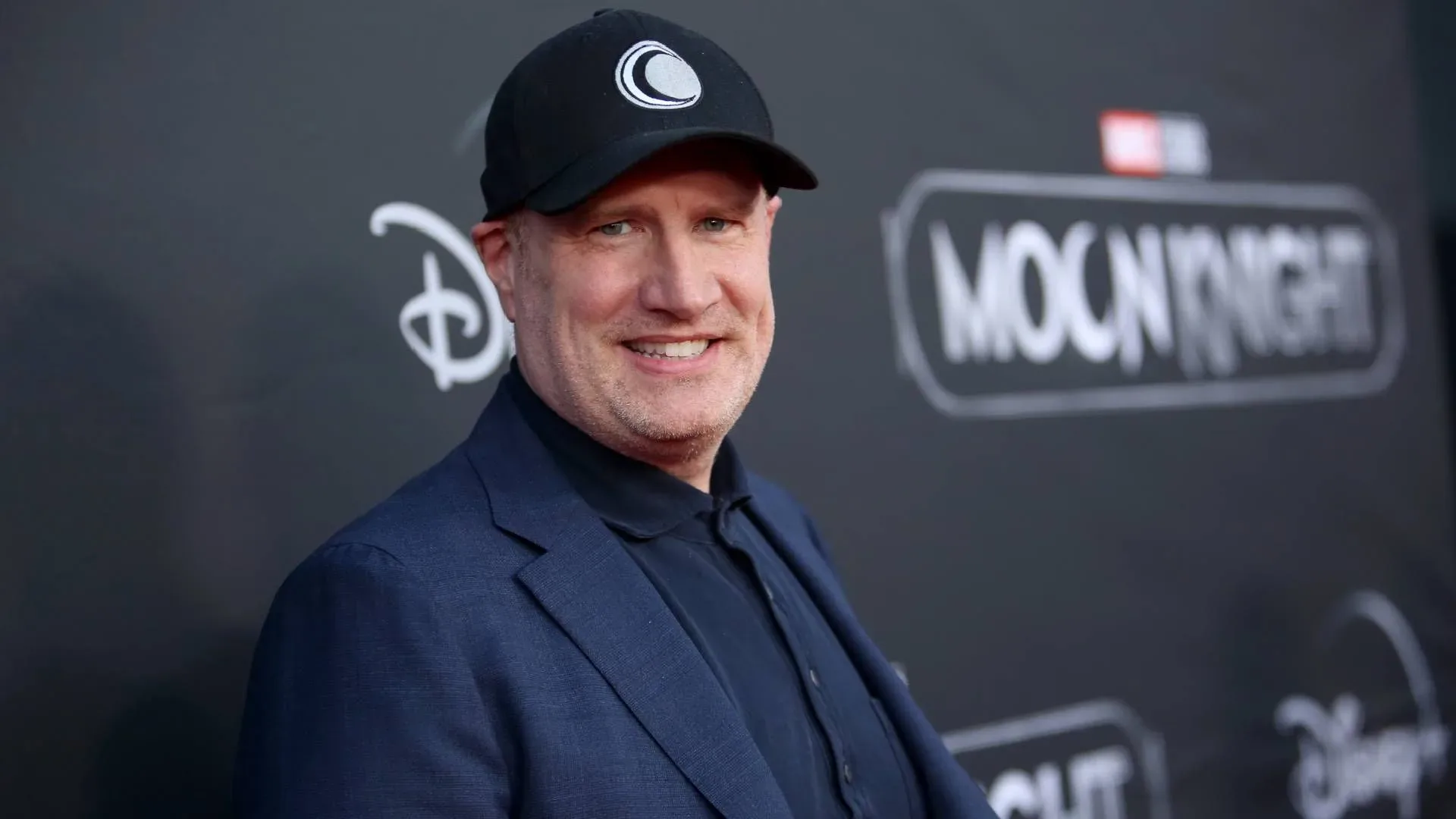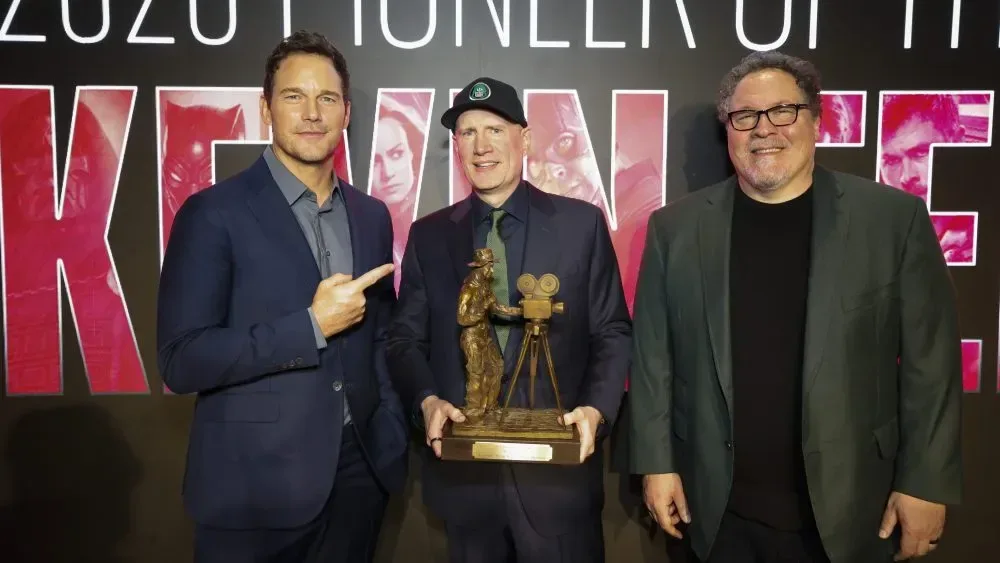
Kevin Feige was honored as the Will Rogers Motion Picture Pioneers Foundation’s Pioneer of the Year at a Beverly Hilton gathering that put a spotlight on both an enormous Marvel record and a simpler belief about cinema: a movie does not quite reach its final form until people experience it together in a theater.
Feige, president of Marvel Studios and Marvel’s chief creative officer, has overseen a run described at the event as 38 films across 17 years. Disney Entertainment chairman Alan Bergman said those films have taken in more than $35 billion globally at the box office, with 12 crossing $1 billion and three reaching $2 billion each. Those are formidable commercial numbers, but Feige’s own remarks turned away from scale, franchises and spectacle to emphasize the communal side of the medium.
His argument was not that effects, production technology or long development cycles do not matter. Rather, he framed them as parts of a process whose last, indispensable collaborator is the crowd. A film is made by people working with one another, then viewed by people sharing a darkened room. The cheers, laughter and tears that arrive when a story lands are not an afterthought in that view; they are part of what makes the experience complete.
“Movies are an invitation to experience a story together,” Feige said, describing the audience’s shared emotional response as the final step in the collaboration.
A career defined by connected storytelling
The Pioneer of the Year recognition arrives for an executive-producer whose name is closely tied to the modern interconnected cinematic universe. In practical terms, an interconnected universe is a group of films that share characters, settings and continuing plot threads. It asks filmmakers to make each installment work as its own piece while also leaving room for events, relationships and consequences that may continue elsewhere.
That kind of approach can make the audience’s role especially visible. Viewers do not only react to what unfolds in one screening; they may bring memories of earlier characters and conflicts into the room. Recognition can produce a louder laugh, a reveal can prompt applause, and a payoff can carry extra emotion because a crowd has followed the road to it over multiple films. None of that guarantees a satisfying movie, but it illustrates why Feige places value on the collective act of watching.
The night’s tributes underlined the number of creative collaborators associated with that body of work. Chris Pratt, who stars in Guardians of the Galaxy, and writer-director Jon Favreau attended in person. Composer Michael Giacchino appeared by video due to illness. Prerecorded tributes also came from Marvel executive Louis D’Esposito and performers Robert Downey Jr., Chris Evans, Hayley Atwell, Chris Hemsworth, Paul Bettany, Hailee Steinfeld, Pedro Pascal and Vanessa Kirby.
Favreau, who directed Iron Man, offered an affectionate picture of Feige’s enthusiasm for the form, joking about his habit of listening to film music while driving, including the soundtrack to FernGully. It was a small anecdote, but one suited to an event centered on a producer often discussed in terms of strategy and enormous box-office totals. The tribute instead made room for the movie fan beneath the executive reputation.
Why exhibition was at the center of the evening
The celebration had a direct connection to theatrical exhibition, the industry term for the business of showing films to paying audiences in cinemas. The event raised $1.9 million for the Will Rogers Pioneers Assistance Fund, which supports people in that community who need assistance. AMC Theatres leader Adam Aron and Regal Cinemas executive Eduardo Acuna were among those in attendance, alongside Disney chief Josh D’Amaro and producer Scott Stuber.
That context gives Feige’s comments additional weight. The audience he described is not merely an abstraction or a statistic on an opening-weekend report. It is made up of people who choose a time, enter a venue and react alongside strangers, friends or family. Exhibition is the infrastructure that makes that particular form of cultural participation possible: the auditorium, the schedule, the projection and sound, and the staff who help the screening happen.
Feige recalled being drawn to movies at the Rialto Theater in Westfield, New Jersey, where childhood trips meant sitting in the dark with Twizzlers. The detail is modest, even ordinary, which is precisely why it works. For a figure associated with some of the biggest contemporary franchises, his memory was not a production meeting or a financial milestone. It was the familiar, personal ritual of going to a local cinema.
His central point also avoids treating the audience as passive. Viewers receive a finished film, of course, but in a theater their collective response changes the atmosphere around it. A joke can gain energy because a whole room laughs. Tension can be more palpable when silence spreads through an auditorium. An emotional scene can feel larger when it is clear that it has affected many people at once. Those reactions do not alter the footage, yet they can alter the experience of the footage.
The practical meaning of “shared” moviegoing
There is a useful distinction in Feige’s comments between watching a movie and moviegoing. Watching describes the act of seeing a film. Moviegoing describes the ritual around that act: making a plan, arriving at a venue, settling into a seat and temporarily sharing attention with other people. His comments favor the latter because it treats cinema as a social event rather than only a piece of content delivered to an individual screen.
That does not require every title to generate the same kind of vocal response. Some films may be best met by quiet attention, and every audience expresses itself differently. The larger claim is simply that the room matters. A crowd that laughs, cries or cheers becomes part of the occasion in a way that an isolated viewing environment cannot replicate exactly.
It is also a reminder that large-scale filmmaking rests on work from many disciplines. Feige referenced the lengthy route from development through post-production. Development is the stage in which a project is shaped before filming, including the work of defining its story and creative direction. Post-production is the phase after principal filming in which footage is assembled and refined, often incorporating editing, sound and visual effects. Both can demand years of coordinated work before a public ever sees the result.
Yet his framing gives that labor a destination beyond completion. The goal is not only to deliver a file, finish an effects shot or reach a release date. It is to create a story that people can encounter together. For an industry conversation often occupied by technology and business scale, it is a people-first definition of what the finished work is for.
That human emphasis was echoed by Pratt, who said Feige believes in films and, even more importantly, in the people who make them. The comment applies neatly to a producer’s role. Producing is not a single craft in the same sense as acting, directing or composing; it is the work of helping many creative and practical efforts move toward one project. On an interconnected slate, the coordination can extend beyond one title, with continuity and collaboration becoming recurring responsibilities.
Feige’s recognition therefore reflects more than raw commercial achievement, though the figures shared at the event are undeniably huge. It acknowledges a career built around organizing recurring creative partnerships and sustaining a shared fictional world over many films. The celebration’s guest list, from performers to filmmakers to exhibition leaders, made that breadth visible.
A modest argument amid blockbuster-sized numbers
There is an appealing tension between the statistics introduced at the event and the idea Feige chose to stress. The statistics are almost impossibly large: dozens of films, tens of billions in box office, and a dozen releases above the billion-dollar threshold. But his most memorable point was deliberately small-scale: people in a dark room having a feeling at the same time.
That does not diminish the work behind blockbuster filmmaking. It explains why such work matters to its makers. Spectacle can draw attention, recognizable characters can create anticipation, and years of planning can make a vast story legible. Still, the meaningful test comes at the screening, when an audience decides—moment by moment—whether it is moved, amused or energized.
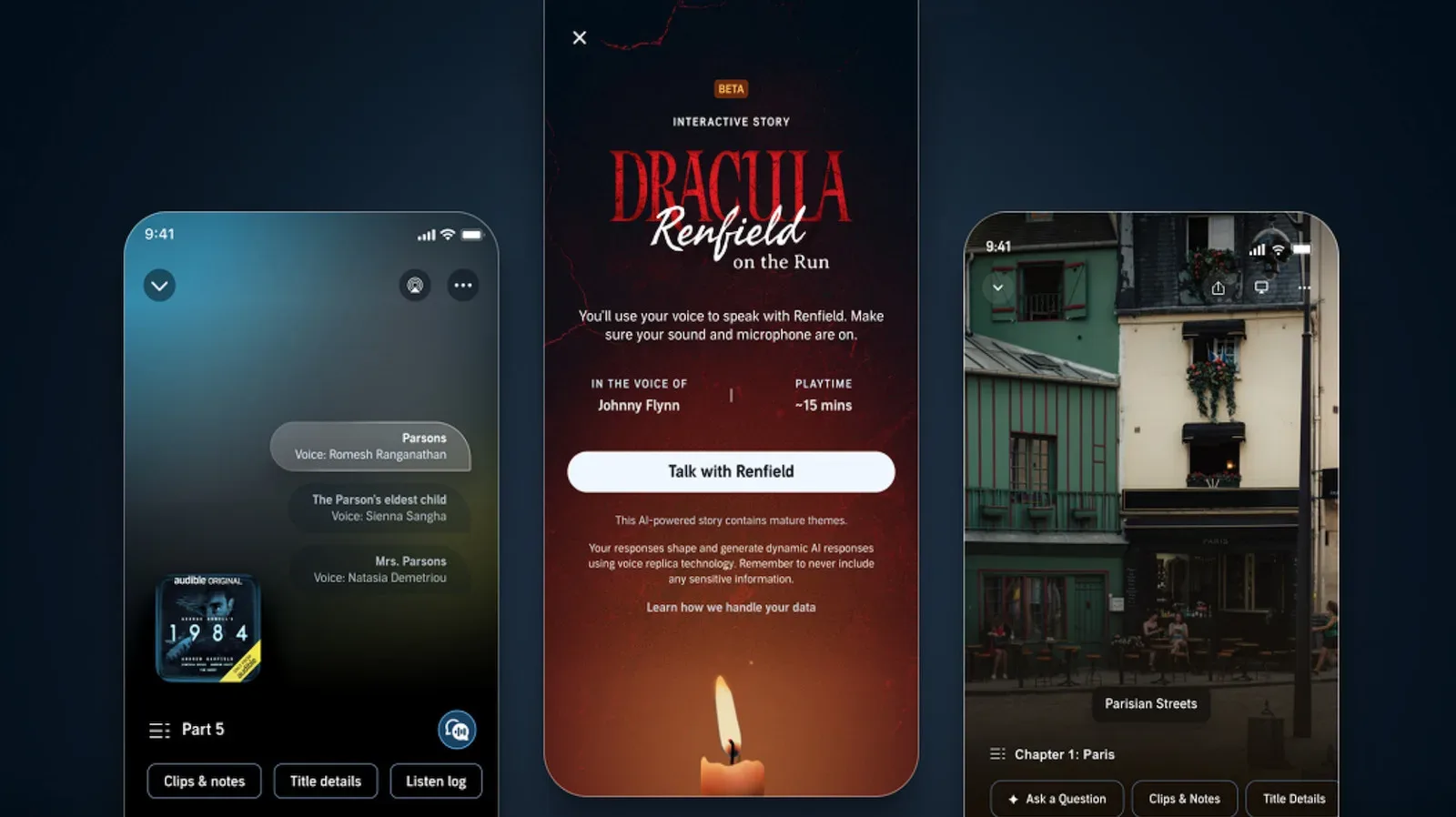
The idea has relevance beyond superhero cinema as well. Any storytelling format that seeks a collective response has to consider its audience as more than a final metric. That is especially notable as entertainment experiments with new forms of audience interaction and technology; new listening tools and character-based interactions show how the boundaries around experiencing a story can continue to change. Feige’s comments articulate the lasting appeal of a much older model: people assembling in one place, giving their attention to the same story, and discovering their response together.
The event did not present that shared response as nostalgia or as a rejection of technology. Feige explicitly placed technology and spectacle within the movie-making process. His point was that neither replaces the audience. A technically elaborate production is still trying to reach a person, and a theatrical showing can turn many individual responses into something communal.
That is a fitting message for an event benefiting cinema workers and honoring a producer whose professional legacy is measured in both massive totals and long-running connections. The caps, the gentle jokes, the tiki-band performance of Marvel music and the celebrity video tributes gave the night its celebratory personality. But Feige’s remarks located movie magic somewhere more basic: in the relationship between the people who make a film and the people who gather to meet it.