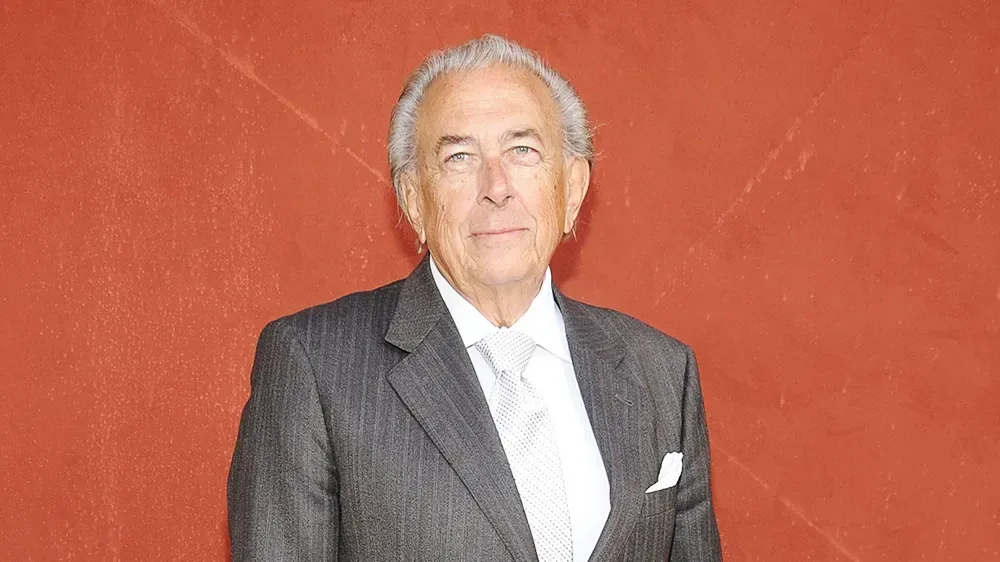
Frank Mancuso Sr., the veteran film-distribution executive who became chairman and chief executive of both Paramount Pictures and MGM/UA, has died at 93. He died October 1 at his Los Angeles home from complications related to cancer, his family said.
Mancuso’s name may not be as instantly familiar to moviegoers as the stars of Top Gun, Flashdance or GoldenEye, but his career was deeply connected to the business decisions that determine how films reach an audience. He spent nearly three decades at Paramount, beginning in local exhibition-facing roles and rising to run the studio, before taking on the difficult task of rebuilding MGM/UA in the 1990s.
His professional story was, above all, a distribution story. That means it was not principally about writing, directing or producing a picture; it was about deciding where and when it should play, how it should be presented to theaters and audiences, and how marketing could turn a film into an event. At a time when release dates and promotional campaigns could radically reshape a movie’s prospects, Mancuso developed a reputation for understanding both theater owners and the commercial potential of films that did not fit conventional scheduling assumptions.
Actor Andy Garcia remembered Mancuso in the family’s statement as a figure of “warmth, integrity, and generosity,” saying he had valued Mancuso’s friendship, support and guidance. Within the industry, Mancuso was also known as “Gentleman Frank” and “the Godfather,” nicknames that reflected his longstanding relationships and a reputation for a more courteous management style.
A rise built from the distribution side
Born in Buffalo, New York, Mancuso graduated from the State University of New York. Before joining Paramount, he worked from 1958 to 1962 as a buyer and operations supervisor for Basil Enterprises, a motion-picture theatrical circuit. That early experience mattered: theatrical circuits and exhibitors are the businesses that operate cinemas, while studios depend on them to put movies in front of ticket-buying audiences.
He joined Paramount in 1962 as a Buffalo branch booker, then became a sales representative and branch manager. In practical terms, booking is a central part of the theatrical-distribution process. It involves arranging engagements with cinemas, negotiating the placement of titles and helping translate a studio’s national ambitions into local screens and local audiences. That foundation gave Mancuso experience well below the executive suite, across the day-to-day mechanics of releasing films.
His ascent took him through Paramount offices in Buffalo, Toronto, Los Angeles and New York. Paramount made him vice president and general sales manager for Paramount Pictures Canada in 1970; two years later, he became president there. After six years in Toronto, he moved to Los Angeles as Western divisional manager, then relocated to New York as general sales manager and vice president of domestic distribution. By 1983, he was president of Paramount’s motion-picture division.
That path is significant because Mancuso came to studio leadership as a seller of films rather than a filmmaker. He had accumulated detailed knowledge of exhibition, seasonal release patterns and marketing, areas that can decide whether even a highly anticipated title finds its audience. It also made him a different kind of studio chief: one whose instinct was shaped by the question of how a movie would travel from a studio to theaters.
Release strategy as a creative commercial decision
Mancuso’s Paramount years are closely tied to several calculated release and marketing decisions. The choices were not merely about putting posters in theaters. They tested conventional wisdom about which kinds of films could work in particular parts of the calendar.
One prominent example was An Officer and a Gentleman. The romantic drama was released in the summer, a period then viewed largely as a season for younger audiences. The risk was that an adult-oriented film could be overlooked amid the assumptions that guided summer programming. The gamble worked: the film grossed more than $100 million, helped by a music video created in-house to promote it.
The campaign illustrates an important industry term: synergy. In this context, synergy means different media forms reinforcing each other. A song, soundtrack, music video and feature film can each lead audiences toward the others. Rather than treating a soundtrack as a byproduct of a movie, the approach uses music as an additional promotional route.
Mancuso was an early advocate of connecting music videos and soundtrack marketing with motion pictures, notably on Saturday Night Fever and Flashdance. Footage from Flashdance featured in music-video promotion, helping make the 1983 film a cultural and commercial phenomenon. The basic idea now feels familiar because entertainment marketing routinely moves between formats and platforms, but the underlying lesson remains useful: a film’s identity can be built outside the theater before viewers ever buy a ticket.
Another scheduling decision involved Terms of Endearment, released in November with the expectation that strong responses would build momentum into Christmas. That strategy succeeded when the movie was embraced by critics and audiences, became a major box-office performer and won the Academy Award for best picture. A release platform such as this is a gradual build: a studio relies on growing awareness, reviews and audience response rather than assuming the entire commercial outcome must arrive during opening weekend.
For readers following the broader entertainment business, the enduring takeaway is that distribution is not a passive last step after a film is finished. It is part of the proposition being sold to audiences. The date, the campaign and the media connections around a release can all change the scale of a movie’s opportunity. That wider conversation about how entertainment reaches viewers also intersects with newer platform questions, including the choices explored in this look at how platform selection can shape a creator’s move into streaming.
Running Paramount through a shifting 1980s
Mancuso became Paramount’s leader in 1984 after Barry Diller departed to run 20th Century Fox. The transition came during a period of sharp upheaval among major studios. Michael Eisner, who had been passed over for Paramount’s top job, left for Disney with several Paramount executives. Mancuso inherited a company whose competitive environment was changing rapidly.
Although he lacked production experience, Paramount initially continued to produce major hits. During his tenure, the studio released profitable titles including Top Gun, Fatal Attraction and the first two Beverly Hills Cop films. Production was initially overseen by the experienced Ned Tanen, later followed by Sidney Ganis.
But studio leadership is often judged by the balance of hits and expensive disappointments, not simply by a list of successes. As the decade closed amid recession, Paramount also faced costly films including Days of Thunder, The Two Jakes and The Godfather: Part III. The environment was made more difficult by growing star and producer compensation, involving figures such as Tom Cruise, Eddie Murphy, Don Simpson and Jerry Bruckheimer.
Mancuso’s measured demeanor, a strength to many colleagues, was characterized by others as too soft during disputes over escalating compensation. In 1991, Paramount parent Gulf and Western chief Martin Davis installed producer Stanley Jaffe to oversee the company. Mancuso sued, alleging a breach of contract and arguing he had been fired. The $45 million case was later settled for an amount estimated at as much as $20 million.
The episode underscores a hard reality of studio management. Commercial instincts and personal relationships matter, but leadership also involves negotiating power with talent, producers, corporate owners and financiers. A studio chief may be responsible for results without having unilateral authority over every budget, deal or creative decision that affects them.
The MGM/UA turnaround and sale
In 1993, Mancuso took over MGM/UA from Alan Ladd Jr. It was an unusually risky assignment. The company was heavily leveraged and deeply in debt. Leverage here refers to the use of borrowed money; high leverage can magnify returns when business goes well, but it also makes a company far more vulnerable when revenue falls short.
With Crédit Lyonnais supporting the effort, Mancuso helped reduce debt and make MGM/UA viable for a sale. He brought in CAA agent Mike Marcus to run MGM and recruited former Warner Bros. executive and producer John Calley to revive United Artists, then inactive. The resulting slate included successful releases such as The Birdcage, GoldenEye and Species.
In 1996, Mancuso engineered MGM/UA’s sale for $1.3 billion to former owner Kirk Kerkorian and Australia’s Seven Network. He remained chairman and CEO after the transaction. The sequence matters because the goal was not only to make individual movies work; it was to stabilize an entire company sufficiently that a buyer would see lasting value in it.
MGM paid Sony $5 million in March 1999 to become the clear sole owner of the James Bond property. The following month, after a yearlong box-office drought, Mancuso resigned and Alex Yemenidjian succeeded him. Mancuso retired in 1999.
A legacy beyond the credits
Frank Mancuso Sr.’s career provides a useful reminder that major entertainment history is made by more than directors, performers and producers. It is made by distribution executives who understand audiences, exhibitors, release windows and the connective tissue between a movie and its marketing.
His record included high-profile wins, difficult corporate battles and the rehabilitation of a debt-burdened studio. It also contained the contradictions of executive life: commercial success could be followed by a damaging run of underperformers; a reputation for decency could be praised by friends and treated as a liability by rivals.
Outside studio work, Mancuso served as chairman of the corporate board of the Motion Picture and Television Fund. He is survived by his wife, Frances, whom he met when he was 12, and their children, Maria and producer Frank Mancuso Jr.