A proposed federal incentive for film and television production has accumulated bipartisan support in Congress, yet its immediate future rests on a procedural problem as much as a political one: advocates need a larger tax package to carry it across the finish line.
The Motion Picture, Television and Entertainment Revitalization Act, commonly shortened to MPTERA, would establish a federal tax credit worth 20% to 30% of qualifying film and TV labor costs. Supporters argue that it would encourage production work to remain in, or return to, the United States. But the measure is not described as having an independent route to passage before the end of the year. Instead, it would need to be attached to a broader bipartisan tax bill, and it remains unclear whether such a vehicle will materialize.
That makes the remaining lame-duck session particularly consequential. The proposal has support from President Trump and a co-sponsor list that has reached 76 House members and 14 senators, split evenly between Republicans and Democrats. Yet Congress is simultaneously confronting disputes over Iran-war funding, a defense measure that has stalled, internal Senate Democratic politics, and a potential government shutdown when current funding expires on Dec. 11.
What MPTERA would do
A tax credit reduces a taxpayer’s tax liability when the terms of the credit are met. In this case, MPTERA is framed around film and television labor costs: a production that qualifies could receive a federal credit equal to 20% to 30% of those eligible expenses. The supplied details do not specify the final eligibility rules, spending caps, application process, or precisely what would determine whether a project receives 20% rather than 30%. Those details matter, but they are not yet established here.
The core policy case being made by entertainment-industry advocates is employment and investment. Production involves more than performers and directors; its labor spending can encompass a wide range of work connected to making a film or television project. Backers are presenting the proposal as a way to compete for that activity and reduce the incentive for productions to locate work abroad.
Sen. Katie Britt, the Alabama Republican who recently joined the bill’s Senate supporters, emphasized that argument in terms of jobs and wider local investment. Her support also illustrates why advocates are pitching the measure as a national production policy rather than as a narrowly Hollywood-focused benefit. The political message is that screen production can affect communities outside California, including states such as Alabama.
For entertainment audiences, the proposal is about the machinery behind movies and television rather than a promise about any individual title. It would not, based on the available information, guarantee a particular release, crew hire, filming location, or creative outcome. Its practical purpose is to alter the financial calculation around eligible labor spending. Whether that results in more domestic projects would depend on the eventual statutory text, implementation, and production decisions that follow.
Support is broad, but timing is the hard part
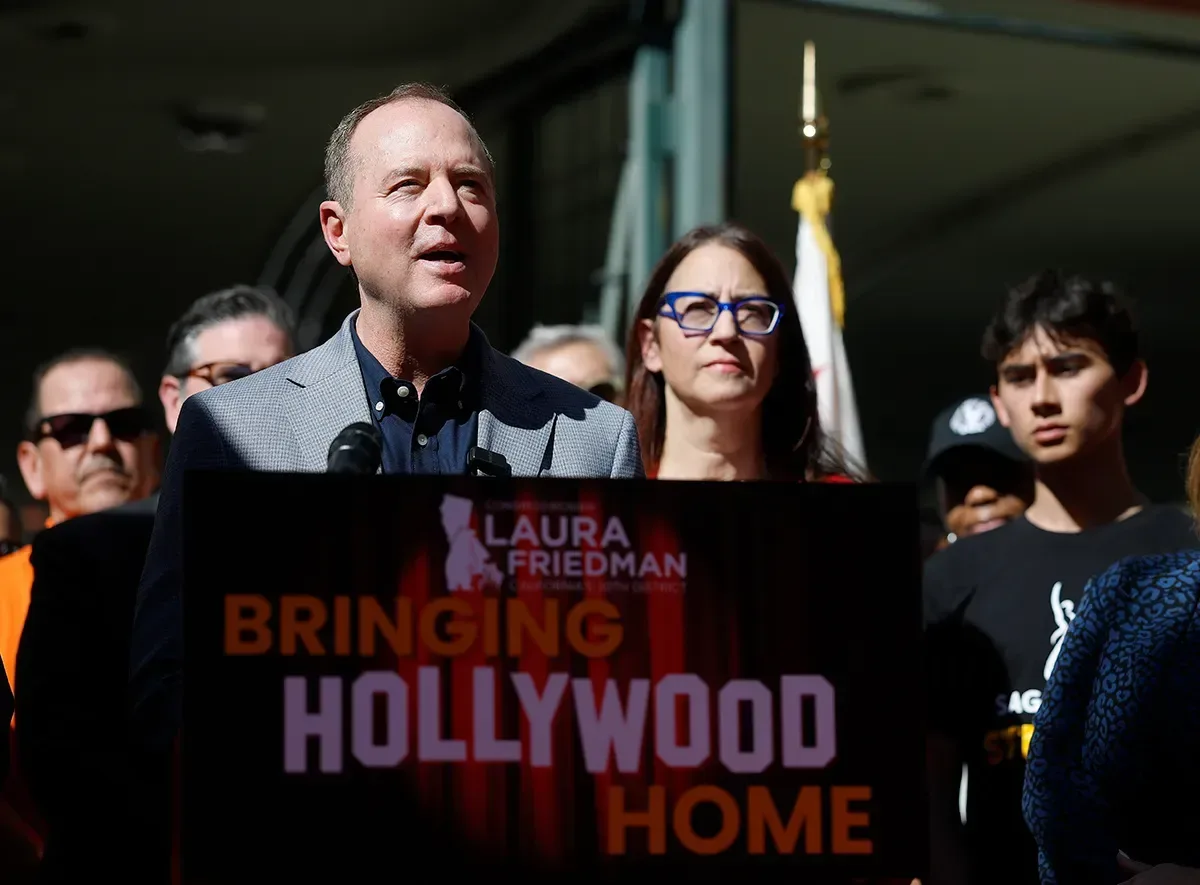
Rep. Laura Friedman, a co-author of the legislation, has said support is bipartisan and increasing. The 76 House co-sponsors and 14 Senate co-sponsors are evenly divided by party, a meaningful feature for a proposal seeking a place in a tax package that would have to survive both chambers.
But co-sponsorship is not the same as enactment. A bill can have a growing list of public supporters and still fail to receive a vote, particularly near the end of a congressional session. Friedman’s warning is fundamentally about legislative bandwidth: there are only so many measures that can be considered, negotiated, and passed in a short window, especially when must-pass government funding is unresolved.
This is why the phrase legislative vehicle is central to the story. A vehicle is a larger bill capable of moving through Congress that can carry a related proposal with it. Here, the desired vehicle is a bipartisan tax package. Attaching MPTERA to such legislation could provide the proposal a path that a stand-alone bill may not have before the year closes. Conversely, if no viable tax package advances, the federal film credit may have no near-term route forward regardless of its support level.
The Directors Guild of America has told members that the post-midterm political environment is more complicated and that the window for action this year is narrow. Its leadership is contacting congressional decision-makers in an effort to have MPTERA included if a workable tax package moves ahead. That lobbying effort reflects the bill’s current stage: the immediate contest is not simply winning public approval, but securing a slot in the legislative process.
Presidential encouragement does not settle the congressional math
President Trump added a high-profile push during a meeting with actor Jon Voight, urging lawmakers on Truth Social to complete the work on a film incentive. Advocates hope that endorsement creates momentum while they seek support from lawmakers.
Still, a presidential preference is not a substitute for agreement in Congress. The recent difficulty around a separate $350 billion defense bill is a reminder that lawmakers can remain divided even when the president urges action. Senate Republicans had not reached internal consensus on that defense effort by mid-week, while some Democrats sought removal of Iran-war funding as a condition for cooperation.
Those negotiations are directly relevant to MPTERA’s timetable, even though they concern separate policy areas. In a compressed session, attention, negotiating leverage, floor time, and the willingness to assemble broad packages are finite. A looming shutdown can put government funding at the center of congressional activity; it can also make other agreements harder to form. The present uncertainty over what Congress will pass before Dec. 11 therefore creates uncertainty for an industry measure looking for a tax-bill attachment.
Senate Democratic leadership politics add another layer. Sen. Chris Van Hollen has launched a challenge to Sen. Chuck Schumer for the Democratic leadership position. That does not determine the fate of the tax credit on its own, but it is part of the broader political environment in which advocates are trying to build consensus and move legislation.
Industry advocates are making a direct case on jobs
Film and television stakeholders have been meeting with lawmakers to strengthen the case for the incentive. Their argument centers on bringing jobs back from overseas and retaining more production-related spending in the U.S. Sean Astin, president of SAG-AFTRA, met with Schumer to seek his backing.
That outreach is significant because the legislation touches a labor question directly. MPTERA’s proposed credit is tied to labor costs, which puts workers and unions at the heart of the policy discussion. The bill’s supporters are presenting the incentive not merely as assistance for studios or producers, but as a measure meant to support good-paying work and the broader economic activity associated with production.
It is also a reminder that tax incentives are not automatic wins simply because they are popular with a sector. Lawmakers must decide whether the proposed credit belongs in a larger tax deal, whether its structure is acceptable, and how it fits beside other priorities. The available information establishes support for the concept and growing advocacy, but not an agreement on final legislative text or passage.
For readers tracking broader screen culture, policy can feel distant from the finished work that arrives in theaters or on TV. But decisions about where production occurs can influence the labor and investment conditions surrounding future projects. The industry’s ongoing effort to persuade Congress is part of the same ecosystem that produces the films, series, and creative discussion followed by audiences; for instance, the site has also covered Christopher Nolan’s comments on unreleased deleted scenes from The Odyssey.
What happens next
The clearest near-term question is whether congressional negotiators produce a bipartisan tax package before the end of the year. If they do, MPTERA advocates will seek to have the federal production incentive included. If they do not, the current window becomes far more difficult.
Friedman has acknowledged the competition from other issues and urged advocates to be vocal. That is a candid assessment of both the proposal’s opportunity and its vulnerability. Bipartisan support, a presidential endorsement, and active union engagement give the measure visible momentum. None of those factors by themselves creates the tax vehicle it needs.
Advocates could continue their work after Democrats take control in January, and the measure may be considered then. But they would prefer to act while Trump’s backing is fresh and before shifting control and priorities change the negotiating landscape. A delay would not necessarily end the push; it would mean a new political calendar, new legislative calculations, and a less certain path.
For now, the proposal remains a high-interest but unresolved piece of entertainment-industry policy. The numbers are clear: a proposed 20% to 30% credit for film and TV labor costs, 76 House co-sponsors, and 14 Senate co-sponsors. The missing piece is equally clear: a broader tax bill that can move through Congress in time.