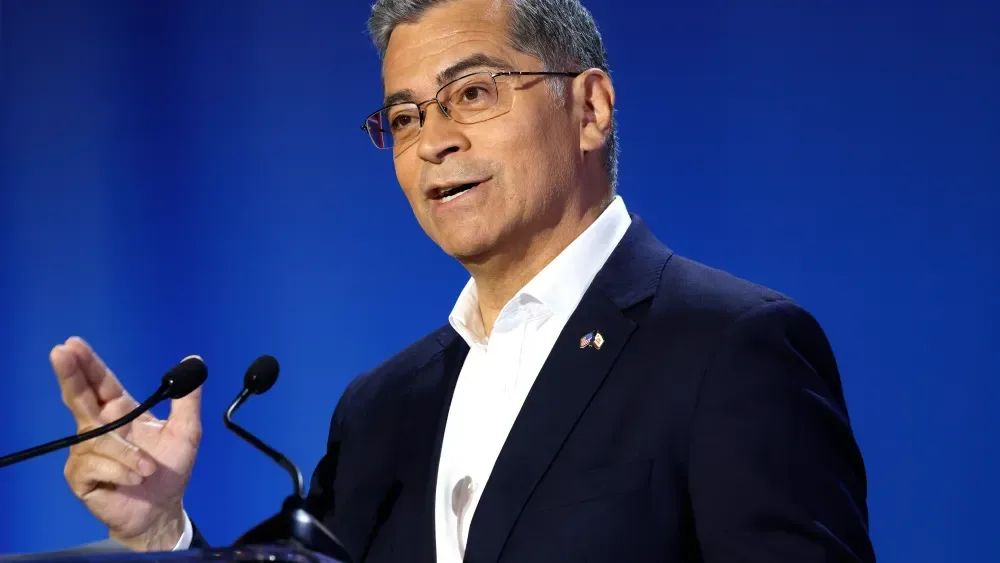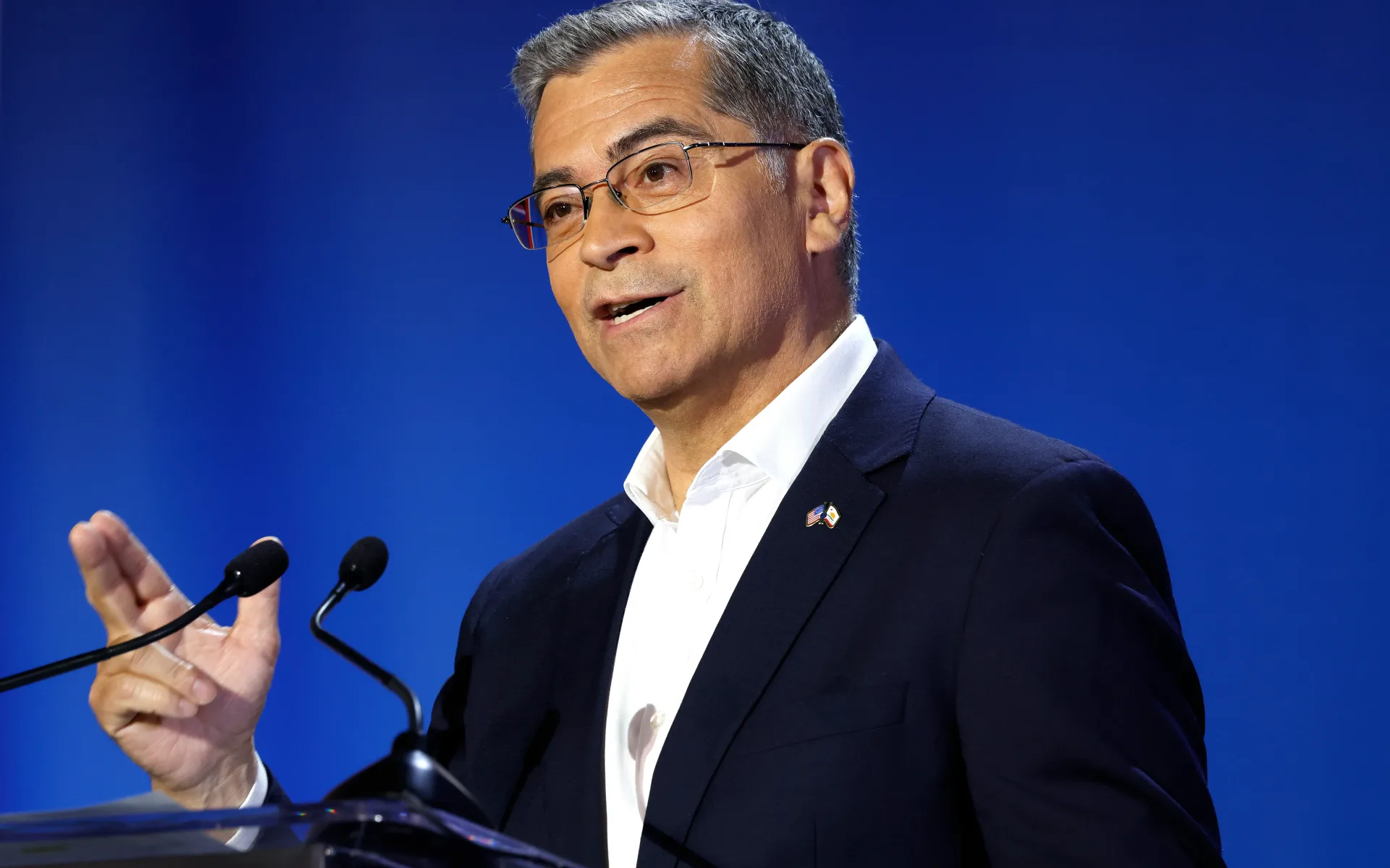
Xavier Becerra has been declared the winner of California’s gubernatorial race, defeating Republican Steve Hilton and setting up a consequential handoff for the state’s film and television production policy.
For California’s entertainment workforce, studios and production-adjacent businesses, the immediate question is not whether Becerra recognizes Hollywood’s importance. He has said that the state must fight to retain the industry in Southern California, pointing to Hollywood, Universal Studios and Disneyland as major reasons the region remains a destination for visitors from around the world.
The unanswered question is what, specifically, he will support once he takes office. Becerra has offered broad support for improving California’s production tax credit, but has not committed to a particular expansion, including the far-reaching proposal for an unlimited incentive.
A victory with a major industry decision waiting
Becerra emerged from the June primary as its top vote-getter and entered the general election with a clear route against Hilton. His campaign emphasized lowering energy costs, pursuing universal health care and opposition to President Trump. Becerra has frequently noted his record of suing Trump more than 100 times while serving as California attorney general during Trump’s first term.
His public background spans several levels of government. Before becoming attorney general—after being appointed to replace Kamala Harris—Becerra served in Congress. He later served as secretary of the Department of Health and Human Services during the Biden administration.
That governing experience will now meet a state-level entertainment policy issue with substantial practical stakes. Film and television work is not only a cultural matter for California. It supports productions, crews and a wider ecosystem of vendors and venues. Becerra’s campaign language has acknowledged that value, but the policy details remain for negotiations with legislators.
“We have to fight to keep that industry here in Southern California,” Becerra said while discussing the region’s entertainment attractions.
The governor-elect’s strongest Democratic primary opponent was hedge fund billionaire Tom Steyer, who had backing from IATSE and several progressive groups. Becerra became the frontrunner following Rep. Eric Swalwell’s withdrawal from the contest and resignation from Congress amid sexual misconduct allegations.
Related coverage includes Xavier Becerra Wins California Governor Race as Film Tax Credit Debate Looms.
What California’s production tax credit does
A production tax credit is a government incentive intended to encourage eligible film and television projects to spend and work in a particular jurisdiction. In this case, California’s program is designed to help keep production activity in the state rather than losing it to competing locations offering their own financial incentives.
The policy is especially important because production decisions can turn on costs as well as creative needs. A project’s location affects the people hired, facilities used and services purchased. When policymakers discuss enhancing California’s credit, the core issue is whether a larger or more flexible program would make the state a stronger option for productions that might otherwise work elsewhere.
Gov. Gavin Newsom has proposed increasing the state’s current $750 million production tax credit to $1 billion. His proposal would also allow above-the-line costs and extend the program’s sunset date through 2040.
Above-the-line costs generally refer to high-level creative and producing personnel whose compensation is set before a production’s more granular budget is built out. The supplied proposal does not specify every category that would qualify, but adding above-the-line expenses would be a material change in what the credit can cover.
A sunset date, meanwhile, is the point at which a policy expires unless it is extended or renewed. Moving that date to 2040 would give the program a much longer prospective life. For an industry where productions can be planned well in advance, a longer-running program can matter because it provides a clearer policy horizon—even though its precise terms would still be shaped by the final legislation and administration.
The debate over an unlimited credit
Newsom’s proposal is not the only model under discussion. Many figures in Hollywood are advocating for an unlimited tax incentive. Under that approach, the credit would operate as an entitlement rather than depending on discretionary approval from the state film commission.
In plain terms, an entitlement-style incentive would mean qualifying projects receive the credit under the program’s rules instead of competing for a limited pool of discretionary awards. That distinction matters. A capped program must determine which applicants receive available credits; an unlimited structure is intended to make eligibility more predictable for productions that meet the requirements.
Predictability is the argument’s obvious attraction for the industry. A production considering several locations may place real weight on whether a financial incentive is assured, subject to criteria, or uncertain until a commission approves an application. The counterweight is that an unlimited program is a larger policy commitment, which is why the debate is not simply about whether California supports screen production but about the mechanism, fiscal scale and degree of automatic access.
An Assembly special committee held a hearing on the unlimited-incentive concept. Its chair, Rick Chavez Zbur, subsequently described the idea as a “heavy lift,” underscoring that the proposal faces a demanding legislative path rather than a settled consensus.
Becerra’s position: support for enhancement, not a fixed blueprint
Becerra has not taken a position on the unlimited-credit proposal. His stated approach is to work with legislators on proposals that reach his desk, while maintaining that California will fight for the industry. His campaign did not respond to a request for comment on Newsom’s $1 billion proposal.
That leaves several separate questions unresolved:
- Whether Becerra will back Newsom’s proposed increase from $750 million to $1 billion.
- Whether he supports adding above-the-line costs to the eligible spending base.
- Whether he will support extending the program’s sunset date to 2040.
- Whether he would endorse an unlimited, entitlement-style model rather than a discretionary allocation process.
Becerra posted a film policy document that did not make explicit commitments. The document was rated 100% AI-generated by Pangram, a detail likely to draw scrutiny precisely because the next governor’s eventual decisions will require clearer positions than general support for the industry.
The timing places the matter squarely in Becerra’s hands. Newsom will leave office in two months, meaning any decision over expanding the incentive will fall to his successor. That creates a transition from a proposal already on the table to a new administration that has signaled sympathy for the sector without yet defining its preferred policy architecture.
Why the next steps matter to entertainment workers
It would be premature to treat Becerra’s election as a guarantee of any particular outcome for the credit. He has not promised to enact the $1 billion proposal, accept the above-the-line change, extend the sunset date, or pursue an unlimited program. Those distinctions are important, and collapsing them into a single promise would overstate the evidence.
What is clear is that his administration will inherit the choice at a moment when entertainment stakeholders are pressing for a more competitive incentive structure. The political work ahead will involve the governor, legislators, the film commission’s role and the industry groups seeking a more dependable system.
For readers following the broader business of movies and television, California’s credit fight will unfold alongside international production and distribution developments, such as the North American deal for Park Hoon-jung’s assassin noir Tristes Tropiques. But California’s debate is distinct: it concerns the rules that may influence whether work is made in the state in the first place.
Becerra has made the broad argument that Southern California’s screen institutions are worth defending. The next measure of that commitment will be less about campaign language than the concrete proposal he is prepared to advance, negotiate or sign when the production tax credit reaches his desk.