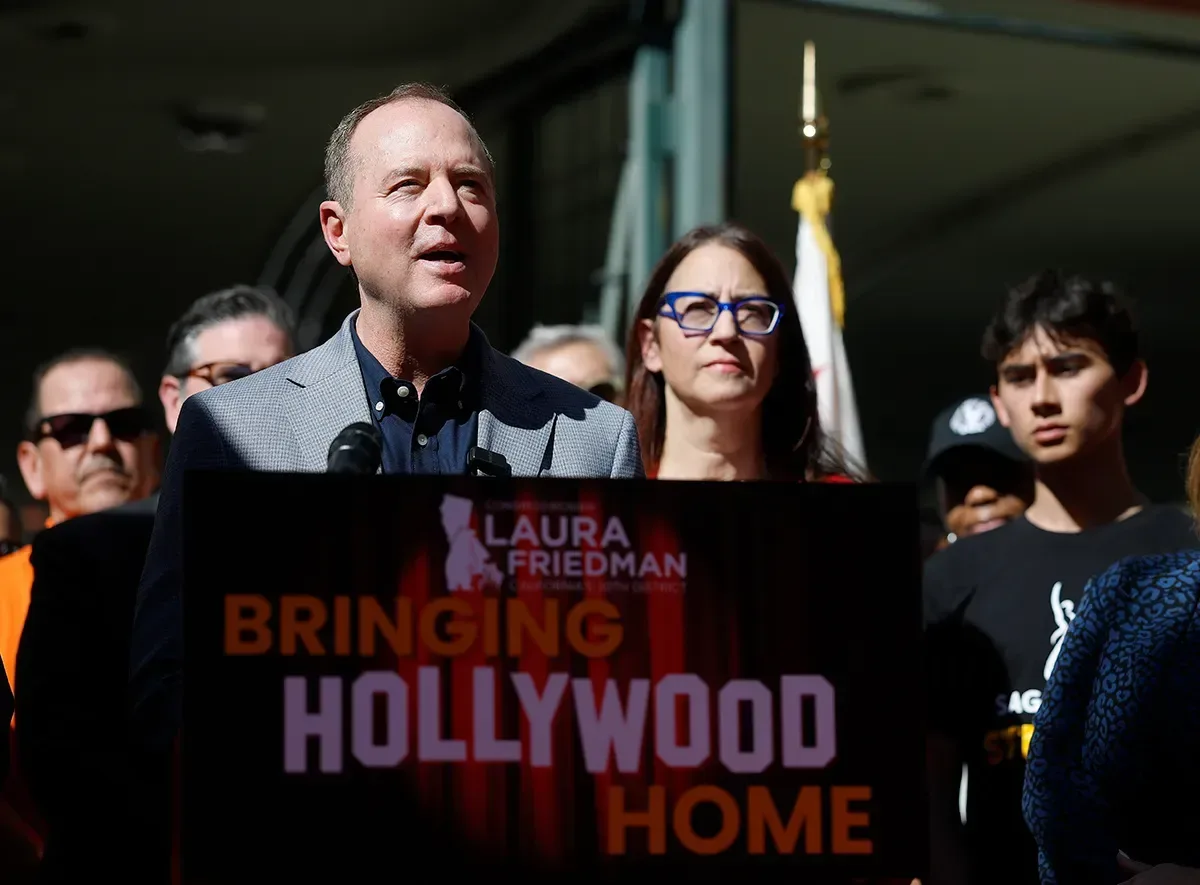
California dramatically increased its film and television tax-credit program in an effort to keep productions working in the state. The early result is a mixed one: more Los Angeles scripted projects are receiving the incentive, but total production activity still moved in the wrong direction during the third quarter.
FilmLA’s latest figures show overall production fell 3.7% in the quarter. Location filming also remains substantially below its five-year average. That means the expanded incentive appears to be changing which productions receive support without yet restoring the broader volume of shoots taking place in Los Angeles.
The distinction matters. A tax credit can make an individual production’s California budget more competitive, but it does not automatically create a production that otherwise would not exist. Nor does it ensure that every kind of show can afford to remain in the state. The current numbers point to both effects at once: the program is reaching a larger share of scripted work, while the total pool of work is still shrinking.
A much bigger program, but a smaller quarter
In 2025, California increased its annual film and television incentive from $330 million to $750 million. The larger program took effect on July 1, 2025, and applications rose immediately. The expectation was that successful applicants would begin production in early 2026.
That timeline made the first quarter of 2026 an encouraging signal for local officials. Los Angeles Mayor Karen Bass described the industry as “turning a corner” after that period. But shoot-day totals then declined in each of the following two quarters, including the 3.7% drop in the third quarter.
A shoot day is a unit used to track a day of production activity. It is useful because it measures on-the-ground filming rather than merely counting titles. A single series can generate many shoot days; changes in the number can therefore reflect both how many projects are active and how long their productions are working. FilmLA’s result does not say that every area of production declined equally. It does show that the aggregate amount of activity fell.
Location production being below the five-year average adds important context. Even a quarter with improvement in one category may still represent a subdued market compared with the recent longer-term norm. The expanded credit has not, so far, brought the overall level of location shooting back to that baseline.
The clearest measurable gain: more scripted shows are subsidized
There is tangible evidence that the larger incentive is being used. In the most recent quarter, 40.2% of scripted shows filming in Los Angeles received the state tax credit, nearly twice the share recorded a year earlier.
Related coverage includes California’s Expanded Film Tax Credit Has Yet to Stop Production Decline.
The rise is especially pronounced in television comedy and drama. Among comedy productions, 62% received the credit, compared with 19% in 2025. For dramas, the subsidized share rose from 21% to 49%.
That is a meaningful shift in the composition of local production. It indicates that the policy expansion has materially increased the number of eligible scripted projects receiving aid. It also supports the narrower claim that incentives can influence location decisions for productions that qualify.
However, the data does not establish that the credit alone can counter every pressure on the California production economy. A larger percentage can receive a credit while the total number of productions or filming days declines. In simple terms, a bigger slice of a smaller pie may be subsidized.
Philip Sokoloski, a vice president at FilmLA, framed the problem in cost terms, saying work without incentive support is increasingly likely to leave California for less expensive places. His point highlights the program’s practical limitation: capped incentives select and support particular projects, but productions outside that support may still compare California’s costs against other locations and choose elsewhere.
Comedy rebounded, but drama declined more sharply
Television comedy supplied the quarter’s strongest positive category. Comedy registered 192 shoot days, up from 57 in the previous three-month period. It was the category’s best quarter since the 2023 strikes by the Writers Guild of America and SAG-AFTRA.
That result is encouraging, particularly given comedy’s increased use of the state credit. Still, it was not sufficient to lift the wider figures. Television drama dropped from 732 shoot days in the prior quarter to 494. The loss of 238 drama shoot days exceeded comedy’s 135-day gain.
This comparison is a useful reminder of why headline production data can look disconnected from positive category-specific news. A sizable increase in one segment can be outweighed by a decline in another segment that starts from a higher level of activity. Drama’s lower quarter had greater impact on the total than comedy’s recovery.
Reality television also remained weak, recording 630 shoot days. That total was 66% beneath its five-year average. The figures supplied do not explain why reality production has remained so far below that benchmark, and it would be premature to assign a cause from the available data. But its gap illustrates that the production slowdown is not confined to scripted television.
What an “unlimited” incentive would change
Bass has called the increased share of subsidized shows an encouraging sign while arguing that more action is needed. She continues to support an unlimited state incentive. Her opponent in the coming mayoral election, Nithya Raman, has also criticized the current response and called for the cap to be eliminated.
In this debate, an unlimited incentive means removing the program’s overall funding ceiling rather than setting a fixed annual pool from which projects must receive allocations. California’s existing annual amount is $750 million. A cap determines how much total assistance can be awarded; even if many more productions seek qualifying support, the state’s program has a maximum budget.
Supporters of lifting that limit argue that a capped program leaves some prospective California work unsupported, making a cheaper competing location more attractive. The latest FilmLA data offers support for the premise that subsidized productions are now a much larger part of the local scripted market. It does not, by itself, forecast how much total production would return under an uncapped program, nor does it establish that such a change would reverse the decline.
That uncertainty is central. The $750 million expansion is large relative to the previous $330 million annual level, and it has clearly led to more credit-backed scripted activity. Yet the third-quarter figures indicate that the expansion has not been enough to overcome the forces weighing on the total volume of filming. The policy question is therefore no longer merely whether incentives affect production decisions; the current data indicates they do for many recipients. The harder question is whether a larger or uncapped commitment would be sufficient to alter the statewide trajectory.
Why the numbers matter beyond the soundstage
Production statistics are more than an industry scoreboard. Shoot days are a direct indicator of how much active filming work is taking place locally, and FilmLA’s report is therefore a closely watched measure of the California screen sector’s health. When activity is below the five-year average, the implication is a smaller overall level of location work than the market has recently sustained.
For audiences, this does not mean every series filmed in California is at risk, or that an individual production’s future can be inferred from quarterly totals. The data instead describes the market-level environment in which projects are choosing where to work. For creators and businesses connected to production, the growing divide between credit-supported and unsupported work is likely to be especially consequential.
Hollywood’s wider business pressures also remain relevant to games and interactive entertainment, where studios, technology companies, labor and creative talent can all intersect. The broader issue of how companies decide where to make expensive creative projects is familiar across media. For a related look at the pressures surrounding major game-studio ownership and survival, see the complicated record of acquired studios disappearing.
For now, California can point to a real operational success: state support reached 40.2% of local scripted shows in the quarter, with especially large gains in the shares of subsidized comedy and drama. But the broader result remains sobering. Overall production fell 3.7%, drama declined sharply from the preceding quarter, and reality work stayed far below its five-year average.
The expanded credit has increased participation, not yet reversed the downturn. That is the tension likely to shape the next phase of the policy debate: whether California should expand beyond its $750 million annual commitment, and whether a larger incentive can bring enough unsupported work back to change the total production picture.