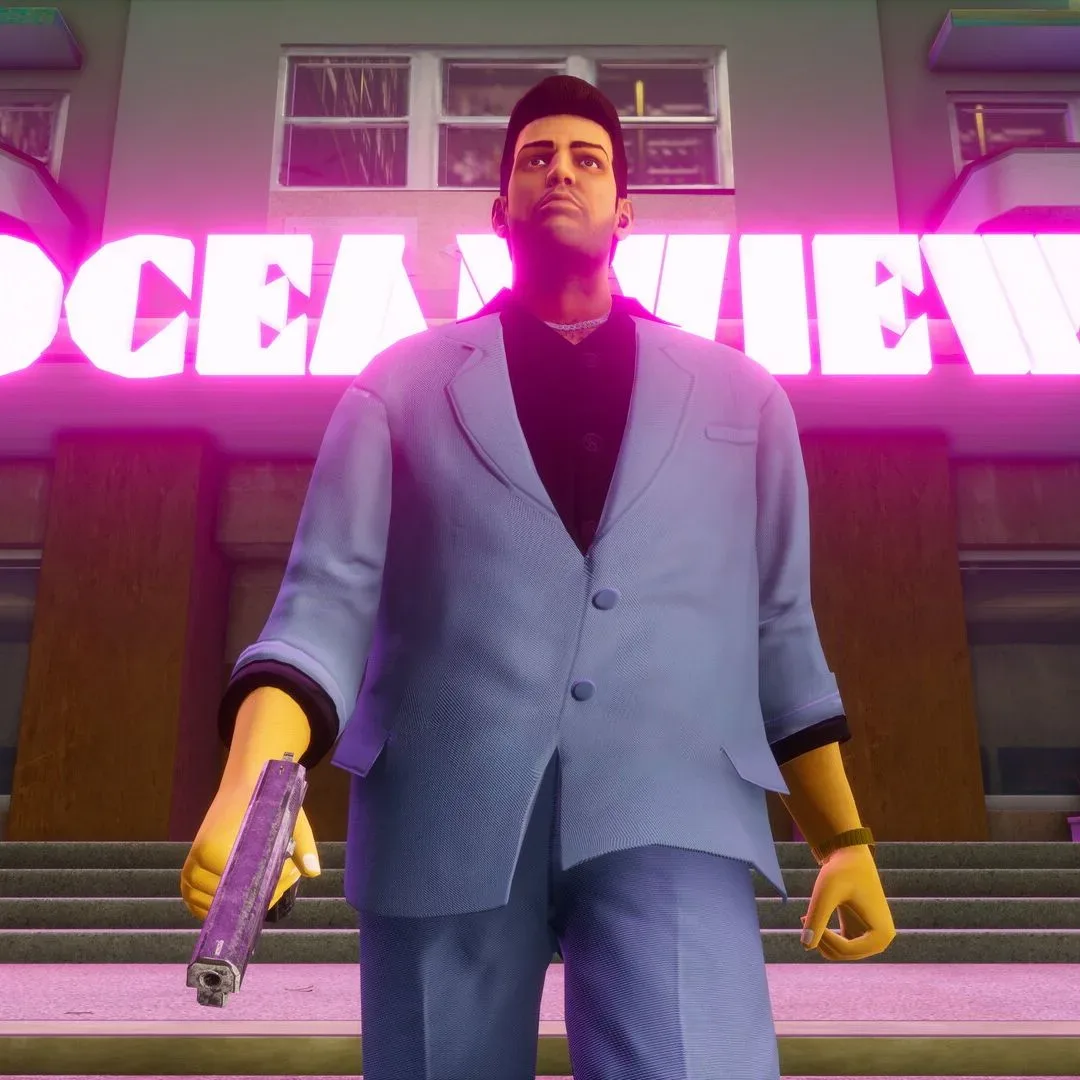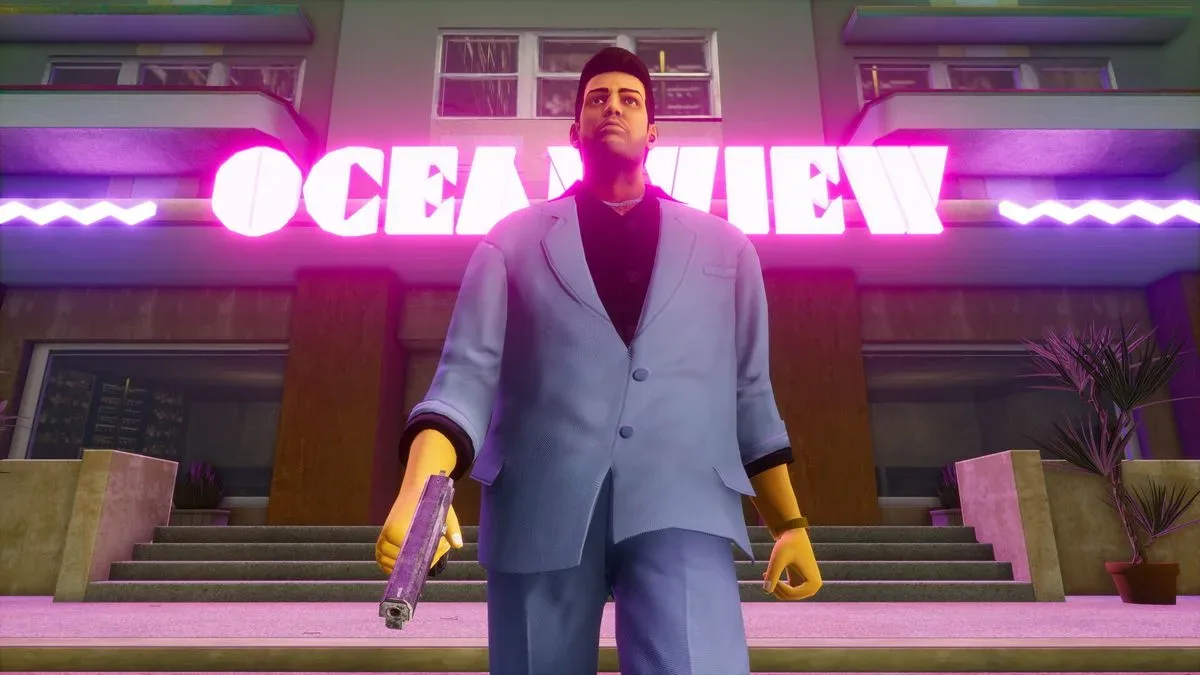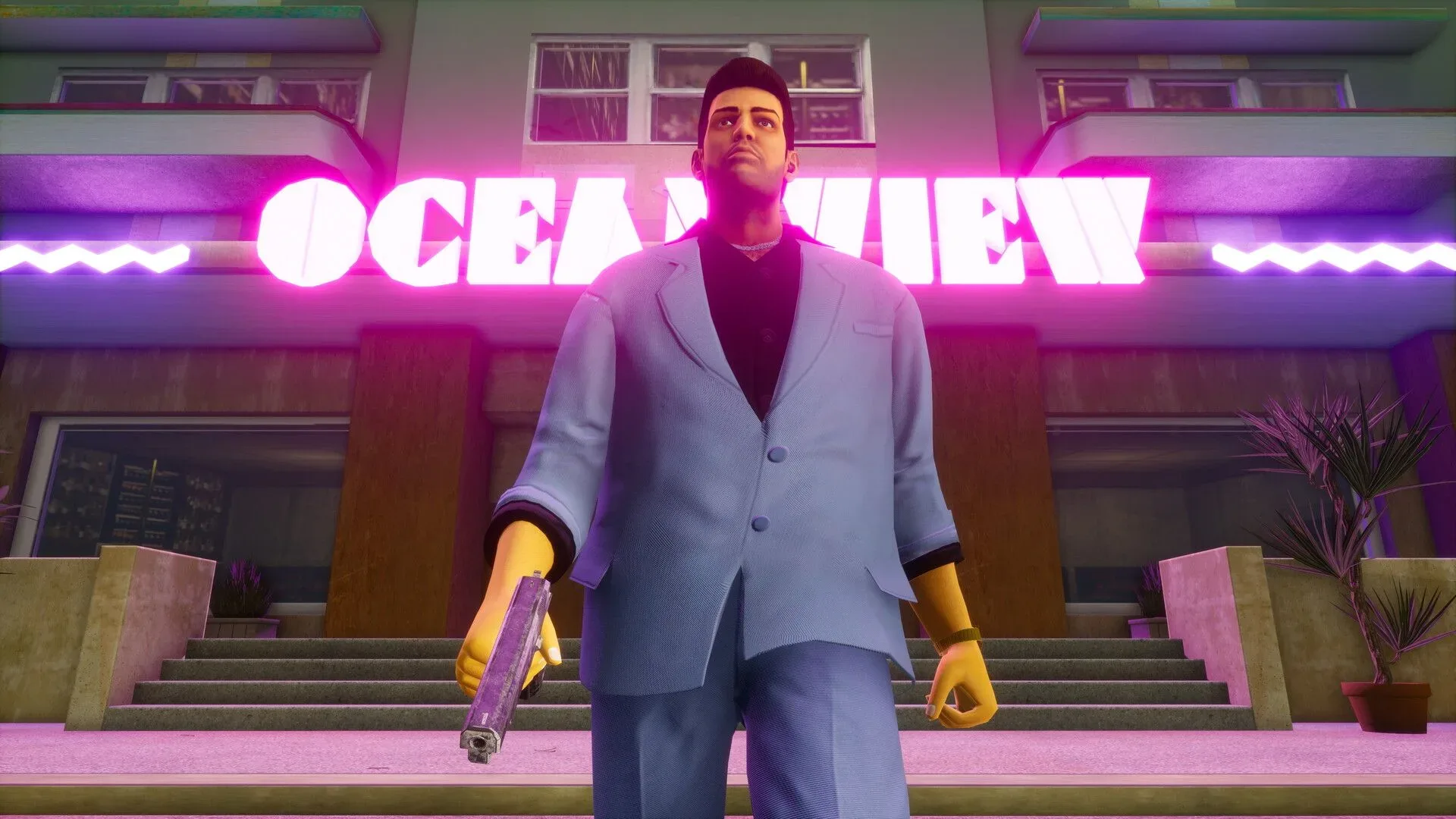
Dan Houser has offered a notably blunt assessment of the writing in Grand Theft Auto: Vice City: he thinks it was “awful.” But the former Rockstar co-founder and lead writer places a great deal of the game’s enduring force on Ray Liotta, the actor behind protagonist Tommy Vercetti.
Houser’s comment is not really an attempt to diminish the game’s place in the series. Instead, it is a concise acknowledgement of what voice performance can do for a character once words leave the page. In Houser’s telling, Liotta did more than deliver Tommy’s dialogue cleanly. He found dimensions that were not explicitly written, then supplied the character with an authenticity the team might not have been able to locate with another actor.
“My writing’s awful, and he made it sound good,” Houser said of Liotta’s work in Vice City. It is a strikingly self-deprecating line, but Houser’s fuller explanation is more useful than the joke. He describes acting as an art form in which the strongest performers uncover material beyond what is directly present in a script. An adequate performance can communicate the writer’s intended character; an exceptional one, he argues, moves beyond that intention. Liotta, in Houser’s view, did exactly that for Tommy.
A voice performance is not merely dialogue read aloud
That distinction is particularly important in a game built around a playable lead. Tommy Vercetti is not only present in cutscenes. He is the player’s point of connection to the story, so the way he speaks helps establish the mood and character of the entire experience. A line on a page can establish information or plot direction, but performance determines many of the qualities an audience actually feels: tension, confidence, contempt, fatigue, amusement, restraint, or the sense that a character is thinking faster than the words being spoken.
This is what Houser appears to mean when he says the best actors find things “not on the page.” It does not require changing the dialogue. It can come through timing, emphasis, pauses, rhythm and vocal texture. A performer may make a short reply feel threatening, make a boast sound defensive, or let an apparently routine line carry impatience. Those choices create subtext: the implied feeling or motive beneath the literal words.
For an actor, that work is interpretation. For a game’s writing team, it can reshape how the character is understood without a rewrite. The final performance becomes inseparable from the writing in the audience’s memory, even when the actor’s most important contributions are difficult to isolate sentence by sentence.
Houser’s comments frame Liotta’s Tommy as precisely this kind of creative partnership. The script supplied a character and a set of scenes; Liotta’s performance supplied a level of credibility that Houser believes would have been difficult to achieve otherwise. That is more meaningful than celebrity casting alone. A recognizable name may attract attention, but it does not automatically produce a convincing role. Houser’s point is that Liotta’s skill, rather than his fame by itself, was the difference-maker.
How the collaboration came together
Houser also outlined a relatively direct route from initial contact to recording. Rockstar contacted Liotta’s agent and offered what Houser called “a chunk of money” for roughly four days of work. Houser said the team had dinner with Liotta the night before recording, then completed two days of sessions in New York.
Related coverage includes Dan Houser Says Ray Liotta Elevated GTA: Vice City's Script With Tommy Vercetti Performance.
A few months later, closer to the game’s full release, Houser went to Los Angeles to record additional lines. He recalled that Liotta did not seem especially engaged on the first day. The following day, however, Liotta recorded for about five hours and finished everything that remained.
That account is a helpful reminder that voice work is not always a neat, linear process. Dialogue recording can be distributed across separate sessions, and later work may be needed as a project nears completion. The available account does not establish why further lines were required, so it would be wrong to assume rewrites, added scenes or production problems. What it does show is that Liotta ultimately completed the remaining work in one sustained session.
Houser’s recollection also avoids turning the experience into an uncomplicated story of instant chemistry. He was candid about Liotta seeming unenthused at one point, while also emphatic about the result: “He was fantastic at doing it.” For fans, the practical takeaway is that the finished performance is not necessarily a record of an actor’s mood at every moment of production. A difficult or low-energy start does not preclude a committed, decisive session later.
Why Liotta fit Tommy Vercetti
Houser’s strongest praise concerns authenticity. He said Liotta brought a level of it to Tommy that the team would have struggled to find with anyone else. In this context, authenticity does not mean that Tommy is a real person or that the game is presenting a documentary version of crime. It means the voice gave the character a persuasive internal reality: listeners could accept the attitudes, reactions and presence of the man speaking, even within an overtly stylized game world.
Liotta was already closely associated with major film roles, including work in Something Wild and Goodfellas. That background helps explain why the casting carried weight. Still, Houser’s description does not reduce the result to importing a screen persona into a game. He specifically credits Liotta with finding a level above the character work Houser had put on the page. The performance, in other words, was not simply an impression of an established image; it was an interpretation of Tommy Vercetti.
There is a useful broader lesson here for the way players discuss video-game performances. It is tempting to separate “writing” and “acting” as though one is fully responsible for dialogue and the other merely carries it out. Houser presents a more collaborative model. The writer may establish the character’s basic intention, but the performer can reveal new possibilities through delivery. Neither contribution is erased by the other. Rather, the final character is built from both.
Celebrity casting versus character casting
Games now frequently feature well-known actors and musicians, which can make celebrity involvement feel routine. Houser’s account of Vice City underlines why a high-profile casting decision can matter for more than marketing. The useful question is not simply whether an actor is famous, but whether their craft changes the dramatic center of the game.
Liotta’s contribution, as Houser describes it, was not a guest appearance attached to a largely fixed character. Tommy is the protagonist, and the actor’s interpretation informed the voice through which players encounter much of the game’s story. That is a heavier responsibility than providing a brief cameo, because the performance has to sustain a character across the full experience.
It also puts pressure on the recording process. Unlike a film viewer, a player may spend long stretches away from a story scene before returning to it. A protagonist’s voice therefore needs to re-establish character quickly when the narrative resumes. Consistency in tone matters, but so does specificity: the sense that a character has a recognizable way of responding to the people and situations around him. Houser’s praise suggests Liotta gave Tommy that specificity.
The evolution of game performance is also visible in production methods beyond the vocal booth. For example, a recent project used a virtual camera inside a game world to help creators scout scenes, as covered in this look at virtual-camera scouting for Cyberpunk: Edgerunners. The techniques differ from the voice sessions Houser describes, but the shared principle is clear: performance and presentation depend on many creative decisions made around a script, not just the text itself.
Houser’s critique is also praise for collaboration
Taking Houser literally when he calls his own writing awful would miss the larger value of his comments. He does not identify a specific flaw in the script, nor does he say the game’s narrative succeeded in spite of every other contributor. His point is narrower and more revealing: Liotta made the material better through performance.
That perspective gives proper weight to an element of game development that can be obscured by character names, mission design and story summaries. Voice actors are not just supplying audio files for dialogue boxes. At their best, they are making interpretive decisions that shape what a character means to the audience.
For Tommy Vercetti, Houser believes those decisions were decisive. Liotta’s recording process may have begun with an agent call, an offer for a limited number of workdays and a pair of sessions in New York. It ended with a performance Houser says added something the script alone did not contain. The enduring image of Tommy, then, is not solely a written creation or a famous voice attached to a game. It is the result of an actor finding the life between the lines.