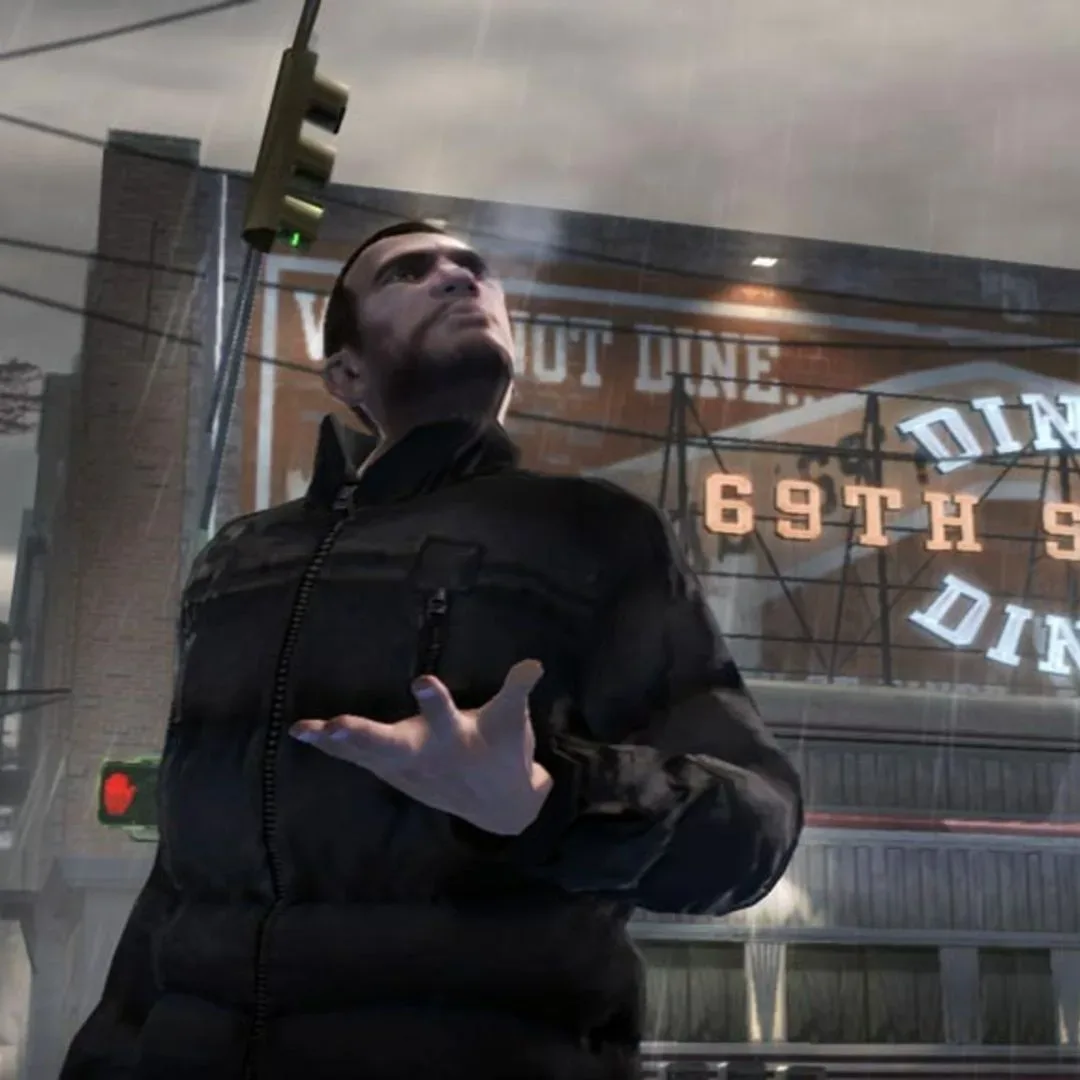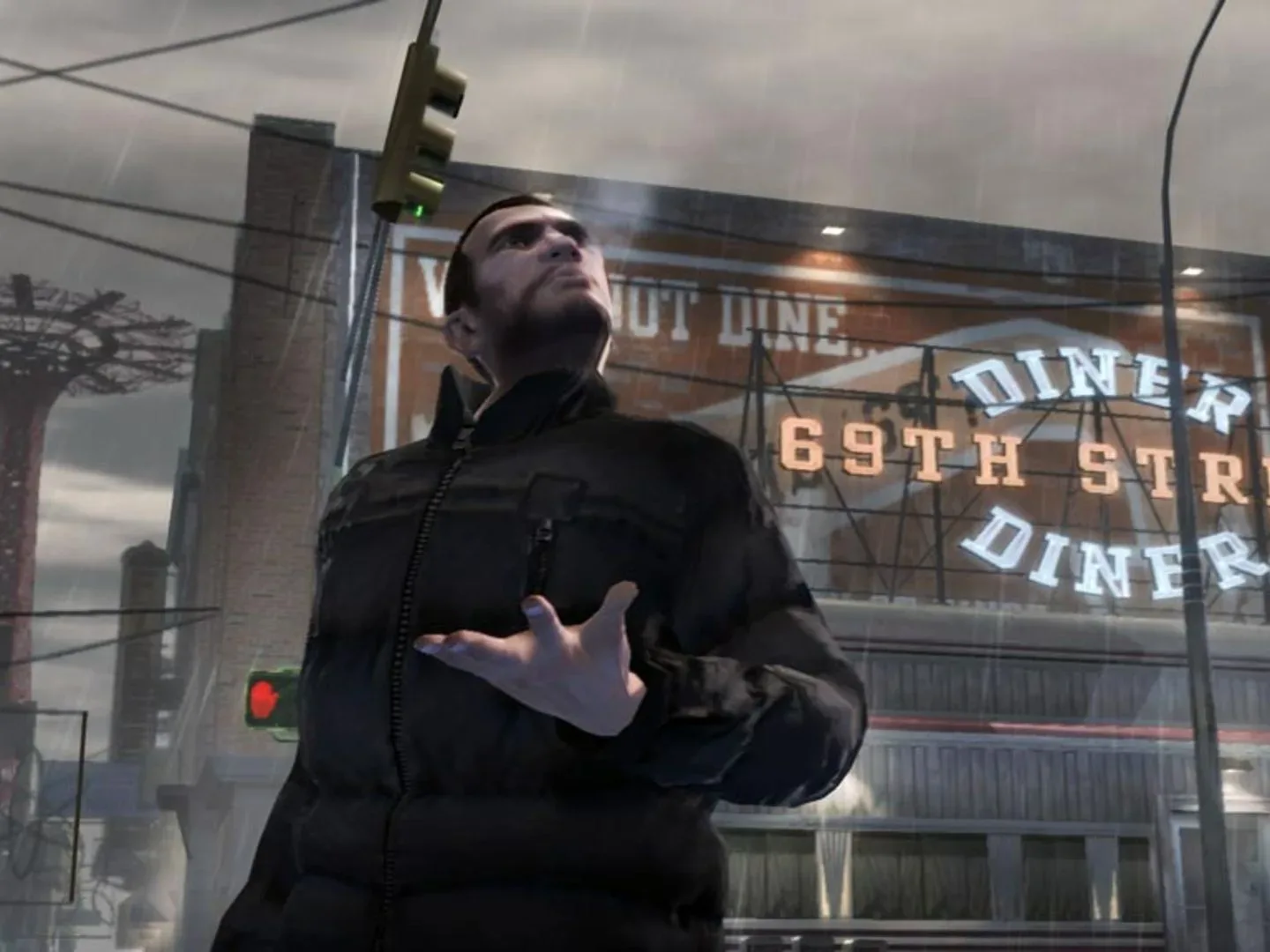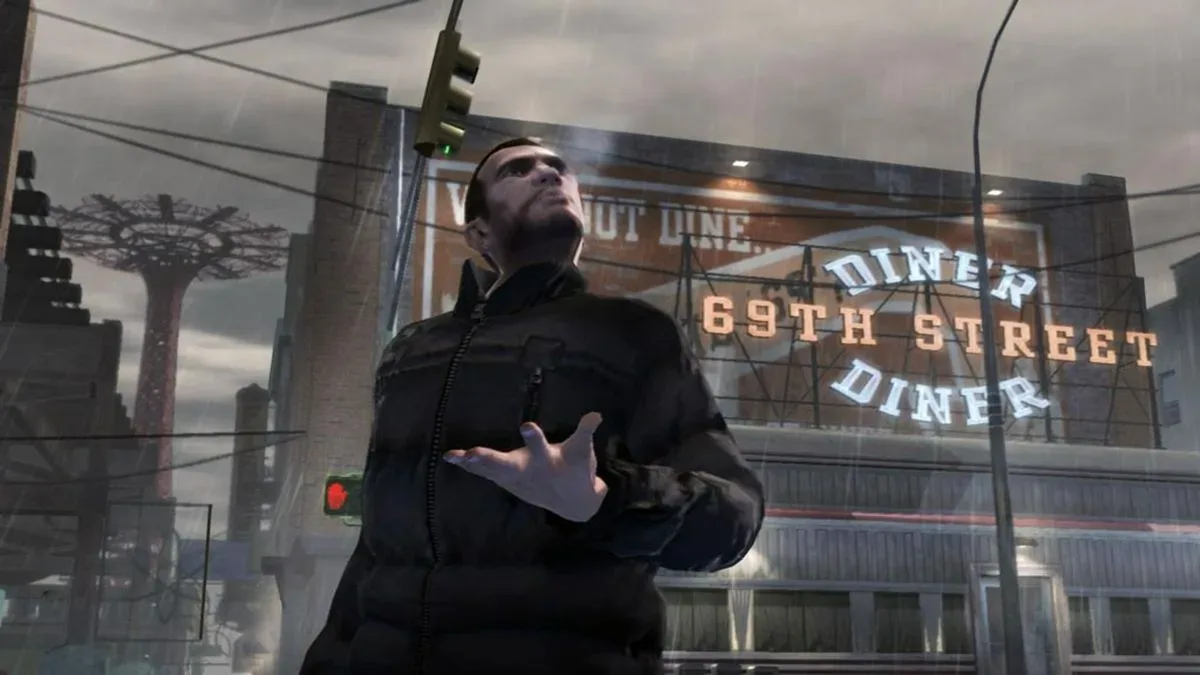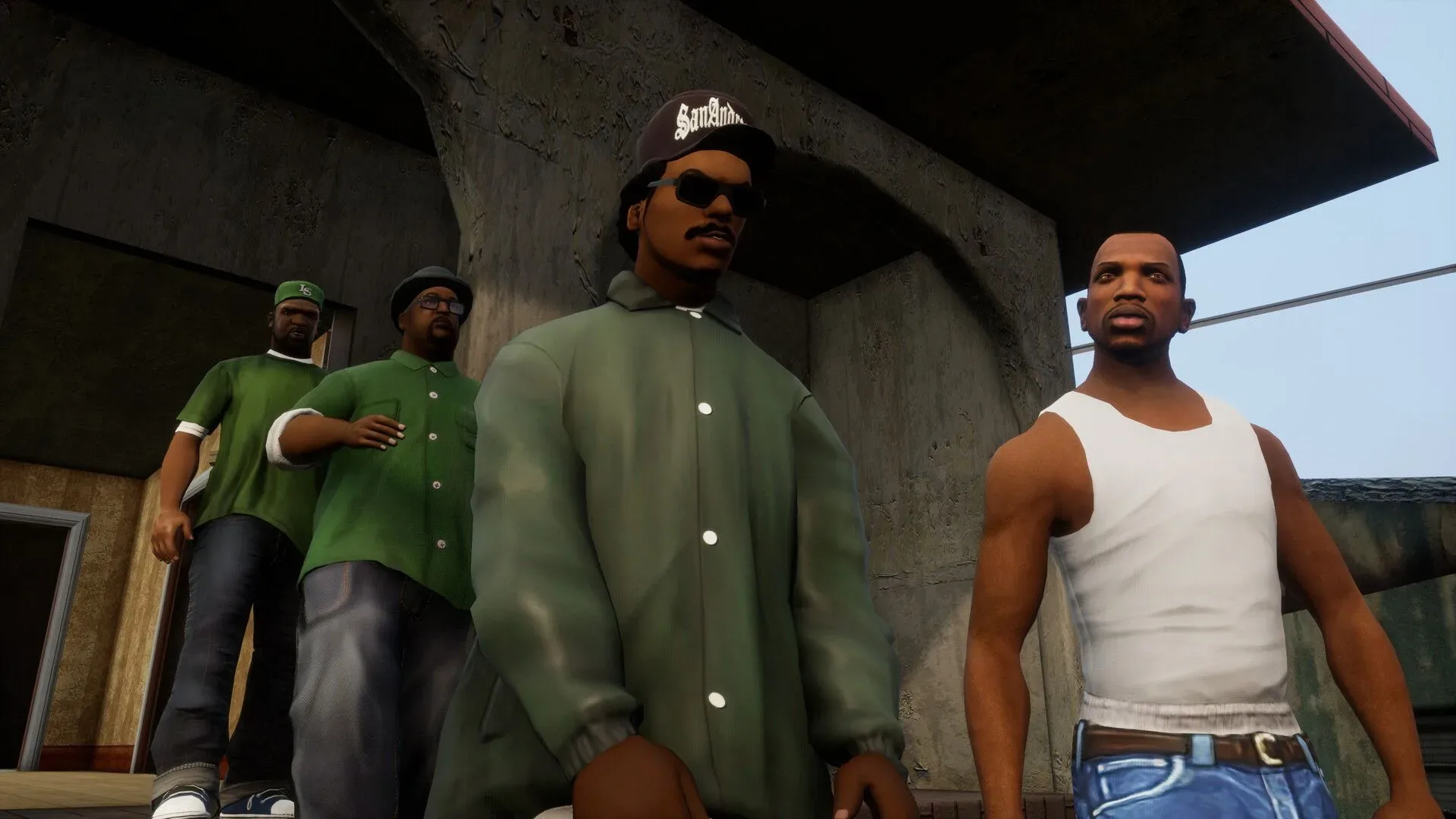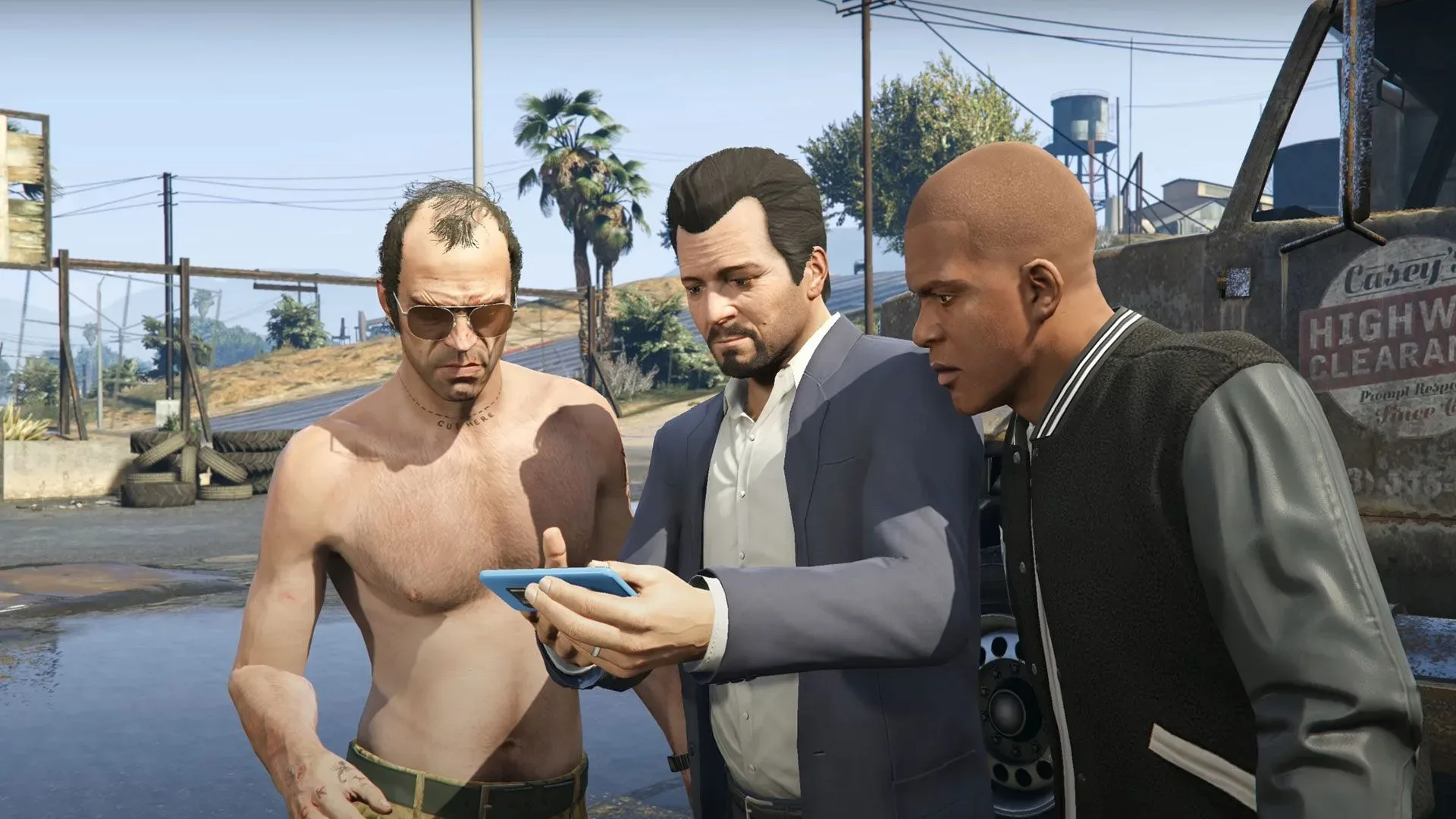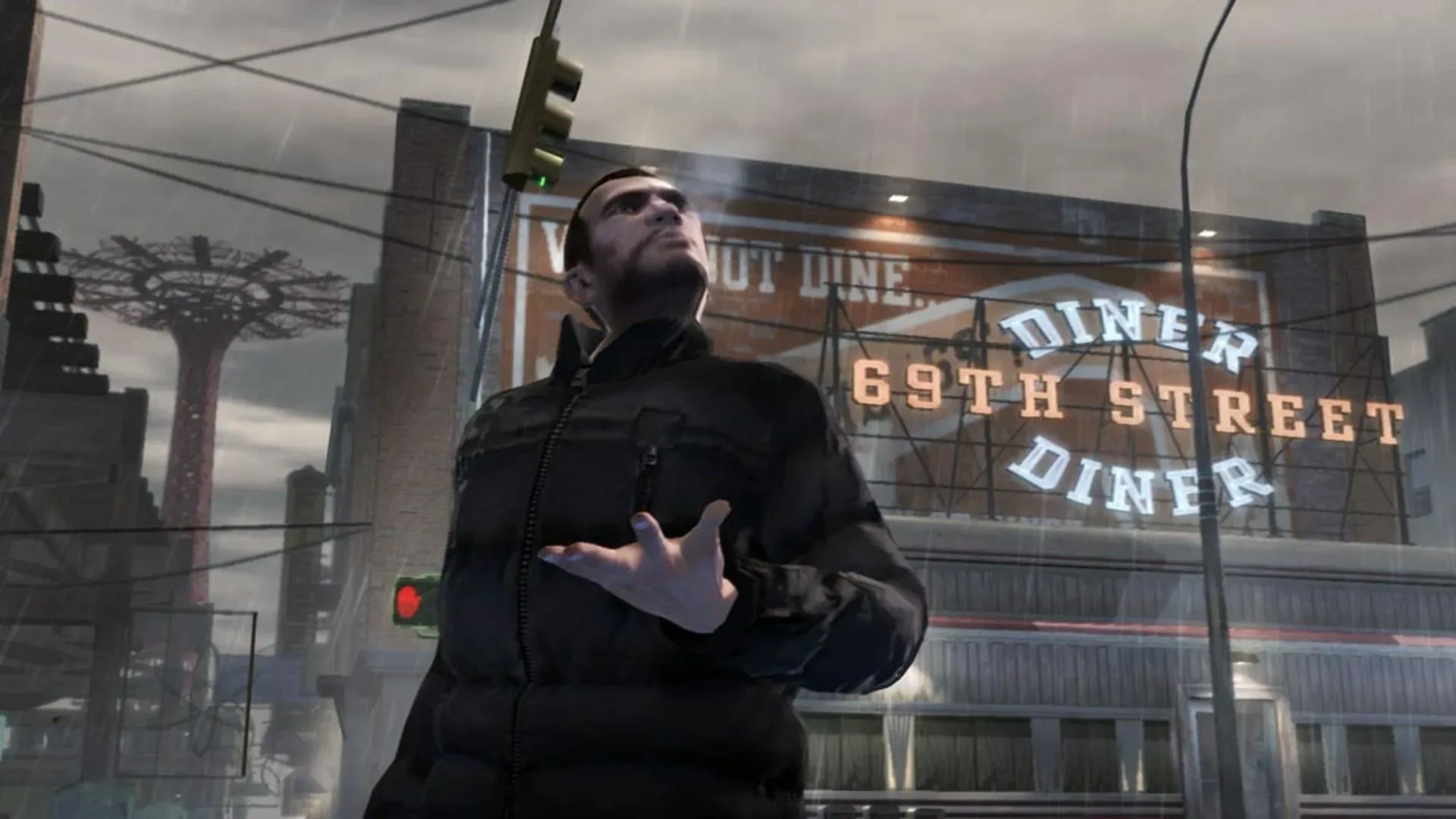
Grand Theft Auto IV’s somber mood was not simply a case of Rockstar Games deciding to make the series more serious for the Xbox 360 and PlayStation 3 generation. Former series writer and creative director Dan Houser says the studio viewed a major tonal change as necessary: after the enormous success of Grand Theft Auto III, Vice City, and especially San Andreas, repeating the established formula was seen as the greater risk.
Houser’s explanation puts GTA 4’s differences in a clear light. Where the PlayStation 2-era games are widely remembered for their larger-than-life settings, stylized personalities, and exuberant “pop” energy, GTA 4 moved toward a more realistic world and a much darker overall tone. For Houser, that was about keeping the franchise creatively relevant rather than turning away from what had worked.
“There was a belief that San Andreas had taken that kind of ‘pop’ energy as far as it could go,” Houser said.
San Andreas had been massive and successful, but that achievement did not automatically point to a straightforward sequel on newer hardware. Houser’s account suggests Rockstar saw the game as a culmination of a particular Grand Theft Auto mode. Continuing in precisely the same direction could have made a new installment feel familiar at the moment it most needed to feel distinct.
Reinvention, not rejection
It is important to distinguish reinvention from rejection. Reinvention does not mean a series discards its identity; it means the creative team changes the way that identity is expressed. GTA 4 remained a Grand Theft Auto game, but it used a more grounded presentation and an unusually sustained atmosphere to give the series a different emotional register.
Houser’s point is that commercial success can create its own creative pressure. A blockbuster provides a template that would be easy to repeat, particularly when fans have responded warmly to it. Yet a template can also become a constraint. The more firmly an audience associates a franchise with one tone, the easier it is for later work to be judged as a variation rather than a new statement.
That concern was central to Rockstar’s thinking. Houser said the perceived danger was not principally that the studio might take a bold new direction after the success of the PS2 entries. Instead, the danger was failing to do so. “The risk was if you don’t reinvent yourselves and don’t do something new and fresh, you’re going to become obsolete,” he said.
That is a useful way to understand the divide between GTA 4 and the games that preceded it. The darker direction was not framed as a repudiation of GTA 3, Vice City, or San Andreas. It was an attempt to avoid treating their style as an endlessly renewable resource.
Related coverage includes Dan Houser Explains Why Grand Theft Auto IV Embraced a Darker Identity.
What tonal consistency means for GTA 4
Houser specifically praised GTA 4 for feeling cohesive, identifying the game itself, its art direction, its moody lighting, and the nature of its missions as elements that worked in tonal alignment. In practical terms, tonal consistency means that a game’s separate parts reinforce a shared emotional effect rather than constantly pulling the player in unrelated directions.
For a game as broad as Grand Theft Auto, that is a meaningful creative challenge. The series has room for narrative, action, open-world exploration, satire, visual design, and missions with very different premises. A coherent tone does not require every scene to have the same intensity or every idea to be literal-minded. It requires the game’s writing, imagery, and activities to feel as though they belong to the same version of the world.
Houser believes GTA 4 reached a level of that consistency the earlier games had not attained. That does not establish a universal ranking of the series, nor does it mean everyone will prefer GTA 4’s approach. It does explain why its darker mood remains so central to conversations about the game. The shift was broader than a plot choice. It connected atmosphere, visual presentation, and mission design.
Moody lighting is a particularly revealing detail in Houser’s description. Lighting is not merely decorative. In visual media, it guides how locations are felt before characters speak or a mission begins. Alongside a more realistic world and somber story, it can help make a game’s fiction feel unified. Houser’s account treats that visual layer as part of the same tonal decision, not as a detached graphical flourish enabled by newer consoles.
San Andreas as the high point of one style
Before GTA 4, the series had a celebrated run of GTA 3, Vice City, and San Andreas. All three earned mass acclaim, sold millions, and became influential games of their era. The prospect of carrying that momentum into the Xbox 360 and PS3 generation was naturally appealing.
But Houser characterizes San Andreas as the point where the preceding approach had reached its natural conclusion. Its scale and success made it a powerful accomplishment, while also making escalation less obviously useful. If the prior solution had been to make the experience bigger and to pursue more of the same high-energy sensibility, Rockstar had to decide whether “more” would actually feel new.
That is the key distinction behind the word “relevant.” Relevance here is not just popularity or sales. The earlier titles already had those. It is creative immediacy: whether a new entry has a reason to exist beyond being another version of a known success.
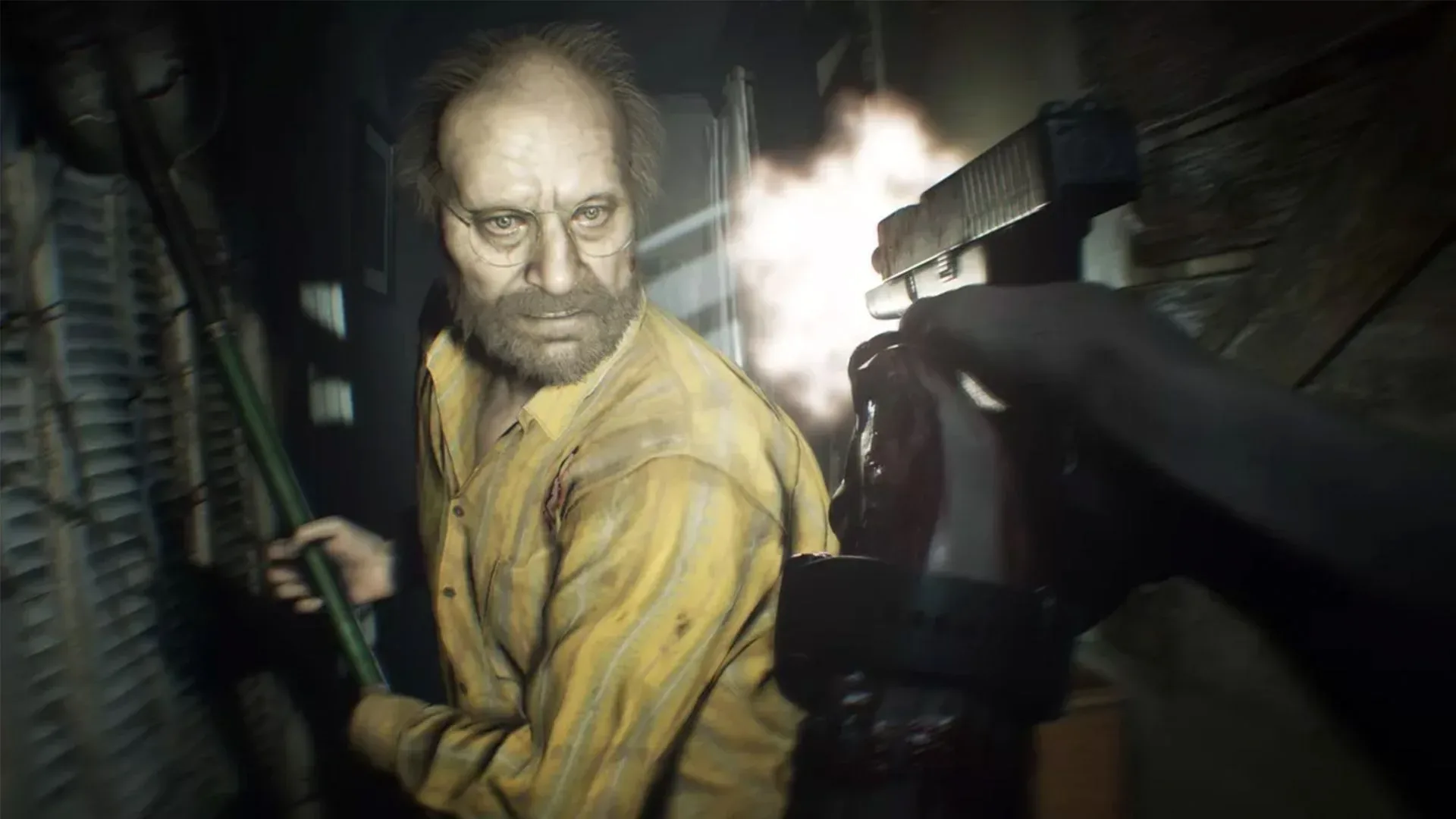
Other developers have articulated comparable concerns when discussing major series resets. For example, a former Capcom production manager has described how Resident Evil 7’s horror reset was shaped in part by a changing view of the genre. The circumstances are different, but both discussions point to the same broad development question: when does protecting a recognizable formula become less valuable than giving the series a new center of gravity?
That question has no automatic answer. Some franchises thrive through refinement and continuity. Others need conspicuous shifts in tone, structure, or perspective to retain momentum. Houser’s comments make GTA 4 an example of the latter instinct. Rockstar believed the established PS2-era energy had achieved what it could, then sought freshness through a more tightly unified, darker identity.
A risk that did not depend on universal preference
Houser acknowledges that GTA 4 is not quite as popular as the games on either side of it. That observation matters because it prevents the story from becoming a simplistic claim that a tonal change is always the commercial optimum. The later GTA 5 was more lighthearted and sillier than GTA 4, and it became a juggernaut in both popularity and sales.
Rather than invalidating GTA 4, GTA 5’s success shows that Grand Theft Auto can accommodate very different tonal balances. GTA 4’s serious, cohesive approach and GTA 5’s comparatively lighter sensibility are not identical creative goals, and they do not need to produce identical audience responses. A long-running series can evolve through contrast as well as through direct continuation.
The immediate lesson from Houser’s remarks is therefore not that darkness is inherently more mature, more artistic, or more effective than comedy and spectacle. It is that Rockstar did not regard GTA 4’s darkness as superficial window dressing. The tone appears to have been a response to a specific creative problem: how to follow a towering success without becoming trapped inside it.
That also explains why the decision could look risky from outside the studio while appearing necessary inside it. Fans could reasonably see the wildly successful PS2 games as a foundation worth extending. Rockstar, by Houser’s account, saw the possibility that extending it unchanged would eventually make the franchise feel obsolete. Both reactions begin with the same fact—the extraordinary success of San Andreas—but arrive at opposite conclusions about what should come next.
Why GTA 4 still stands apart
GTA 4’s standing in the series is inseparable from this decision to make its tone a whole-game proposition. Houser points not only to the story but to the art direction, lighting, missions, and the overall game. That breadth is why the contrast with the PS2 trilogy is so pronounced. A darker script alone would not necessarily create a darker game; tonal consistency comes from making many creative elements point in the same direction.
In hindsight, the more somber approach can also be viewed as an early sign of an interest in the kind of mood Rockstar would later explore in the Red Dead Redemption games. That is an interpretation of the creative lineage, not a claim that the games are identical. The useful connection is the value placed on atmosphere and emotional coherence across a large open-world experience.
Houser’s comments ultimately reframe GTA 4 as a calculated response to success. The game did not become more downbeat because Rockstar had run out of the previous series’ ideas. It became more downbeat because the team believed its previous “pop” energy had already been pushed to a meaningful endpoint. In that reading, GTA 4’s identity was built around the conviction that standing still was more dangerous than changing course.