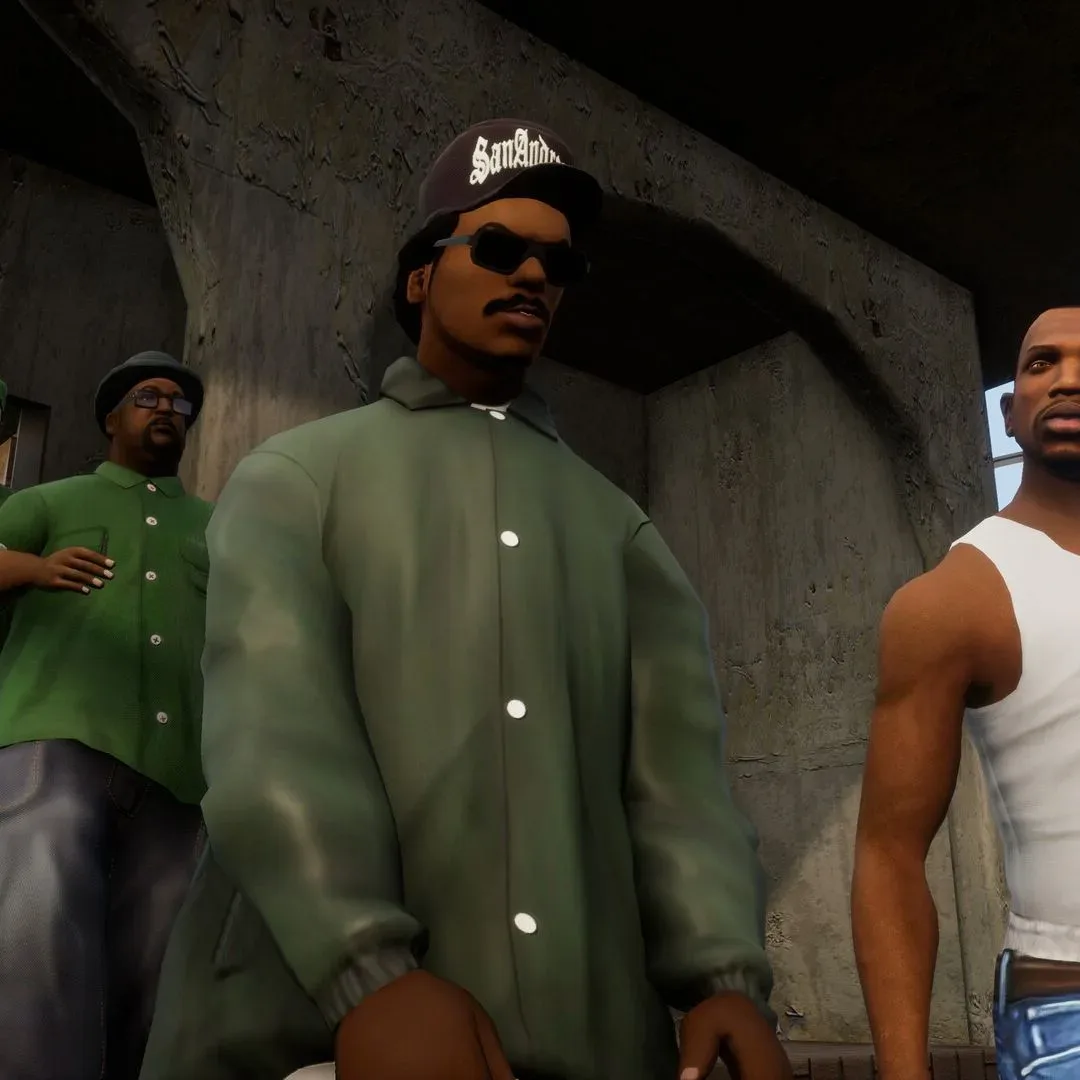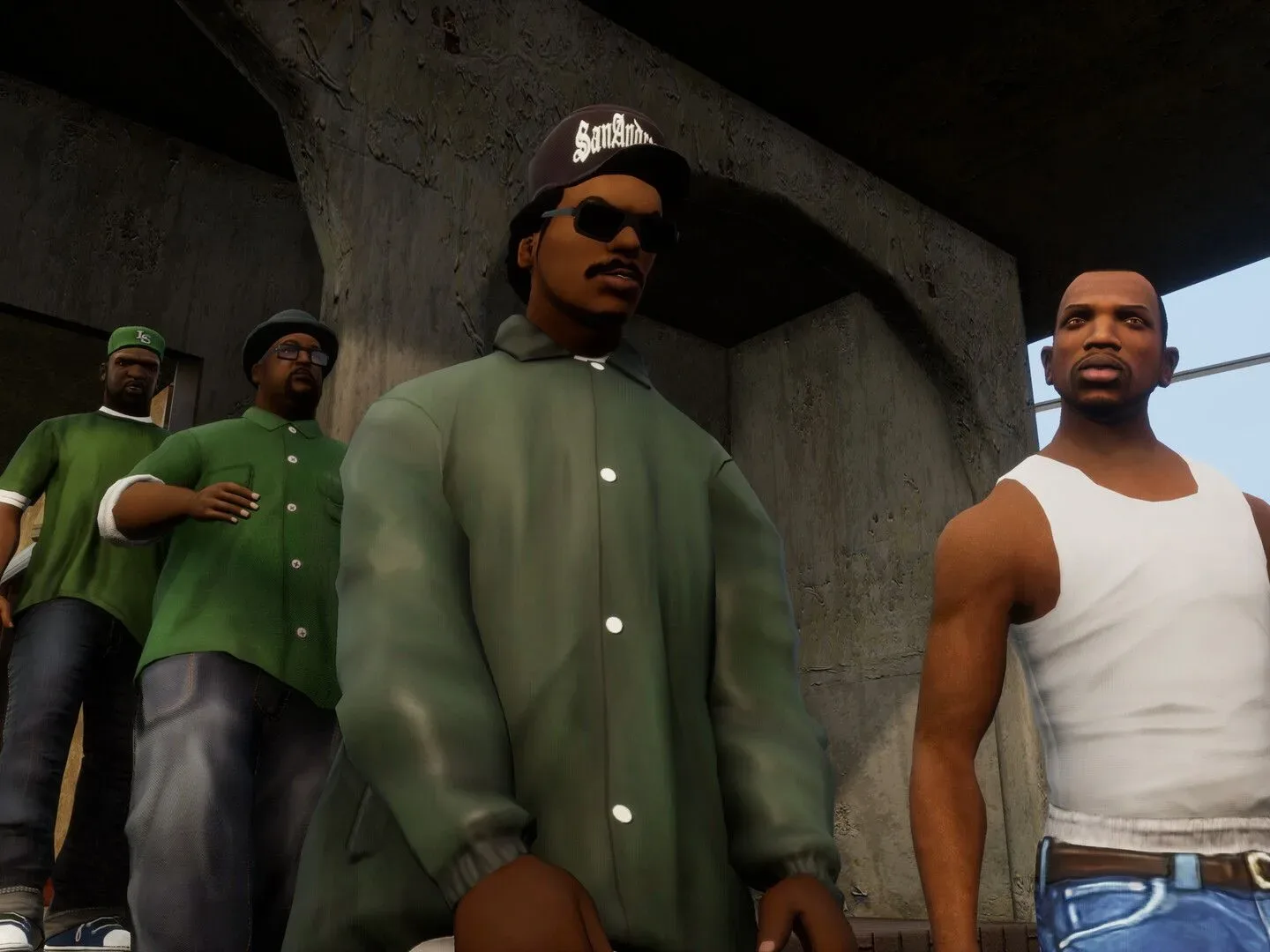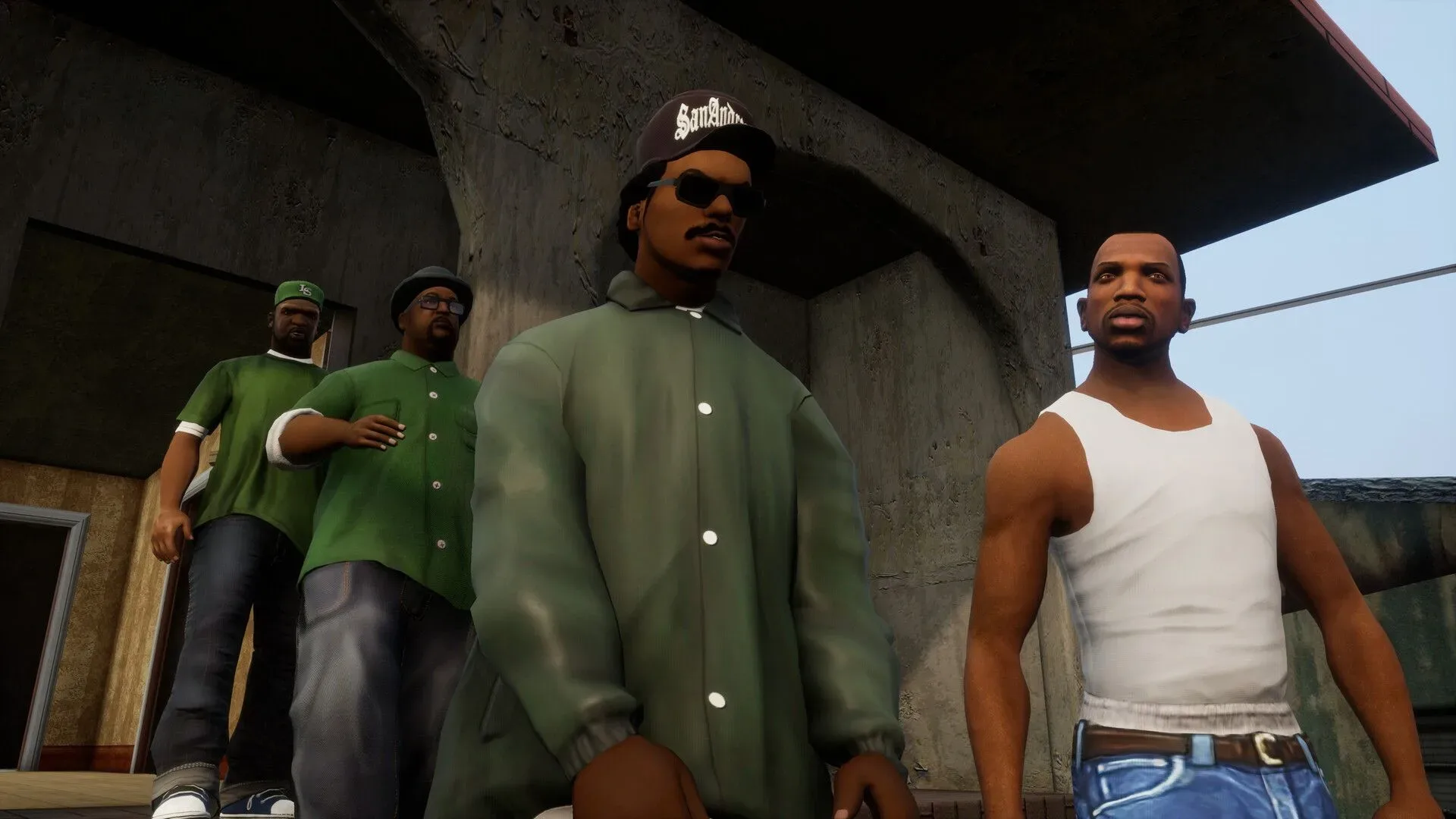
Grand Theft Auto is a useful measuring stick for the modern games business because the series has grown alongside the industry’s appetite for bigger worlds, higher fidelity and longer-lasting online ecosystems. A resurfaced set of figures for Grand Theft Auto: San Andreas makes that change especially stark: the 2004 game was reportedly developed for less than $10 million, yet had sold more than 12 million copies roughly 16 months after release.
If every one of those copies had sold at the then-standard $50 retail price, that would imply about $600 million in consumer spending. That is not the same thing as revenue retained by Rockstar Games or Take-Two Interactive: retailers, platform holders, distribution, taxes, returns and other costs all sit between a shelf price and a publisher’s proceeds. It is still a startling illustration of the scale that San Andreas reached.
More importantly, the comparison is a reminder that a game’s budget is not a simple prediction of its cultural footprint. San Andreas arrived as an enormous open-world game for its era, but it was reportedly made by fewer than 100 people over a few years. Two contemporary accounts pointed to a budget around, or below, $10 million. Adjusted for inflation, $10 million in 2004 is roughly $18 million today.
That is a meaningful amount of money for any developer. But against the reported, unverified estimates that place the next Grand Theft Auto in the billion-dollar-plus territory, it illustrates a profound shift in the cost structure of top-end games.
The numbers need careful reading
The headline comparison is compelling precisely because it is so clean: reported development spending of under $10 million, over 12 million copies sold, and a $50 launch price. But the implied $600 million figure is best treated as a rough gross consumer-sales estimate, not a profit calculation.
“Gross” in this context means the total price paid by customers before the many parties involved in selling a game take their shares and before expenses are deducted. It does not establish how much Rockstar or Take-Two received, and it does not account for marketing. Development cost and marketing cost are also separate categories. A game can be relatively inexpensive to build but expensive to promote, distribute and support.
The 12 million figure also refers to a point around 16 months after San Andreas launched in October 2004, rather than its full lifetime sales. Likewise, using $50 for every copy is deliberately generous: real-world sales include regional pricing, discounts, retailer arrangements and other variables. The resulting $600 million should therefore be understood as a useful scale comparison, not an audited financial statement.
Even with those caveats, the underlying point remains. A reported sub-$10 million production budget and multi-million sales result would represent an extraordinary commercial outcome. The fact that the game achieved it before downloadable add-ons, recurring microtransactions and a dedicated multiplayer service became central to the series’ business model makes the contrast with today’s blockbuster strategies even sharper.
Related coverage includes GTA: San Andreas' $10 Million Budget Highlights How Far Blockbuster Game Costs Have Climbed.
What changed between San Andreas and the current GTA era?
“AAA” is an informal label for the biggest productions: games built with major financing, large teams, substantial marketing and expectations of wide mainstream sales. It does not describe a fixed budget. The label is useful here because it signals how far the high end of development has moved beyond the economics of the PlayStation 2 era.
The current GTA model is associated with a far larger organization, outsourced contributors and an expectation of exceptional visual and technical detail. That scale brings more people, more disciplines and more coordination. Each of those factors can increase both a game’s scope and the cost of making changes during development.
There is also a different commercial expectation. Grand Theft Auto V generated major ongoing business through GTA Online over years, rather than relying only on the sale of a boxed game. This matters because a new GTA is no longer viewed only as a one-time release. It is also likely to be viewed as the foundation for the next large online component.
That is why the reported pricing for GTA 6—$80 for the base edition and $100 for an Ultimate Edition—cannot be considered in isolation. A premium launch price is one part of a broader attempt to finance an enormous production and, potentially, an online platform designed for a much longer lifespan. It may help revenue, but it also underscores how much is at stake when a project has been built around blockbuster-scale investment.
San Andreas was not made in a risk-free age
It would be too simple to paint the 2004 market as a carefree period when games were cheap and every major release succeeded. San Andreas became part of a major controversy over the “Hot Coffee” material: sex scenes that were accessible only through modification. A lawsuit filed by the Los Angeles city attorney’s office in January 2006 alleged that Rockstar had concealed pornographic content.
The episode generated enormous attention and led to the game being pulled by some retailers for a period. That kind of disruption could plainly affect sales, since a product absent from shelves is harder to buy. At the same time, notoriety can amplify public awareness. The available figures do not cleanly prove whether the controversy reduced demand overall or helped keep the game in public conversation. What they do show is that the game had already reached a huge audience despite a turbulent period around its retail availability.
The history also serves as a warning against reading success strictly from a spreadsheet. A project can carry legal, reputational and retail risks even when its development spending is relatively low by modern standards. Conversely, a gigantic budget does not make a game safe. It simply raises the amount of money that must be recovered when something goes wrong.
A $10 million reference point now means something different
Today, $10 million is increasingly discussed as a possible reference point for “AA” development. AA generally describes productions positioned between small independent games and the largest publisher-backed AAA releases. It does not promise a particular genre, level of quality or commercial result. Instead, it suggests a more bounded scope: a team chooses what it can execute well and avoids assuming it must match every production value associated with the industry’s biggest franchises.
That framing makes the comparison with Clair Obscur: Expedition 33 informative. The turn-based role-playing game was made by Sandfall Interactive, a small French developer with mostly junior staff, on a budget also reported to be below $10 million. The two games are separated by more than 20 years, different platforms, genres and production expectations, so they are not one-to-one comparisons. But the overlap in reported budget range is revealing.
In 2004, that level of spending could reportedly underpin a new entry in a flagship open-world crime series. In the current market, it can be a disciplined mid-sized budget for a breakout RPG. The change does not mean development has become less inventive; it means the most technically ambitious games now require much more money, labor and organizational overhead to meet the standards expected of them.
That pressure is not academic. Large publishers and smaller studios operating in the same market have been forced to confront rising costs, with thousands of layoffs occurring as expensive bets fail to deliver. A sensible mid-budget strategy cannot eliminate that risk, but it can lower the threshold a game needs to clear to be sustainable. It may also let teams pursue a focused idea without building every system, visual effect or open-world feature expected from a GTA-sized production.
For a wider view of how industry leadership and corporate structures continue to shift around major entertainment businesses, see this look at Skydance’s evolving leadership bench.
Rising budgets were already visible in 2004
The escalation did not start with the current console generation. Even during the period when San Andreas was made, blockbuster costs were rising. Halo 2, for example, was later described in a 2015 presentation by Microsoft veteran Chip Pedersen as having cost $40 million to develop and another $80 million to market.
That distinction reinforces the central lesson. Comparing development budgets tells only one part of the story, particularly for heavily promoted releases. But it shows that the industry was already splitting into different scales of production. A $10 million GTA and a $40 million Halo 2 could coexist in the same era; both would look modest beside the largest contemporary estimates.
There is no evidence in these figures that every game should try to operate at San Andreas’ reported budget, or that a GTA-scale project could simply return to that cost level while preserving today’s ambitions. Technology, player expectations, team structures and the online-service model have changed. The useful takeaway is not nostalgia for a cheaper past. It is an argument for matching a project’s scope to its realistic commercial needs.
San Andreas remains a powerful example because it shows what can happen when a comparatively restrained budget meets an idea with enormous reach. The next GTA represents the opposite end of the same spectrum: a rare project whose pedigree, resources and expected audience can support a gamble almost no other studio could attempt. Between those poles is the question the industry is still trying to answer—how to make ambitious games without making each release an existential wager.