Kotaro Uchikoshi has revealed that Crash Keys, a studio he founded in March 2025, has had its first game canceled before either the project or the company could be formally unveiled. The studio had intended to announce itself alongside that game in 2027. Instead, its public introduction arrives with an appeal for new client work and projects.
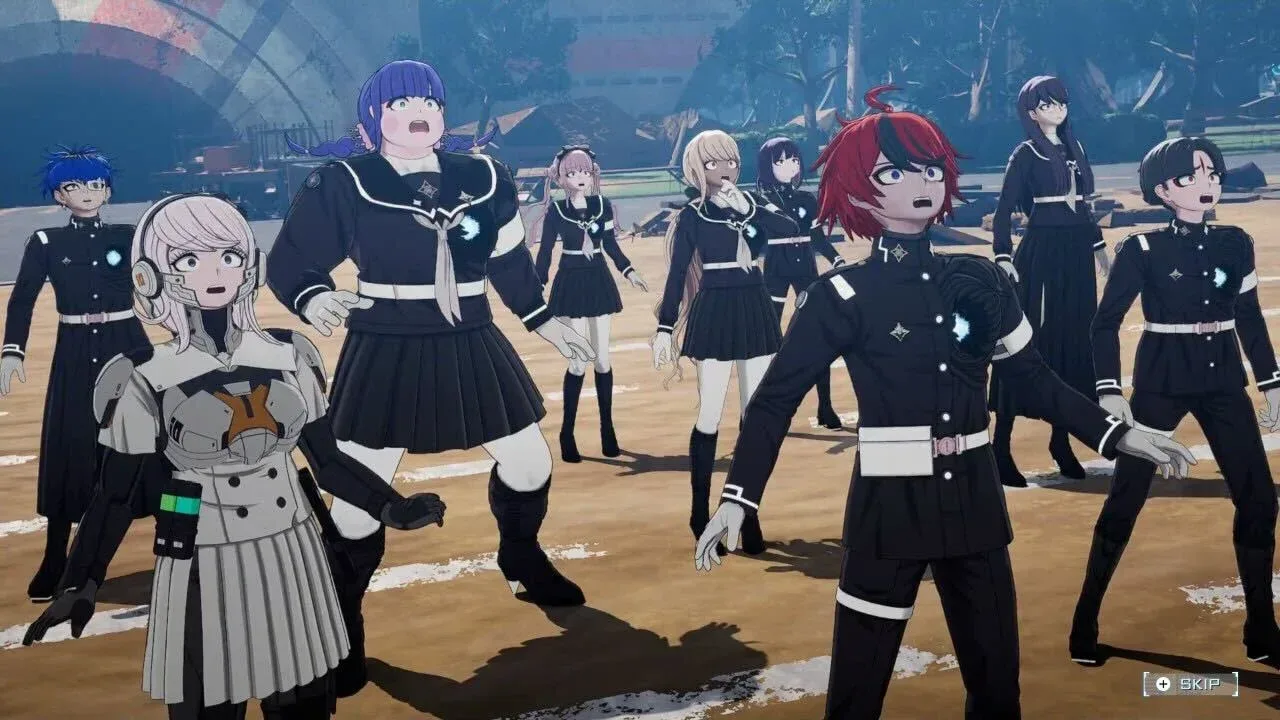
Uchikoshi is known for work connected to Zero Escape, AI: The Somnium Files, and, more recently, The Hundred Line: Last Defense Academy. The abrupt loss of an unannounced game naturally leaves a large gap in the story: there is no stated genre, platform, publisher, release window, or explanation for the cancellation. Those absences matter. At present, the confirmed news is not that a particular kind of Uchikoshi game has disappeared, but that a new small studio has lost the work that was supposed to introduce it.
A studio reveal turned into a request for work
Crash Keys was established to specialize in video game design, direction, and narrative writing. That description suggests a team organized around creative services and authored game development rather than a broad, publicly detailed production slate. Its work page is presently empty because the project it had been developing was suddenly canceled, and Uchikoshi says no subsequent projects are lined up.
In his public message, Uchikoshi made the precariousness unusually plain, using a humorous image of staff resorting to selling stones collected from a riverbank while asking potential partners to get in touch. Beneath the joke is a direct business reality: an early-stage studio can have its identity, staffing plan, and near-term finances tied closely to one contracted or commissioned production. When that work disappears before announcement, there may be little public-facing material available to demonstrate the team’s new label, even if the people involved have substantial individual credits.
For more context, explore The Breakfast Club Brings a Full Interview Back to YouTube, Raising Questions About Its Netflix Era.
The announcement does not identify who canceled the game or why. It also does not establish whether the project was stopped during pre-production, deeper into development, or at another stage. “Canceled” can cover many different circumstances in game production, from a funding or publishing decision to a shift in a partner’s priorities. It should not be read as proof of any particular dispute, financial condition, or creative problem at Crash Keys.
For now, the practical request is straightforward: Crash Keys is looking for clients and collaborators that need the kinds of work named in its mission—design, direction, and narrative writing. The team’s public appeal can be read in Uchikoshi’s social-media post.
Who is listed at Crash Keys
The studio’s member list includes Uchikoshi, writer Akira Mine, and scriptwriter Muri Sasaki. Mine’s cited credits include The Hundred Line: Last Defense Academy and Danganronpa 2×2. Sasaki’s cited work includes Zero Escape and AI: The Somnium Files. All three have connections to the creative orbit around The Hundred Line developer Too Kyo Games.
Related coverage includes Kotaro Uchikoshi's New Studio Loses Debut Game Before Its Planned Reveal.
That is notable because the available roster is compact and concentrated in writing-led disciplines. In game development, narrative writing generally covers the words and story structure a player encounters: dialogue, scenes, character material, branching sequences, and related text. Direction is broader, referring to high-level creative decision-making that can connect story, game structure, presentation, and the intended player experience. Game design concerns the rules, systems, choices, progression, and interactions that make a game playable.
Those categories can overlap, especially on a small team. A studio focused on them may contribute to an entire game or support another developer’s project in a more specialized role. But no particular business model, future title, or external partnership has been announced for Crash Keys, so it would be premature to infer what its next project will look like.
Why the cancellation stands out for narrative-game fans
Uchikoshi’s name carries expectations because of the kinds of games attached to his past work. Zero Escape and AI: The Somnium Files are associated with narrative-forward experiences, while The Hundred Line: Last Defense Academy is described as combining visual-novel and strategy elements. That background helps explain why an unannounced project has drawn attention despite having no public title or footage: the interest is in the creative team and the possibility of another original work built around its specialties.
Still, the missing project should remain just that—missing. There is no supported basis to label it a sequel, a visual novel, a strategy game, an adventure title, or a continuation of any existing series. Nor is there information about how much of it was completed. A canceled project can leave behind design work, narrative material, prototypes, or nothing that is ever released, but Crash Keys has not described what may happen to any of its work.
The team’s situation also illustrates a less glamorous part of game development. Players often encounter a studio only when a trailer, store page, or release date is ready. Before then, a project may depend on arrangements that are invisible outside the companies involved. If that arrangement ends, a project can vanish without players ever learning its name. For a newly founded group, the impact is sharper: the canceled game may have been intended not only as a product, but as the studio’s opening statement.
A difficult comparison close to home
There is a recent point of context in the broader Too Kyo Games circle, though it is not evidence that Crash Keys faces the same circumstances. Kazutaka Kodaka, Too Kyo Games’ CEO and a co-lead on The Hundred Line, said last year that the game’s unexpected success helped the company remain afloat after it had built up significant debt while getting the title made.
The comparison is useful only in a limited sense. It shows that creatively ambitious, smaller teams can face real production pressure even when a finished game ultimately finds an audience. It does not tell us Crash Keys’ finances, whether it has debt, or whether a future project will rescue the studio. Those would be unsupported assumptions.
What is clear is that Crash Keys has opted to be visible at the moment it needs work rather than waiting for its original reveal plan. The studio now has a public identity, a named team, and a clear set of disciplines it is offering. Its next milestone is unlikely to be a conventional game announcement until it has secured a project. Whether that leads to an original title, contract work, or another form of collaboration has not been disclosed.
For fans, the immediate takeaway is both disappointing and cautiously hopeful. An unknown game from Uchikoshi and his collaborators has been lost before it could be shown, but the people who would have made it are publicly seeking a route to make something else. Until Crash Keys shares more, the most accurate description of its future is an open slot where its debut was meant to be.