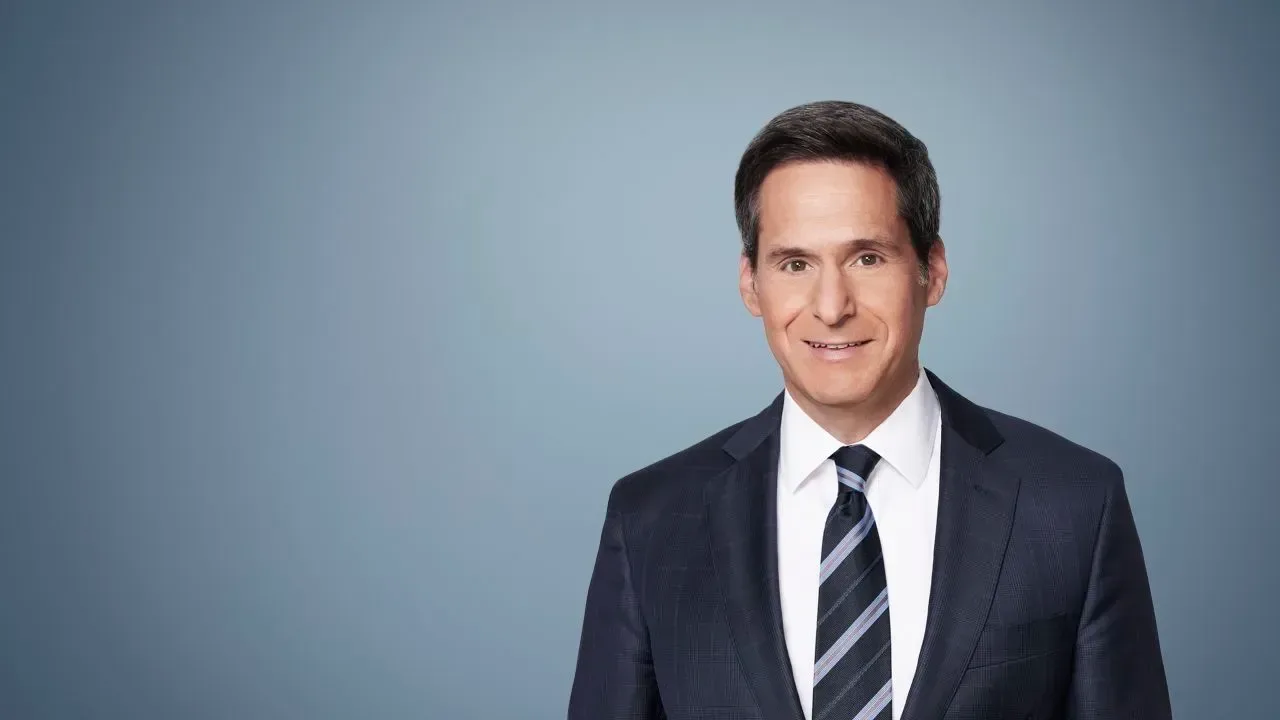
Television news is trying to trade the old one-way broadcast model for something closer to a live conversation. CNN anchor John Berman is now hosting Office Hours, a weekly interactive program for subscribers to CNN All Access, where questions from viewers help determine the direction of discussions about elections, politics and related news.
The experiment matters because it puts a familiar linear-TV role into a different setting. Berman is known for anchoring CNN News Central, covering breaking news, filling in for Anderson Cooper, co-hosting morning programming and working CNN’s touchscreen election display. Office Hours asks for a different skill: not simply presenting a prepared rundown, but responding to a community whose interests may not map neatly onto that day’s standard television agenda.
For this week’s session, Berman is set to appear with his News Central co-anchors Kate Bolduan and Sara Sidner. The format is hosted on CNN’s relatively new All Access subscription product rather than the conventional television schedule.
What makes ‘Office Hours’ different from a TV segment?
Interactive programming is not just television with a comment box stapled to it. A conventional news block has a relatively firm structure: producers choose the subjects, reporters and anchors provide verified reporting and analysis, and the audience receives the finished program. Live interaction shifts one part of that equation. Subscribers can surface the topics they still want explained, challenged or revisited after the main broadcast has moved on.
Berman has described the experience as unlike television despite the presence of cameras. That distinction is useful. The production may remain video-based and professionally moderated, but the editorial rhythm is more responsive. The anchor has to judge which audience questions are worthwhile, answer in real time and preserve the standards expected of a news operation while keeping the exchange human rather than overly scripted.
In this case, the word interactive means the audience has some input into what is discussed, not that subscribers take over reporting or editorial verification. The useful version of the model is a guided conversation: the newsroom brings its reporting discipline and the viewers bring a clearer sense of which open questions have continued to matter after a headline has passed.
Audience feedback can reveal what a rundown missed
A recent session focused on the approaching midterm elections illustrates why the format could have practical editorial value. Berman said questions and comments kept returning to President Trump’s proposal to distribute $5,000 checks to Americans if Republicans won. The subject had been addressed on television, but its continued prominence in the subscriber discussion made clear that some viewers felt the topic had not been exhausted.
That does not automatically make a heavily requested subject the most important story of the day. Popularity alone is not a substitute for reporting, context or proportionality. It can, however, identify an explanatory gap. Viewers may be seeking details about a proposal’s meaning, feasibility, conditions or wider political stakes. Their questions can alert an anchor and production team to the difference between covering an announcement once and helping an audience understand why it remains unresolved in its mind.
Berman said the evening feedback could inform conversations he held while anchoring the next morning. That is perhaps the clearest potential advantage of a recurring subscriber session: it creates a feedback loop between a newsroom and people who are already spending time with its work.
- Broadcast coverage establishes the day’s major developments.
- Subscriber discussion shows which claims or issues viewers are still interrogating.
- Follow-up coverage can address the most substantive unanswered points without treating every comment as an assignment.
The approach is especially relevant to election coverage, where a rapid sequence of speeches, polls, proposals and reactions can leave audiences with a lot of information but little time to ask what it means. A conversational format potentially makes room for the questions that do not fit a tight live-TV segment.
A subscription strategy built around access
CNN’s reasoning is also commercial. Ryan Kadro, the network’s senior vice president of content strategy, has framed the effort around engaging people who are already watching video and reading articles and who want to go deeper. In subscription terms, the perceived value is not only a catalog of material; it is access to expertise and to the people who present the news.
This is often called retention, meaning the effort to give paying customers reasons to remain subscribed over time. A weekly session with a recognizable anchor can become a habit and a feature that is harder to replicate through passive clips or articles alone. Kadro said the goal is to bring conversations that may otherwise play out in comment sections or on X into CNN’s own environment, making its subscriptions more compelling.
CNN has also experimented with on-screen chat features, including a text “rail” from correspondents during some television programming. These tools point toward the same broad ambition: keep the discussion connected to the journalism instead of letting it disappear into external platforms where a newsroom has less ability to frame, moderate or answer it.
There is a broader industry context here. MS NOW has been emphasizing interactive sessions through its Membership product, including weekly subscriber hangouts involving Rachel Maddow and members of Morning Joe. The common thread is that established television talent is being asked to do more than front a show. Anchors and correspondents increasingly serve as guides for a paying audience that expects an opportunity to ask questions, not merely watch a finished package.
Why moderation and pacing still matter
There are real limits to this approach. A live audience can rapidly pull a conversation toward the loudest, most repetitive or most partisan questions. A newsroom cannot promise that every question will be selected, nor should it follow every topic suggested by the chat. The anchor and producers must decide what is relevant, accurate and useful, and must be ready to correct misinformation or acknowledge uncertainty when an answer is not yet known.
That makes moderation more than a technical add-on. It is the editorial structure that separates a subscriber Q&A from an unfiltered social-media thread. If the format is going to deepen trust, viewers need to understand that participation can influence the conversation without erasing standards of verification, relevance and civility.
There is also a pacing challenge. Traditional TV is optimized for concise transitions and a clear hierarchy of stories. Viewer-led sessions need enough flexibility to linger on a concern without becoming a loop of similar prompts. Berman’s willingness to cede some control is part of the appeal, but successful sessions will still require the anchor to summarize, clarify and move the conversation forward.
Early response and a deliberately gradual rollout
The network did not launch the format without testing it first. CNN held three or four early Zoom sessions and sought feedback from participants before developing a version for its app. Kadro said participation in Berman’s first Office Hours was three times higher than expected.
That early result is encouraging, but it is not by itself proof that an interactive franchise will remain a major subscription draw. Sustained interest depends on consistency, the quality of the questions and answers, the subjects chosen, and whether viewers see a clear benefit in returning. Still, beginning with smaller sessions and feedback is a sensible way to learn what actually works before treating interaction as a magic feature.
The future of CNN’s broader strategy may also receive closer review following Paramount Skydance’s successful bid to acquire CNN’s parent company. It remains to be seen which existing priorities new leadership will retain. For now, Office Hours offers a visible example of an established news brand testing a more participatory model while still relying on its on-air talent and reporting infrastructure.
What this means for news viewers
For viewers, the appeal is straightforward: a chance to ask follow-up questions after the lower-third banner is gone and the next story has begun. For journalists and anchors, the benefit is more nuanced. Direct audience input can expose confusion, skepticism and curiosity that ratings alone cannot explain.
It will not replace reported journalism, and it should not become a referendum on which subjects deserve coverage. But used carefully, interactive programming can make a news organization more responsive without turning it into a crowd-controlled feed. As CNN’s ownership transition approaches, the company’s larger direction remains unsettled; for more on that uncertainty, read the latest on CNN leadership and Paramount Skydance’s plans.
Berman’s weekly sessions show the immediate version of that bet. The value is not simply that subscribers can speak. It is that an anchor can listen, identify the questions that survived the news cycle and bring sharper answers back into the next conversation.