Four television networks have suspended White House pool coverage after the administration prevented CNN from carrying out its scheduled duty as the day’s TV pool provider. ABC News, CBS News, NBC News and Fox News joined CNN in the action, meaning there was no major-network television pool coverage of the president’s scheduled events on Monday, including appearances at the White House and a trip to the United Nations in New York City.
The dispute is larger than one outlet’s access. It centers on the practical system through which broadcasters share coverage of events where space, camera positions or access are limited. When the assigned pool organization is excluded and the other participants decline to substitute, the result is an unusual blackout: there is no designated television feed being gathered for the pool on that day.
What happened to the television pool
The administration suspended CNN as the designated television pool provider on Monday, Sept. 21. CNN had been one of five outlets participating in White House TV pool coverage, alongside ABC News, CBS News, NBC News and Fox News.
Fox News Washington bureau chief Bryan Boughton, who was serving as the White House TV pool chair, told the other networks that the TV pool would not cover presidential events designated for pool coverage, effective immediately. He said the decision followed the White House position that kept CNN from performing its assigned pool responsibilities, and that no replacement pool would be installed.
The five networks issued a joint statement framing the action as a question of independent access to government information:
“The public has a vital interest in receiving accurate, independent information about its government. No administration should restrict a news organization because it objects to its reporting.”
That collective response matters because it included Fox News as well as the other broadcast networks and CNN. The stated concern was not a disagreement over an individual report or a competition for a specific camera position. It was the principle that a news organization should not lose access because an administration dislikes its coverage.
Pool coverage, explained
A pool is a shared newsgathering arrangement. Rather than every outlet sending a separate camera crew or reporter into an event with limited capacity, a selected organization covers it and makes the material available to other participants. Pooling is especially important for tightly controlled locations and movements, including presidential events.
In this case, the assigned TV pooler’s role was not merely to air material for its own audience. The pool function supports a broader group of outlets. Removing the scheduled pooler therefore has consequences beyond the targeted network: it disrupts a shared infrastructure that helps television organizations cover an event at all.
White House arrangements also include secondary providers for television, print, radio and newer digital-media organizations. But the presence of secondary designations does not automatically solve the immediate problem. The other television networks were not obligated to provide material to third parties, and the pool chair said a replacement would not be used. Their choice not to step in turned the objection into a coordinated suspension rather than a routine reshuffle of the assignment.
For viewers, the immediate implication is straightforward. Pool-designated presidential events may not receive the usual shared television coverage while the suspension remains in effect. The disruption affects the availability of independently gathered network footage, rather than simply changing which channel supplies it.
The wider access dispute
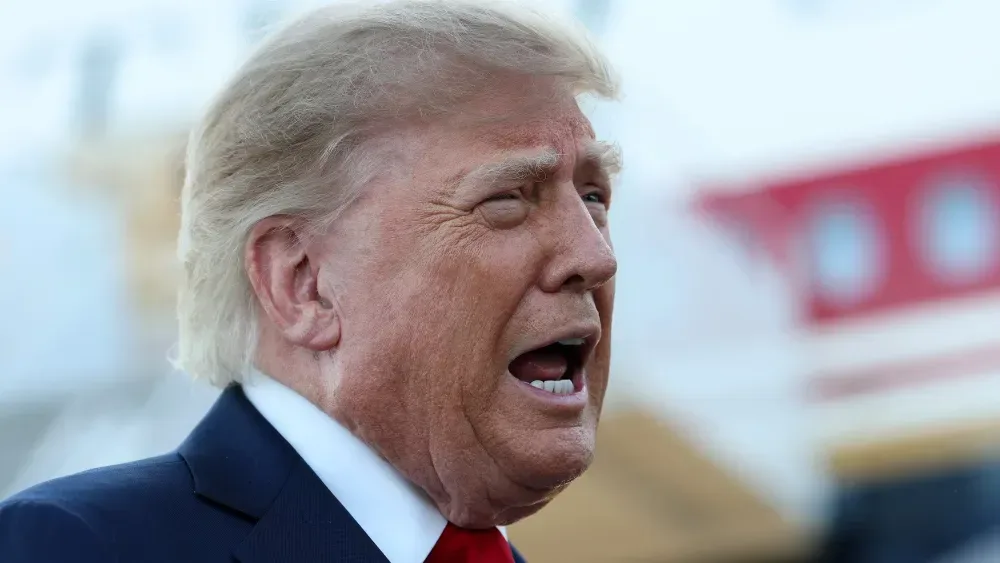
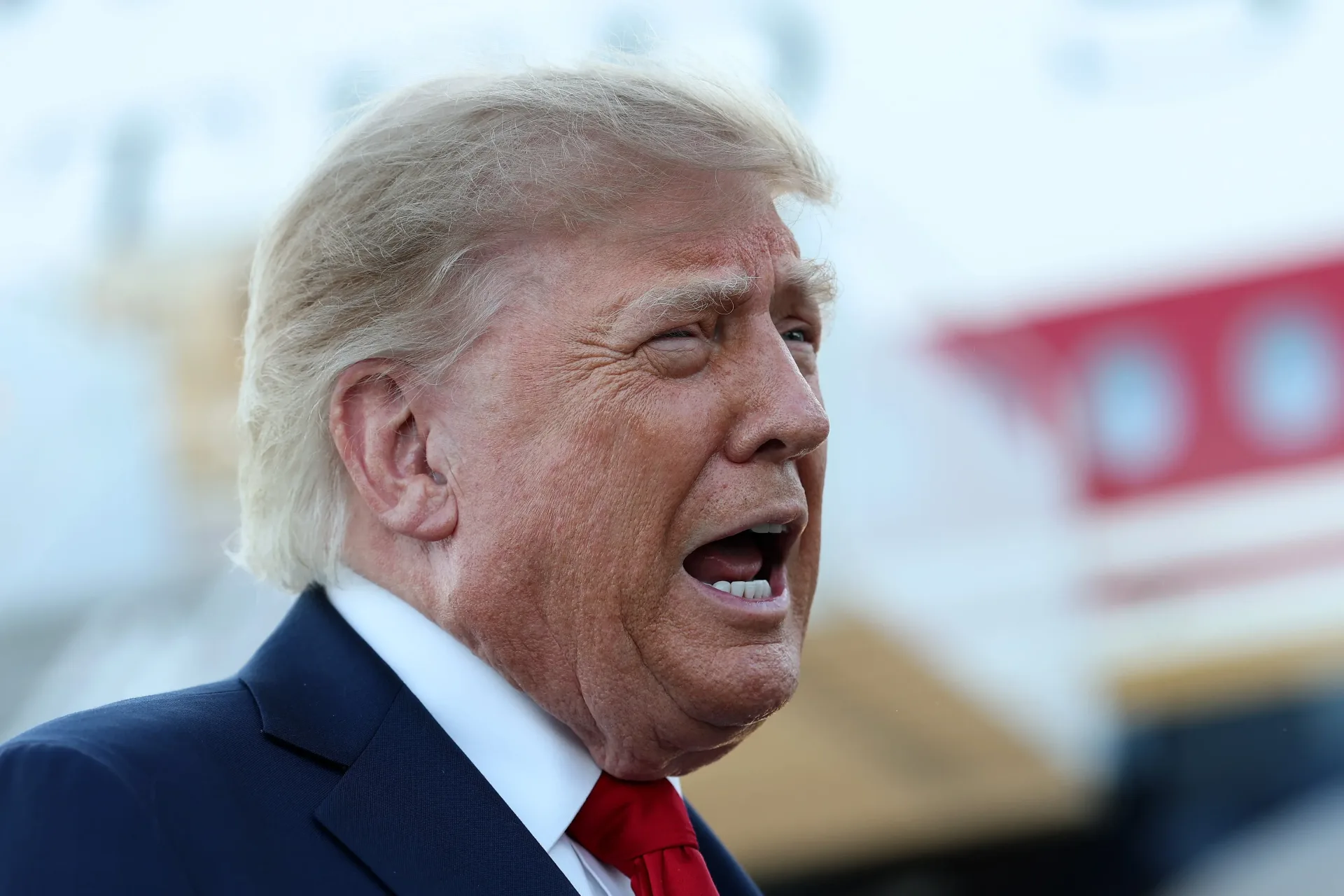
The pool suspension followed the administration’s broader move against CNN, MS NOW and Politico. On Friday, Sept. 18, President Donald Trump said on social media that the three organizations were barred from the White House “effective immediately,” citing his accusation that they spread “fake news.” Staffers from the outlets were denied entry on Saturday and their press passes were revoked.
At an Oval Office briefing on Friday, Trump said there was not one report that prompted the decision. Instead, he described the outlets’ coverage as cumulatively and deliberately negative. He also indicated that the New York Times and the Washington Post could be barred next.
CNN, MS NOW and Politico subsequently said they were suing Trump and three White House officials over the ban. Their allegation is that the unilateral exclusion violates the First Amendment. That is an allegation within a legal challenge, not a ruling: the supplied information does not establish how a court will assess the claim or what remedy, if any, it may order.
The distinction is important. The legal case concerns the constitutionality of the access ban, while the TV-pool shutdown is a separate operational response by the networks. One could develop through litigation; the other changes the day-to-day mechanics of coverage immediately.
Why the solidarity action changes the story
A White House access fight often initially appears to be a conflict between one administration and one newsroom. The decision by the other TV pool participants to stop pool coverage changes that frame. It makes the dispute about whether the pool itself can operate when the government bars its scheduled member over editorial objections.
This is also why the absence of a replacement is consequential. Replacing CNN would have restored at least some pool coverage for the day, but it could have implied that an outlet’s scheduled role can be removed without affecting the overall system. The networks instead chose a course that left no television pooler in operation, making visible the system-wide cost of the exclusion.
There is no indication here that secondary organizations were unable to gather any news independently, nor that every form of media coverage ended. The specific action concerned events designated as TV pool coverage. That scope should not be overstated: it is a suspension of the shared television-pool arrangement, not evidence that all reporting about the administration ceased.
What audiences should watch next
The next practical question is whether the White House reverses or changes its position on CNN’s pool participation, whether the networks restore coverage, or whether the dispute moves toward another arrangement. The immediate record says there would be no replacement pool put in place, but it does not establish a longer-term schedule or resolution.
There are parallel tracks to follow:
- White House access: whether CNN, MS NOW and Politico regain entry and press credentials.
- Pool operations: whether television networks resume covering events designated for the shared pool and under what conditions.
- The lawsuit: how the First Amendment claims made by the three outlets are argued and addressed.
- Broader press relations: whether the president’s suggestion that additional newspapers could be barred turns into further access restrictions.
For the media business, the episode arrives at a moment when access, distribution and institutional relationships remain central pressures for large news organizations. Those pressures are distinct from corporate dealmaking, but they share the same industry stakes around who can gather information and deliver it to the public. For another current media-industry development, see the state deal that removed a major hurdle for the Warner Bros. Discovery merger.
The key fact for now is unusually plain: all five members of the White House television pool were aligned in objecting to CNN’s exclusion, and the result was no designated TV pool coverage for Monday. The networks’ joint stance treats independent newsgathering as a shared concern, even where the organizations are normally competitors for viewers, scoops and airtime.