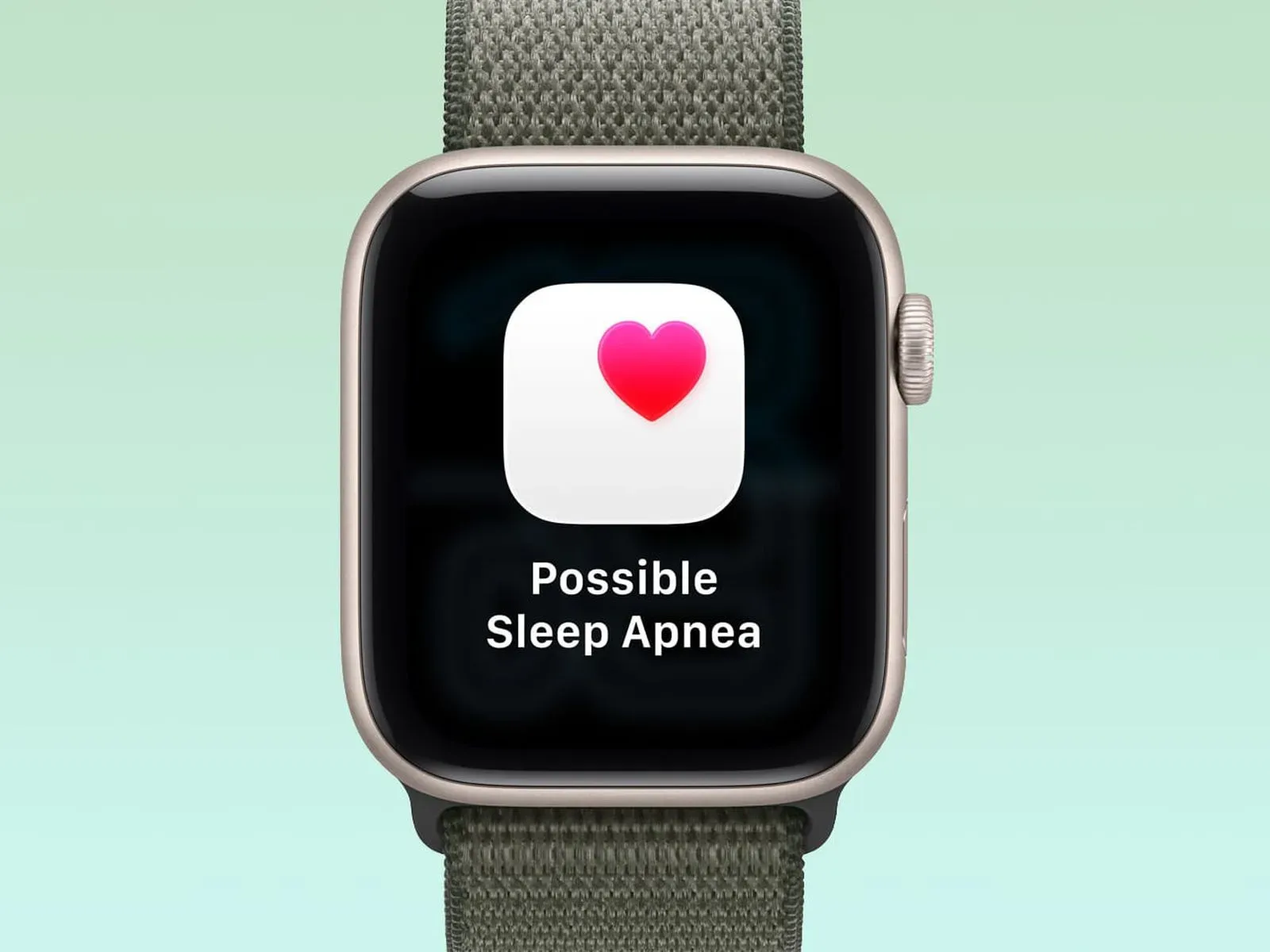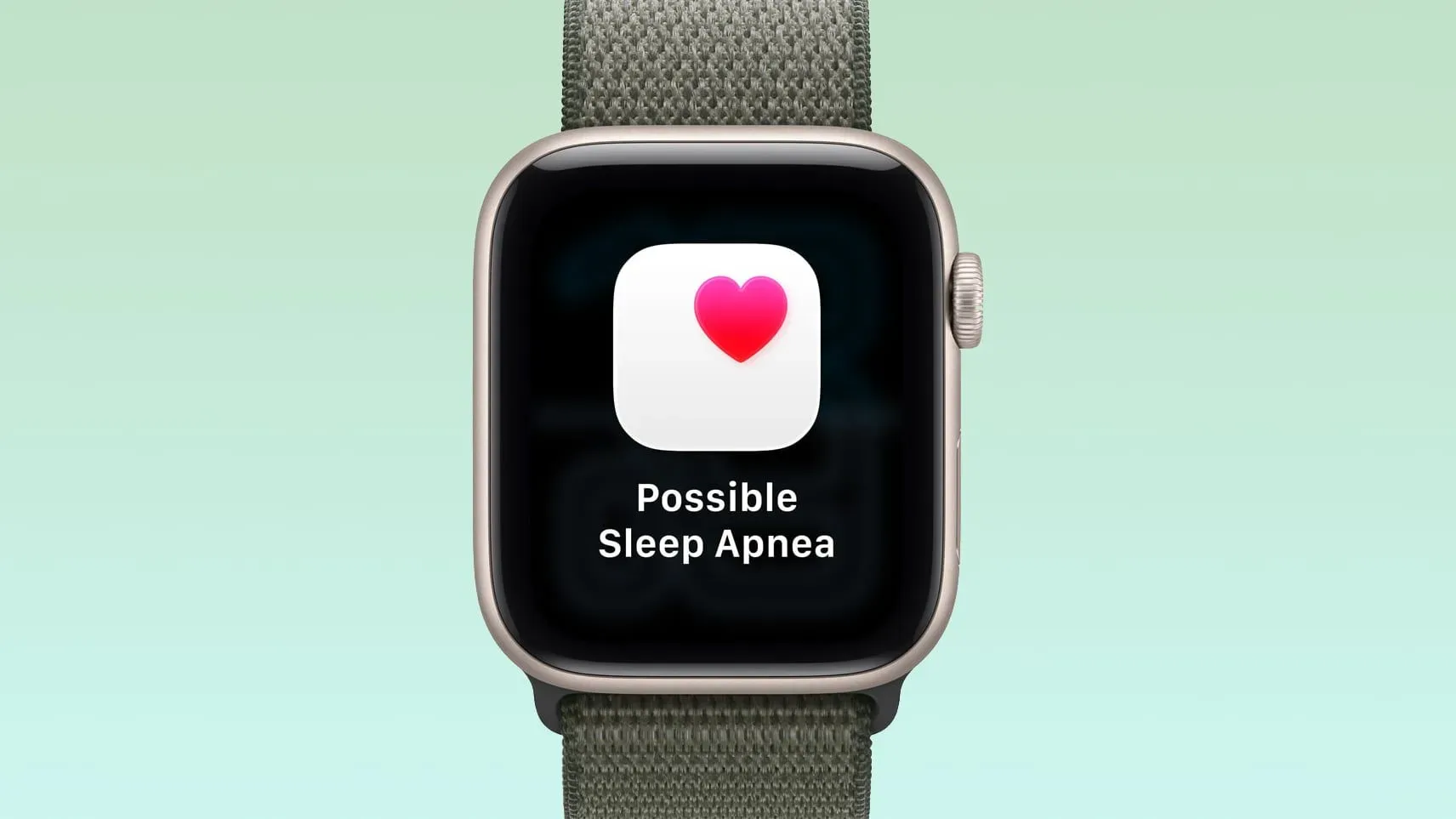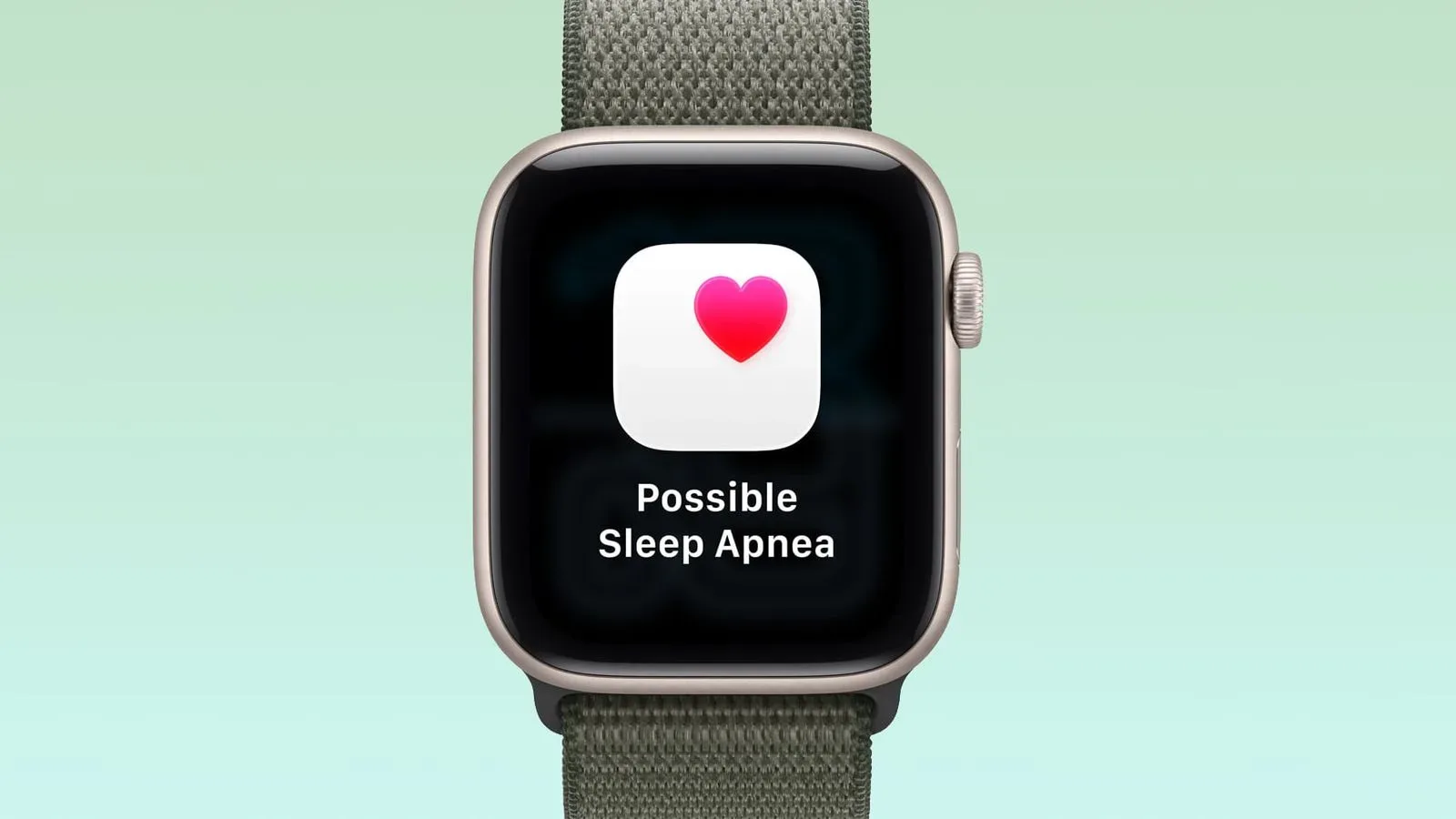
Apple Watch sleep apnea notifications are now available in mainland China following approval from the country’s National Medical Products Administration. The rollout brings a health-focused Apple Watch capability to users with compatible recent models, but its purpose is importantly narrower than a diagnosis: it is designed to identify patterns that may be consistent with moderate to severe sleep apnea and encourage a conversation with a clinician.
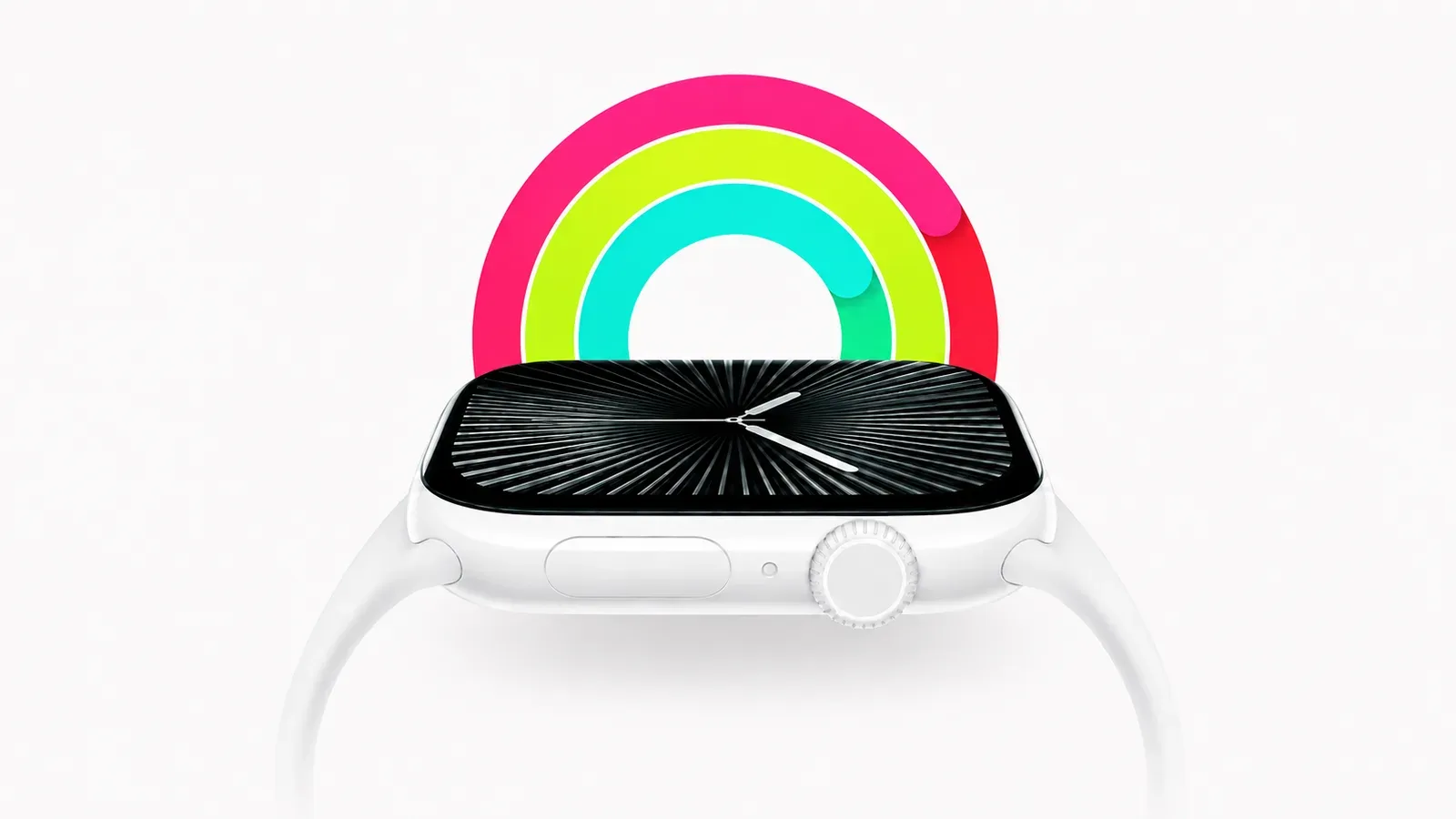
Supported devices are the Apple Watch Series 9, Apple Watch Ultra 2, Apple Watch SE 3, and newer models. For owners in mainland China, compatibility matters because the notification system is tied both to the hardware generation and to local regulatory clearance. Having a compatible watch does not make the feature a replacement for medical assessment; it provides a route to notice a potentially concerning longer-term pattern.
How the Apple Watch feature works
The watch uses its accelerometer while the wearer is asleep to monitor breathing disturbances. An accelerometer is a motion sensor: in this context, it is used to detect movements associated with breathing-related interruptions or irregularities during sleep rather than to directly measure a medical diagnosis.
Apple analyzes the collected data over 30 days. That detail is central to understanding what the notification means. This is not presented as an immediate alarm based on one unsettled night, nor as a general sleep-quality grade. The feature looks across a month of breathing-disturbance information for signs associated with moderate to severe sleep apnea.
Sleep apnea notifications therefore sit in a screening-oriented role. A notification can flag that the collected pattern merits attention, but it does not establish why that pattern occurred or confirm a condition on its own. The practical next step is not self-diagnosis from a wrist display; it is using the result as useful information to discuss with a healthcare professional.
What a notification gives users
A wearer who receives a notification can export a PDF report. That report can be taken to a doctor to support a discussion around potential diagnosis and treatment. Turning watch data into a shareable document is significant because it gives users a way to bring a recorded, longer-term observation into an appointment rather than attempting to describe sleep patterns from memory.
The PDF does not change the division of responsibility between consumer technology and clinical care. The Apple Watch monitors and analyzes a specific set of signals, while medical professionals are the people who can assess symptoms, interpret the broader health picture, determine whether diagnostic testing is appropriate, and discuss treatment if needed.
That distinction is worth keeping clear, especially with health features that can feel unusually personal. A notification should be treated as a prompt to seek professional guidance, not as a definitive answer. Likewise, the absence of a notification should not be interpreted as a guarantee that no sleep issue exists. The feature’s stated focus is signs of moderate to severe sleep apnea identified through its 30-day analysis.
Why the 30-day window matters
By assessing data every 30 days, the system is framed around recurring signals rather than the noise of an individual night. Sleep can vary for many reasons, and a single unusual night does not necessarily communicate much on its own. Looking for a pattern over time gives the feature a more measured purpose: identifying data that may justify follow-up.
For users, this also means patience is part of the experience. There is no indication here of a rapid, one-night result, and people should not expect the watch to operate like an emergency alert system. Its role is longer-term observation during sleep. Consistent overnight wear is therefore logically important for the device to have sleep data to analyze, although a user should follow the watch’s own setup and usage guidance.
The approach also illustrates a wider point about consumer wearable health tools. Sensors may collect data continuously or frequently, but meaningful notifications often depend on interpretation across time. The data is only one part of the process; the other is how it is evaluated, communicated, and used responsibly after the notification appears.
Availability is tied to approval
The mainland China launch follows approval from the National Medical Products Administration. Regulatory approval is not merely a distribution detail in this case. Sleep apnea notifications concern health-related analysis and user-facing guidance, so availability can differ between markets even when the underlying watch hardware is sold more widely.
That makes this rollout notable for Apple Watch owners in mainland China who have an eligible model: the hardware support and local approval are now aligned for this particular feature. It also underscores why feature lists should be checked by region rather than assumed from an international product announcement or a feature available elsewhere.
Apple’s recent product coverage has also included connected-home hardware, such as Apple HomeView’s temperature and humidity sensor additions. The Apple Watch update is a different kind of technology story, with substantially higher stakes: it deals with sleep-related health signals and a defined path for taking a report to a doctor.
Practical takeaways for eligible Apple Watch owners
- Check the model: The feature supports Apple Watch Series 9, Ultra 2, SE 3, and newer models.
- Check the region: This launch applies to mainland China following National Medical Products Administration approval.
- Understand the signal: The watch’s accelerometer monitors breathing disturbances during sleep.
- Expect a longer view: Data is analyzed every 30 days for signs of moderate to severe sleep apnea.
- Use the report constructively: If notified, export the PDF and discuss possible diagnosis and treatment with a doctor.
- Do not treat the alert as a diagnosis: The notification identifies a pattern for follow-up; clinical evaluation remains essential.
A careful use case for smartwatch health data
There is an important difference between a device feature that simply reports a number and one that can direct someone toward medical care. Apple’s sleep apnea notifications are built around that difference. They are not described as diagnosing sleep apnea, and the availability of an exportable PDF makes the intended handoff clear: the watch can surface relevant information, while diagnosis and treatment remain matters for a doctor.
For compatible Apple Watch users in mainland China, the launch adds a potentially useful layer of overnight health monitoring. The most responsible interpretation is also the simplest one: if the watch identifies a 30-day pattern associated with moderate to severe sleep apnea, take the notification seriously, save the report, and use it to start an informed medical conversation.