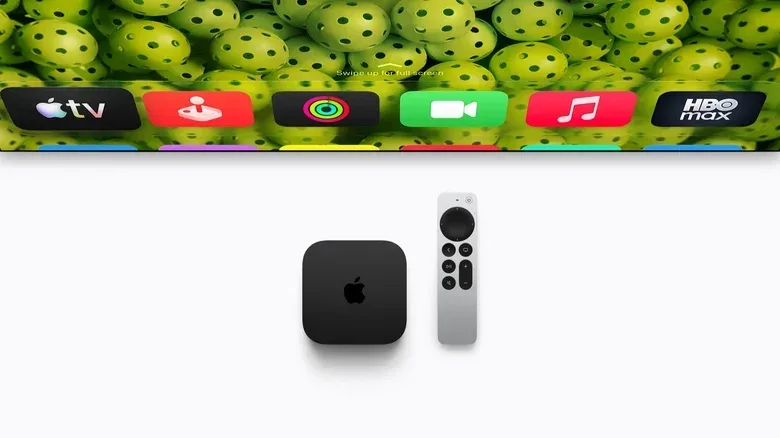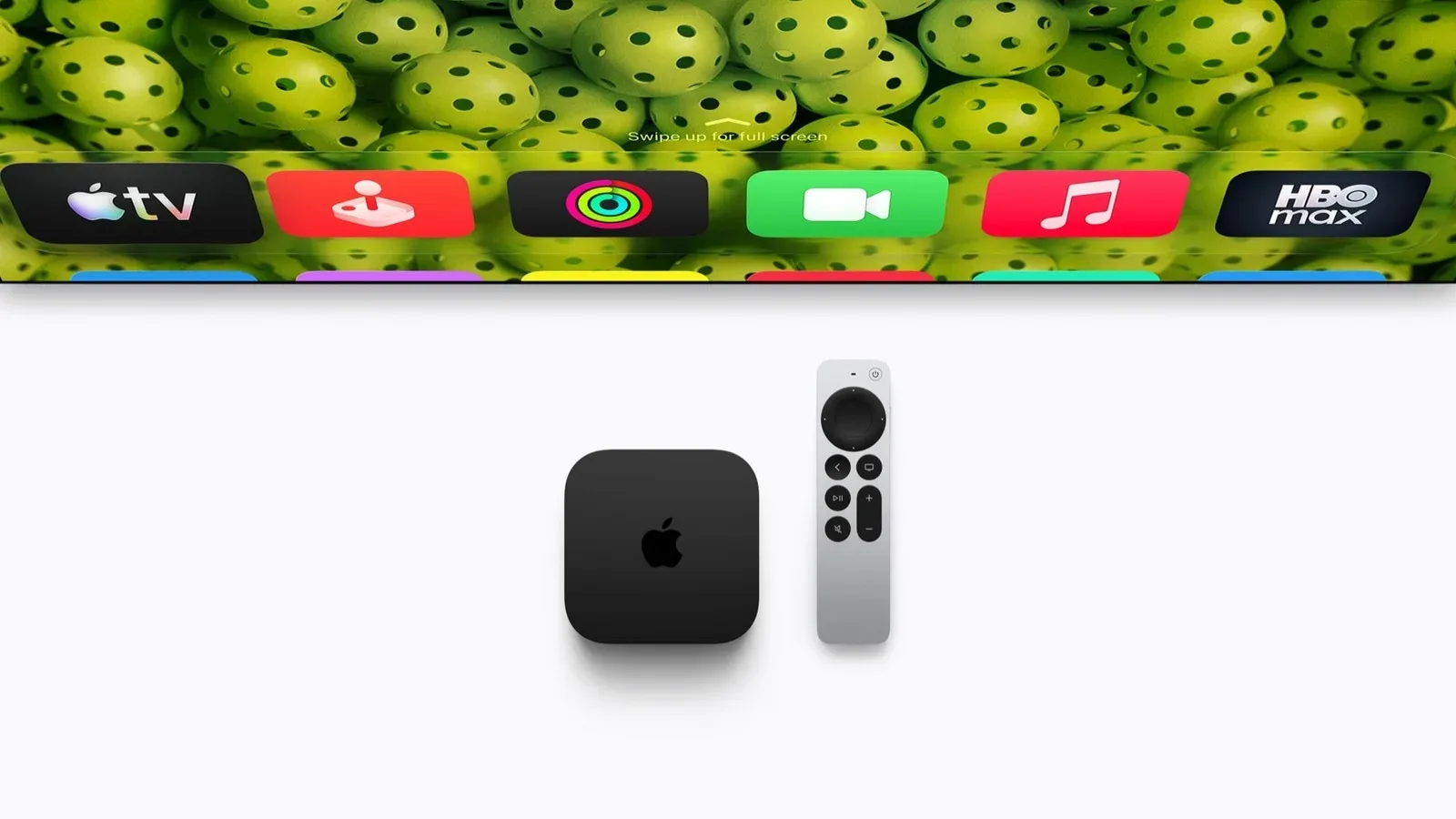
Apple’s new fourth-generation Apple TV 4K is scheduled to arrive on November 13 at $299, bringing a faster A19 chip, 128GB of storage, Ethernet, built-in microphones and a redesigned Siri Remote. It is the first new Apple TV 4K in four years, and its headline pitch is clear: more performance, more convenient voice control, and a few important fixes to the platform’s underlying media hardware.
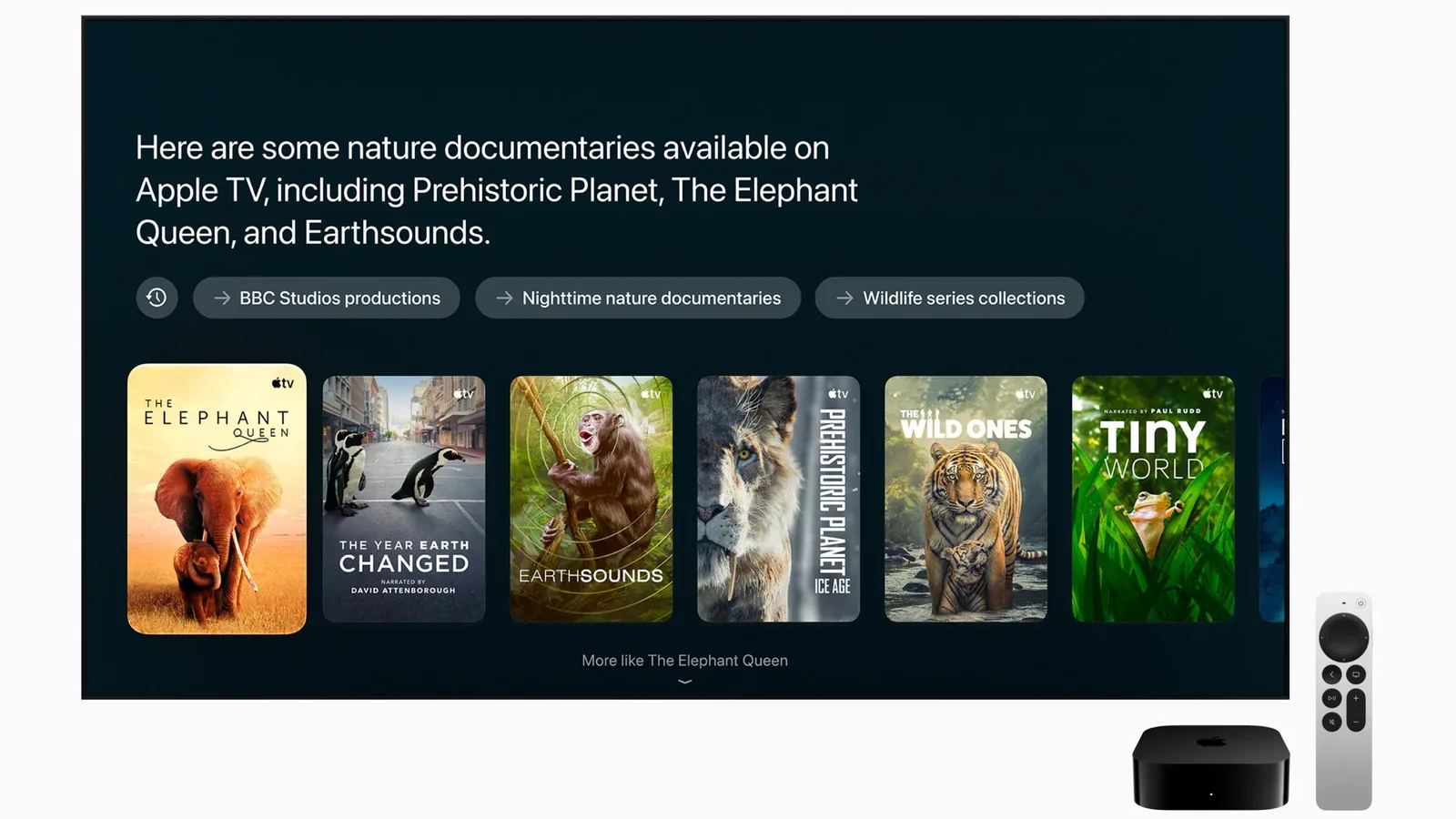
The slightly awkward wrinkle is that the most prominent software addition, Siri AI, is not exclusive to the new box. Apple says the assistant will also come to second-generation Apple TV 4K models and later through an update, provided the household owner has a compatible Apple Intelligence-capable iPhone or iPad. At launch, Siri AI is limited to English in eight countries.
That support substantially changes the upgrade calculation. For someone with a 2022 Apple TV 4K, the new model offers meaningful hardware refinements, but it does not put the newer conversational Siri experience behind a $299 paywall. For someone using an older Apple TV 4K or the 2015 Apple TV HD, the divide is clearer: those devices are outside Siri AI support.
A much higher entry price, with one configuration
The 2026 Apple TV 4K costs $299 and comes in a single configuration with 128GB of storage and Ethernet. That is $100 more than the least-expensive 2022 model at its current price, and $50 more than the 2022 version with 128GB and Ethernet.
The comparison becomes more striking when measured against the 2022 model’s original pricing. That generation launched in 64GB Wi-Fi form at $129, while its 128GB Ethernet version cost $149. Prices were raised in June to $199 and $249, respectively, amid increased demand for memory and storage components tied to AI data centers. The new model therefore costs more than double the original price of the entry 2022 unit.
There is no 64GB, Wi-Fi-only option this time. That simplification means every new buyer receives wired networking and the larger storage allotment, but it also removes the lower-cost path for people who simply want a compact streaming device. In practical terms, the $299 price is not merely a premium upgrade tier; it is now the starting line for the current Apple TV 4K.
What the A19 changes—and what it does not
The 2022 Apple TV 4K uses Apple’s A15 Bionic chip. Its replacement moves to the A19, which Apple says is up to 50% faster for CPU work and twice as fast for graphics. The new system also has double the RAM.
CPU, or central processing unit, is responsible for general computing work: running the operating system, responding to interface inputs, managing apps and handling many tasks that are not primarily visual. Graphics performance refers to the hardware’s ability to render imagery, an especially relevant metric for 3D games and more elaborate visual effects. RAM is fast working memory used while software is active; more of it can give developers greater room for complex tasks and multitasking, though its real-world benefit depends on how apps use it.
For ordinary streaming, the ceiling remains unchanged. Both the 2022 and 2026 Apple TV 4K are limited to 4K at 60 frames per second. Both support Dolby Vision, HDR10+ and Dolby Atmos. Dolby Vision and HDR10+ are high-dynamic-range formats, designed to carry expanded brightness and color information on compatible displays, while Dolby Atmos is an audio format intended to support more spatial sound placement. None of those core viewing capabilities distinguish the new hardware from the 2022 model.
That does not make the processor change irrelevant. A faster CPU and a substantially faster graphics component may matter more for games and other demanding apps than for selecting a streaming service and watching a film. But the actual scale of improvement for complex Apple TV tasks is not established yet. On the available specifications, performance is the new model’s biggest potential advantage for players, rather than its most certain everyday advantage for video-only households.
For a perspective on how Apple’s broader device ecosystem can affect compatibility and setup requirements, see our coverage of the iPhone Duo’s expected day-one iOS update.
AV1 is the quiet but potentially consequential addition
The A19 includes dedicated AV1 decoding hardware. AV1 is a video-compression format: it is designed to deliver high-quality video while using less bandwidth. A dedicated decoder means the device has specialized hardware to process that format, rather than relying solely on more general-purpose processing.
This is a notable correction for Apple TV users who have encountered limitations around AV1, particularly on YouTube. The 2022 device lacks AV1 hardware decoding, while the new Apple TV 4K adds it. The upgrade does not alter the box’s 4K/60fps output limit, but it should make the new model better equipped for services that use AV1 streams.
The networking stack also advances from Wi-Fi 6 to Wi-Fi 7 and from Bluetooth 5 to Bluetooth 6. Wi-Fi is the device’s local wireless network connection, while Bluetooth handles communication with nearby accessories. These specifications indicate newer wireless hardware, though their benefit in a specific home will depend on the rest of that home’s equipment and network. Thread support remains the same as on the 2022 model.
Built-in microphones turn Siri into a room-level interaction
The most obvious day-to-day distinction is not the chip. It is three microphones built into the Apple TV 4K itself. Apple says they can hear a Siri request over whatever is playing, allowing hands-free interaction without taking hold of the remote.
On the 2022 model, there are no microphones in the box. Using Siri means pressing the appropriate button on the remote and speaking into it. The difference is therefore less about whether Siri exists and more about how it is accessed. The older unit can receive Siri AI where eligible; the newer one adds a voice-control method that is intended to work from farther away.
That convenience will be valuable to some households, especially those that routinely use Siri in front of the television. It is also the feature that calls for the clearest personal assessment. A person who prefers a physical button before making a request may see little value in always-ready room microphones. A person who frequently misplaces the remote or uses voice control constantly may see the change quite differently.
The new remote works with old Apple TVs
Apple’s revised Siri Remote introduces Precision Finding. With a supported iPhone, this feature can guide an owner toward a misplaced remote and make it play a sound. Precision Finding requires an iPhone 17 or later, an iPhone Air or an iPhone Duo; it does not work with the iPhone 17e.
Crucially, the remote is not locked to the 2026 streaming box. It will be sold separately for $59 and works with all Apple TV 4K models as well as the 2015 Apple TV HD. That makes it a targeted option for existing owners who consider remote recovery the useful part of the refresh but do not need a new processor, AV1 decoding or built-in microphones.
It also makes the hardware comparison more nuanced. A 2022 owner who wants Siri AI can receive it through software, and a 2022 owner who wants Precision Finding can buy the compatible remote. What remains exclusive to the newest unit is the combination of A19 performance, doubled RAM, AV1 hardware decoding, updated wireless connectivity, built-in microphones and four-HomePod surround support.
Four HomePods, but only under specific conditions
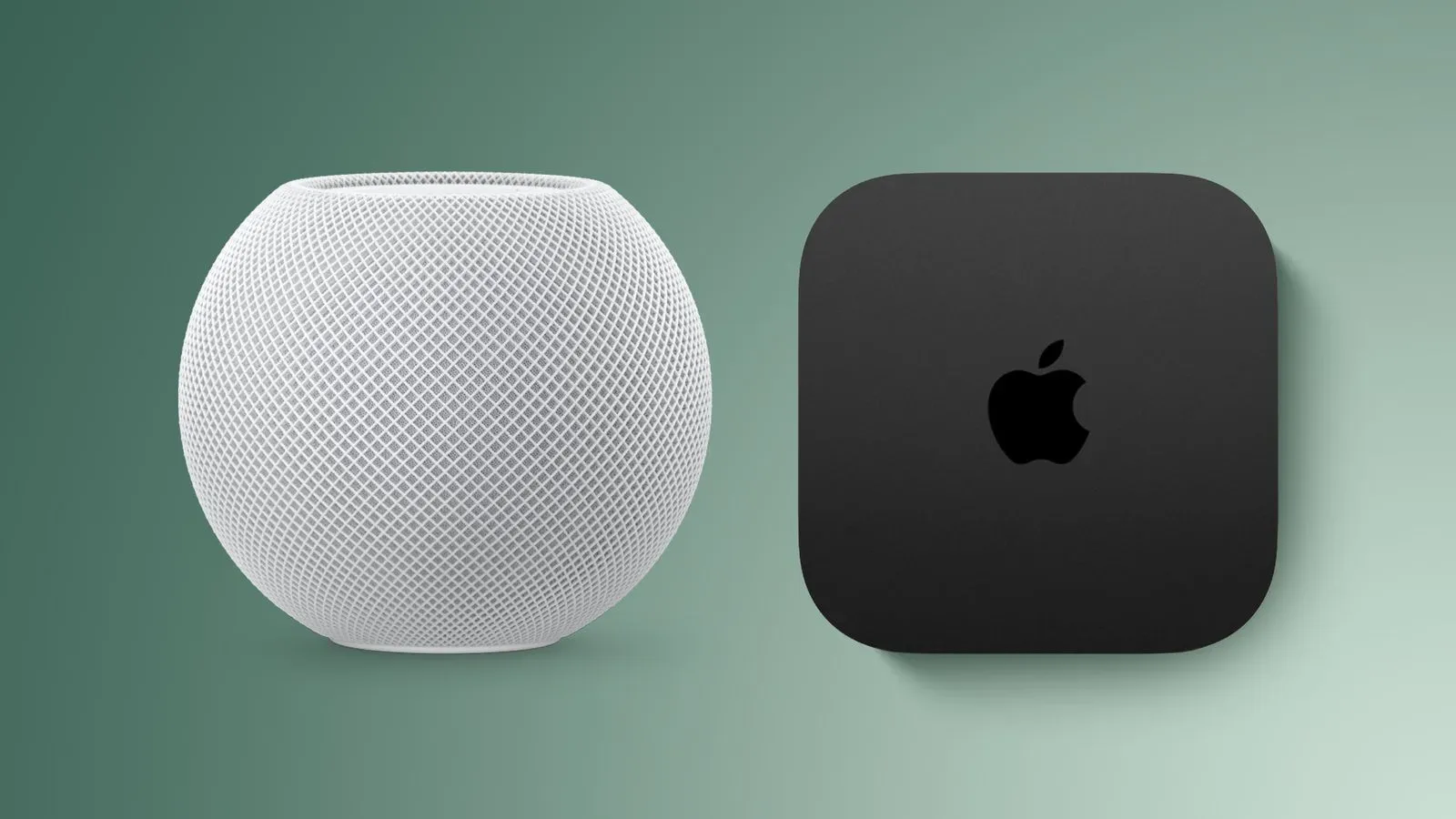
The fourth-generation Apple TV 4K can connect four HomePods for surround sound: two speakers in front and two behind. Earlier Apple TV 4K setups were limited to a stereo pair.
The requirements matter. This configuration needs the new Apple TV 4K and either HomePod mini 2 speakers or second-generation HomePods, arranged as matching pairs. It is not a general upgrade for any assortment of HomePods. For buyers already building around compatible Apple speakers, it is one of the few entirely new home-theater capabilities in this generation. For everybody else, it may be a feature that never enters the equation.
Who should consider upgrading?
Owners of a 2022 Apple TV 4K can be selective. Their existing box retains 4K/60fps output, Dolby Vision, HDR10+, Dolby Atmos and access to Siri AI under Apple’s stated eligibility requirements. The new remote is separately available. Unless AV1 support, hands-free Siri, the four-speaker HomePod arrangement or stronger game-oriented hardware is specifically important, the new $299 model does not represent a wholesale change in streaming fundamentals.
People who play Apple TV games have a more credible hardware reason to watch the new model. Apple’s claimed graphics uplift and extra RAM suggest more room for demanding software. That is a technical advantage, not proof of a particular game experience, and it remains to be seen how developers use the capability. Still, gaming is the scenario where a faster A19 is likely to matter more than it does for playback alone.
Owners of older Apple TV hardware have a stronger reason to evaluate the change. Siri AI support starts with the second-generation Apple TV 4K, excluding older Apple TV 4K models and the Apple TV HD. Moving to the latest version also brings the modern video decoder, new wireless standards, updated remote and room-level microphones in one purchase.
New buyers face a simpler but more expensive choice. Apple has folded 128GB and Ethernet into the only 2026 model, so there is no need to choose between storage and wired connectivity. The trade-off is the $299 entry price. Buyers should therefore decide whether they need the Apple TV 4K’s particular mix of formats, Siri features, Apple ecosystem integration and prospective game performance, rather than assuming the refresh alone creates a must-have streaming upgrade.
The 2026 Apple TV 4K is a technically stronger device, and AV1 decoding in particular addresses a meaningful omission. Yet its central software attraction is reaching supported 2022 hardware as well. The result is a refresh that is easiest to recommend to new buyers, older-device owners, Apple TV game players and committed HomePod users—not necessarily to everyone who already owns the still-capable 2022 box.