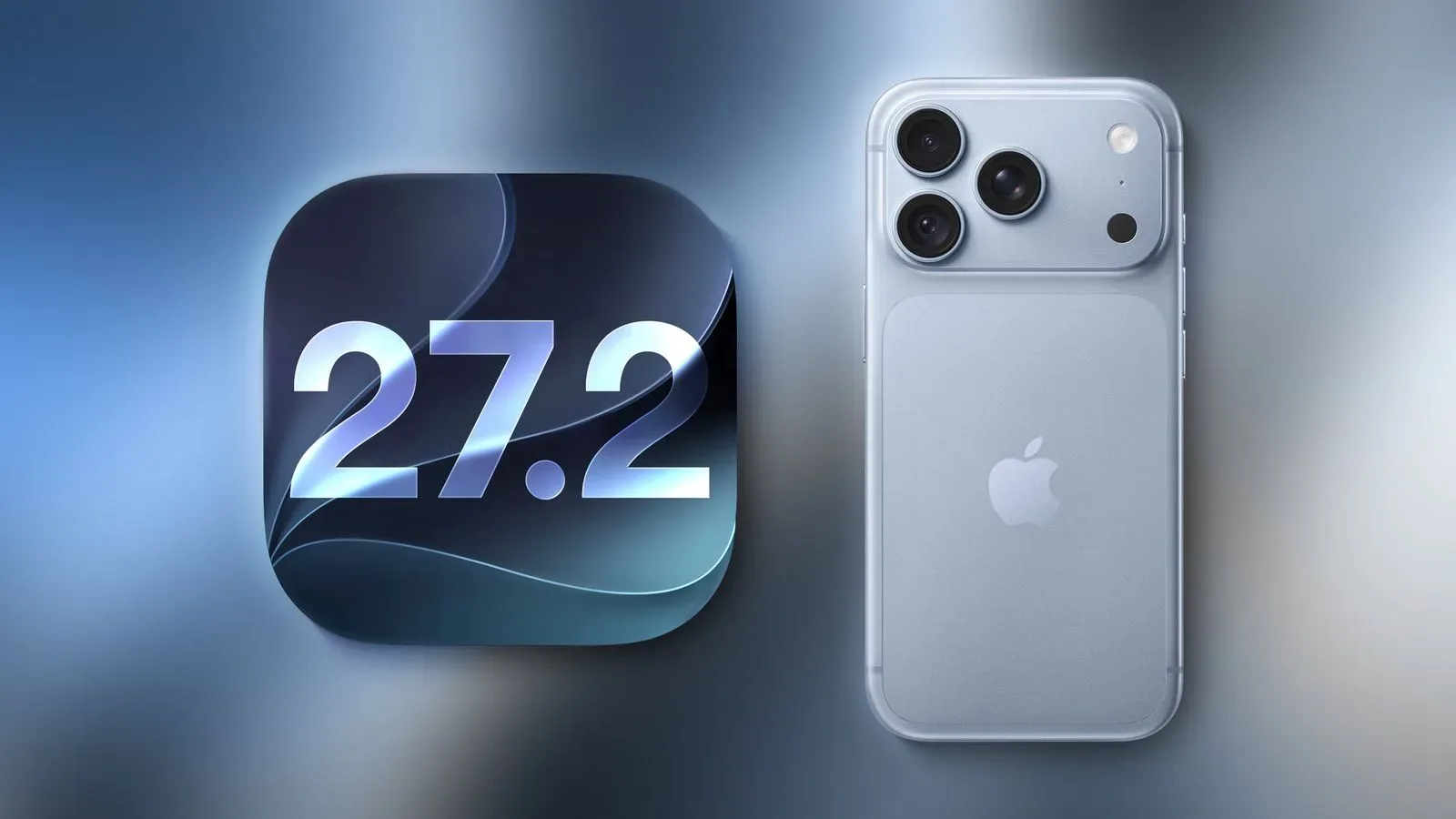
There is a particular kind of mobile-ad irritation that feels less like tapping a bad button and more like losing an argument with gravity. Pick up a phone, walk a few steps, hit a bump in a car, and an app decides the movement counts as an enthusiastic invitation to open an ad. Apple is testing a possible answer in iOS 27.2 beta 2: a per-app control called Restrict Motion Data.
The setting lets iPhone users add apps to a list that prevents those apps from accessing the device’s motion-sensor data. At present, it appears to be linked to mainland China App Store accounts. Apple has not publicly specified why it is introducing the option, so any connection to shake-triggered advertising remains an informed interpretation rather than a confirmed explanation.
Still, the timing and the feature’s design make the practical use case easy to understand. Some apps in China use “shake-to-open” advertising when an app launches. The problem is that a deliberate shake is not the only kind of motion an iPhone can detect. Everyday handling can produce the same basic signal: lifting the phone from a desk, walking while holding it, or travelling over uneven roads. When that gesture produces an unwanted redirect, the phone has effectively mistaken normal life for ad engagement.
What the setting is designed to block
An iPhone uses several components to understand how it is moving. The two named by this setting are the accelerometer and gyroscope.
- Accelerometer: A sensor that measures acceleration, including movement and changes in direction. It can help software recognize that a device has been moved or shaken.
- Gyroscope: A sensor that helps measure rotation and orientation. It provides a more detailed sense of how a phone is turning or tilting.
Those readings have plenty of legitimate uses. Apps can use motion information to react to tilting, rotation, or movement-based interactions. The issue raised by shake-triggered ads is not that motion data exists, but that an app can treat incidental motion as a commercial command with consequences the user did not intend.
Restrict Motion Data appears to tackle that at the permission level. Instead of requiring a person to avoid moving their phone in ways an app might misread, it gives them a way to deny selected apps access to the underlying accelerometer and gyroscope data. In theory, an app that cannot read that data cannot trigger a response based on the phone being shaken.
That is a notably narrower approach than a broad, device-wide switch. A per-app list means users can target software that causes unwanted behavior without necessarily cutting off motion access for every application on the phone. It also frames the control as a choice about a particular app’s access, rather than a demand that people change how they physically use their device.
A beta feature, not a confirmed worldwide iPhone change
There are important limits to what can be claimed right now. The control is being tested in iOS 27.2 beta 2, not described as a finalized feature available to all iPhone owners. It appears to be limited to mainland China App Store accounts, and there is no indication that it will be offered more broadly when iOS 27.2 arrives later in 2026.
That regional scope matters. A setting visible to one App Store account region is not automatically evidence of an imminent global rollout. Apple sometimes tests or deploys options that address conditions in particular markets, and the available information does not establish that Restrict Motion Data will become a standard setting everywhere.
It also means the exact behavior should not be overstated. The known description is straightforward: users can place apps on a list that blocks access to accelerometer and gyroscope data. The available details do not spell out every possible effect inside affected apps, which features may change when access is denied, or whether an app can offer a different path when it no longer receives motion readings.
For users who encounter the setting, the sensible expectation is therefore specific rather than magical: it may help prevent an app from using motion-sensor input. It is not presented as a universal anti-ad system, a general redirect blocker, or a guarantee that every unwanted promotion inside an app will disappear.
Why accidental ad activation is such an aggravating design problem
Advertising that activates from physical movement creates an unusually poor interaction because its trigger can happen before the user has made a meaningful choice. A tap is normally intentional, even if it lands on an awkwardly placed button. Motion is much messier. Phones are moved constantly as part of ordinary use.
That ambiguity is the core problem. An app may define a threshold intended to distinguish a shake from ordinary movement, but the real world does not provide tidy inputs. A quick lift, a jolt while riding in a vehicle, or a few steps while checking the screen can all create motion. If the consequence is a redirect, the user may be pushed away from what they opened the app to do.
There is also a trust issue. A gesture-based promotional mechanic asks people to accept that the same sensors used for ordinary software functions can be turned into a route toward an advertisement. When the trigger is too sensitive, it can make basic device handling feel risky or unpredictable. The irritation comes not merely from seeing an ad, but from being told—implicitly—that a movement nobody intended was an action.
A platform-level control is meaningful because it changes who holds the decision. Rather than relying on an app maker to remove, soften, or accurately tune a motion-triggered ad prompt, it lets the device owner withdraw access from that app. This does not judge every use of motion sensors as suspicious. It gives users a way to make a targeted decision when a particular app’s use of them becomes unwelcome.
What this could mean for apps and everyday iPhone use
If Restrict Motion Data stays in the eventual iOS 27.2 release for eligible accounts, the clearest immediate benefit would be practical control. Someone affected by accidental shake-based redirects could restrict the app responsible rather than tolerate the behavior or alter the way they carry their phone.
There is a trade-off inherent in the feature, though. Since apps may use accelerometer and gyroscope readings for functions unrelated to ads, restricting motion data could affect behavior that depends on those sensors. The present information does not identify which app features might be affected or how individual apps would respond. Users would need to weigh whether avoiding unwanted motion-triggered behavior is worth any change to an app’s normal operation.
For app developers, the feature is a reminder that access to device data is increasingly treated as something users should be able to control in a granular way. Motion sensors are often less visible than a camera or microphone permission because they do not obviously announce themselves during use. Yet they can still shape what an app does and when it does it. A setting that calls out accelerometer and gyroscope access makes that relationship more legible.
It may also encourage cleaner distinctions between an app’s core functions and its ad mechanics. When an app’s promotional flow depends on sensor access that a user can deny, the design has to tolerate the possibility that motion data will not be available. That is not a judgment on any individual app; it is simply a consequence of user-controlled permissions.
Part of a wider conversation about control
This beta setting arrives amid broader questions about how much control people have over the devices and services they use. Those questions extend beyond sensors to data handling, automated assistance, and the limits of platform intervention. Joking Joystick recently examined similar tensions around a PlayStation concept involving AI support, privacy and user control.
Restrict Motion Data is much smaller in scope than those debates, but it is built on the same basic principle: a convenience or commercial feature can have side effects, and people may reasonably want a direct mechanism to limit it. In this case, the choice is especially concrete. An iPhone owner can potentially say that one app does not get to interpret everyday movement as an ad-opening gesture.
For now, the feature should be viewed as a regional beta test with an understandable purpose, not as a promise of a worldwide iOS change. Apple has not confirmed its motivation, and broader availability is not expected with the later-2026 iOS 27.2 release. But if the setting works as its name suggests, it offers a pleasingly direct response to a very modern nuisance: sometimes the best way to avoid an accidental ad is to stop an app from treating a normal shake as a request.