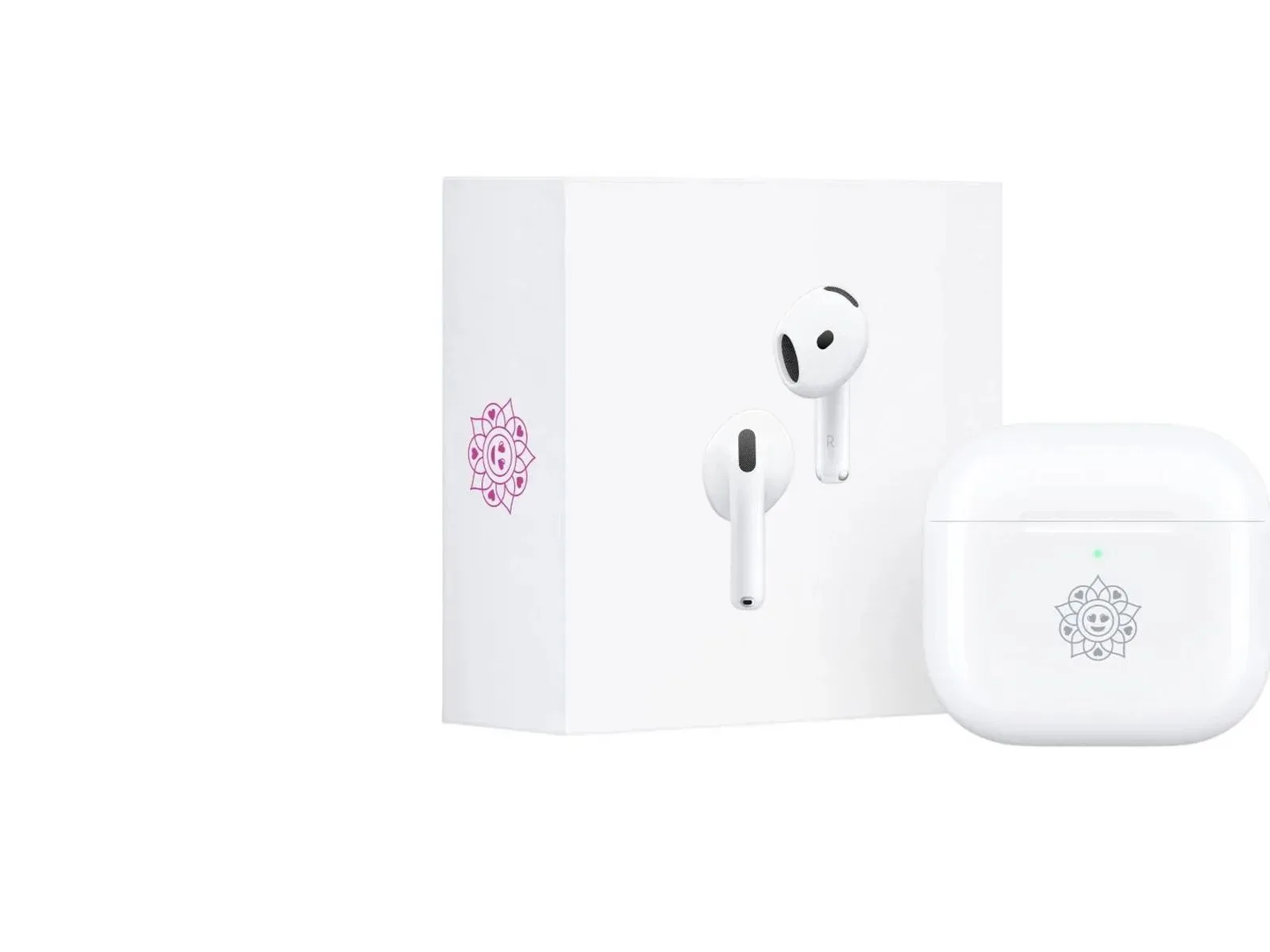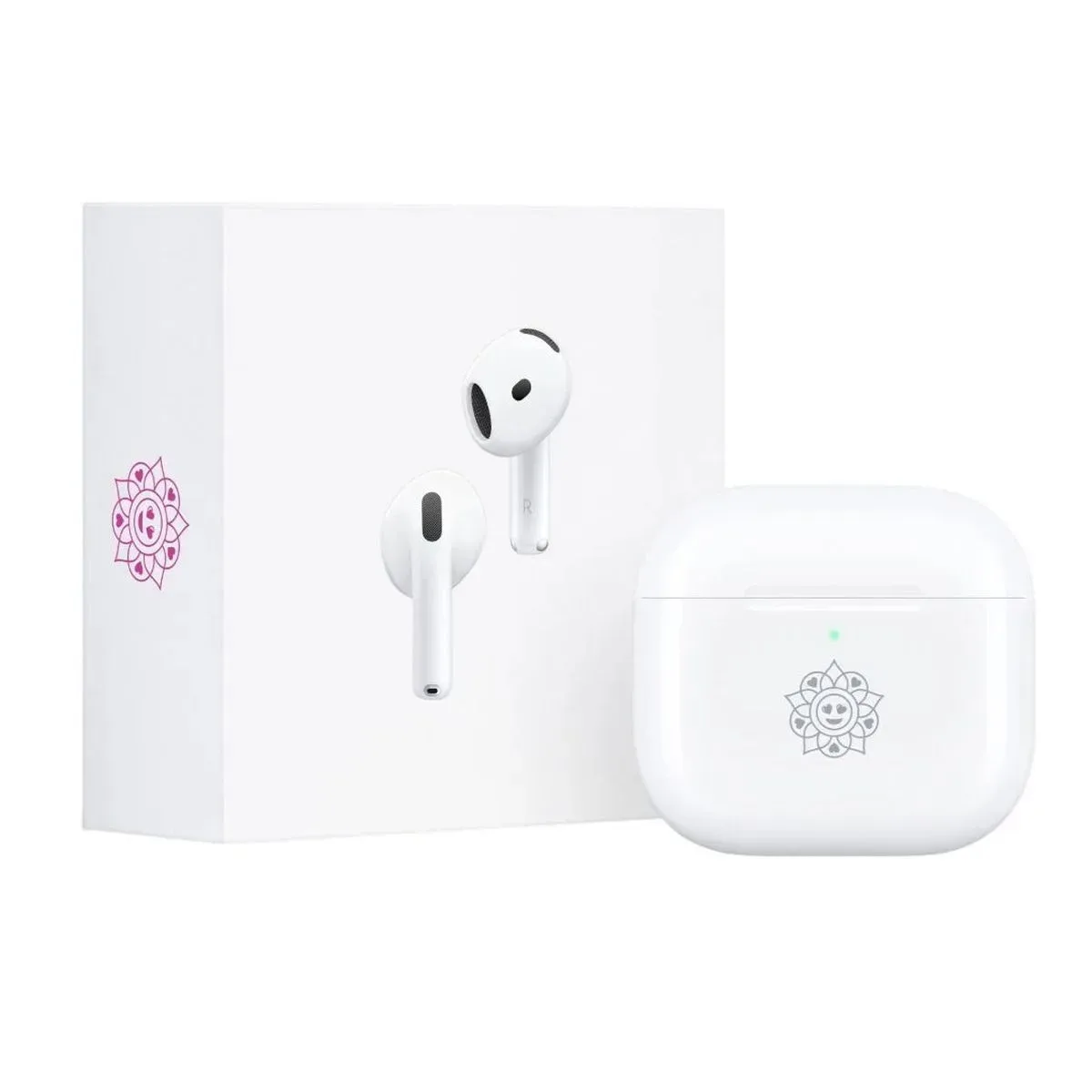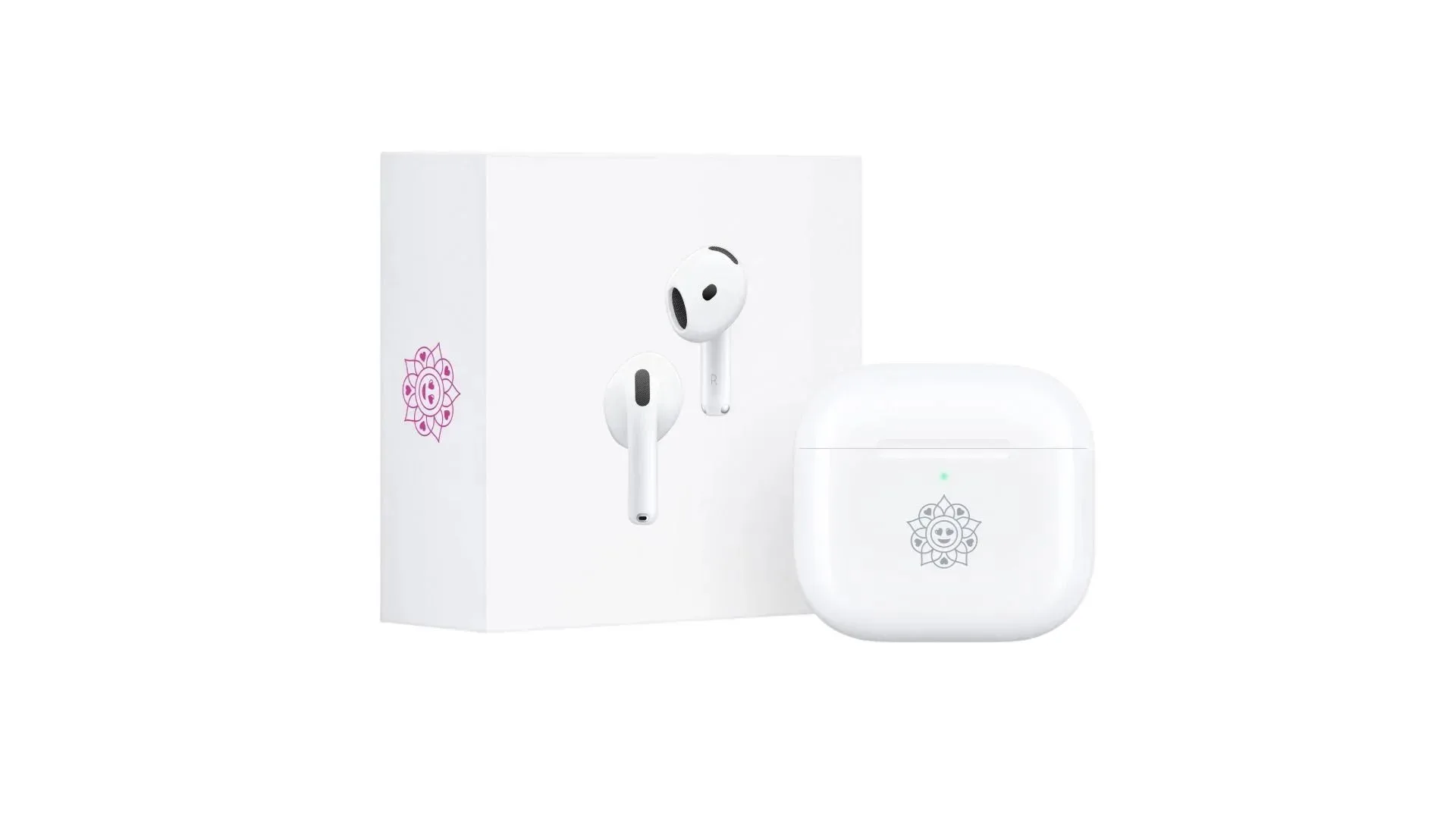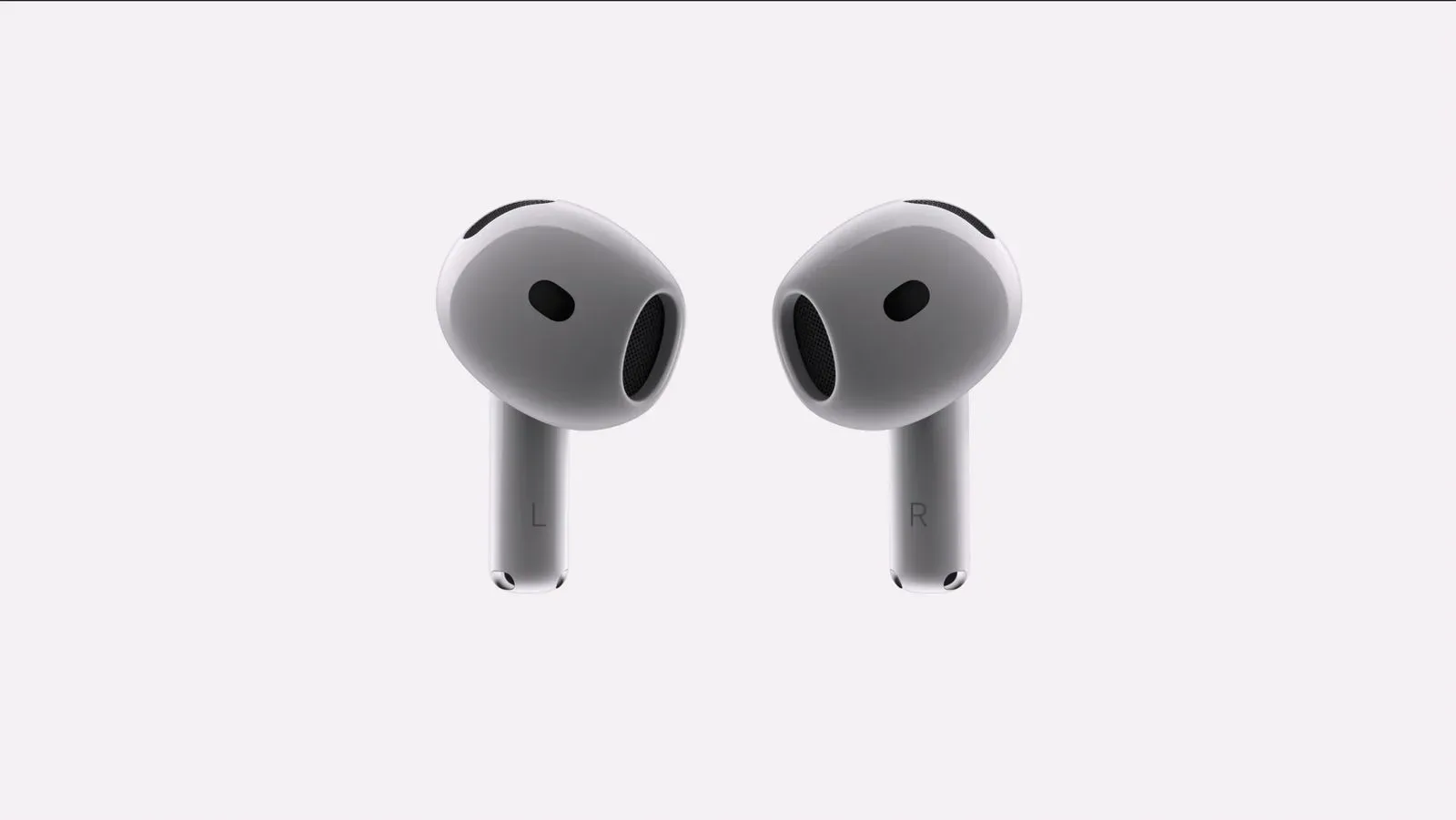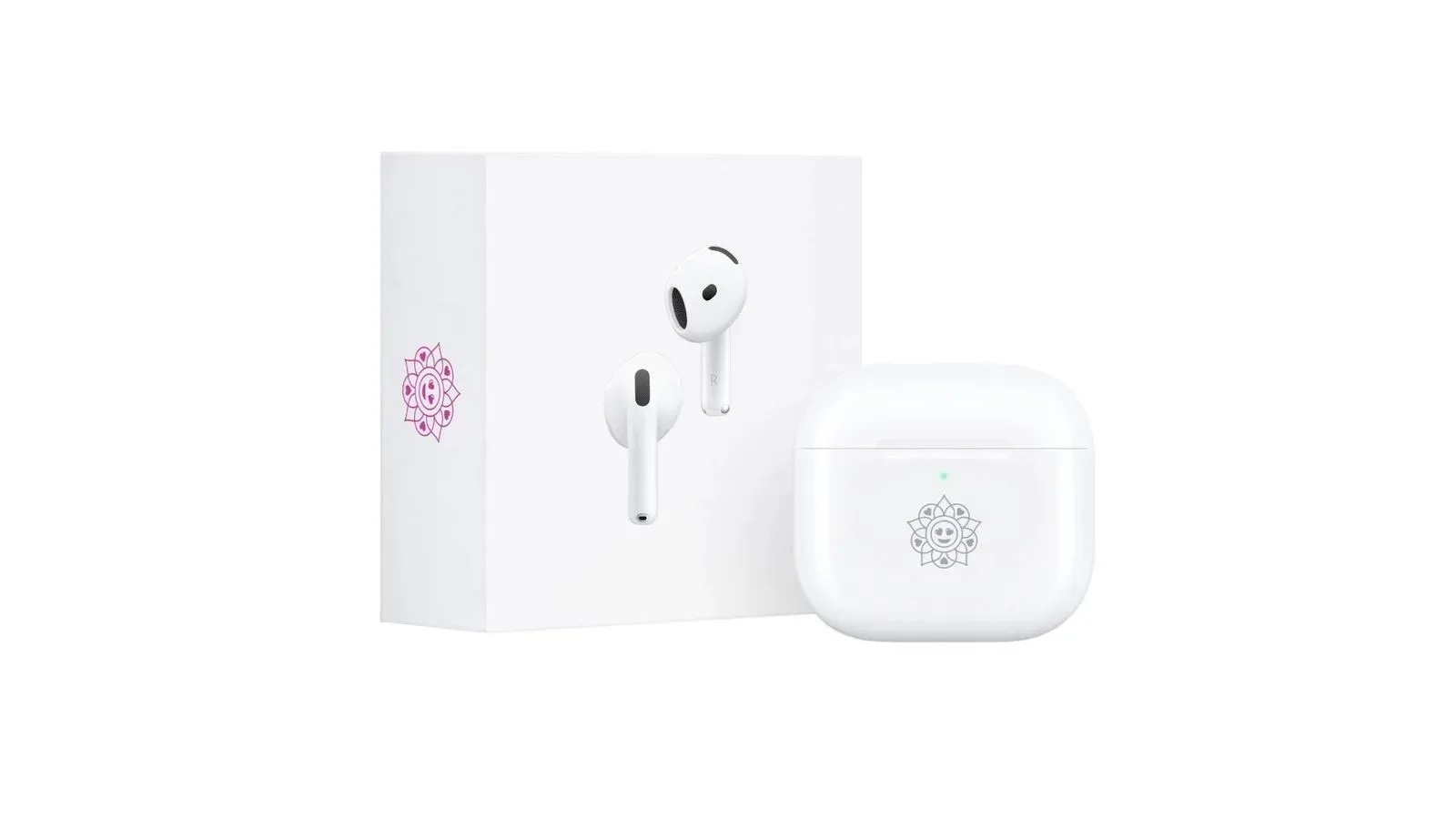
Apple is marking Diwali in India with a limited-edition version of its AirPods 5 with Wireless Charging Case. The special release uses a rangoli-inspired engraving on the charging case, built around a heart-eyes emoji and a decorative pattern informed by the traditional Indian art form.
The limited edition costs ₹17,900, the same listed Indian price as the regular AirPods 5 with Wireless Charging Case. Sales began on October 11 and are scheduled to run until November 11, 2026, although availability is explicitly subject to stock. It can be ordered through Apple’s online store and Apple Store app, or purchased at the company’s six retail stores in India.
The central distinction is the case design. There is no stated hardware upgrade, altered audio specification, or new AirPods feature attached to this edition. For buyers, then, this is best understood as a seasonal design variant of the standard AirPods 5 with Wireless Charging Case rather than a separate product tier.
What the rangoli-inspired edition includes
Rangoli is a traditional decorative art form associated with patterns, and Apple’s engraving translates that visual language onto the AirPods charging case. The design surrounds a heart-eyes emoji, creating a specific festive motif rather than simply applying a Diwali label to standard hardware.
That focus matters when judging the edition’s value. The ₹17,900 price parity means the special case does not carry a stated premium over the regular wireless-charging configuration. A person who was already planning to buy that model during the sale period can choose the festive finish without an indicated extra charge, if stock remains available.
Conversely, someone looking for improved earbuds rather than a commemorative visual treatment should not assume that the limited release changes the underlying product. The supplied details identify the product as AirPods 5 with Wireless Charging Case and identify the engraved case as the difference. “Wireless Charging Case” refers to the case that holds, protects, and recharges the earbuds, with wireless charging support as part of that configuration.
A short sales window, with a firm caveat
Apple’s stated run is October 11 through November 11, 2026. That month-long period is useful planning information, but it is not a stock guarantee. The edition is offered only while supplies last, so the final day is an endpoint for the planned promotion, not a promise that units will remain for the full period.
There is also a two-pair limit per customer. That is a practical constraint for anyone hoping to buy several as gifts or arrange a group purchase. Apple has further excluded the edition from other AirPods promotions and from Business, Education, and Corporate Employee Purchase Plan pricing.
In plain terms, the standard listed price is the relevant comparison point. A shopper should not presume that a separate AirPods promotion, an education-oriented price, a business purchase arrangement, or an employee plan can be applied to the limited-edition model. Since the special edition already matches the stated price of the standard AirPods 5 with Wireless Charging Case, its appeal is visual and seasonal rather than a discount mechanism.
Where it is being sold
Indian customers have three stated routes: Apple’s online store, the Apple Store app, and the company’s six retail locations in India. These are distinct options with the same key limitation: inventory may determine whether the edition can actually be purchased.
The in-store option may suit people who want to make the purchase at one of the six locations, while online ordering and the app provide the digital routes identified by Apple. The information provided does not establish stock levels at individual stores, regional distribution beyond those channels, or any additional retail partners, so buyers should avoid treating the limited edition as broadly available outside the named sales methods.
The replacement-policy detail is important
The most consequential small print concerns repairs and replacements. Apple says that, depending on supply, a repair or replacement could involve standard-edition AirPods 5 with Wireless Charging Case rather than the rangoli-engraved version.
That does not mean every service case will result in a standard replacement. It means the special design is not assured in the event service is needed. For a functional product, that may be an acceptable trade-off: the customer may receive the standard equivalent configuration if limited-edition stock is unavailable. For someone specifically buying the edition because of its case artwork, however, it is a condition worth understanding before purchase.
This is also a useful distinction between limited styling and a separate long-term service category. The supplied purchase terms identify the edition as a version of AirPods 5 with Wireless Charging Case, not as a unique technical model with separately guaranteed replacement inventory. The decorative element may therefore be temporary in a way the core product is not.
Diwali activity extends beyond the earbuds
The launch is accompanied by free rangoli workshops created with artist Arushi Kathuria. Participants will use Procreate on iPad with Apple Pencil, including a custom brush meant to recreate the look of powder.
Procreate is the drawing app named for the sessions, while Apple Pencil is the stylus used with iPad. A custom brush, in this context, is a drawing tool setting designed to create a particular mark or texture. Here, the intended effect is powder-like rather than a generic digital pen line, connecting the digital activity more directly to the visual quality of rangoli.
The workshops run from October 14 through November 9. They are scheduled in India and at selected locations in the United States, Canada, Malaysia, and Singapore. “Selected locations” is a meaningful qualifier: the workshops are not described as taking place everywhere in those countries. The supplied information also does not list venue-by-venue schedules or say whether participation requires registration, so those details should not be assumed.
The workshop program makes the wider campaign more than a retail reskin. The AirPods case is a finished physical object, while the sessions invite people to experiment with the pattern-making idea through iPad, Apple Pencil, and a specialized Procreate brush. Both elements draw on rangoli, but they serve different roles: one is a limited consumer product, and the other is a free creative activity.
What prospective buyers should weigh
- Design: The rangoli-inspired engraving and heart-eyes emoji are the stated reason this release differs from the regular AirPods 5 with Wireless Charging Case.
- Price: It is listed at ₹17,900, matching the regular version’s Indian price.
- Timing: Sales run through November 11, 2026, but may end earlier if stock runs out.
- Purchase cap: Apple permits no more than two pairs per customer.
- Discount exclusions: Other AirPods offers and Business, Education, and Corporate Employee Purchase Plan pricing do not apply.
- Service expectations: Repairs or replacements may use a standard-edition AirPods 5 with Wireless Charging Case, depending on supply.
For readers following Apple’s wider hardware activity, the company’s pricing and retail focus in the region also sits alongside its broader international operations, discussed in this look at Apple’s manufacturing and retail priorities. The Diwali release itself is narrower: a time-limited Indian sale of a design-specific AirPods case, paired with rangoli workshops that also reach selected overseas locations.
The practical takeaway is straightforward. The special edition offers the same stated Indian price as the regular wireless-charging AirPods 5 configuration, but it is governed by restricted stock, a two-pair purchase limit, excluded discount programs, and a replacement policy that may not preserve the festive casing. Buyers who chiefly want AirPods hardware can evaluate it as the standard configuration at its standard listed price. Buyers who chiefly want the engraved Diwali design should account for both the limited sales window and the possibility that future service may substitute a standard case.