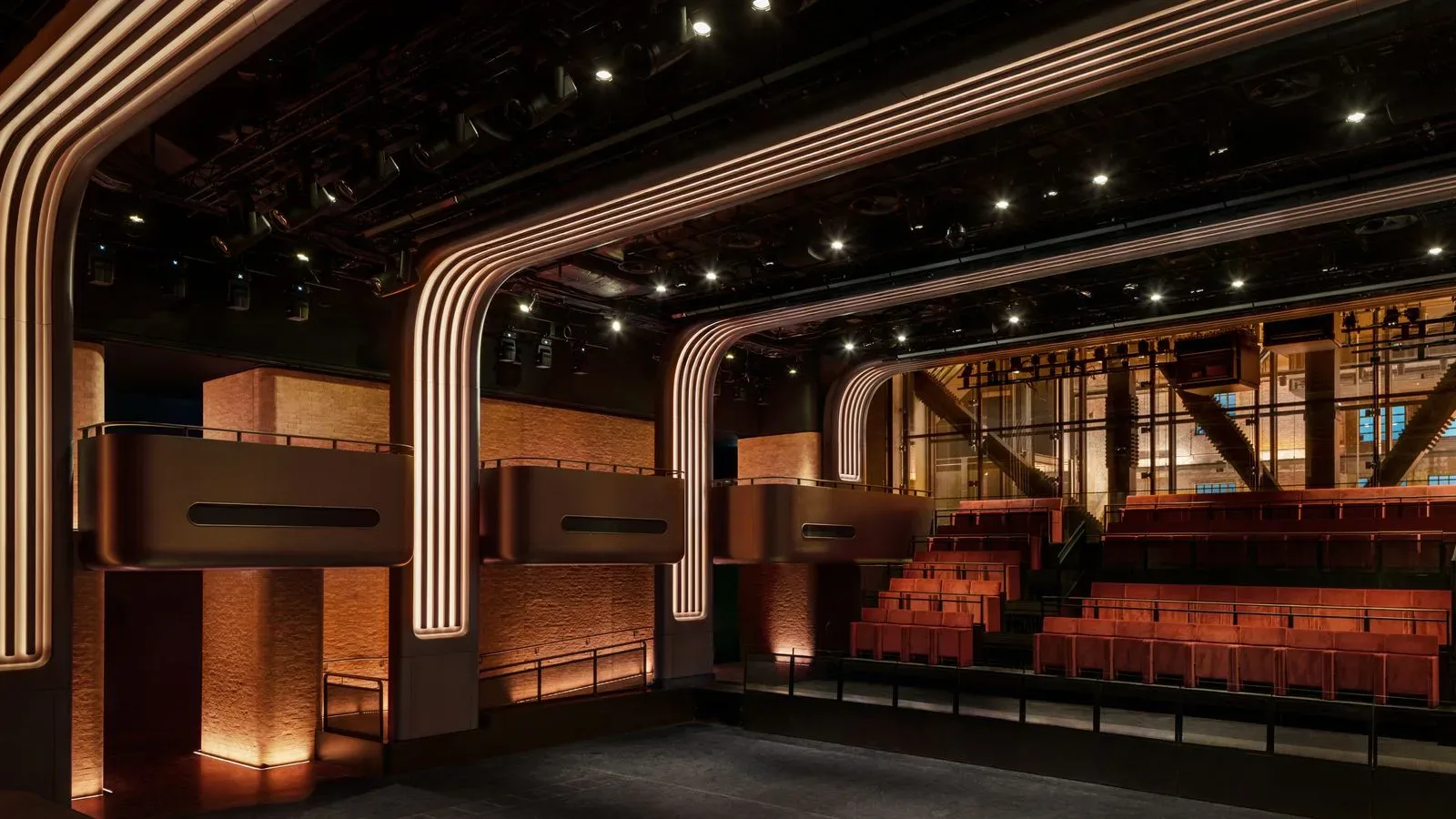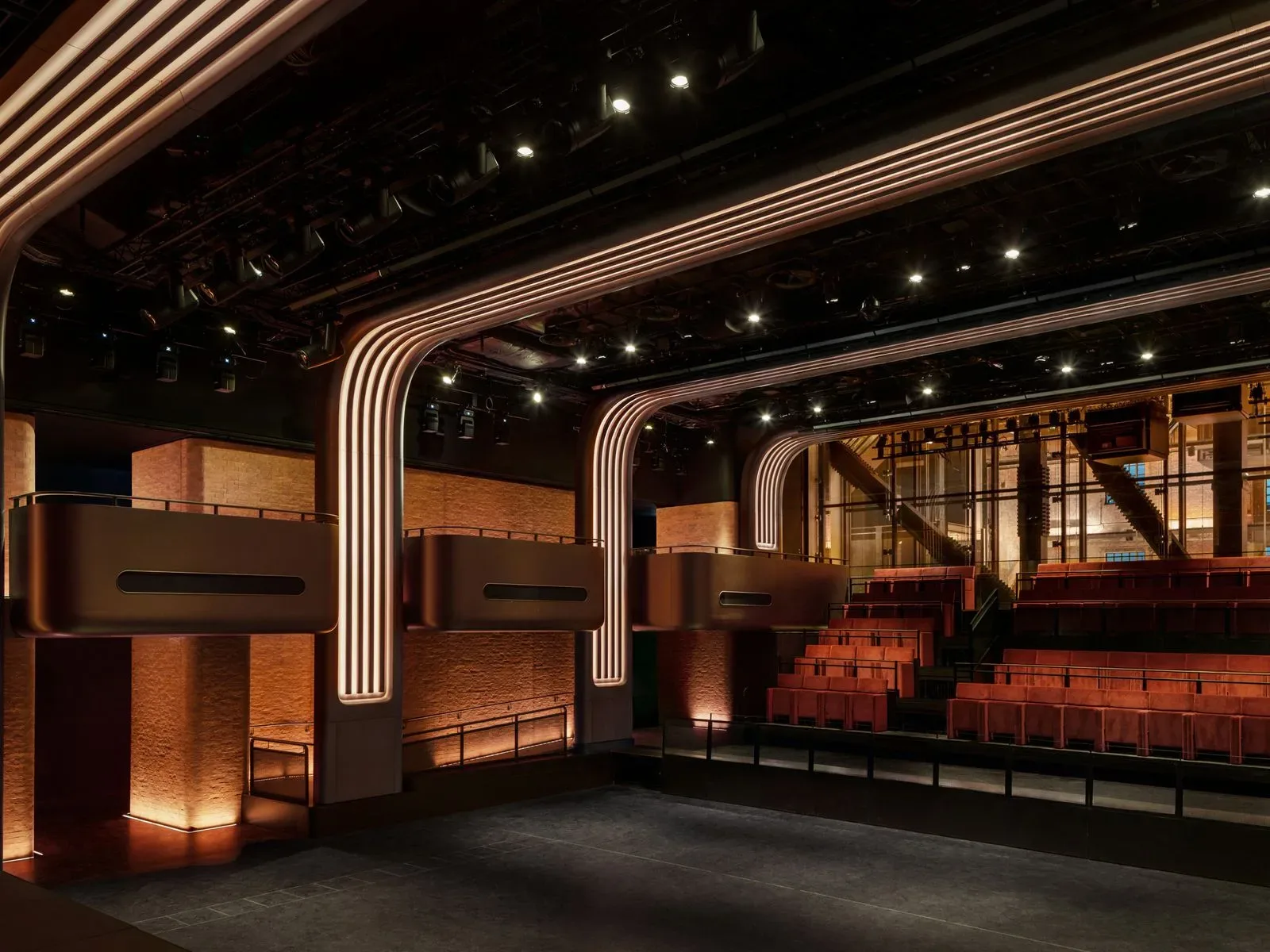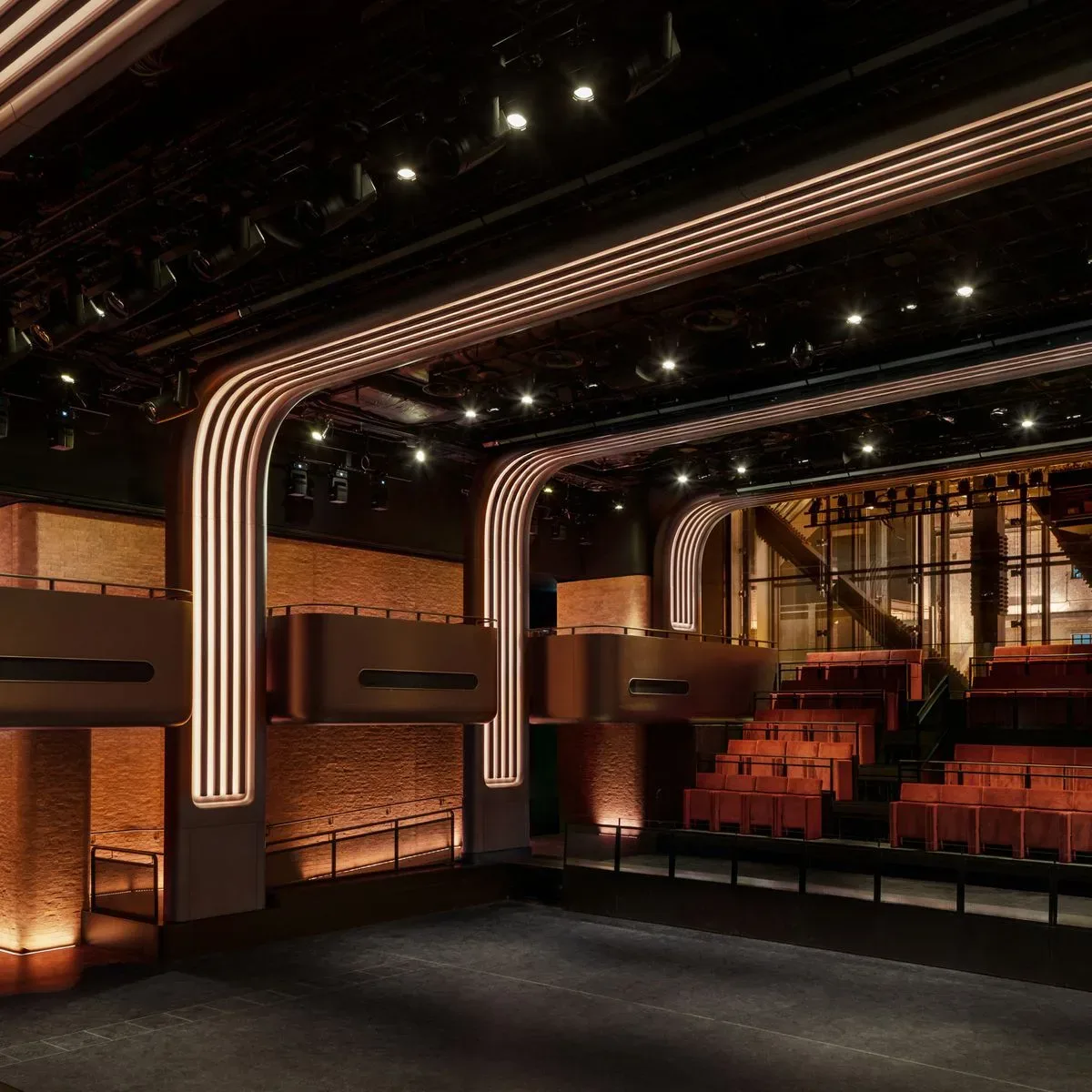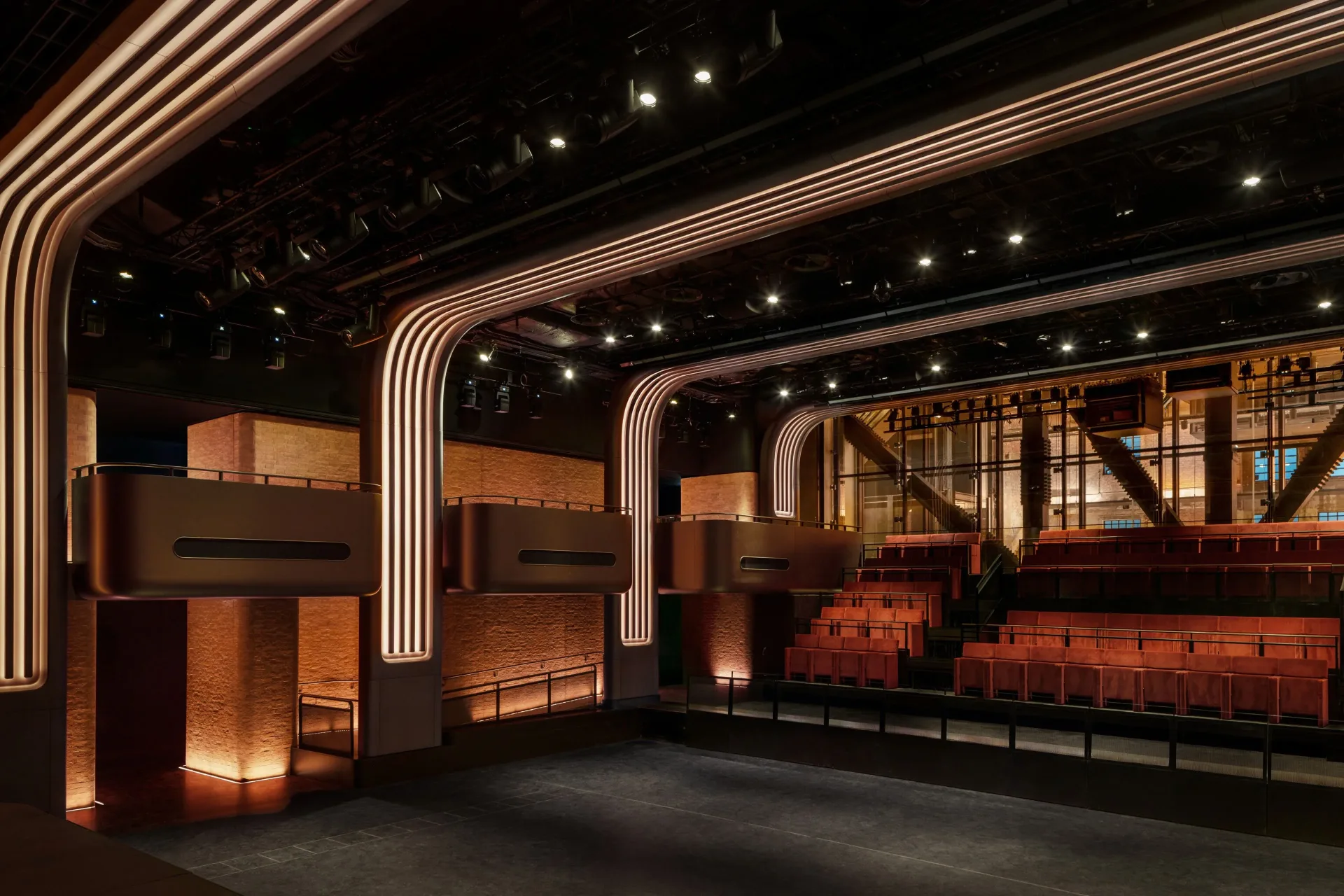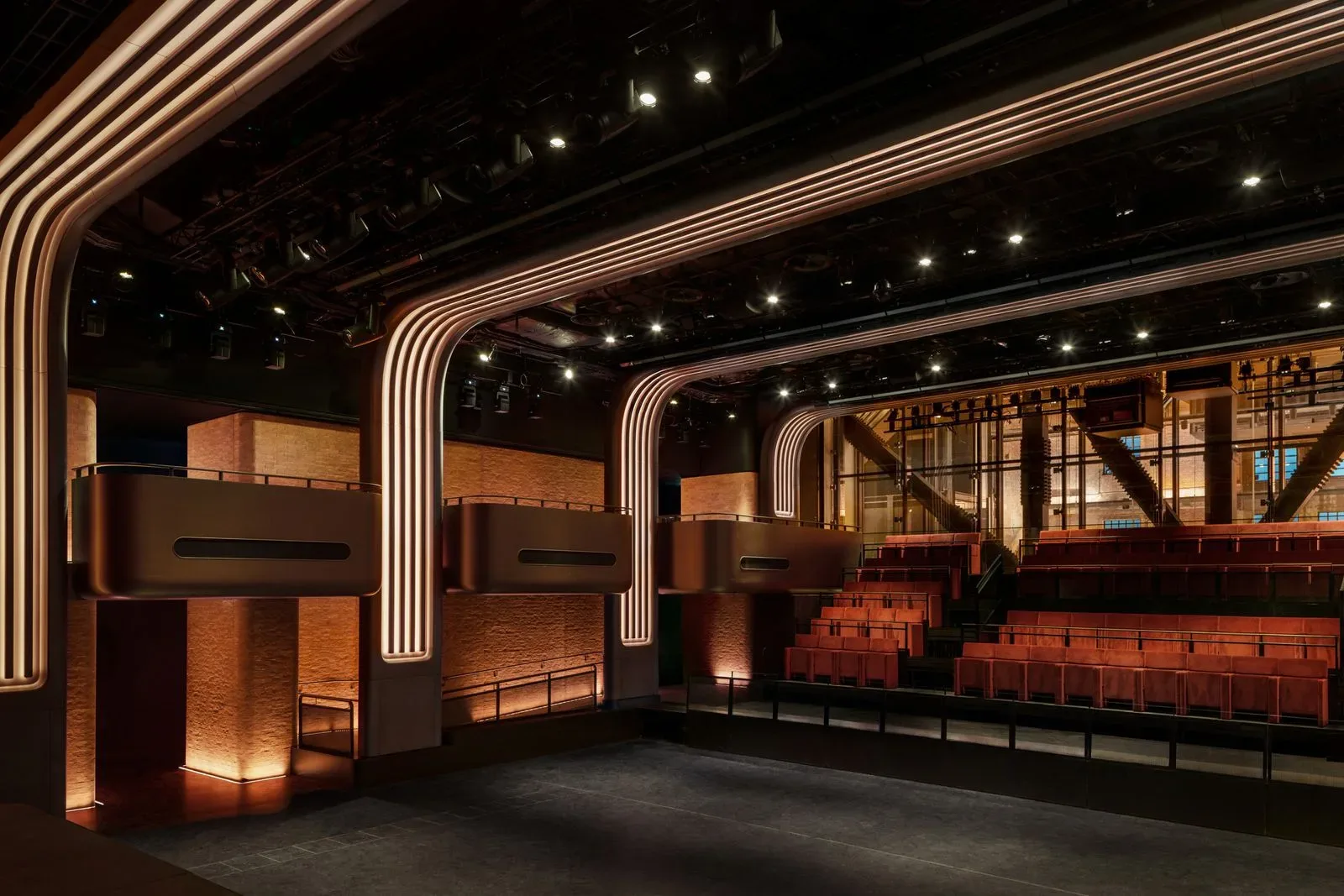
Apple has opened Apple Music Hall, a 600-capacity live-music venue inside London’s Battersea Power Station. The new room is designed around a fairly ambitious premise: an artist should be able to play a close-quarters show, capture it properly, create a Spatial Audio mix, and record multicamera video without having to move the project into a separate studio afterwards.
That is a bigger proposition than simply putting an Apple name above a stage. The hall’s technical layout combines a reconfigurable 38-foot-wide stage, a 48-speaker system arranged around the audience, and a recording and mix studio directly behind the stage. Apple is framing the space as a way to bring artists and fans together through bespoke performances, but the production infrastructure may be the more consequential part of the announcement.
A venue designed as a production pipeline
Live shows frequently involve a split between the experience in the room and the version that reaches everyone else. A performance can be filmed for a broadcast, recorded for later release, or mixed for an audio platform, but those tasks may require separate crews, separate facilities, or compromises based on the venue’s existing equipment.
Apple Music Hall is intended to place those stages of the process in one location. Its dedicated studio can record every performance as a multi-track recording. In simple terms, multi-track capture preserves individual audio sources on separate tracks rather than baking everything into one finished stereo file. Vocals, drums, guitars, keyboards, crowd microphones and other elements can consequently be adjusted after the show.
That flexibility matters when a live performance needs to become a polished release. An engineer can correct the balance between a singer and band, decide how much audience response should be present, and build a mix suited to the intended format. Apple says this can be done live or later in post-production, meaning the room is meant to support both an immediate broadcast-ready result and a more considered version prepared after the audience leaves.
The venue is also equipped to capture multicamera video. The practical significance is straightforward: the audio and video sides of a performance are planned as parts of the same production, rather than as an improvised recording of a night that was mainly built for the people physically attending.
What Spatial Audio means in this setting
The defining audio feature is the hall’s 48-speaker Spatial Audio system, with speakers placed all around the audience. Spatial Audio is an audio format and playback approach designed to give sound placement a sense of direction and space. Rather than treating a mix solely as left and right channels, producers can position elements around a listener.
In a performance venue, speaker placement around the crowd has an obvious theatrical use. It gives the production tools to make sound arrive from more than one direction, rather than relying only on a conventional front-facing stack beside or above the stage. Apple Music Hall’s system is therefore aligned with the format it intends to record and mix for, rather than treating immersive sound as an afterthought once the concert is over.
That does not mean every show will necessarily use sound in the same way. A stripped-back vocal set, a full band, and an electronic performance each call for different choices. The important detail is capacity: the venue has the equipment to support an immersive approach around the audience while also capturing the show for a Spatial Audio mix.
For musicians and production teams, the workflow could reduce friction. The same event can serve several purposes:
- a live performance for a 600-person audience;
- a multi-track recording session;
- a Spatial Audio mixing project;
- a broadcast-ready audio production; and
- a multicamera video capture.
Apple has not detailed a schedule of performers, release plans, or how recordings made at the hall will be distributed. Those unanswered questions are significant. Sophisticated capture equipment creates possibilities, but it does not on its own tell fans which artists will use it, whether shows will be made broadly available, or what form future releases might take.
A flexible room rather than a fixed stage picture
The 38-foot-wide stage can be configured for a conventional show with the crowd facing forward, or for an in-the-round presentation. In-the-round means the audience can be arranged around the performer rather than occupying only one side of a stage. It changes sightlines, staging decisions, camera placement and the relationship between artist and crowd.
That flexibility fits the stated focus on intimate, custom-built performances. A standard front-facing layout is useful for familiar concert staging and direct visual focus. An in-the-round arrangement can make the room feel less like a formal barrier between performer and audience. Neither format is inherently better; the value is in allowing a production to choose the layout that suits the act and the performance concept.
It also complements the surrounding speaker system. With an audience potentially positioned around a performer, sound reinforcement and immersive design can be considered from multiple angles instead of being locked into one traditional orientation. The architectural and technical choices are, at least on paper, working toward the same idea: a venue that can be rearranged to match a show rather than demanding that every show fit one fixed template.
Built into Battersea’s visual identity
The room sits at Battersea Power Station and incorporates heritage brickwork, fluted arches and bronze balconies that recall the building’s historic oriel windows. A large glass wall looks out across the concourse and toward the river beyond. Those features distinguish the hall from a black-box studio or a purposefully anonymous event room.
There is a practical branding dimension here as well. An artist’s performance can be technically captured in a controlled environment while still taking place in a visually recognizable London setting. For video, architecture is not mere decoration: it becomes part of the frame, the lighting plan, the audience experience and the identity of the finished programme.
The mix of preserved structural cues and modern production infrastructure also makes clear that Apple is not presenting the hall only as a listening room. It is intended as a place where the setting, the audience and the recorded result all belong to the same package.
Why Apple is investing in a physical performance room
Apple’s music history includes the iPod, the iTunes Music Festival and Apple Music, and the company is positioning Apple Music Hall as another step in its support of artists and fans. The new venue brings a physical layer to a music strategy otherwise closely associated with devices, software and streaming.
That physical layer may be especially useful for a platform that emphasizes premium formats and high-quality playback. A venue equipped to originate an immersive audio performance gives Apple a controlled setting for making material designed with Spatial Audio in mind. It is different from merely accepting a finished recording and making it available in a catalogue.
There is a similar pattern in Apple’s broader product approach: hardware, software and service are most effective when their roles are planned together. That does not reveal how each future Apple Music Hall show will be used, but the venue’s stated ability to host, record, mix and film under one roof clearly reflects that integrated thinking. Readers following the company’s wider platform decisions can also see how that ecosystem has been evolving in Apple’s recent camera-control changes for select iPhones.
What fans and artists can reasonably take from the opening
For fans, the immediate confirmed fact is the arrival of a 600-capacity Apple-branded performance venue in London. A room of that scale points toward a more intimate proposition than a large arena, though intimacy is about more than a headcount: staging, access, programming and audience layout will all shape the actual experience.
For artists, the more tangible appeal is the opportunity to make a live event and a high-end recorded asset at once. A dedicated mix room beside the stage and a 48-speaker immersive system could be useful where an artist wants a performance documented with more intention than a typical concert recording.
For viewers and listeners who may never enter the room, the potential benefit depends on what Apple and participating artists choose to publish. The venue’s equipment means the capture can be made; it is not a guarantee of any particular stream, video series, album release or public archive.
Apple Music Hall has opened with the technical pieces in place: capacity for 600 people, a configurable stage, 48 speakers around the audience, a nearby recording and mix studio, and multicamera production capability. The next measure of the venue will be its programming—specifically, how artists use those tools and whether the resulting performances reach audiences beyond Battersea Power Station.