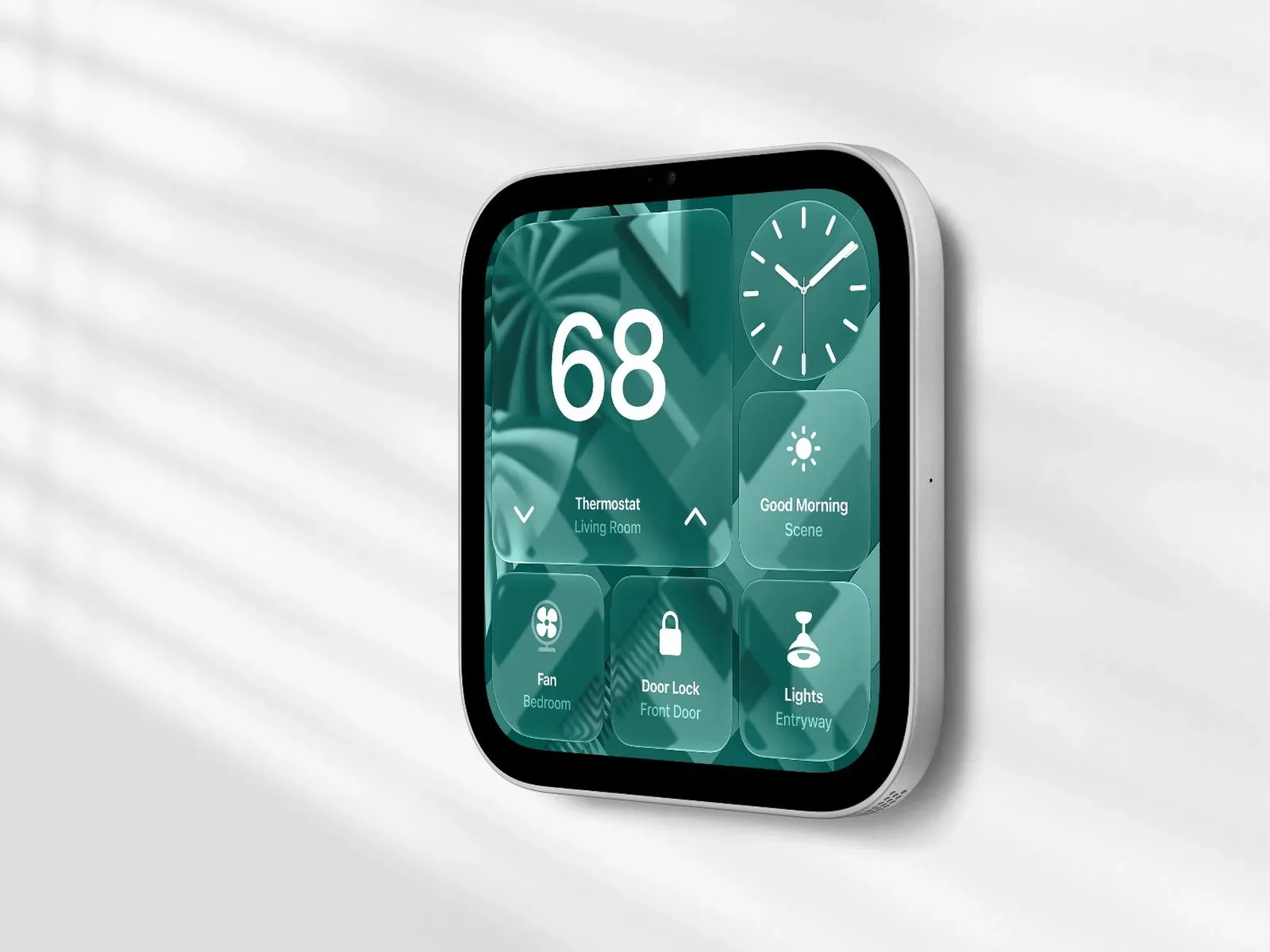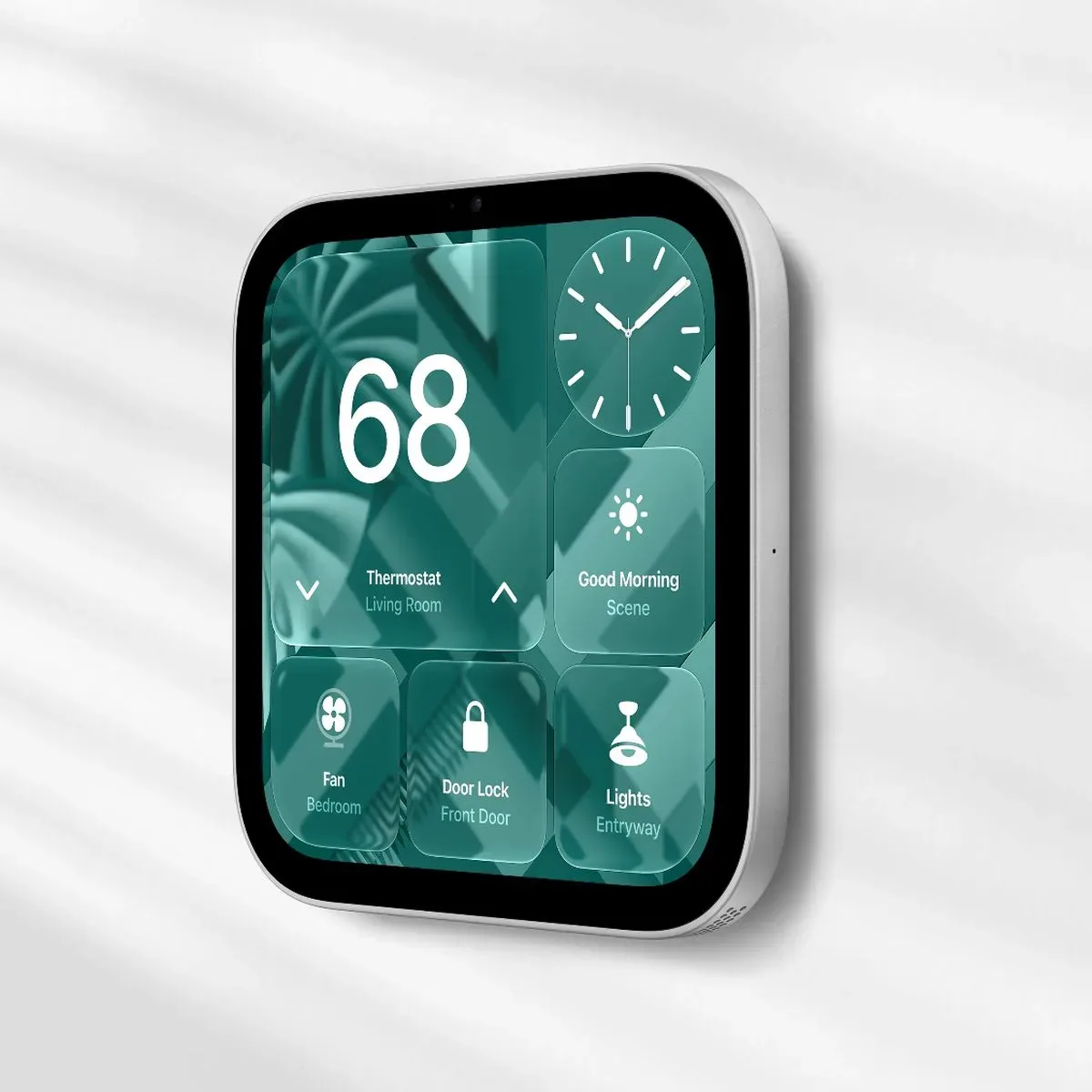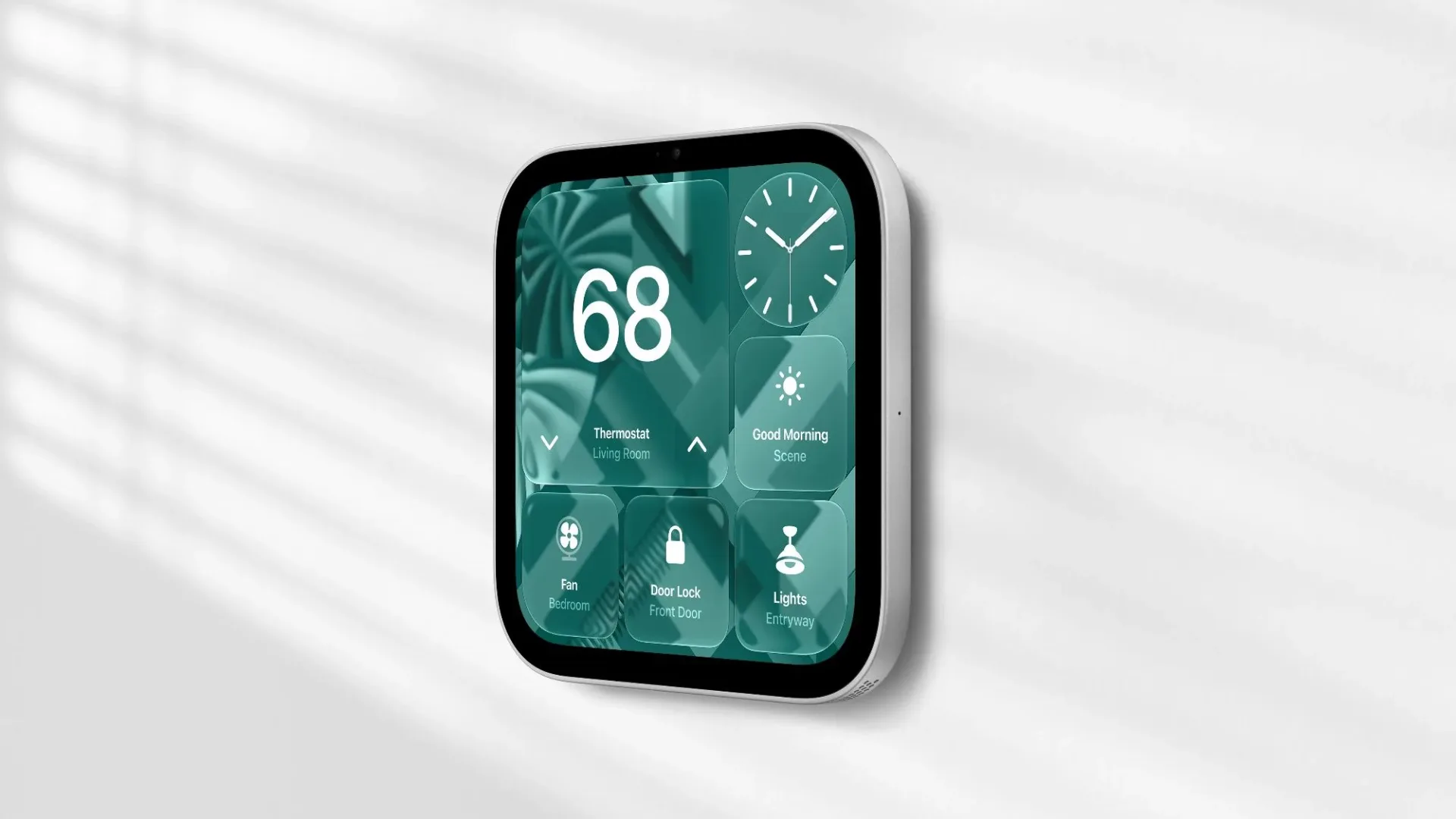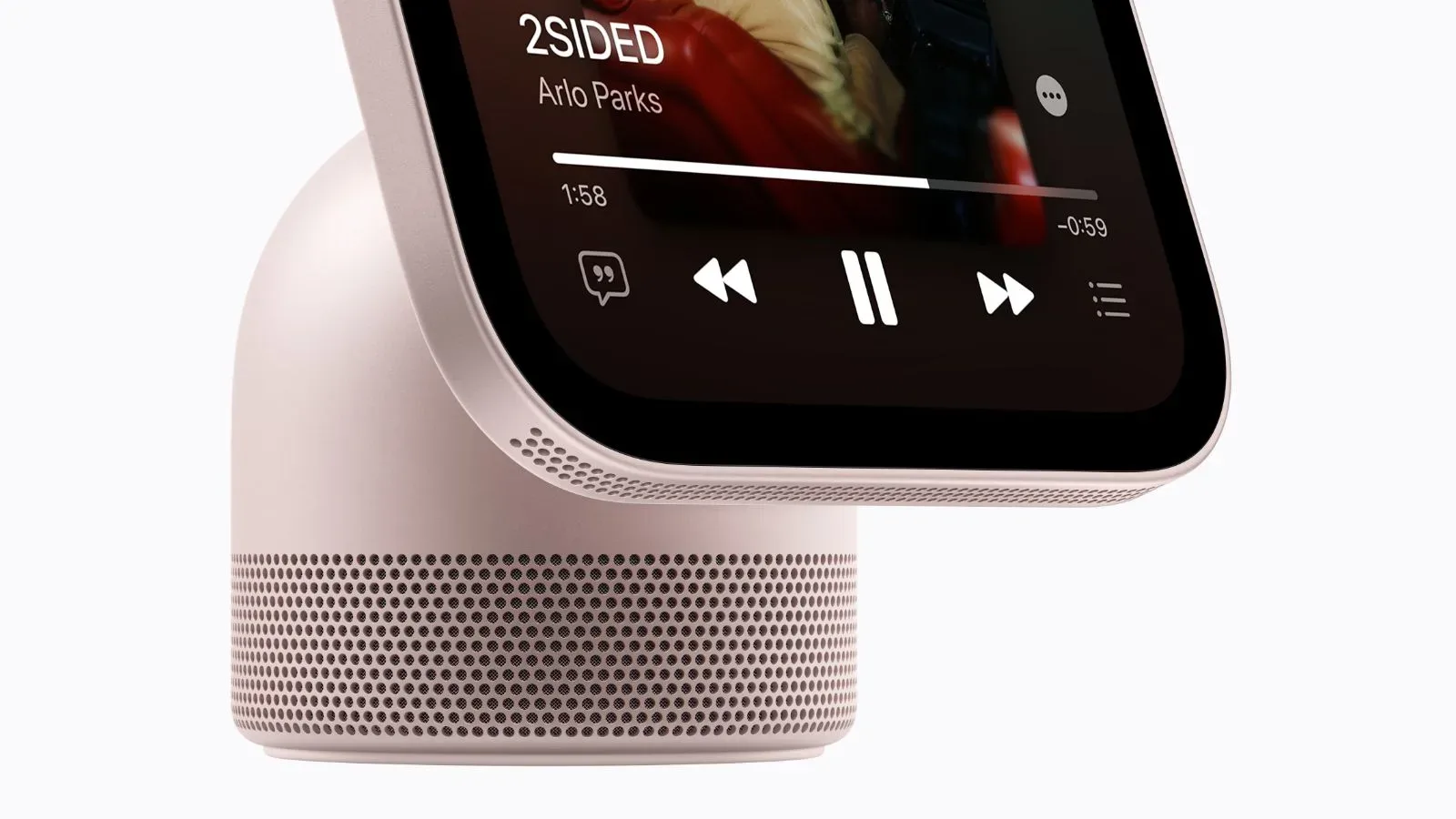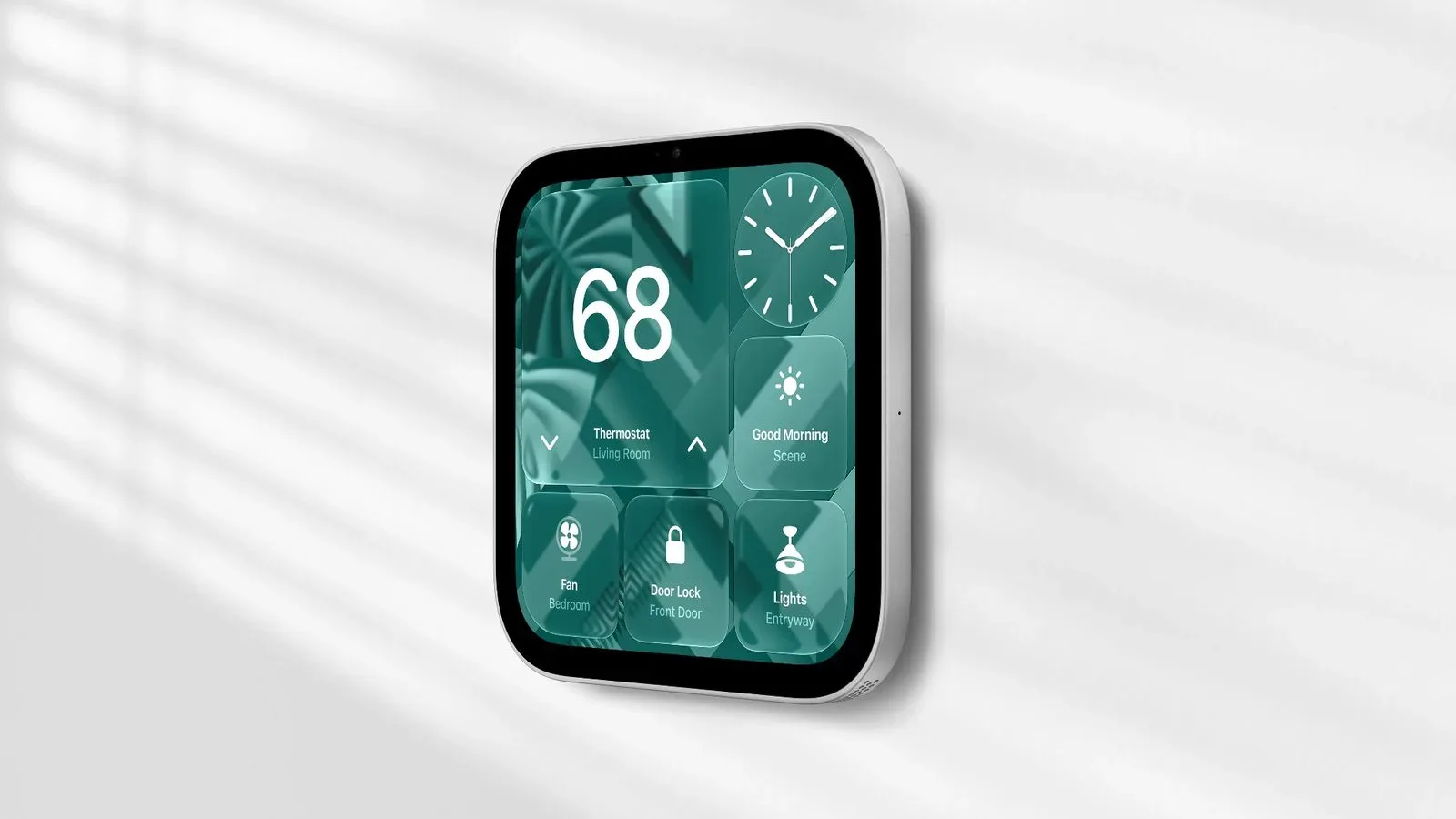
Apple’s HomeView has arrived with a choice that looks simple until the receipt starts acting like a side quest. Buyers can choose a standalone HomeView with a speaker base or a wall-mounted version. Both carry the same $299 price. The catch: the wall model does not include the hardware that actually puts it on a wall.
For people picturing a tidy smart-display setup, that distinction matters immediately. Apple’s currently available wall-mount options begin at $59.95, and one route requires a separately supplied power adapter. Another is intended for professional electrical installation. In practical terms, the model designed to disappear into a room can cost more to make usable than the version that arrives with its own speaker base.
The wall HomeView is not necessarily the wrong purchase. A wall-mounted display can make a great deal of sense where counter space is limited, or where a fixed screen is preferable to another device occupying a table or shelf. But Apple’s configuration makes it important to separate the $299 product price from the real cost, wiring requirements and installation decisions of the intended setup.
One price, two notably different packages
The fundamental comparison is unusually blunt. The wall-mounted HomeView costs $299, exactly the same as the standalone version with the speaker base. Yet the standalone model includes audio hardware the wall unit does not: a down-firing woofer and two force-canceling passive radiators.
Both models include two custom full-range drivers in the display itself. Full-range drivers are speakers designed to cover a broad span of audible sound rather than focusing only on a narrow band, such as deep bass or high treble. Apple also says the wall model uses computational audio tuned for an on-wall position. That generally means software processing is being used to tailor the audio output for the acoustic effect of placing a device flat against a wall.
That tuning may be valuable. A wall changes how sound reflects around a device, and placement can affect what a listener hears. Still, the standalone model’s extra physical audio components are concrete differences, while any real-world sound advantage from computational tuning remains something that needs independent listening comparisons.
The decision is not simply “wall versus stand.” It is a choice between two $299 devices with different audio hardware, different color availability and sharply different installation paths.
There is no confirmed sound-quality verdict yet, so it would be premature to declare either one the better-sounding HomeView. The sensible reading of the listed specifications is narrower: buyers who select the wall version are paying the same starting price for a product without the standalone model’s woofer and passive radiators, then may pay more for mounting.
The mounting menu, explained
Apple lists three mounting approaches, plus the option to buy the wall model with no mount. Each one has a different cost and a different level of commitment to a location.
- Power Mount USB-C Wall Connector — $59.95: Made by Schneider Home, this is described as a self-install option. It uses a standard USB-C cable connected to a power adapter that the buyer must provide. That adapter needs to supply at least 20W.
- Power Mount AC Wired — $79.95: This version uses in-wall electricity to avoid a visible cable. Apple recommends installation by a licensed electrician and is working with ADT to provide installation services.
- Power Mount PoE Wired — $129.95: This Power over Ethernet option is not currently available; Apple says to check back later. It requires a home that already has PoE wiring.
- No mount: The wall HomeView can be purchased without mounting hardware. Apple is the only listed mount option for now, although other accessory makers may eventually provide alternatives.
The $59.95 USB-C mount is the lowest stated extra cost, but it is not necessarily the total. Since the required 20W-or-higher power adapter is not included, buyers without one must account for that separately. And although a cable-based arrangement may be straightforward to install yourself, it does not promise the cable-free look that likely draws many shoppers toward a wall display in the first place.
The $79.95 AC Wired mount is the cleaner-looking option on paper because its power connection is routed in-wall. It is also the point where HomeView stops being a simple consumer-electronics purchase and becomes a home-installation project. The product cost does not include the potentially separate expense of licensed electrical work. Apple’s ADT partnership offers a route to installation, but no service price is provided here.
PoE, short for Power over Ethernet, sends electrical power and network data through Ethernet cabling. For the right home, that can be an elegant way to support a fixed device. For everyone else, it is not a plug-and-play upgrade: the residence needs compatible wiring. It is also the costliest listed mount at $129.95, and it is not available at present.
The actual starting costs are higher for most wall buyers
Calling both variants “$299 HomeViews” is accurate, but it can obscure the decision shoppers will actually make. A wall buyer using the currently available USB-C mount faces a listed hardware total of $358.95 before considering the required power adapter. A buyer choosing the AC Wired mount reaches $378.95 in listed hardware before any possible electrician or installation-service charge.
The PoE route would put the combined listed device-and-mount total at $428.95, provided it becomes available and the home already meets the wiring requirement. That is not a statement of a final installed price; it is simply the device price plus the stated mount price. Installation and any necessary home work are separate unknowns.
Buying no mount keeps the immediate purchase at $299, but leaves the central job unfinished. That could be reasonable for someone waiting on another mounting solution, planning a later installation, or working with a custom setup. It is less compelling for a buyer who expects an out-of-box wall experience.
Color is another quiet trade-off
Apple has also split the color lineup. The wall HomeView comes only in silver or space gray. The standalone speaker-base model is available in those two finishes plus starlight and rose pink.
That may be a minor detail for buyers whose device will be placed high on a wall or visually blend into a neutral room. It could matter more for anyone treating HomeView as visible decor. The standalone version offers the broader set of finishes while also retaining the additional speaker hardware, so it is the less compromised choice on pure variety.
None of this means a permanent wall placement has no value. A product designed for a fixed location can be appealing precisely because it is not competing for desk or kitchen-counter real estate. The design intent is clear. The purchasing question is whether that placement benefit is enough to outweigh the extra hardware, power and installation considerations.
What buyers should decide before pre-ordering
HomeView is available for pre-order now and is set to launch November 13. Before choosing the wall configuration, prospective buyers should settle a few questions that cannot be solved by the $299 headline alone.
- Is a visible cable acceptable? If yes, the USB-C Wall Connector is the least expensive listed mount, but the user still needs a qualifying 20W-or-higher adapter.
- Is a clean, cable-free wall essential? If it is, the AC Wired solution is the currently listed route, with the added complication of recommended licensed installation.
- Does the home already have PoE wiring? The PoE mount is not yet available, and it only makes sense in a location with the necessary infrastructure.
- How important is audio hardware? Both editions have two full-range drivers, but only the speaker-base HomeView adds a down-firing woofer and two force-canceling passive radiators.
- Which finish fits the room? Silver and space gray work across both variants. Starlight and rose pink are exclusive to the speaker-base model.
It is also worth distinguishing a specification from a proven result. Apple’s on-wall computational audio may help account for the wall unit’s placement, but it does not erase the physical component differences listed between the two versions. Until comparisons arrive, shoppers should not assume that software tuning will either match or fail to match the standalone model. The evidence currently supports only an informed purchasing caution, not a sound-quality verdict.
A familiar premium-device problem: the accessory changes the proposition
HomeView’s wall edition illustrates how a device can have one official price and several practical prices. The display itself is $299. The desired placement determines whether a buyer needs a $59.95 self-install mount, a $79.95 hardwired option, or eventually a $129.95 PoE solution. Then come the additional requirements: a suitable adapter for USB-C, or a suitable wall and potentially professional work for hardwired power.
That is especially notable because the alternative does not start from a stripped-back audio position. The speaker-base HomeView costs the same $299 and includes hardware absent from the wall model. For most buyers who are undecided about placement, the standalone version is the easier value to understand: one price, more color choices and additional speaker components.
The wall unit is for a more specific use case. It trades some flexibility and a simpler purchase for a fixed, integrated presentation. That is a legitimate design goal, but it is not a discount configuration. It is a $299 display that can become a more expensive project.
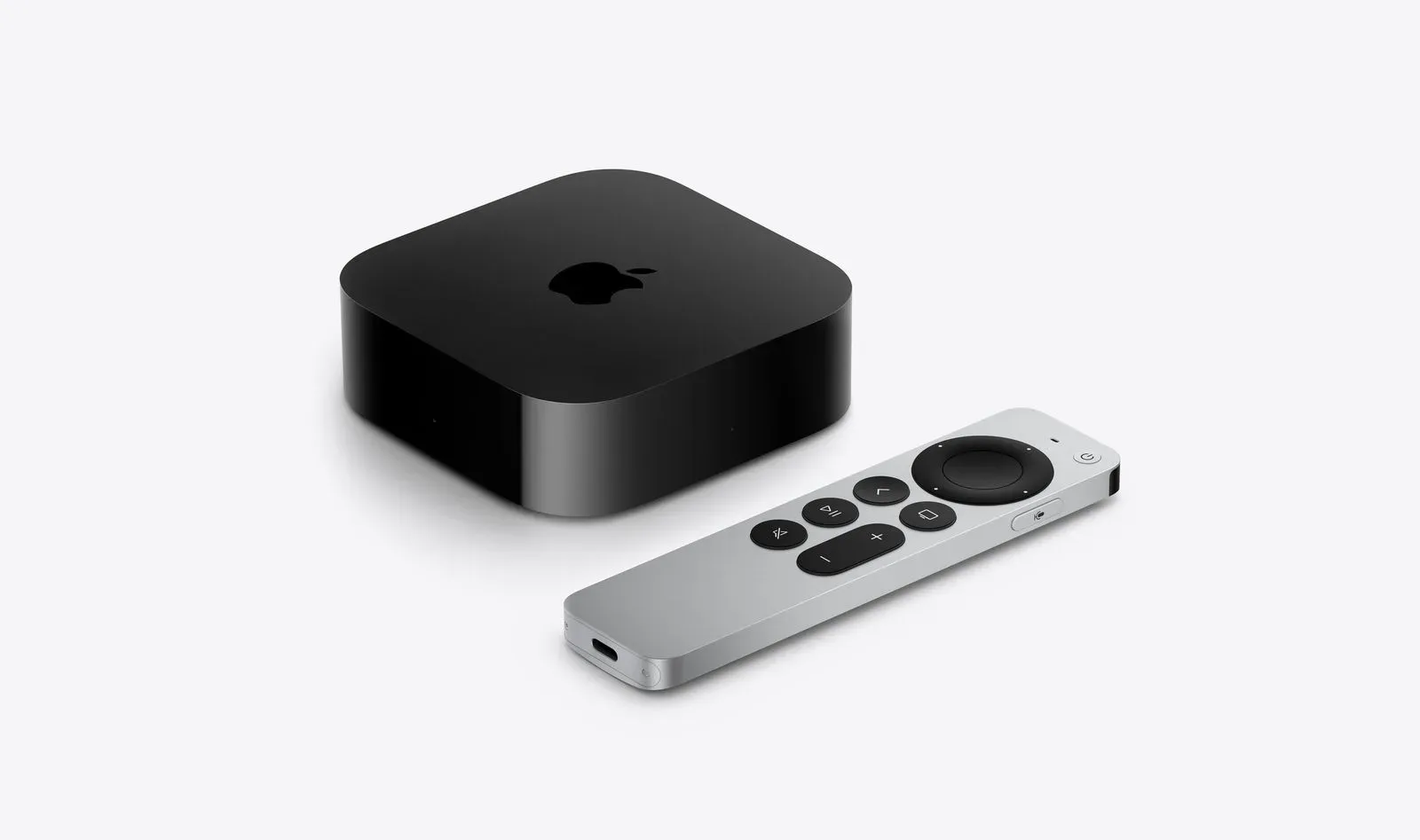
Apple has previously emphasized small living-room hardware conveniences with products such as the Siri Remote with Find My and Precision Finding. HomeView’s wall strategy pushes in the opposite direction on simplicity: it turns placement, power and audio priorities into decisions buyers need to make before they can enjoy the clean finished look shown by the concept.
For now, the best case for the wall HomeView is clear but narrow: a buyer who specifically wants a permanent display location and is comfortable budgeting for the mount and appropriate power arrangement. Everyone else should look closely at what the same $299 buys in the speaker-base model before paying extra to remove a base—and then paying again to replace it with a wall bracket.