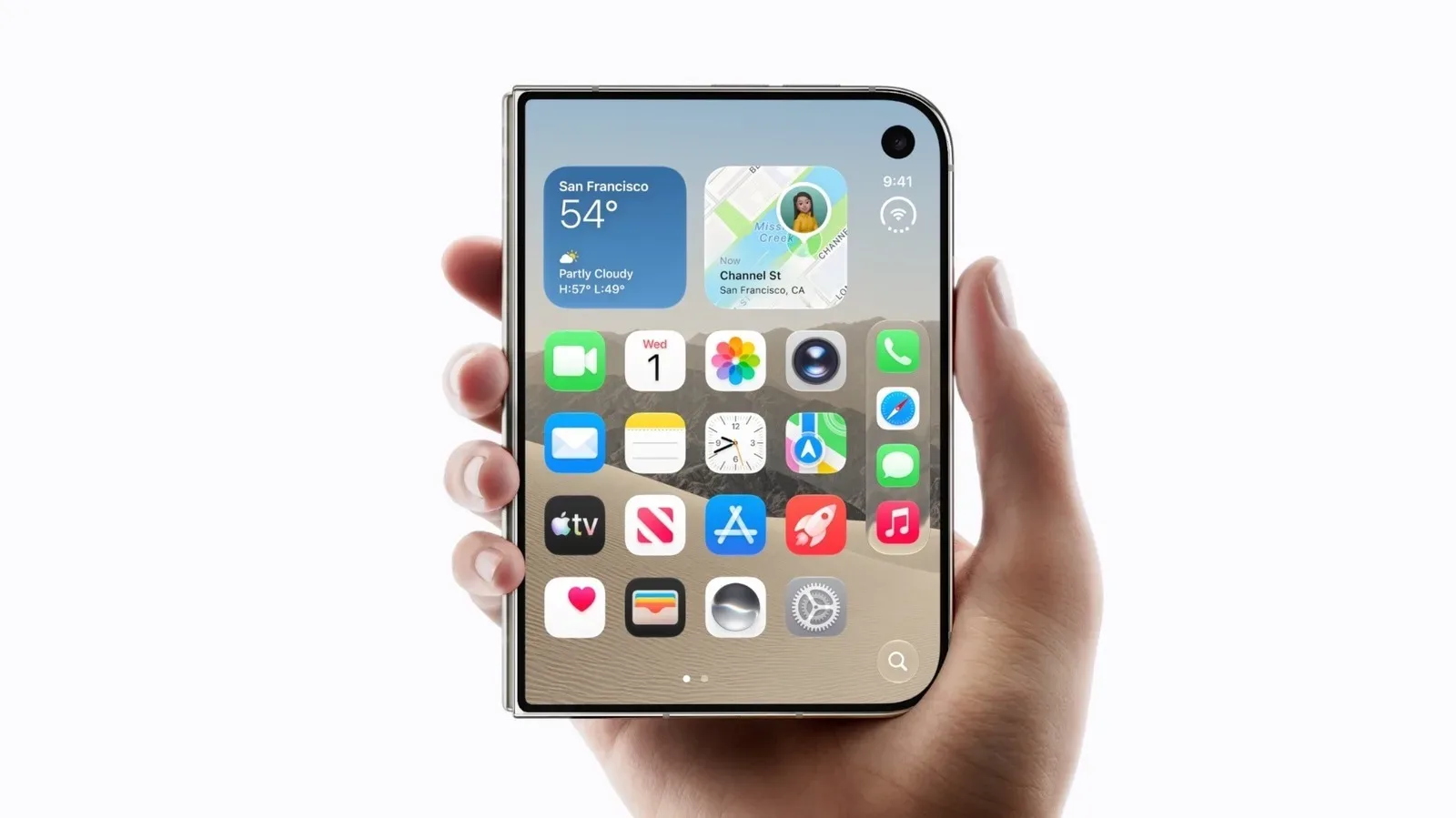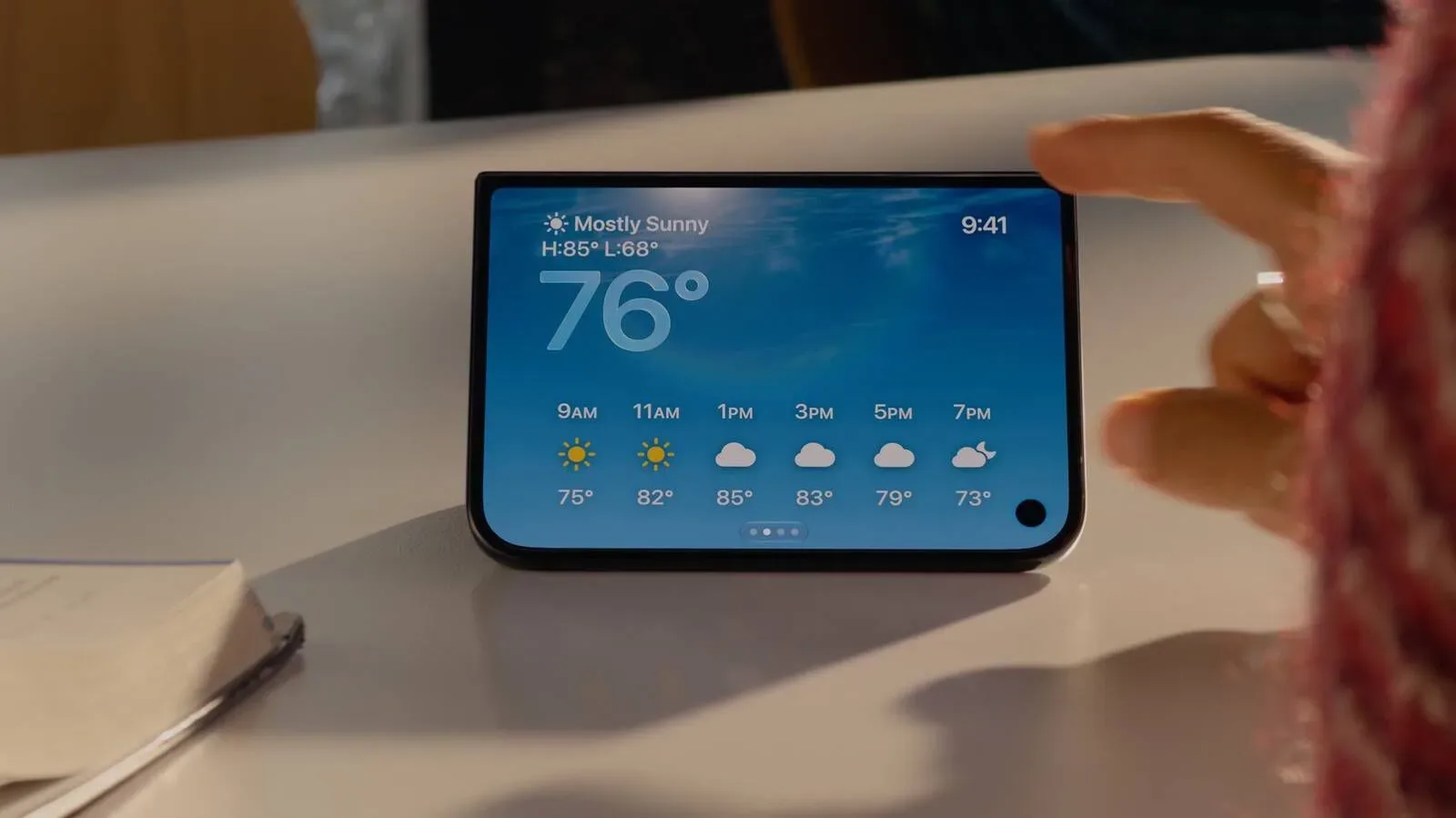
Apple CEO John Ternus has offered a clearer view of the thinking behind the iPhone Duo: the company did not begin with the premise of joining two conventional phone-shaped halves. Instead, Ternus described the device as an attempt to make a large-screen experience that felt coherent on its own terms.
That distinction matters because it frames the iPhone Duo as a question of form factor—the physical shape and arrangement of a device—rather than simply a phone with an extra moving part. Ternus said Apple drew on its experience with iPad-sized screens and arrived at a new aspect ratio for the Duo. An aspect ratio is the proportional relationship between a display’s width and height; it influences how apps, video, games, reading layouts, and interface elements are presented.
His comments came in a post-September-event interview that ranged beyond the foldable device, covering Apple’s approach to Siri AI, his unexpected path to the chief executive role, and the continuity he expects in the company’s product strategy.
The iPhone Duo brief: make the large display feel intentional
Ternus characterized the iPhone Duo as new and distinctive, arguing that Apple did not want the result to resemble two phone forms placed together into an awkward square. The stated objective was a large-screen experience that felt right to the company, supported by a newly developed display proportion.
That is a design philosophy, not a full technical specification. The interview does not establish the Duo’s dimensions, the behavior of individual apps, display size, software features, price, release timing, or how it compares to any particular rival. It does, however, provide useful insight into the problem Apple believes it is solving: a larger canvas has to be more than the byproduct of a folding mechanism.
For people who use phones for games, streaming, web browsing, messaging, creative work, or reading, screen shape can be as consequential as raw screen area. A wide or unusually proportioned screen may create opportunities for different layouts, but it can also require thoughtful interface design so that content does not merely stretch or sit surrounded by empty space. Ternus’s emphasis on the shape suggests Apple sees the display geometry as central to the product’s identity.
The company’s existing iPad experience was the reference point he named. That should not be read as confirmation that the iPhone Duo functions like an iPad, or that it runs iPad software in a particular way. It only indicates the kind of large-screen experience that informed the device’s design direction.
Why hinges and flexible displays are the hard part
Ternus said the project involved many problems to solve and specifically identified the hinge, the display, and reliability as major hardware engineering concerns. Those are closely connected challenges in any device whose screen changes shape.
A hinge is the mechanical system that permits the device to open and close. In a folding design, it cannot be treated as an isolated component: it affects the device’s feel, the route taken by internal parts, its closed and open alignment, and the stresses repeatedly placed on the display assembly. Meanwhile, a flexible display has to accommodate movement across the fold while remaining usable and dependable over time.
Reliability, in this context, means the device continuing to perform its intended function consistently through ordinary use. Ternus did not offer test numbers, durability ratings, materials details, or a description of Apple’s validation process. Still, his decision to call out reliability directly is notable. It recognizes that a product defined by repeated physical motion needs its core moving and visual systems to work together without turning every open-and-close cycle into a small act of faith.
Ternus portrayed those constraints as an opportunity for Apple teams to be clever and create new solutions. It is an engineering-focused account of the work rather than a claim that the problems were trivial. The useful takeaway is modest but meaningful: Apple views the Duo’s hinge and display as foundational to the device, not as background parts beneath a marketing concept.
A small animation that explains the intended feeling
When asked for a favorite iPhone Duo trick, Ternus pointed to the opening animation that moves across the device as it unfolds. He described it as whimsical and enjoyable, the sort of interaction intended to produce a smile.
Animations can be functional, expressive, or both. Functionally, motion can visually connect one state of an interface to the next: closed to open, one panel to a larger canvas, or one arrangement of content to another. Expressively, it establishes a sense of character. In this case, the animation appears to be part of making the physical transformation feel deliberate rather than abrupt.
It would be easy to dismiss an opening animation as a superficial flourish, but foldable hardware has an unusually visible state change. A conventional phone screen is already there; a folding device performs a transition each time it opens. A well-designed visual handoff can help the software acknowledge that physical event. Whether users ultimately find it charming, useful, or unnecessary will depend on the final experience, which the interview does not detail.
Siri AI is not being positioned as a replacement for people
Ternus also reaffirmed Apple’s position on AI companions. Siri AI, he said, is not designed to be the user’s friend, and Apple does not want technology to replace human relationships. He argued that people learn, grow, and find joy and happiness through those relationships.
This is a significant boundary to state plainly during an era when AI products are frequently discussed in emotional and social terms. An AI companion generally refers to software designed to sustain an ongoing, personal-feeling interaction with a user. Ternus’s description draws a line between an assistant that may help someone and a product presented as a substitute for human connection.
The comment does not explain every planned Siri AI capability, nor does it define how the company will make that philosophy visible in product design. But it does clarify the public posture: assistance is the premise, while simulated friendship is not the intended role. That stance intersects with a broader cultural concern over AI-generated representations of people, including calls for restraint around synthetic videos of deceased performers. The debate over AI videos of Robin Williams is one recent example of why the human stakes of these tools cannot be reduced to novelty alone.
There is an important analytical difference between an AI system’s tone and its social purpose. A system can sound conversational without being marketed as a friend. Ternus’s remarks suggest Apple wants that distinction to remain visible, even as conversational AI becomes more common.
Ternus describes surprise at becoming CEO, not a reset of Apple’s direction
Ternus said then-CEO Tim Cook and Apple’s board asked whether he would consider becoming the next CEO. He did not specify when the approach occurred, but said he was surprised by it—so surprised, he joked, that it was fortunate he was seated.
On the question of whether his tenure signals a return to Apple’s roots or a stronger emphasis on engineering, Ternus resisted the premise of a major break. He said the company’s focus on innovation, products, and customers had not changed, and described himself as deeply passionate about building things. His message was continuity rather than a dramatic new doctrine.
That is not the same as saying nothing will evolve. Leadership always changes the way a company communicates, prioritizes, and makes decisions. But based on Ternus’s own account, readers should not assume that a new chief executive automatically means a declared reversal in Apple’s product approach. His public emphasis is on carrying forward existing commitments, especially the connection between product-making and customer focus.
The iPhone Duo discussion fits that theme. Ternus did not present the device as a radical departure for its own sake. He described a familiar Apple goal—making a product experience feel considered—applied to a difficult new hardware format. In that framing, the innovation is not merely that a device folds; it is whether the screen’s shape, the hinge, the display, reliability, and the software’s transition all combine into something that feels purposeful.
“One more thing” and the weight of an Apple stage
Ternus also reflected on saying “one more thing” during Apple’s September event. He called the opportunity amazing and said it gave him goosebumps, noting that he had previously watched both Steve Jobs and Tim Cook use the phrase.
The remark is personal, but it also reinforces the wider theme of the interview: inheritance without an announced revolution. Ternus is conscious of the company’s public rituals and history, while describing his own goal as continued attention to product innovation and customers.
Beyond the iPhone Duo, Siri AI, and the CEO transition, the full conversation also touched on Cook, the AI race, environmental goals, Vision Pro, and new parental controls in iOS 27. The details provided here do not establish new specifications or policy particulars in those areas. What the interview does provide is a concise sketch of Ternus’s priorities: build products carefully, address hard engineering constraints directly, and keep AI in a role that does not displace human relationships.