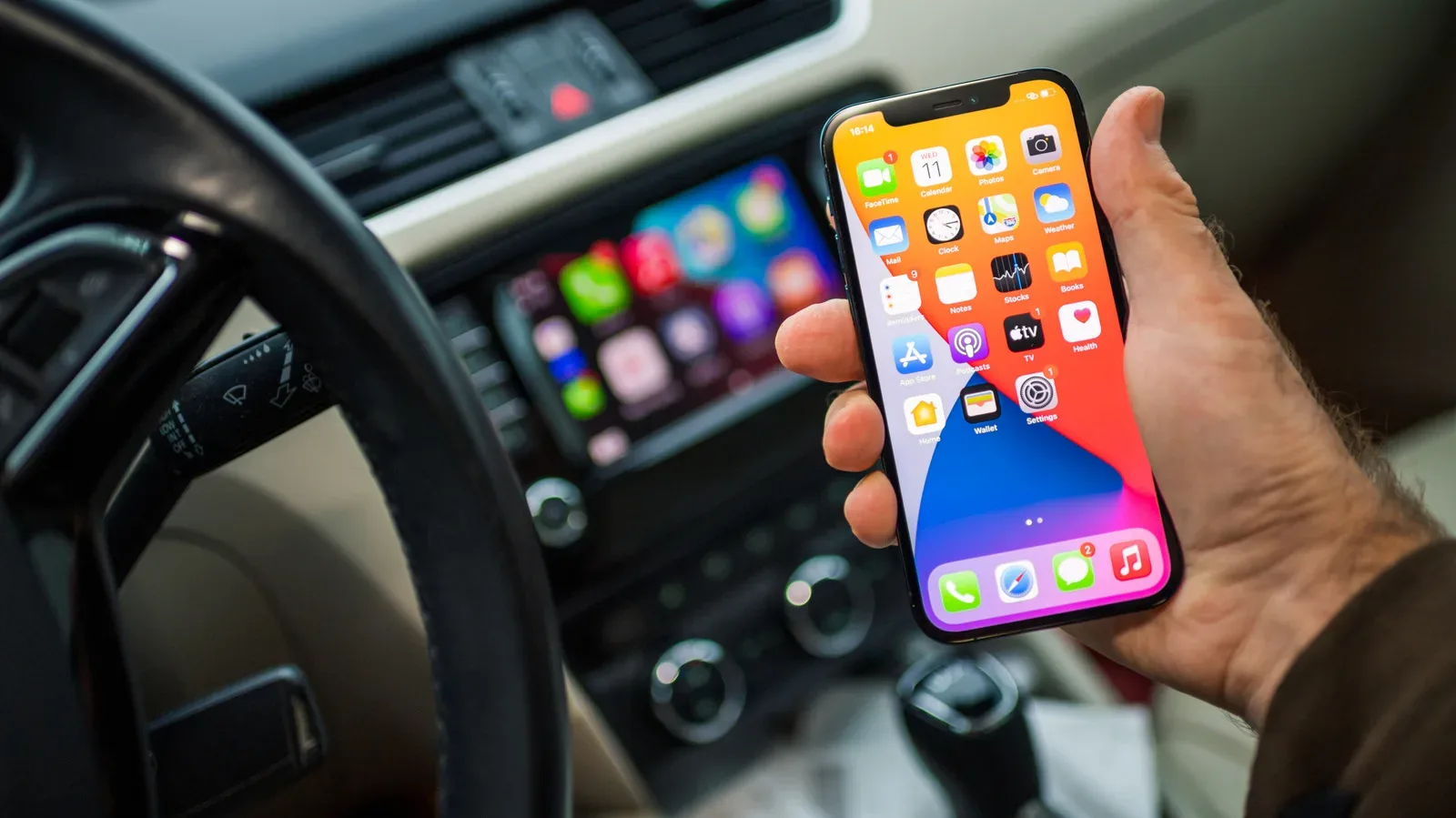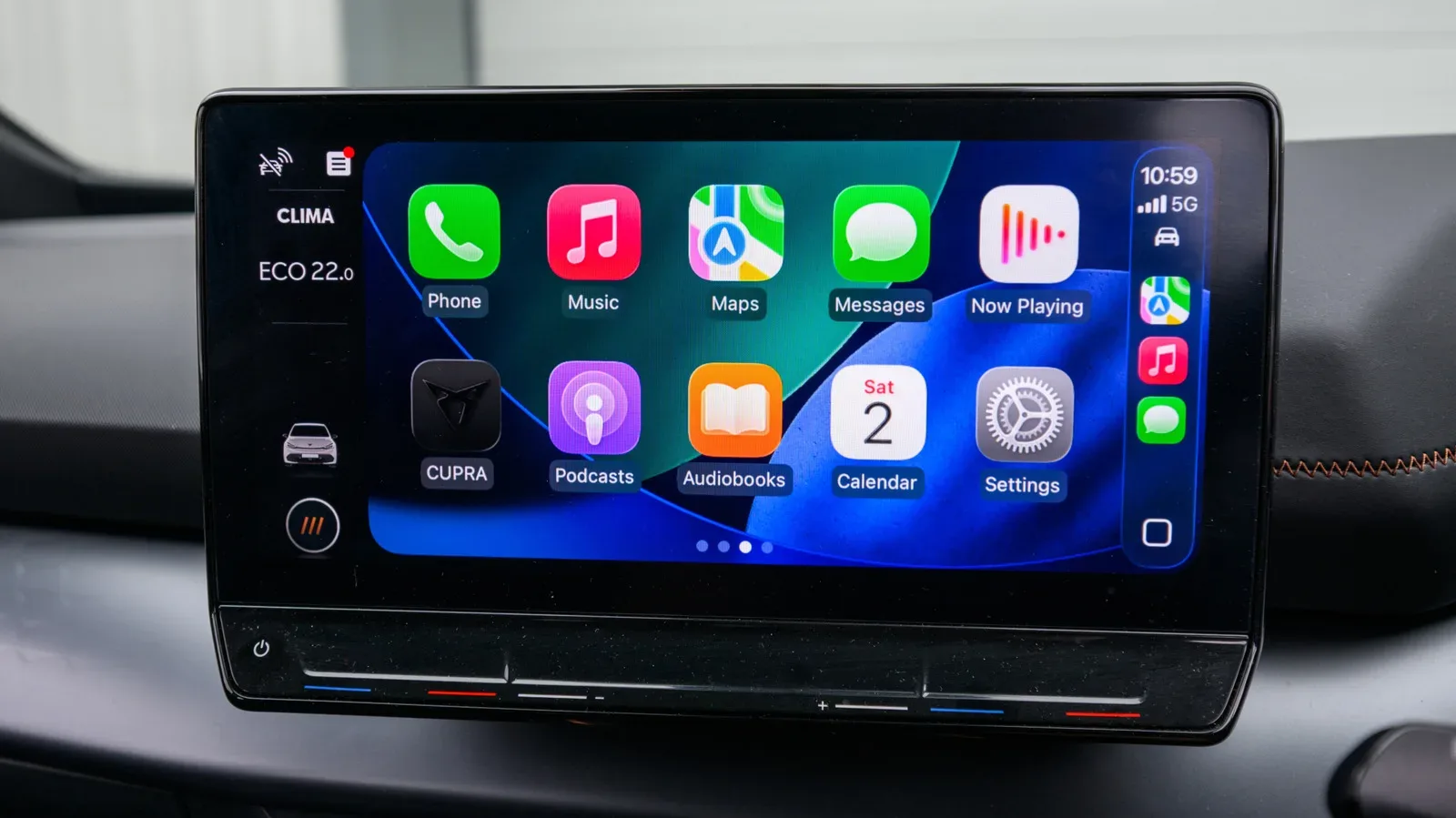
Apple CarPlay and CarPlay Ultra begin with the same basic idea: bringing an iPhone-friendly interface, selected apps, media and voice interaction into a car. The important distinction is scope. Regular CarPlay is an app-focused layer displayed on the vehicle’s infotainment screen. CarPlay Ultra is designed to reach much further into the cabin, covering multiple displays, instrument information and certain vehicle controls.
That makes Ultra sound like a simple upgrade, but it is better understood as a different level of integration. The familiar version of CarPlay works alongside a manufacturer’s native car software. Ultra is meant to make Apple’s interface the place a driver stays while using both iPhone functions and supported car functions. For drivers, the practical question is not just which version looks nicer; it is whether the vehicle supports the deeper system at all.
Standard CarPlay: iPhone apps on the infotainment display
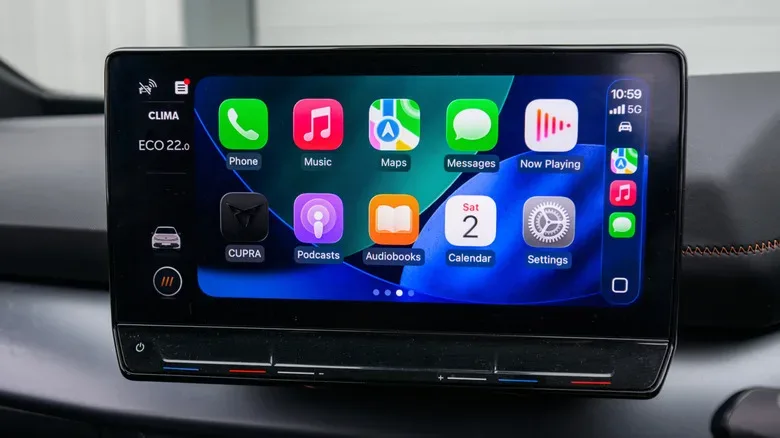
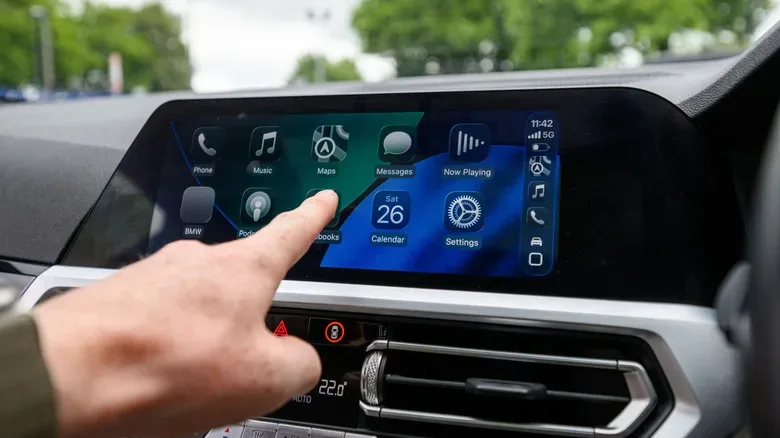
The core version of CarPlay arrived in 2014 with iOS 7.1. An iPhone connects to a compatible vehicle by USB or wirelessly, and the car’s dashboard display presents a simplified interface built for use in a vehicle. It is deliberately not a complete mirror of the phone. Instead, it prioritizes a limited set of app categories that make sense during a trip, particularly navigation, audio streaming and messaging.
That focus is central to what CarPlay is. A driver can begin a route in Maps, listen to an Apple Music playlist, or use Siri for supported requests without having to handle the phone. Siri is Apple’s voice assistant, and in this setting its relevance is straightforward: voice interaction can reduce the number of taps required on the vehicle screen. The purpose is convenience while keeping the phone out of the driver’s hand.
CarPlay’s selective app support is also worth stressing. It does not turn every iPhone application into a dashboard application. Navigation, streaming and messaging are the main use cases described for the platform. Anyone comparing cars should therefore think of standard CarPlay as a way to use certain phone-based services through the car display, rather than as software that takes command of the entire vehicle.
What “infotainment” means here
Infotainment is the broad term for the car’s built-in screen system used for information and entertainment features. It can include navigation, media, radio and, depending on the vehicle, settings and controls. Standard CarPlay occupies this area, but the vehicle manufacturer’s own software remains responsible for the native functions behind it.
That division produces one of standard CarPlay’s main limitations. If a vehicle puts functions such as driving-mode selection or climate settings on the same display, a driver may need to leave CarPlay and return to the carmaker’s own interface to adjust them. The exact functions vary by vehicle, but the issue is the extra transition: one interface for iPhone applications, another for vehicle settings.
In a parked car that may merely be mildly inconvenient. During a drive, it can add steps to a task that should be handled quickly. Standard CarPlay can make the iPhone side of the experience more accessible, while still leaving an interface boundary between the phone and the vehicle itself.
CarPlay Ultra: a broader interface for the car
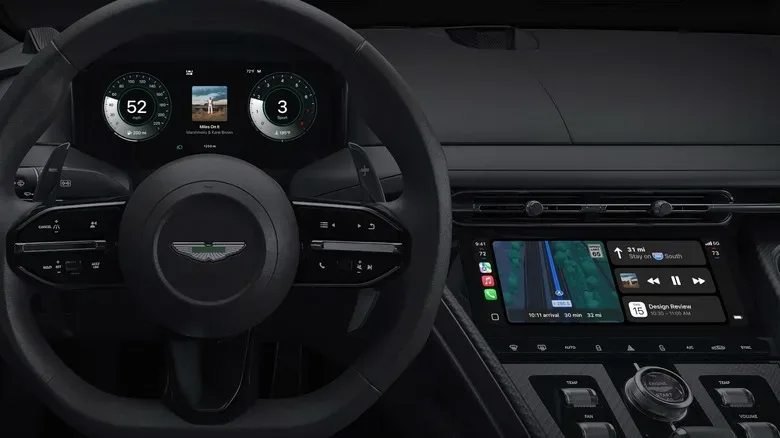
CarPlay Ultra is Apple’s answer to that boundary. First previewed in 2022 as a much more ambitious expansion of CarPlay, it is intended to extend across the vehicle’s displays rather than living only on one infotainment screen. Its role is not limited to launching supported apps and presenting media.
The deeper integration includes key driving information such as the speedometer and fuel gauge. Those are normally part of the instrument cluster: the display area that shows essential vehicle data to the driver. With Ultra, that information can be presented within the wider CarPlay experience and customized in appearance. The result is closer to a coordinated dashboard layout than a phone projection sitting beside the car’s own gauges.
Ultra also integrates supported vehicle controls, including air conditioning and radio functions. In principle, that means a driver does not have to leave the Apple-designed interface to change those settings. This is the clearest functional difference between the two products:
- Standard CarPlay brings supported iPhone apps and media to the vehicle display.
- CarPlay Ultra is designed to combine those functions with supported gauges, displays and vehicle controls.
Customization is another meaningful part of the Ultra proposition. Rather than merely choosing apps on an infotainment screen, the driver can tailor the presentation of information such as instruments. The source material likens this degree of visual adjustment to the customizable displays familiar from racing games. That comparison concerns the interface, not vehicle performance or driving behavior: Ultra is about how approved information and controls are organized and shown.
The trade-off: deeper integration requires manufacturer cooperation
Ultra’s larger ambition also explains why availability is so different. Standard CarPlay is available in more than 800 vehicle models. CarPlay Ultra, by contrast, is currently limited to luxury Aston Martin vehicles in the United States and Canada.
That gap is the most important buying reality. A person can reasonably encounter standard CarPlay across a wide range of vehicles, but should not assume that a new car with a CarPlay badge includes Ultra. The names are closely related, yet the supported hardware, regional availability and system relationship are substantially different.
It also helps explain why Ultra cannot simply be treated as a routine iPhone software update for any CarPlay-equipped car. The standard system does not need to take charge of the instrument cluster or native controls in the same way. Ultra’s concept depends on a car being built to support its multi-screen presentation and its access to controls such as climate and radio. The carmaker has to participate in that arrangement.
Porsche had teased CarPlay Ultra support, but that support had not arrived at the time described here. No definitive explanation is provided. One possible interpretation is that manufacturers may be reluctant to hand a technology company such extensive control over a vehicle’s digital environment, but that remains an inference rather than a confirmed reason for Porsche’s absence.
Connection and iPhone requirements
Standard CarPlay can connect through USB or wirelessly, depending on the vehicle. CarPlay Ultra has a narrower stated requirement: it works wirelessly and requires an iPhone 12 or later. That distinction matters for prospective users. A cable-capable standard CarPlay setup does not establish that the vehicle, or the iPhone, can use Ultra.
Wireless connectivity in this context means the iPhone communicates with the compatible car without being physically connected by a USB cable. It does not mean that every wireless CarPlay car can be upgraded to Ultra. The two facts are separate: Ultra uses wireless operation, and Ultra availability still depends on a compatible model in a supported market.
For drivers who are already invested in Apple’s services, CarPlay remains one piece of a broader iPhone workflow. That does not make the in-car experience identical to the phone, but it clarifies the appeal of familiar media, mapping and Siri-based functions on the dashboard. For another practical guide to an iPhone feature, see how to use iPhone Voice Memos for recording, transcripts, trimming and iCloud sync.
Which one should a driver expect to use?
For most people, the answer remains regular CarPlay. It is the established, broadly available option, and its core purpose is clear: use supported navigation, messaging and audio apps through an interface designed for the vehicle. It can be especially useful for reducing the need to pick up an iPhone while driving.
CarPlay Ultra is more compelling for someone who wants visual continuity across the cabin displays and fewer jumps between phone functions and vehicle settings. Its ability to incorporate gauges, fuel information, climate controls and radio functions makes it a more unified interface where supported. But its appeal should be balanced against its very limited availability. At present, the feature set is not a practical choice for the majority of car shoppers because the compatible vehicle list is so small.
Apple has indicated that Ultra will reach more vehicles eventually. Still, its rollout appears likely to take time. The sensible distinction is therefore simple: standard CarPlay is a widely available iPhone app interface for the car; CarPlay Ultra is a much deeper vehicle-display and controls integration that currently exists in a limited set of luxury vehicles and regions.