I Want to Play the Villain!, a theatre-themed logic puzzle game from Triomatica Games, is scheduled to arrive in Q1 2027 across PC, PlayStation, Xbox, Nintendo Switch, iOS and Android. PlayStation and Xbox storefront pages are now live, allowing players on those platforms to add the game to their wishlists ahead of release.
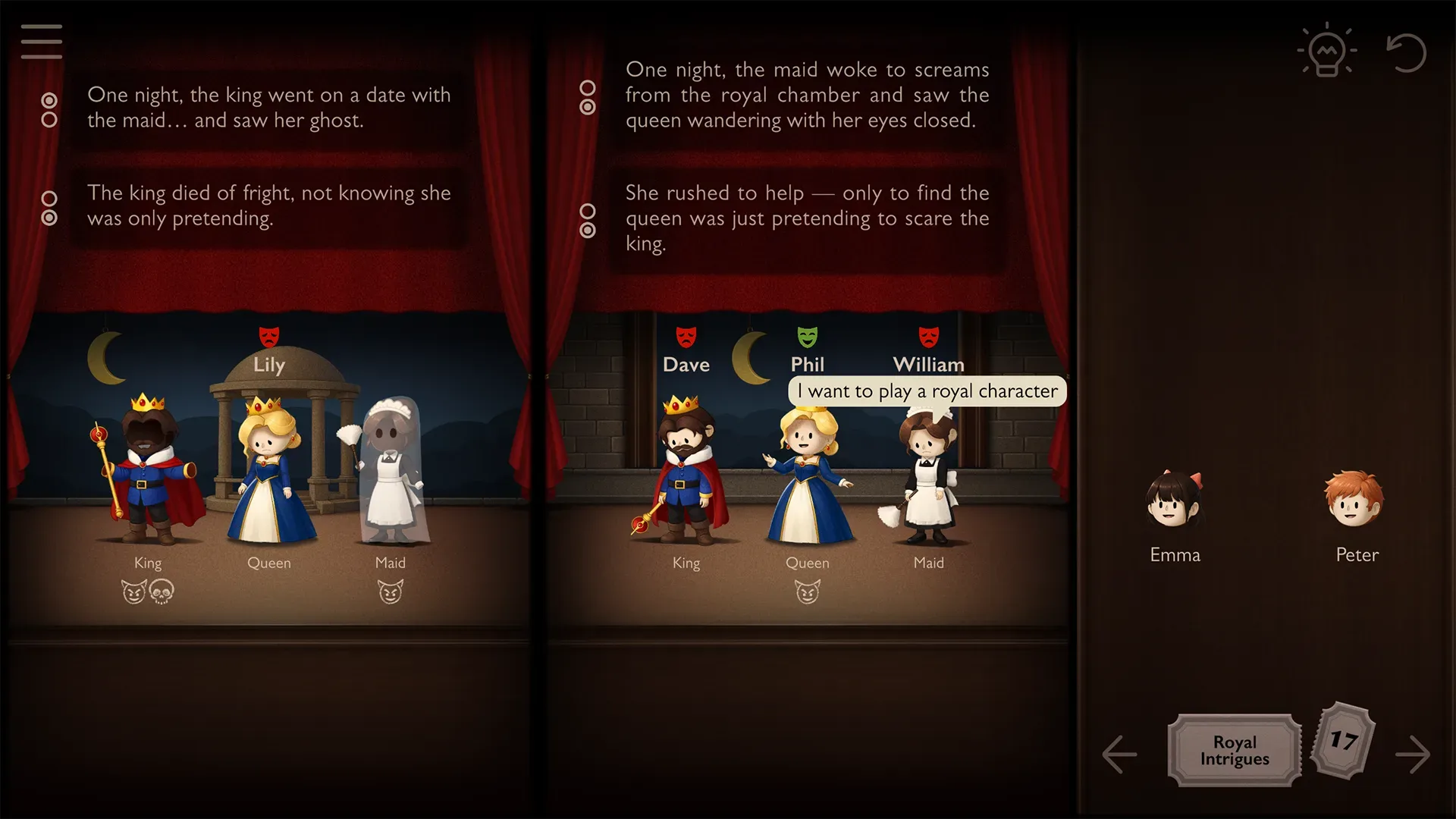
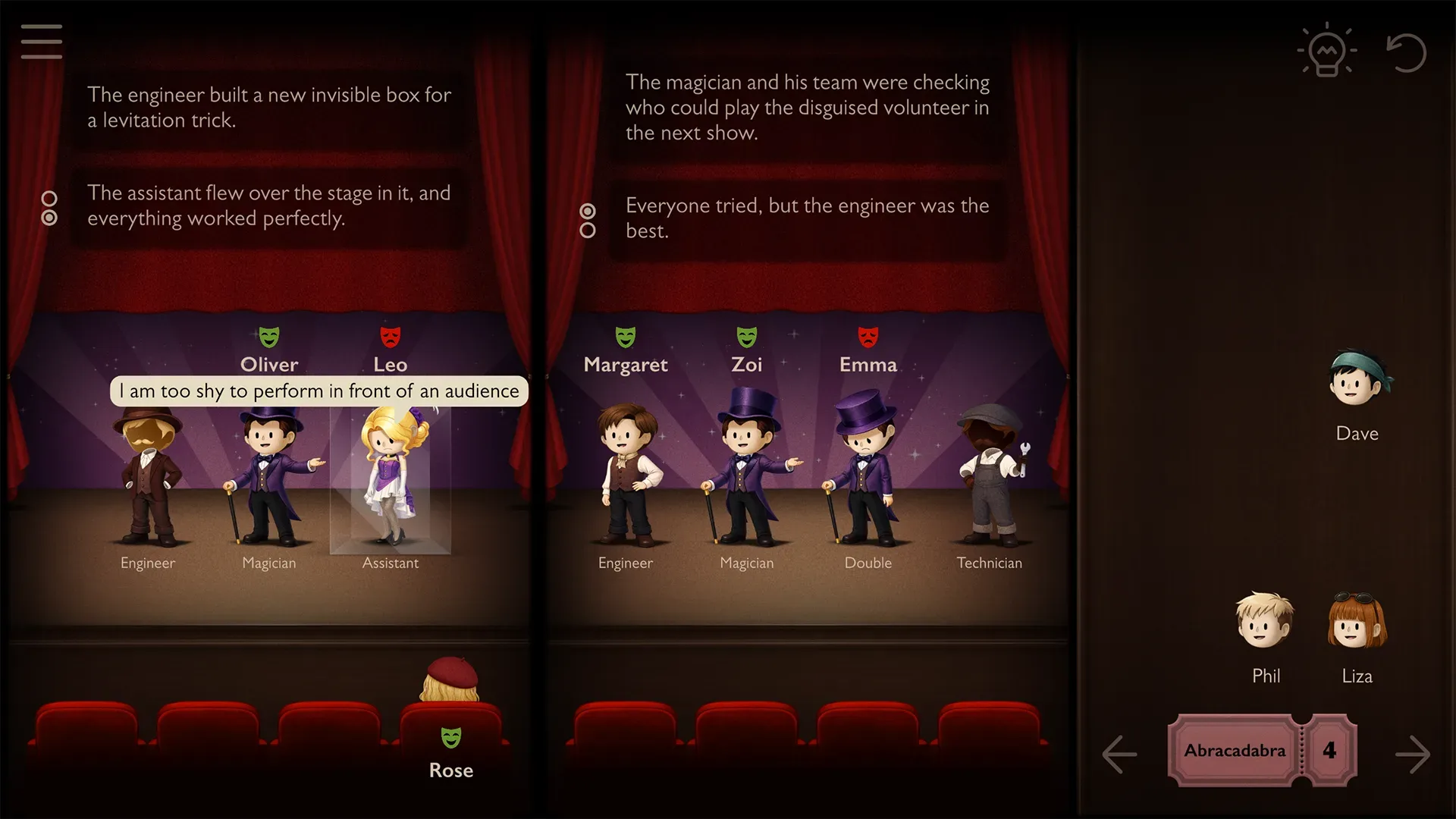
The premise puts players in charge of making a theatrical production work—not merely by assigning a performer to an empty role, but by accounting for the cast’s individual motivations. Actors have ambitions, fears and wishes. The task is to rearrange performers, change costumes and alter the story until the people on stage are satisfied and the production can come together.
That is a fittingly dramatic framework for a logic game: the villain may be the role everyone wants, nobody wants, or a part that only works when the surrounding cast is changed. The game’s title suggests a simple bit of theatrical mischief, while its stated systems point to puzzles built around competing character preferences and changing narrative arrangements.
A puzzle game about casting, not combat
Triomatica describes I Want to Play the Villain! as a logic puzzle game with a theatre setting. Its central action is matching actors to roles, but the variables extend beyond casting. Players can switch costumes and modify modular stories in pursuit of a successful performance.
Modular stories, in this context, means stories designed to be changed or rearranged rather than followed in a single fixed configuration. The supplied details do not spell out every possible rule or outcome, but they establish that altering the story can create different performances. That makes narrative structure part of the puzzle board: a player may need to reconsider who plays which role, what they wear and how the production is assembled rather than treating any one decision as permanent.
Each chapter is set to introduce a new environment, cast, mechanical idea and story. This chapter-by-chapter approach matters for a puzzle game because it signals that the design is not limited to repeating one assignment problem with a larger number of actors. Instead, the underlying theatrical premise is intended to support new situations and fresh complications as the game progresses.
The stated goal is also unusually character-focused for a logic puzzle. An actor’s personality and preferences are not just flavor text around the challenge; learning their ambitions and fears is part of solving it. In practical terms, players should expect information gathering and interpretation to matter alongside rearranging the cast. A role might look right at a glance, but the relevant solution may depend on whether the performer actually wants that part, fears its implications or has another condition that must be met.
What “every performance is different” suggests
The game says that every performance is different, alongside its promise of changeable stories and multiple outcomes. That language supports the idea that a completed chapter can be shaped by the player’s choices, rather than presenting only one identical staging for every solution.
It is important not to read more into that claim than has been confirmed. There is no published breakdown of how many endings, story branches or puzzle solutions a chapter will have. Still, the design emphasis is clear: changing the combination of actor, role, costume and story is meant to affect the result. For players who enjoy games where a solution feels like an arrangement they have constructed, the theatrical framing could make the usual trial, error and deduction loop feel more expressive.
The game also promises increasingly challenging puzzles. That does not necessarily mean every later challenge will simply have a bigger cast; difficulty could come from newly introduced chapter mechanics, more complex character demands, or greater interaction between story changes and casting. The precise progression has not been detailed, but the separate settings and mechanics indicate that Triomatica is presenting escalation as more than a numerical increase in puzzle pieces.
Platforms and release window
I Want to Play the Villain! is planned for an unusually broad list of storefronts and systems:
- Steam, Epic Games Store and GOG on PC
- PlayStation 5 and PlayStation 4
- Xbox Series X|S and Xbox One
- Nintendo Switch and Nintendo Switch 2
- iOS and Android, including the Samsung Galaxy Store
For the console versions, the availability of pages on PlayStation and Xbox means wishlisting is possible now. Wishlists are not a purchase or a release-date guarantee, but they are a useful way to keep track of a game whose launch is still given as a quarter-wide window rather than a specific day.
The inclusion of both current and prior-generation PlayStation and Xbox machines, alongside Switch, Switch 2 and mobile versions, means the game is intended to reach players across a wide range of hardware. Nintendo’s newer system is explicitly named in the platform list; readers tracking upcoming releases for that system can also find broader Switch 2 coverage here.
For now, though, there is no confirmed price. It remains listed as TBC, and no exact Q1 2027 date has been announced. Q1 covers the first three months of the year, so the release window gives prospective players a general target without settling the launch calendar.
A Steam demo and a mobile Chapter 1 option are available now
People interested in the concept do not have to wait until 2027 to see its basic direction. A demo is currently available through Steam. Separately, Villain!, a free standalone release containing the game’s Chapter 1 content, is live on iOS and Android.
Those two options serve different entry points. The Steam demo offers PC users a pre-release sample, while the mobile standalone version gives iOS and Android players access to Chapter 1 material under the shorter Villain! title. Neither availability note establishes how the demo compares in scope with the standalone mobile chapter, so players should treat them as distinct ways to investigate the game rather than assuming they contain the same selection of content.
For a puzzle game based on personalities and shifting constraints, an early sample is especially useful. Its core appeal depends less on a platform list than on whether the individual character requirements, story alterations and stage-management choices form satisfying deductions. The available demo and Chapter 1 release give interested players routes to assess that structure before the full multi-platform launch.
Language support at launch
Triomatica has listed a substantial group of launch languages: English, Ukrainian, French, Spanish, German, Italian, Portuguese, Turkish, Polish, Japanese, Korean, Traditional Chinese and Simplified Chinese.
That is particularly relevant to a game in which players are expected to understand characters’ preferences, ambitions and fears. The announced language support should help more players engage with the clues and story-driven conditions at the center of its puzzles, rather than having the theatrical setting function only as a visual wrapper around abstract logic.
With its Q1 2027 target, I Want to Play the Villain! is positioning its puzzles around a deceptively human production problem: putting on a show when every person in the company has their own idea of how it should go. Players will not be battling a final boss or collecting stage props for their own sake. They will be trying to make a cast, a costume rack and a flexible script agree long enough for the curtain to rise.