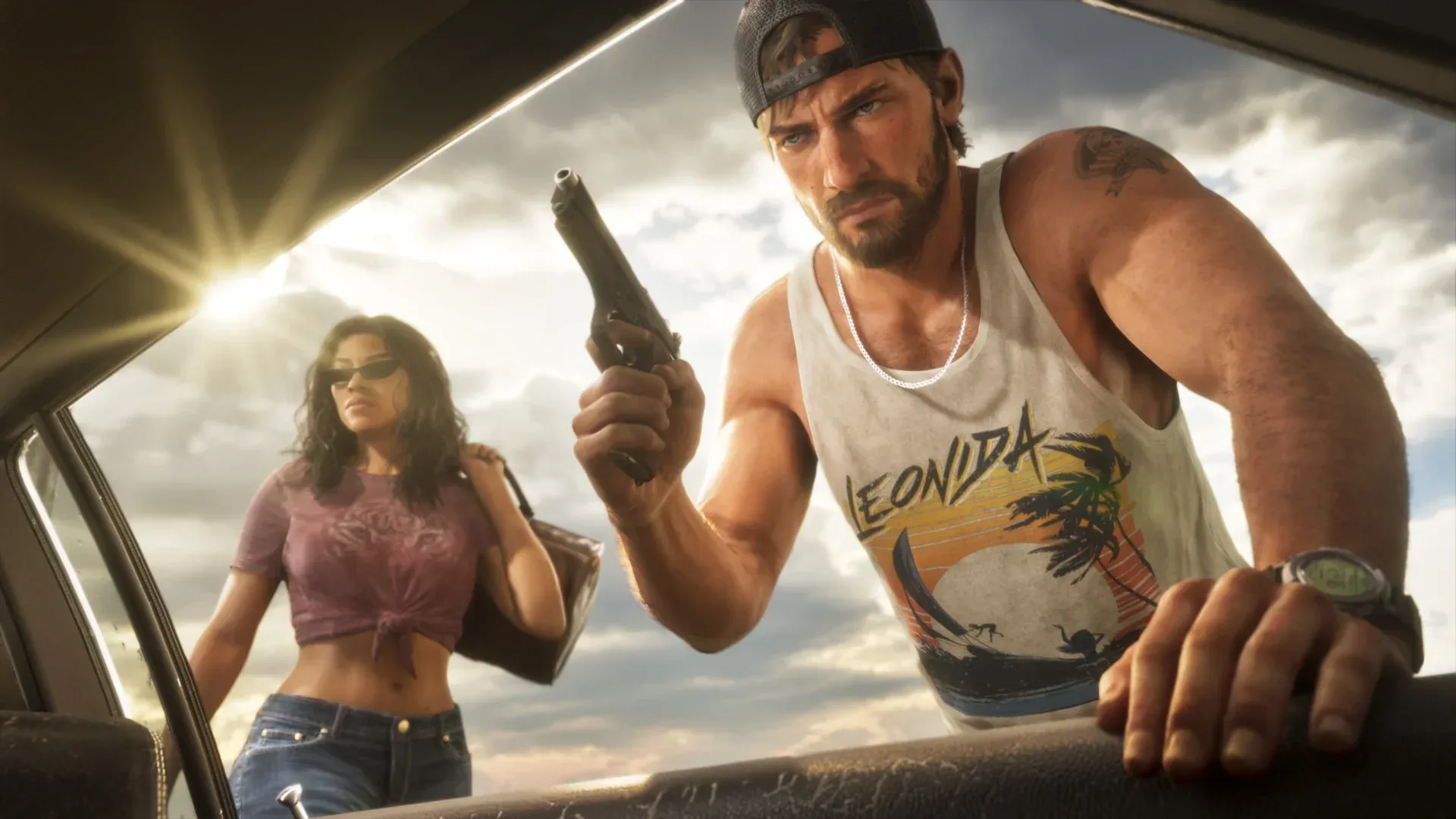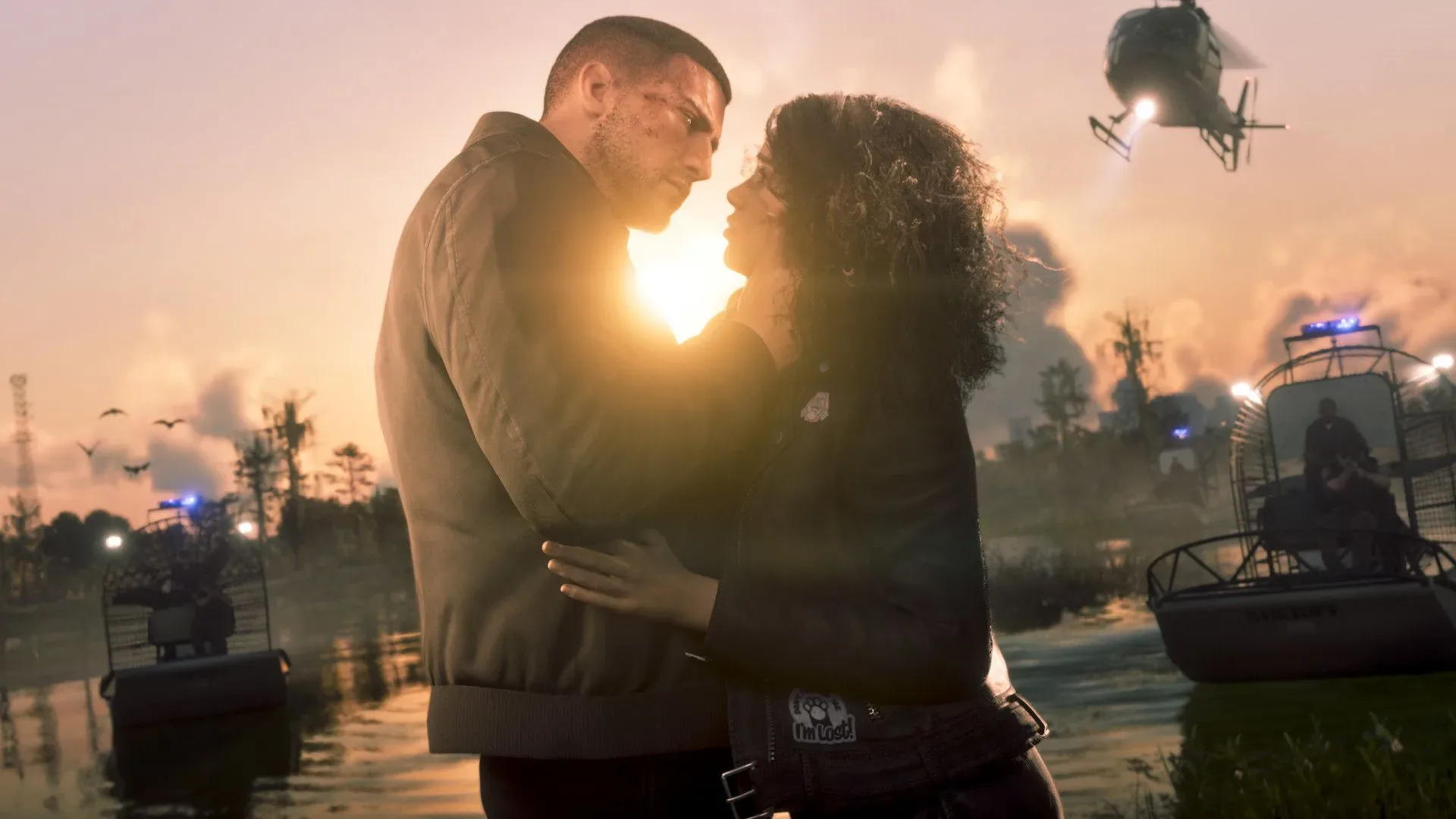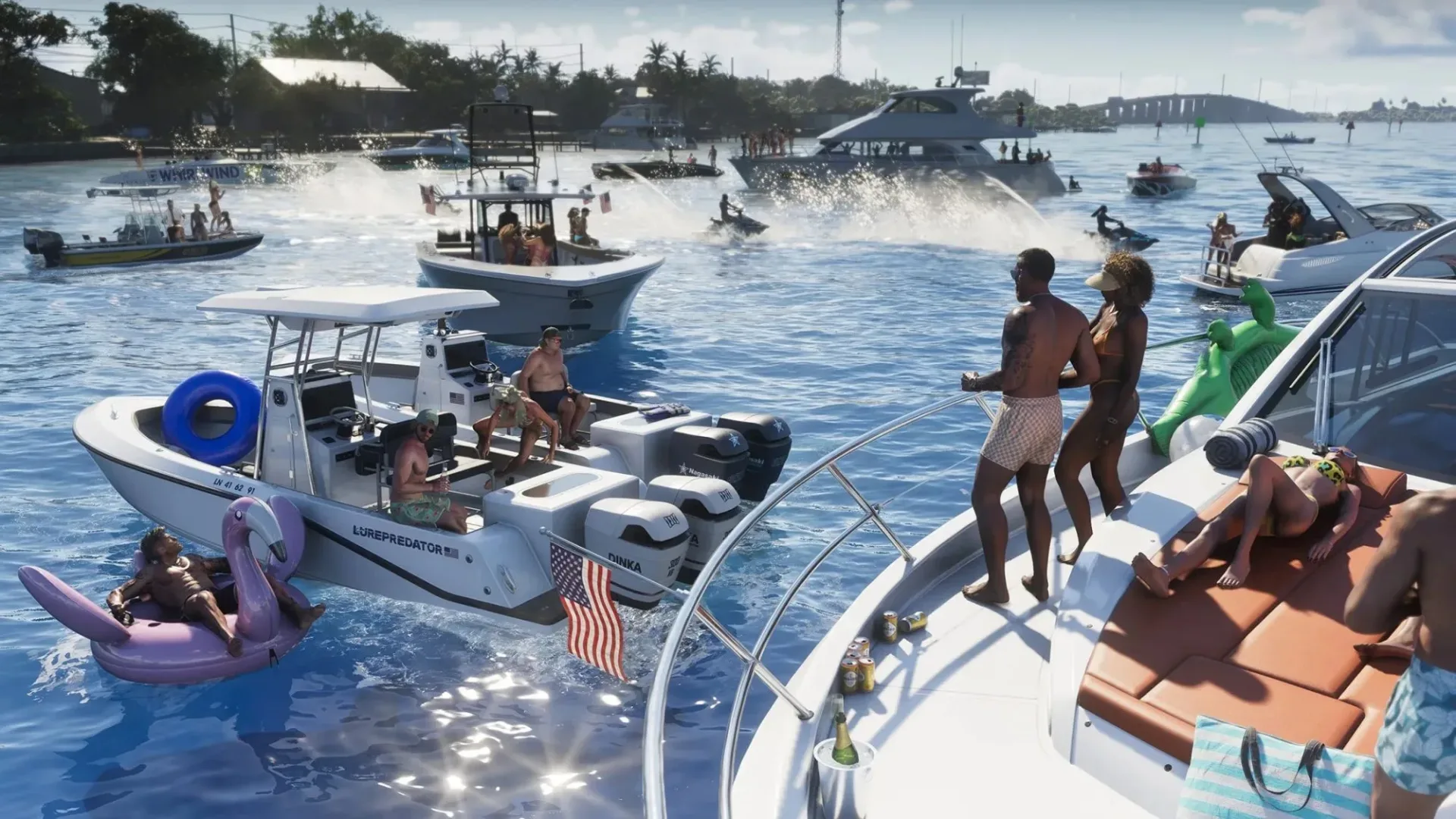

Grand Theft Auto 6’s Leonida is large enough that a mostly direct walk from its southernmost reachable land to its northern edge takes 3 hours, 21 minutes and 20 seconds. A run across a comparable route takes 1 hour and 41 minutes, a fast highway drive takes 10 minutes and 53 seconds, and a prop-plane flight comes in at 5 minutes and 51 seconds.
Those are exceptionally tangible numbers for a game world that can otherwise be reduced to speculative map outlines, screenshots and vague claims of scale. They also provide a useful corrective to one common assumption: a map does not need to require an hour-long uninterrupted car trip to feel enormous. Travel time is only one measurement of an open world, and in GTA 6’s case, it leaves out the density and verticality that make places worth returning to.
The GTA 6 map-crossing times
The timed journeys ran from the farthest southern points of land or road accessible in Leonida to the farthest northern land or dirt-road endpoint, depending on the travel method. The routes were intended to be as direct as conditions allowed, rather than carefully optimized speedrun lines.
- Walking: 3 hours, 21 minutes, 20 seconds
- Running: 1 hour, 41 minutes
- Driving: 10 minutes, 53 seconds
- Flying a prop plane: 5 minutes, 51 seconds
The walking route was not a perfectly straight line. The southern portion of the setting consists of islands, forcing use of highways early in the trip. Alligators, other wildlife and cliffs that could not be scaled also required occasional detours. Once beyond that opening stretch, it was possible to head largely north on foot.
That distinction matters. A traversal test answers a very narrow question: how long does it take to cross the playable world using a particular route and vehicle? It does not establish the world’s total square area, reveal the density of activities, or count interiors and underwater spaces. A route that skirts water, follows roads, and avoids impassable terrain is a practical way to test distance, but it cannot represent every explorable part of the map.
Why the running comparison with GTA V is especially revealing
The reported GTA 6 timings invite comparison with Grand Theft Auto V, where crossing the world on foot reportedly takes about two and a half hours and running it takes roughly 30 minutes. On the surface, the difference is curious: GTA 6’s walking journey is longer, but not by the dramatic margin suggested by its running time.
The most credible explanation offered is character movement. GTA V characters can apparently sprint indefinitely and move faster, while GTA 6 protagonists Jason and Lucia have a stamina bar that limits sustained maximum-speed sprinting and seem to have a slower general pace. Stamina, in this context, is a gameplay resource that restricts how long a character can maintain a sprint before needing to ease off. It means a “run across the map” test does not just reflect geography; it is partly a test of movement rules.
That is why the 1:41 running result should not be read simply as a map-size conversion. It captures a combination of route length, terrain obstacles, character speed and the recovery imposed by the stamina system. For players, it also suggests that ordinary on-foot exploration may be deliberately paced differently than it was in GTA V. A long journey is likely to involve choosing when to sprint, avoiding hazards and responding to whatever interrupts the route, rather than holding one input from coast to coast.
Related coverage includes GTA 6 Map Crossing Test Takes More Than Three Hours on Foot.
Nearly 11 minutes of hard driving is still a serious commute
The driving run began at the southernmost roadway and headed north through highways and freeways to the northernmost dirt road. It was completed in a mid-range sedan with traffic treated as an obstacle to weave through, not as an instruction to follow speed limits. At 10 minutes and 53 seconds, it was only a few minutes longer than fast cross-map drives in GTA V, which have been recorded at around eight minutes.
That result may sound less extreme than the walking and running figures, but it is worth putting in gameplay terms. Nearly 11 minutes is a lengthy single-direction drive in a game where missions, random encounters and player-made detours can all compete for attention. And this was a deliberately aggressive end-to-end trip on major roads. Normal play is unlikely to involve an uninterrupted high-speed run from one geographic extreme to another.
Road travel also measures a different version of scale than walking. Highways are built to compress distance; that is their job in real places and virtual ones. A road network can make a broad game world feel convenient for mission travel while leaving its beaches, backcountry, waterways and side streets substantially less accessible. The reported northbound finish on a dirt road is a reminder that the fastest route need not cover the kinds of spaces players may spend the most time exploring.
Flight is fast, but it does not flatten the world
A prop plane covered the southernmost-to-northernmost land route in 5 minutes and 51 seconds. This is the fastest reported crossing, as expected, because flight avoids road geometry, traffic, cliffs and animal hazards.
Yet the plane timing should not be used to dismiss the scale beneath it. Flying over a map turns terrain into scenery and largely bypasses the navigational choices that make a world feel substantial at ground level. It can be a useful practical option when a player simply needs to cross Leonida, but it says little about how long it takes to inspect neighborhoods, reach a submerged location, search wilderness or move through buildings.
The report specifically notes enterable buildings, underwater locations and broad wilderness areas as dimensions that the four timing tests do not capture. Verticality refers to usable space above and below the main ground plane—such as interiors, upper levels and underwater areas. A map may be relatively quick to fly over while still holding a great deal of playable space in those layers.
Events and discovery are part of the journey
The long on-foot route was not portrayed as empty scenery between two timer stops. It reportedly uncovered areas that had not been seen previously, fresh encounters and at least one distinctly bizarre roadside scene involving a person using a VR headset. The specific content of that encounter is less important than what it illustrates: a crossing test can become a discovery route when the world supports unscripted or situational events.
That is a key difference between map size and world scale. Map size is generally the physical footprint players can traverse. World scale is the broader sense of how much a place contains and how often it gives the player a reason to stop, investigate or take another path. The latter is harder to measure with a stopwatch, but it is often what determines whether a large open world feels memorable rather than merely inconvenient.
The player behind these tests had logged more than 130 hours and said GTA V felt comparatively small and empty after revisiting it. Even after 100 hours, completing the story and most major side missions, there were reportedly areas of the GTA 6 map still unvisited. That is personal experience rather than a controlled measurement, but it supports the larger caution around raw travel times: the route is only a slice of Leonida.
What players should take from the numbers
The most useful takeaway is practical. Players who want to travel from the deep south to the far north should expect a meaningful commitment if they choose to do it on foot, and an hour-plus effort even when pushing the characters’ running ability. A fast car reduces that to about 11 minutes under deliberately reckless conditions, while a prop plane roughly halves it again.
But players looking to judge the game’s breadth should avoid treating any of those figures as a final verdict. The measurement excludes places away from the direct route, underwater exploration, interior spaces and stretches of wilderness. It is also influenced by the routes available, the vehicle selected, traffic, detours and Jason and Lucia’s stamina-limited sprinting.
In other words, GTA 6 can have a north-to-south driving time that is much closer to GTA V than its enormous walking commitment might suggest, while still feeling materially larger during actual play. Roads and aircraft shrink distance. Character limits stretch it. Things to find between the endpoints make it matter.
For additional GTA 6 context, including how the game’s presentation has reportedly held back major narrative details, see our coverage of GTA 6’s trailers and story surprises.
The timer results are valuable precisely because they are so simple: one world, one end-to-end route, four ways to travel. They establish that Leonida is not a quick walk, and they hint that the most meaningful measure of its scale may be everything a direct trip passes by.