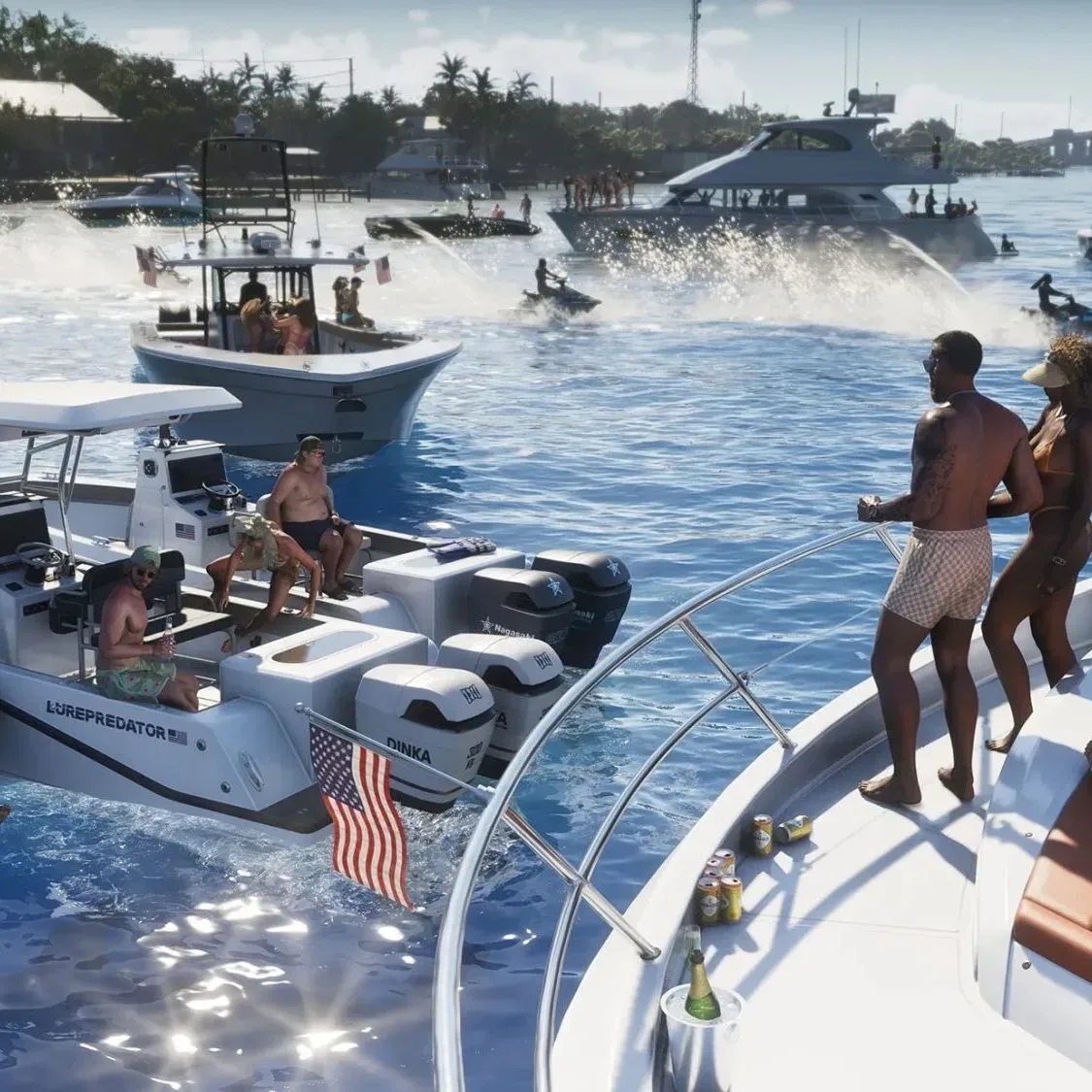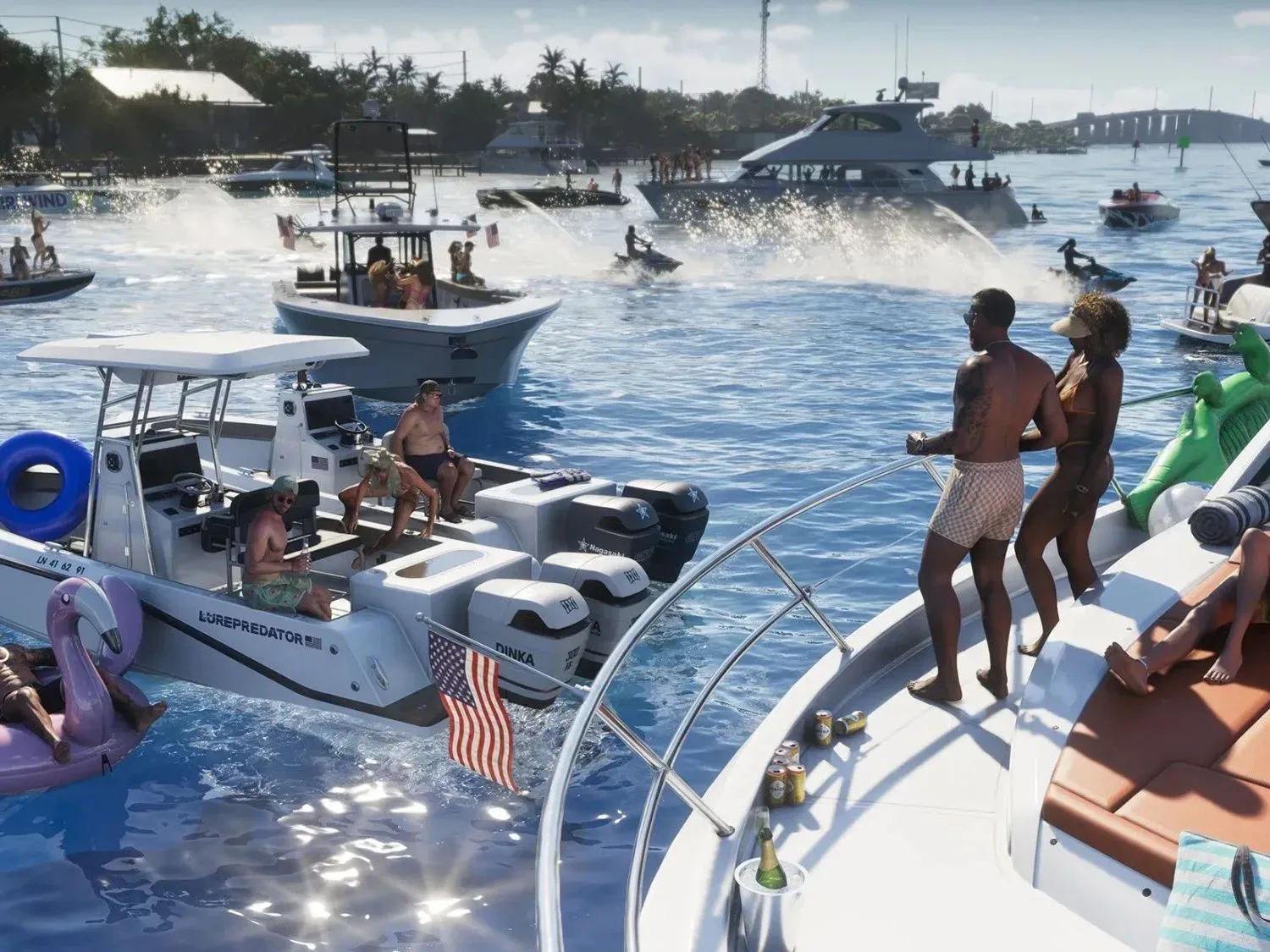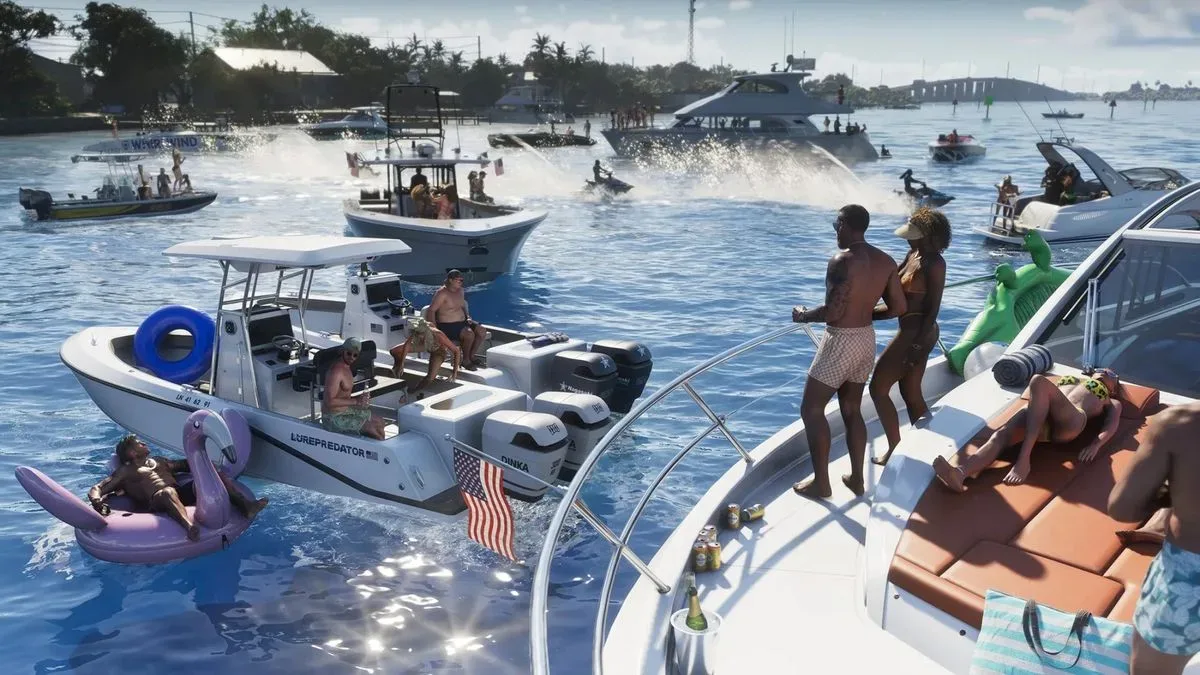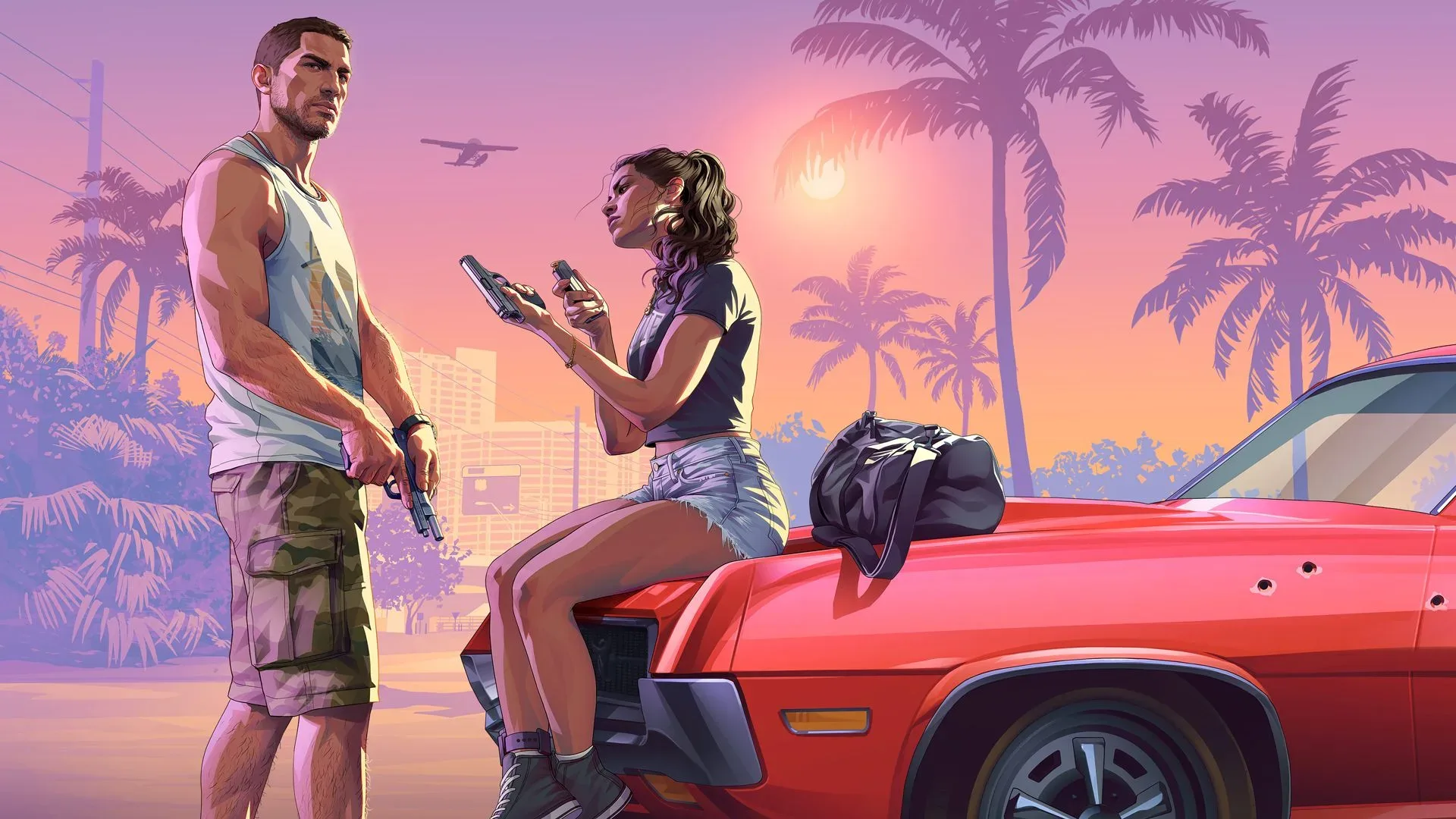
Grand Theft Auto 6 is aiming for weather that does more than tint the sky gray and put a few puddles on the road. Rockstar co-studio head Aaron Garbut has described a far more granular system for Vice City and the wider state of Leonida—one where cloud formations can move independently, storms can develop at a distance and work their way toward town, and the consequences of bad conditions extend to boats, aircraft and the people moving through the world.
The basic promise is not merely visual variety. Weather is being presented as a system of connected effects. Wind affects vegetation and water. Geography changes how that wind reaches a boat. A player’s position on the water can affect how hard the craft is rocked by waves. Severe conditions can make a flight turbulent and can inflict light damage if an aircraft remains in the storm too long. Meanwhile, civilians are intended to respond by looking for shelter.
It is an ambitious description, and it matters because it suggests rain, wind and storms may alter the texture of ordinary travel rather than exist as decorative background noise. For a series built around moving through a huge world by car, boat and aircraft, that could turn the forecast into another piece of situational awareness.
What “more granular” weather means here
Garbut contrasted GTA 6’s approach with game weather that broadly flips between conditions such as sunshine and rain. In this case, “granular” means the simulation is meant to have more distinct, interacting parts instead of treating the whole map as a single weather state.
For more context, explore Park Hoon-jung’s Assassin Noir ‘Tristes Tropiques’ Lands North American Deal as Global Sales Expand.
That includes cloud systems moving separately from one another and storms that can be seen in the distance before arriving. The distinction is important. A map-wide switch from clear skies to rain tells players only that the current condition has changed. A storm moving across the landscape creates a sense of approach: clear conditions may remain in one area while threatening weather visibly occupies another.
That can also make the game world easier to read at a glance. If players can observe storm activity in the distance, a trip by boat or air may invite a practical choice: continue toward the bad weather, change course, or wait for it to pass. Rockstar has not laid out specific player tools for tracking conditions, so it would be premature to assume there will be a forecast interface or any formal warning system. The confirmed point is the behavior of the weather itself, not a particular user interface built around it.
Surface drying is another small detail with potentially large visual value. Rockstar says surfaces will dry at different speeds after storms. In technical terms, that means wetness will not necessarily vanish uniformly the moment rainfall stops. Different areas can retain the look of recent rain for different lengths of time, helping a storm feel like an event with an aftermath rather than a quick visual transition.
Those details should not be confused with promises of a survival simulation. Nothing described suggests players will need to manage temperature, dehydration, fuel reserves or other weather-related meters. The available information instead points to environmental responsiveness: the world’s appearance, motion, transport behavior and pedestrian routines changing together.
Wind is where the system could become tangible
Wind is set to move through Vice City, causing trees to sway and waves to form on the water. On its own, that is familiar environmental animation. The more notable part is Rockstar’s claim that islands and buildings will intercept wind and alter its effect, much as obstacles do in the real world.
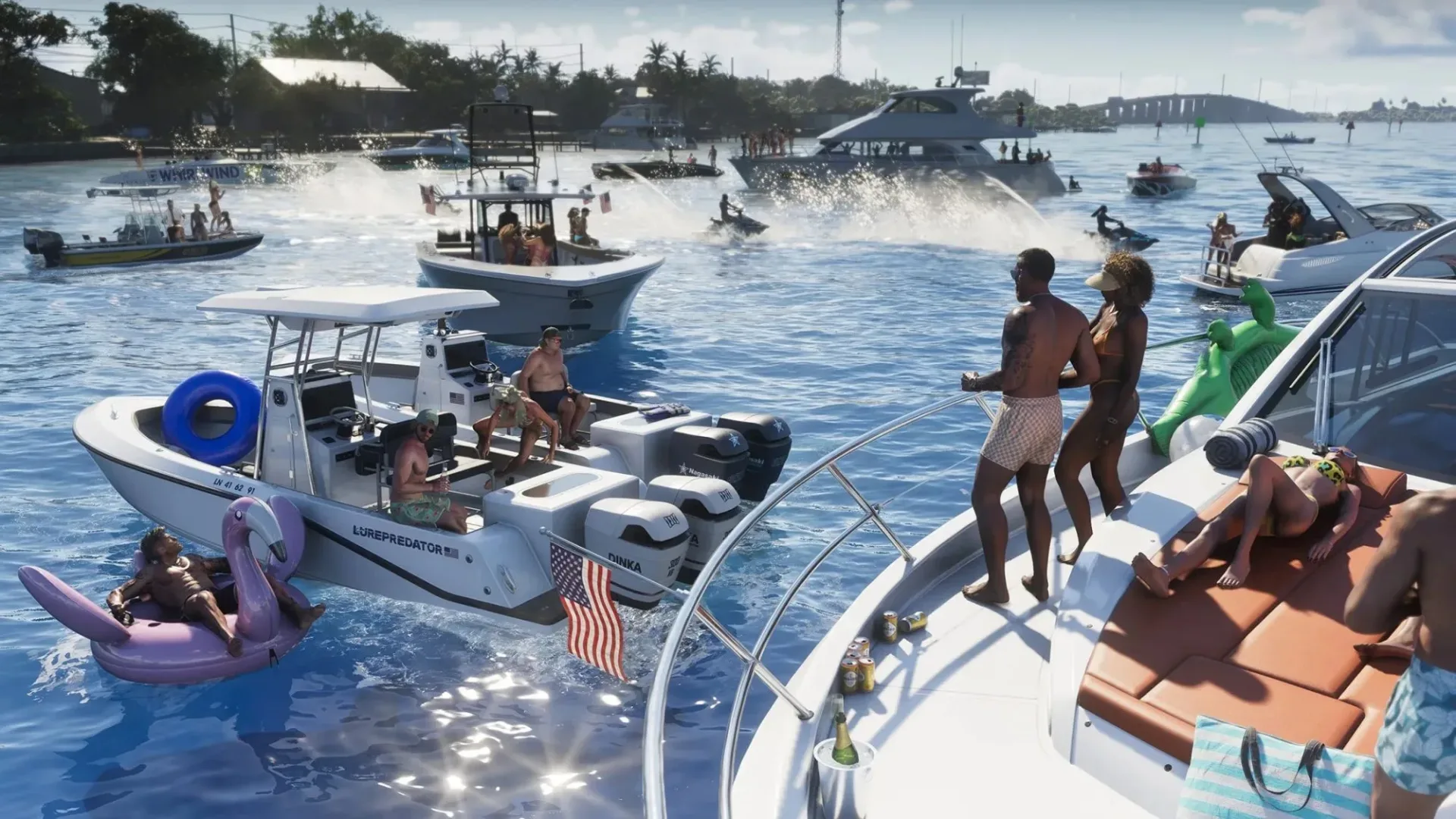
For boats, this means a shoreline is not simply a cosmetic backdrop. A vessel anchored near land may bob and sway differently depending on the surrounding terrain and structures. That is a more specific idea than merely making all water choppier when it is windy. The layout of the coast matters.
Garbut has also said a boat’s location relative to the waves will matter. Depending on where players are, they may skim over the rougher conditions or be rocked around substantially. The practical implication is that two routes across nearby water may not feel identical during the same weather event.
There are sensible limits to what can be concluded. Rockstar has not detailed how far these effects will go, whether every class of watercraft responds in the same way, or whether wind and wave behavior will affect mission objectives. It is also unknown whether rough seas can sink or disable boats. What has been described is motion and handling variation, not a complete list of failure states.
Still, this type of interaction can make water travel feel less like driving a vehicle over a differently colored road. A calm channel, an exposed stretch of open water and a shoreline sheltered by buildings may carry different movement characteristics even before a player reaches a destination.
A world that reacts without stopping for the player
The strongest idea in Rockstar’s description is that weather effects are meant to overlap. Clouds move. A storm arrives. Wind changes the trees and water. Buildings and islands alter the local impact of that wind. People respond to severe weather. Each part is modest on paper, but the goal appears to be a world where the pieces are happening at the same time rather than a set of isolated visual tricks.
That is especially suited to Vice City and Leonida’s coastal setting. Watercraft and low-lying shorelines are already natural parts of a region built around beaches, islands and urban waterfronts. Weather-driven waves and wind shadowing have a clear opportunity to show up during routine exploration, not only during set-piece moments.
For another overview of the announced weather behavior, including storms, turbulence and shelter-seeking citizens, these GTA 6 weather details reinforce the scale of Rockstar’s stated ambitions.
Flying into a storm will carry a risk
Aircraft are also part of the weather equation. Rockstar says flying a plane or helicopter through severe conditions can cause turbulence, and remaining in a storm for too long can result in light damage.
Turbulence is irregular movement caused by disturbed air. In game terms, it suggests that a stormy flight will not simply look darker or rainier through the cockpit. The aircraft itself may become harder to control or may move unpredictably enough to require correction.
The mention of light damage is equally significant, even though the description is deliberately limited. It establishes that dangerous weather can have a mechanical consequence beyond visual atmosphere. At the same time, “potentially” and “light” are important qualifiers. Rockstar has not said storms will routinely destroy aircraft, nor has it explained the threshold for taking damage. Players should view this as a risk to account for, not proof that every flight through rain will become a disaster movie.
It also raises an interesting tension for airborne travel. Aircraft can offer speed and a broad view of the world, but severe weather may make that convenience less straightforward. If a storm is visible on the horizon, the fastest line between two points may not be the most comfortable or safest one. That does not make flying less appealing; it could make choosing when and where to fly more meaningful.
Rockstar’s opening description even invokes the prospect of being high in the air while a hurricane is nearby. That establishes the dramatic scale it is chasing, though the detailed information focuses on severe-weather turbulence and light damage rather than a full breakdown of hurricane-specific mechanics.
Vice City’s residents will not ignore the storm
Weather is also expected to affect civilian behavior. Residents of Leonida will seek shelter as severe weather comes through. This is a simple behavior change, but it can do considerable work for the mood of a place.
In a static open world, pedestrians tend to follow their routines regardless of conditions. If crowds thin out, people head under cover and severe weather changes how public spaces feel, the environment communicates that something meaningful is happening. The response can make a storm feel consequential even if the player is nowhere near a boat or plane.
There are unanswered questions here too. Rockstar has not specified which interiors or covered spaces civilians will use, how broadly this behavior applies, or whether individual non-player characters will have different reactions. It has simply confirmed the larger behavior: severe weather causes people to seek shelter.
That restraint is worth keeping in mind amid excitement about simulation-heavy games. A living world does not require every person to possess a complex personal weather plan. The visible response of the population can be enough to change the rhythm of streets, beaches and waterfronts while leaving the player free to decide whether to do the sensible thing or take a helicopter into questionable skies.
Why the details matter for moment-to-moment play
GTA 6’s weather system sounds most promising when viewed as a collection of small decisions rather than a single headline feature. A player on land may notice approaching clouds and wet pavement that lingers after a downpour. A player on the water may encounter a route made more turbulent by exposed waves. A pilot may weigh a direct path through a storm against the likelihood of turbulence and light damage. Around all of that, civilians may be behaving differently because the same conditions are moving through the city.
None of those details necessarily demands a new game mode or a special mission. Their value is that they can occur during the unscripted stretches between activities—the driving, flying, boating and wandering that define open-world play. If the systems work as described, the same section of Vice City could feel different not because its geometry has changed, but because the weather has changed how the world responds.
That is also why the word “granular” is more useful than it first sounds. It is not just a claim about prettier skies. It describes a design direction in which weather has localized movement, physical effects on vehicles, environmental persistence after rainfall and visible effects on the population.
Grand Theft Auto 6 is scheduled for November 19. Until Rockstar provides more technical specifics or shows the system operating in extended gameplay, the safest expectation is a more reactive weather layer—not a guarantee that every storm will transform every activity. But boats being rocked by location-sensitive waves, aircraft taking turbulence and light damage, and citizens running for cover offer a concrete picture of a Vice City that may be worth watching before heading out into it.