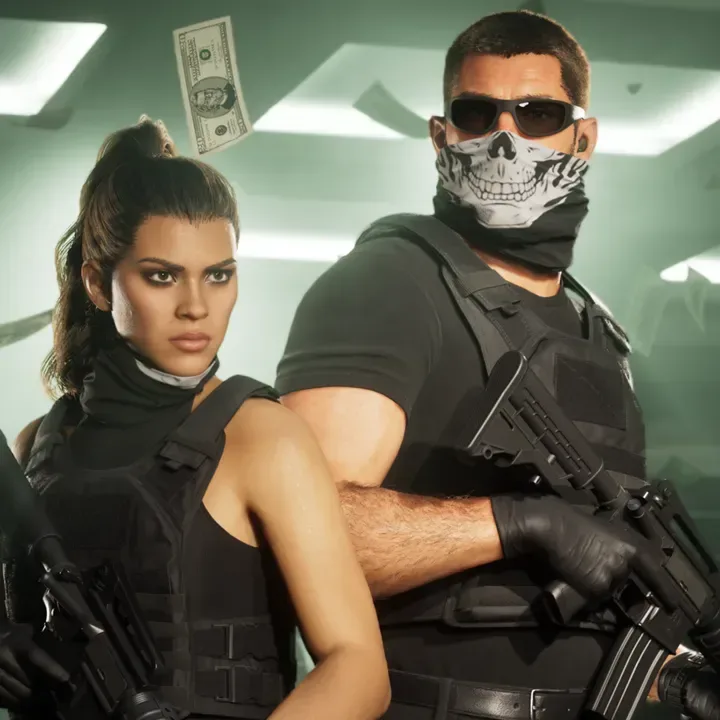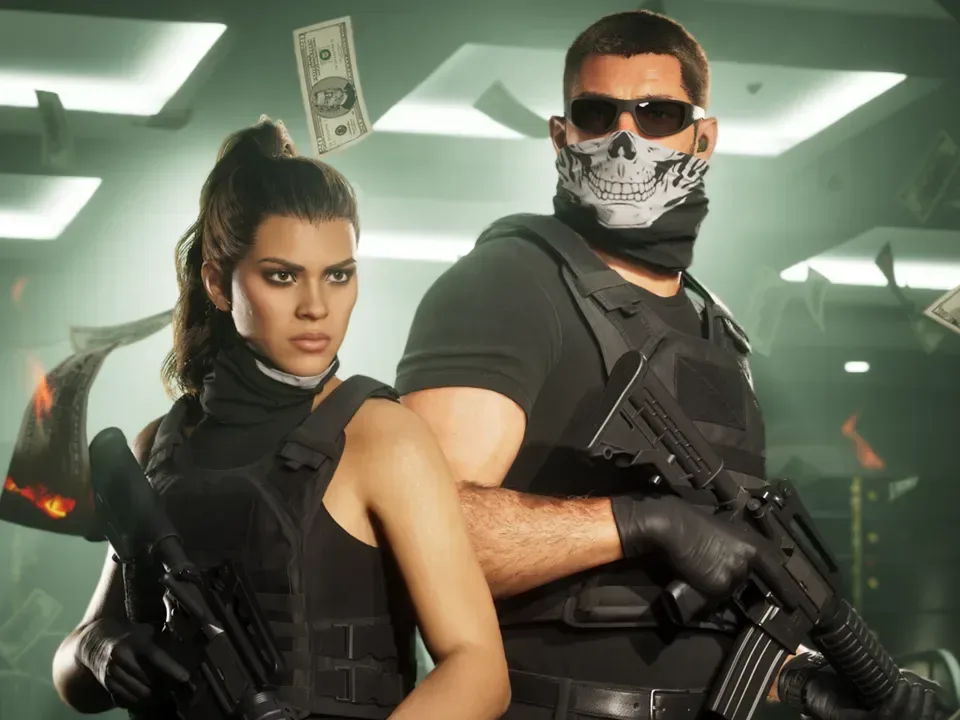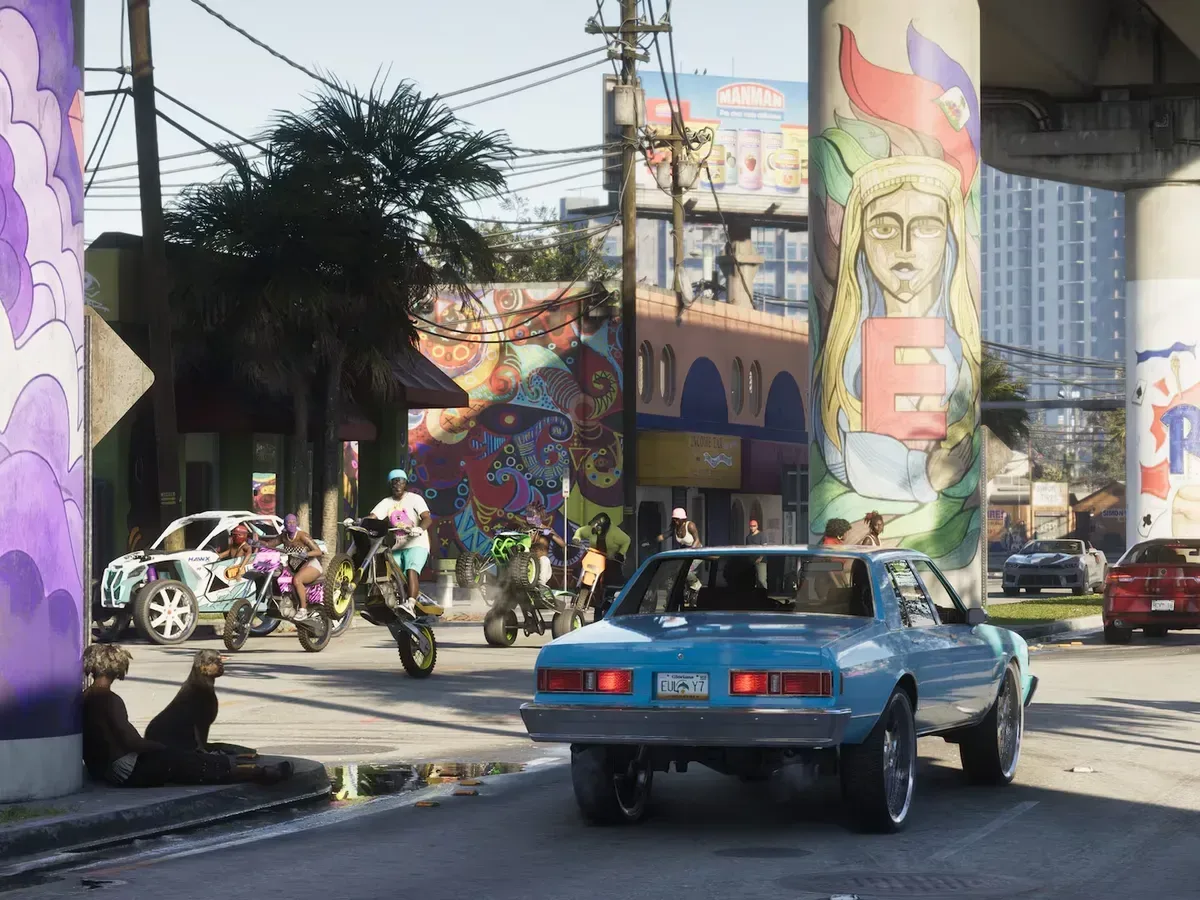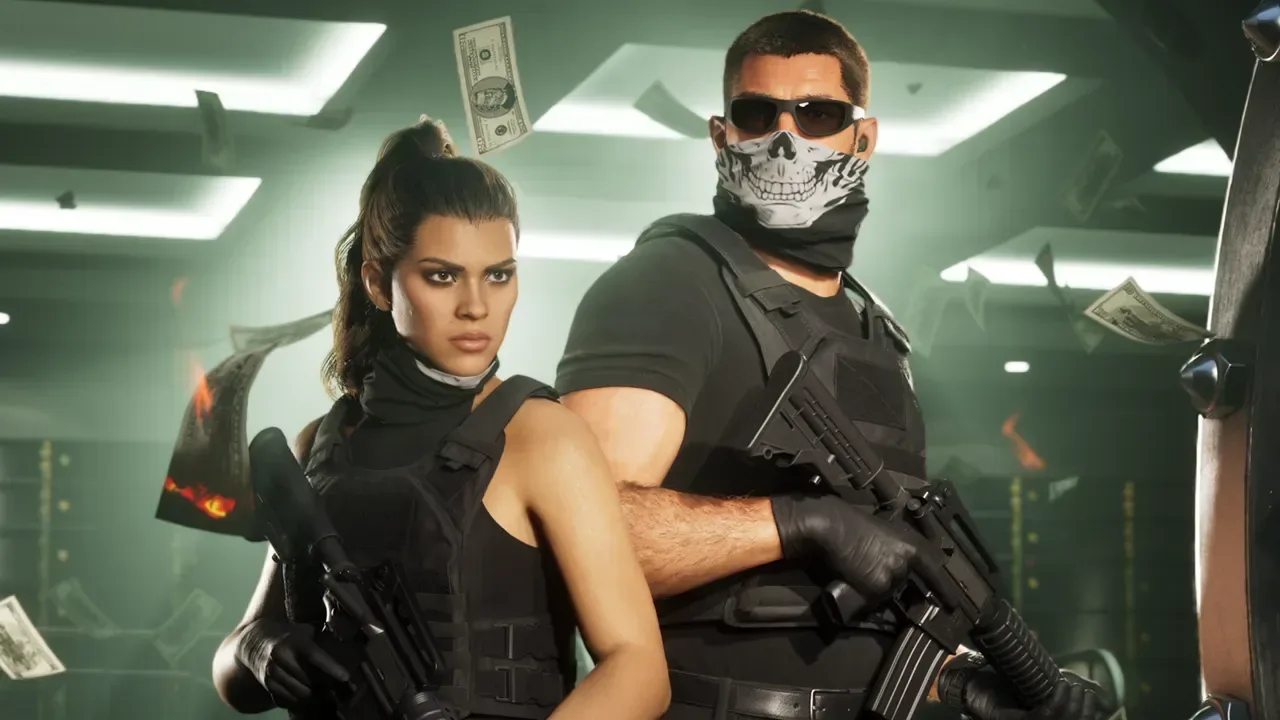
Grand Theft Auto VI is shaping up to make Leonida feel less like a giant backdrop and more like a place whose systems constantly overlap. Newly detailed elements include localized weather, hurricanes, six distinct regions, ride-share travel, a large wildlife population, more layered vehicle theft, and choices that affect both criminal jobs and the relationship between protagonists Jason and Lucia.
The common thread is density—not simply the physical dimensions of the map, but the density of events, people, environments and consequences within it. Rockstar North says the new map is twice the size of Grand Theft Auto V’s and describes it as its biggest and most densely built world so far. That is an enormous claim, but the specifics supplied so far provide a clearer idea of what “dense” is intended to mean: accessible-feeling interiors, neighborhoods with their own visual and social character, activity across land and water, and systems that leave traces even after the player has moved on.
Weather is intended to be seen, felt and remembered
Hurricanes are confirmed for GTA 6. Rockstar has not explained how frequently they occur, whether they are connected to particular missions, or how much they alter play. Those omissions matter: a dramatic visual event is very different from a weather system that changes travel, law-enforcement pressure, civilian activity or mission planning. For now, hurricanes should be treated as confirmed environmental conditions rather than a fully explained gameplay mechanic.
The intended presentation is clear. Heavy cloud cover, strong winds, rain and thunder will combine with wet surfaces, runoff from buildings and lightning illuminating the sky. More important than any one storm is the underlying weather technology. The game’s reworked system is described as localized, persistent and dynamic.
- Localized means conditions need not be identical across the entire map. A player might be in sunshine while seeing a storm occupying another part of Leonida.
- Persistent means a weather event can leave evidence after it passes. Puddles and damp surfaces can indicate recent rain even if the player did not witness it.
- Dynamic means conditions can change rather than operate as a fixed static setting. Wind is expected to ripple water, move hair and push loose debris around the environment.
Rainbows are also planned. That may sound like a small scenic detail alongside a hurricane, but it fits the broader goal: weather is not just a screen filter that turns sunny streets gray. It is being framed as a state of the world with visible transitions and aftermath. That approach could make long drives, boat trips and exploration more visually legible, especially when different areas are experiencing different conditions.
A six-region Leonida has room for sharp contrasts
Leonida comprises Vice City, the Leonida Keys, Grassrivers, Port Gellhorn, Ambrosia and Mount Kalaga National Park. Vice City is the familiar headline location, returning in a new form after its 2002 appearance. The other named regions point toward a world designed to move between urban, coastal, wetland, industrial, rural and parkland spaces.
Rockstar’s stated ambition is for the story to guide players through those contrasts rather than leave them all as optional scenery. That does not mean the campaign will show every corner of the map, but it does mean the main narrative is expected to deliberately expose players to varying levels of wealth and different local environments.
Ambrosia has received the most direct regional characterization. It is rural, includes factories and refineries, and is controlled by a biker gang apparently distinct from the Lost MC seen in Grand Theft Auto IV and Grand Theft Auto V. The detail is useful because it suggests regional identity may extend beyond architecture. A territory with industry, rural roads and a controlling faction can establish a different rhythm and risk profile from central Vice City, even before the exact mission structure is known.
Related coverage includes GTA 6 Details Point to a Denser Leonida, Dynamic Hurricanes, Wildlife and Player-Driven Choices.
Rockstar has emphasized rooftops, alleys and building interiors as part of its effort to make the world feel cohesive. In open-world terms, density is not merely having a large number of map markers. It can mean a stronger sense that spaces connect: an alley belongs to a block, the block belongs to a district, and the people and vehicles in that district look as if they belong there too. Whether GTA 6 fully delivers that cohesion will remain a question until the game is playable, but the design target is more specific than sheer acreage.
Ride sharing offers fast travel without completely skipping the city
GTA 6 will include a ride-share option for getting around. It functions as fast travel, but the trip is designed to retain some social texture: Jason or Lucia can share the ride with other passengers and encounter unique conversations. Players can also pass the time browsing Snapmatic, the game’s social-media parody.
That is a potentially smart compromise for an enormous map. Traditional fast travel is convenient because it removes dead time, but it can also erase the city between mission points. A ride-share system gives the player an option to compress the journey while still providing an enclosed space for dialogue, observation or satire. It is not yet clear whether these passenger conversations are repeatable ambient scenes, story-reactive exchanges or something else, so expectations should stay measured.
Snapmatic browsing has an intentional limitation: players cannot post as Jason or Lucia. The stated rationale is that the pair are on the run, and public activity would create danger. In practical terms, that keeps social media in the role of environmental storytelling and passive entertainment rather than turning it into a player publishing tool. The restriction also aligns with the protagonists’ precarious position: the same culture they browse can expose them.
Leisure activities expand the map’s purpose
The confirmed side activities include:
- Base jumping
- Billiards
- Gym visits
- Kayaking
- Mini golf
- Scuba diving
- Street and off-road racing
- Zoo visits
- Air boating
- Jet skiing
It would be premature to assign depth or reward structures to any one activity. The available information does not establish whether gyms change character attributes, how races are organized, or whether zoos are purely places to visit. Still, the list supports the idea that the game wants different regions to be useful in different ways. Water activities alone span kayaking, scuba diving, air boating and jet skiing, fitting a Florida-inspired setting where coast, inland water and wetlands are central rather than peripheral.
Wildlife has scale, and the sea is part of the ecosystem
Rockstar says GTA 6 includes more than 170 animal species: over 60 kinds of birds, more than 30 land mammals, plus fish and reptiles. The population is meant to cover urban and rural areas, inland water, ocean environments and wetlands. That makes the wildlife count more meaningful than a headline number, because its stated purpose is biome coverage. A biome is simply an area defined by its environmental conditions and the life associated with it; here, the stated ambition is for animals to reflect the different habitats across Leonida.
The ocean is specifically expected to include several shark species, jellyfish, whales, turtles and rays, all with distinct movement behavior and available to encounter while scuba diving. “Distinct movement behavior” does not necessarily confirm elaborate interaction systems, but it indicates the underwater world is not being presented as a uniform collection of decorative models. Marine life is being designed as part of what a player can encounter below the surface.
Animal tracking and rare animal types are also confirmed. Rockstar has not identified the rare animals or detailed the tracking loop, so it is wiser not to infer particular challenges, rewards or collectible structures. A screenshot showing Jason near deer with a rifle suggests hunting may return, but it remains an implication rather than a fully outlined feature. The firm information is that tracking exists and rare animals exist; the exact relationship between those systems has not been explained.
Players will be able to pet dogs. Nothing more has been officially established about petting other animals, despite understandable comparisons with earlier Rockstar games. In a project with more than 170 species, it is especially worth separating confirmed interaction from hopeful extrapolation.
Crime systems add planning, pressure and a price check
Robberies will let players make several major decisions: work as the Jason-and-Lucia duo or alone, approach quietly or loudly, and accept the different police response that follows. The key promise is not just that a robbery can succeed or fail, but that approach affects the amount of attention it creates.
When the police close in, the two protagonists can attempt to escape together or split apart, potentially leaving one to absorb more of the pressure. The hard boundary is that if either protagonist is overwhelmed, the result is game over. That rule makes the partner dynamic more than a narrative flourish: separating may be strategically useful, but neither character is disposable.
Carjacking also has more stated friction. High-end vehicles require special tools, and a successful theft can be followed by complications including trackers or other security systems. Players can examine a vehicle through an in-game app called WAiNK to learn its resale value, security setup and what it would cost to make it a personal vehicle. Selling it requires taking it to a fence.
A fence, in crime fiction and games, is a person who buys stolen property and turns it into money. The presence of a fence, a valuation tool and vehicle-specific security details suggests an attempt to make cars feel less interchangeable. It does not mean every car theft becomes a simulation of vehicle crime; that level of granularity has not been promised. But the information establishes more decision points than simply spotting a desirable car and driving away.
Jason and Lucia are a relationship system as well as a duo
Player choice will influence whether Jason and Lucia’s bond becomes romantic or remains platonic. Activities such as dates, responding when they call or text, opening doors and holding hands are part of the described courtship framework. Their relationship is therefore not presented as a single predetermined track, even if their criminal partnership is central to the game.
The ramifications go beyond romance. Rockstar says choices, both large and small, influence the broader story and create alternate narrative threads for repeat playthroughs. This is a meaningful distinction. A cosmetic relationship meter would mostly alter scenes between the two leads; story-affecting choices imply that decisions may shape the path around them as well. The precise branches, endings and conditions remain unannounced, so the scale of variation is unknown.
GTA 6’s population design reinforces its interest in context. NPCs will vary in body type, height, weight and skin characteristics, including tans and moles. Clothing is described as the largest range of garments and accessories Rockstar has made, with color, pattern, branding, dirt, weathering and fit linked to people’s location and social circumstances. Neighborhood-specific dress can do quiet storytelling work before a player speaks to anyone: it communicates setting, status and local culture without requiring an exposition dump.
That attention to the ordinary may be the most consequential thread running through the new details. Hurricanes are spectacular, but the more durable test for Leonida will be the accumulation of smaller signals—puddles after a storm, wind moving debris, passengers sharing a ride, clothing fitting a place, a sea full of animals with their own movement, and a stolen car that creates as many problems as it solves. For more on the real-world research said to inform the state, see GTA 6’s Florida research and fieldwork.
There is still plenty that has not been detailed, including the practical frequency and impact of hurricanes, the full scope of hunting, the exact nature of story branches and the depth of individual activities. But the information currently available makes one point clear: GTA 6 is presenting its scale as a collection of connected systems, not solely a bigger space to cross.