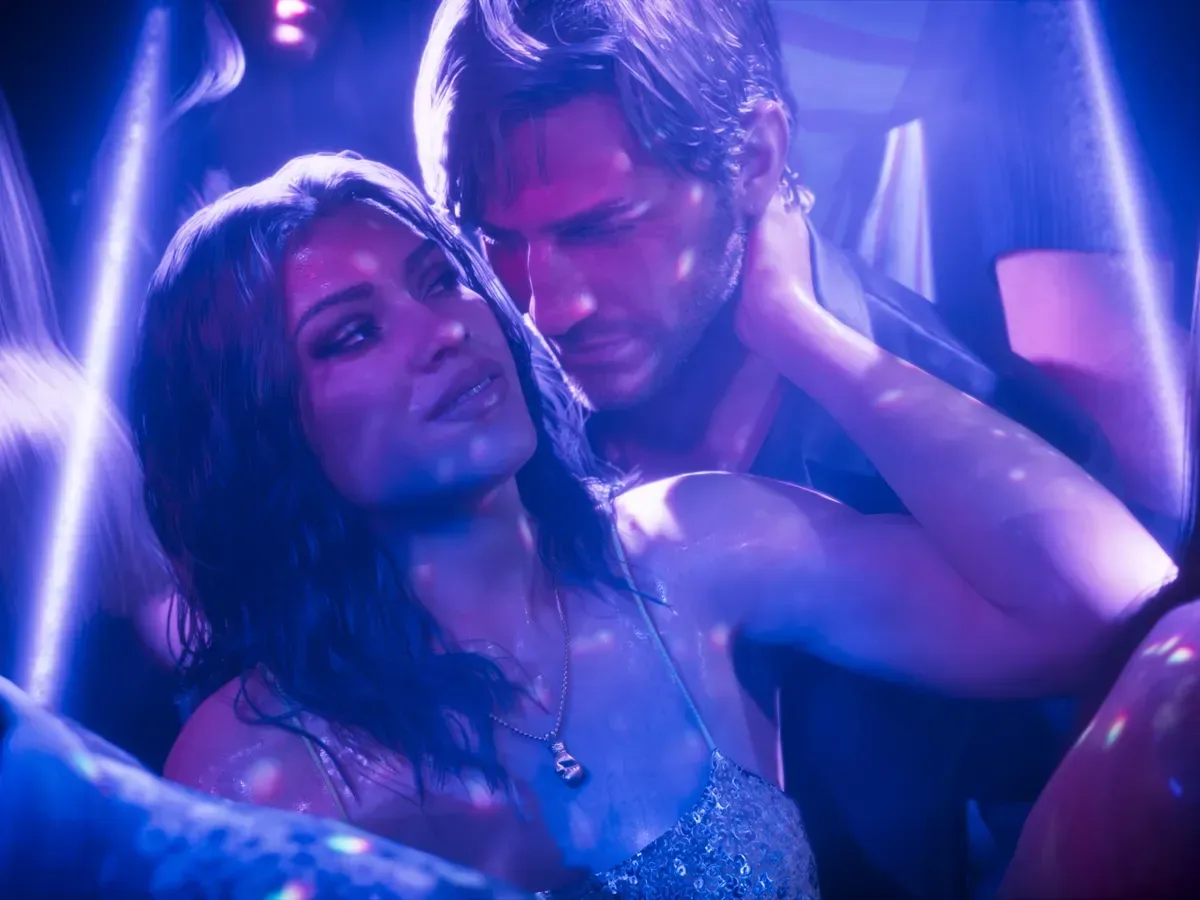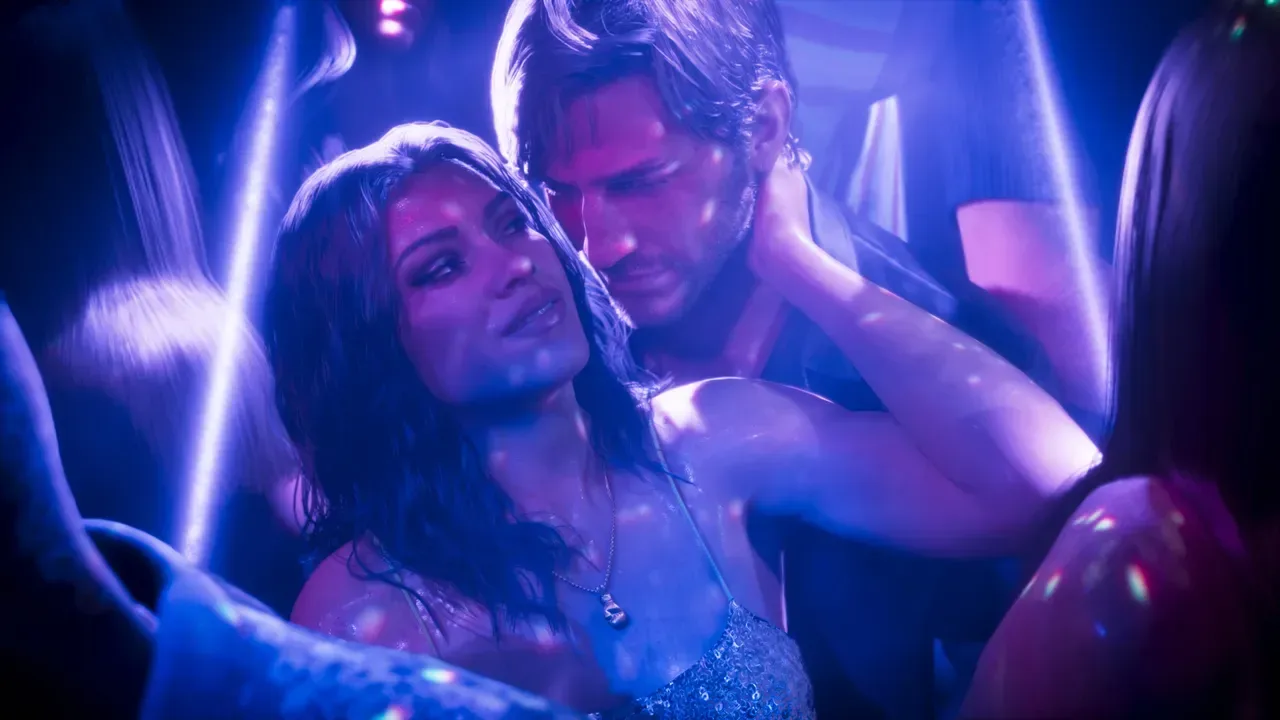
Grand Theft Auto 6 is not abandoning crime, car chases or the freedom to cause a little—or presumably a lot of—trouble. But Rockstar says the next game will introduce something new for the series: mechanisms that encourage empathy for players who want to engage with them.
The important word is encourage. The available details do not point to Grand Theft Auto suddenly becoming a game that scolds every reckless choice, demands heroic behavior, or takes Vice City’s chaos off the menu. Instead, Rockstar co-studio head Rob Nelson has indicated that player actions will affect how the game unfolds, while also stressing that the studio does not want to punish people for playing in the rambunctious style the franchise is known for.
That is a potentially meaningful adjustment for a series whose open worlds have often doubled as elaborate playgrounds for mayhem. In Grand Theft Auto 6, the choice to treat the people of Leonida with consideration may have a place alongside the choice to make a mess. What that looks like in practice remains unknown—but the language around it suggests Rockstar is trying to make a more grounded criminal story without stripping away player agency.
What Rockstar has actually said
Nelson described crime as a fundamental part of Grand Theft Auto, at least up to this point. At the same time, he said that actions will have some effect on the way the game plays out. When asked directly whether the new game would encourage empathy, he answered affirmatively and characterized the approach as part of the story Rockstar wants to tell.
For more context, explore ‘Club Kid’ Cinematographer Adam Newport-Berra Built Intimacy From a New York Apartment to a Sunset Roofline.
“We’ve tried for the first time in a GTA to provide mechanisms that encourage it, for those who want to.”
That wording establishes several useful boundaries. First, the mechanisms are presented as optional in spirit: they are for players who want to use them. Second, empathy is not being framed as separate from the narrative. It is tied to Jason and Lucia, the game’s two protagonists, rather than being described as a detached score-chasing system.
Third, Rockstar has not detailed the mechanics themselves. There is no confirmed description of a morality meter, a reputation gauge, branching endings, rewards, penalties, mission locks, dialogue checks, or a specific list of compassionate actions. Players should be wary of turning the word “mechanisms” into a full imagined feature list. At present, it confirms an intention and a design direction—not the precise rules behind either.
Related coverage includes GTA 6's New Empathy Systems Could Change How Players Approach Vice City.
Empathy is not the same thing as a morality system
Games use several overlapping terms when discussing player behavior, and it is worth separating them. A morality system generally tracks actions along an explicit good-versus-evil scale. A reputation system measures how a faction, town, or group responds to the player. A consequence system is broader: choices influence later events, even if the game never labels them morally right or wrong.
Rockstar has confirmed none of those specific structures for GTA 6. “Mechanisms that encourage empathy” could potentially intersect with any of them, but it may also mean something less visible and more story-led. The key idea is that the game could offer reasons to see Leonida’s residents as people affected by Jason and Lucia’s conduct, rather than simply as scenery, obstacles, targets, or background comedy.
That distinction matters because explicit systems can change how players behave. A visible meter often makes decisions feel transactional: do the “good” action, receive the benefit. A more understated approach can instead let character context, NPC reactions, and downstream consequences guide behavior. Neither is automatically better. What works will depend on whether the final game makes its responses understandable without reducing Jason and Lucia’s choices to a checklist.
Jason and Lucia provide the narrative reason
Nelson has described Jason and Lucia as a younger couple with their backs against the wall. That framing helps explain why Rockstar is speaking about a more restrained kind of criminality, even while the series’ lawless identity remains intact.
Previous protagonists have covered a wide tonal range. Grand Theft Auto V paired Michael, Franklin and Trevor, with Trevor in particular serving as an emblem of unchecked, explosive disorder. Niko Bellic, meanwhile, remains another example of a protagonist whose criminal life was given weight through personal history and difficult circumstances. Jason and Lucia are not being positioned as copies of either model.
For a couple under pressure, conspicuous carnage may not always fit the story’s stakes. If they are trying to survive, evade trouble, protect one another, or navigate difficult relationships, restraint can become dramatically useful. It can also make bursts of violence, recklessness, or desperation feel more consequential when they happen.
This does not mean Jason and Lucia have been recast as conventional heroes. The game is still rooted in crime, and Rockstar has explicitly left room for players who want the familiar chaotic experience. The shift is more about range: the protagonists may be criminals whose circumstances and relationships make it believable for players to exercise care, rather than avatars built chiefly to escalate every encounter.
A more reactive Leonida could change the feel of free roam
The discussion around empathy arrives alongside indications of a more grounded world and NPCs that react to weapons. An NPC, or non-player character, is any character controlled by the game rather than a player. In an open-world game, NPC reactions are central to atmosphere. They determine whether a city feels like a collection of props or a place where behavior is noticed.
Weapon reactions alone do not prove an empathy system. They do, however, fit the same broader direction. If citizens respond more credibly to visible danger, then showing a weapon, threatening someone, or creating a disturbance can carry social texture beyond a simple police response. The outcome may be a world that asks players to consider the effect they are having, even when it does not forbid them from acting irresponsibly.
That could be especially useful in a game set in Vice City and the wider state of Leonida. The series’ cities are traditionally dense spaces for experimentation: driving, exploration, missions and absurd detours collide in the same environment. Adding more meaningful human response could make ordinary movement through the world feel different. A player may still choose chaos, but the game may be better equipped to acknowledge it.
There is also a practical design challenge here. Open-world games need to tolerate a huge range of player behavior. If consequences are too severe, players may feel they are being pushed away from the playful freedom that defines the franchise. If they are too minor, empathy risks becoming decorative flavor. Nelson’s comments suggest Rockstar is conscious of that balancing act, particularly in saying it does not wish to punish players for the way they are accustomed to playing.
Why the phrase “for those who want to” matters
Some players enjoy Grand Theft Auto chiefly for missions and character drama. Others value the unscripted freedom of a giant city sandbox. Many move between both depending on the moment. An empathy-oriented mechanism that is truly optional could serve the first group without alienating the second.
The unanswered question is how optionality will work. Players might receive distinct reactions, story texture or gameplay advantages for thoughtful decisions. Or the game may simply make a compassionate path available without attaching large mechanical rewards. Rockstar has not said. Until it does, claims about “good routes,” “pacifist runs,” or locked content would be speculation.
Still, the intent is notable. The franchise’s historical appeal has often been its willingness to hand players a sprawling environment and let them test its limits. A game that gives those limits emotional context without removing the freedom to cross them could produce a different kind of role-playing. The player would not only decide what Jason and Lucia do, but perhaps what kind of criminals they become when nobody is forcing the issue.
What players should—and should not—expect before launch
It is reasonable to expect GTA 6 to retain the series’ core criminal premise and its capacity for chaos. It is also reasonable to expect Jason and Lucia’s relationship and circumstances to matter to the tone of the story. The confirmed empathy mechanisms suggest that considerate behavior is not merely an accidental player preference; it is something the game is being designed to accommodate.
It is not yet reasonable to assume a redemption arc, a nonviolent completion option, a detailed karma bar, or a radically different genre of open-world game. The available information supports a more nuanced reading: Rockstar wants to offer a grounded story in which actions matter, while preserving room for people who play Grand Theft Auto for unruly freedom.
- Confirmed: Rockstar is introducing mechanisms intended to encourage empathy for players who choose that approach.
- Confirmed: Player actions will have some effect on how the game plays out.
- Confirmed: Crime remains a fundamental part of the game’s identity, and players are not meant to be punished simply for embracing familiar chaotic play.
- Not detailed: The exact systems, rewards, consequences and scope of those mechanisms.
Grand Theft Auto 6 is scheduled to launch on November 19, 2026 for PlayStation 5 and Xbox Series X|S. As the release approaches, the most revealing details will be the concrete ones: what players can do differently, how Leonida reacts, and whether empathy becomes a subtle narrative layer or a major force shaping Jason and Lucia’s path.