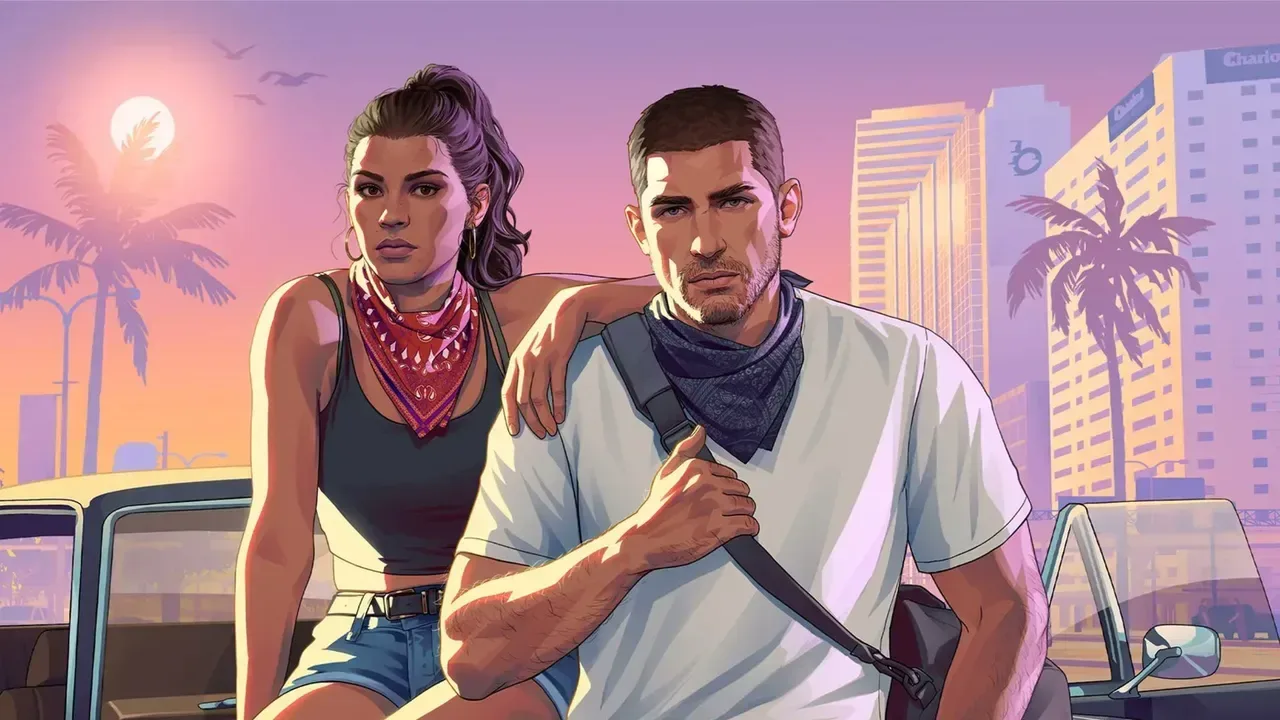
Grand Theft Auto VI may already be reshaping calendars before it reaches a console. Time-off requests for Thursday, November 19—the game’s stated release date—have risen between 9% and 17% compared with normal request levels for the third Thursday in November, based on data from workplace HR software company BambooHR.
The increase is a notable signal of anticipation around Rockstar’s next open-world crime game, but it needs a careful reading. The data shows that more people are requesting leave for that date than is typical; it does not identify why any individual employee is taking time off. A launch as prominent as GTA 6 is an obvious possible factor, particularly given the exact date match, yet the figures cannot establish that every additional request is a planned day of gaming.
Still, the pattern fits the broader expectation that GTA 6 will be an unusually large entertainment launch. It is scheduled for PS5 and Xbox Series X|S on November 19. A PC version has been rumored for early 2027, but that timing is not confirmed.
What the 9%–17% increase actually means
The BambooHR comparison uses the normal volume of time-off requests for the third Thursday in November as its baseline. In plain terms, a baseline is the usual level against which a change is measured. If an employer would ordinarily see 100 requests for that comparable weekday, an increase of 9% to 17% would mean roughly 109 to 117 requests—not that 17% of every worker has requested the day off.
That distinction matters because percentage headlines can sound larger or more exact than the available data permits. The reported range also suggests that the rise varies across the data being compared rather than resolving into one universal number. It is best understood as a measurable lift in leave requests, not a complete census of players who intend to spend November 19 in Vice City.
There are other unavoidable limits. A time-off request is not necessarily approved leave. It may be a full day, a partial day, or a request made for an unrelated reason. Some people will play outside work hours; others may be working on launch day even if they are excited for the game. The available figures therefore show interest expressed through workplace planning, rather than an exact count of launch-day players.
Even with those caveats, calendar behavior can be revealing. Buying a game or watching a trailer is low-commitment enthusiasm. Reserving a workday is different: it asks players to decide well in advance that the launch matters enough to protect time for it. That is why the increase is meaningful without needing to be treated as proof of every requester’s motive.
Productivity estimates are not a bill
Economists have estimated that GTA 6’s arrival could lead to a $1 billion productivity loss in the United States. That is a striking figure, but it should not be read as a confirmed cost that has already occurred, nor as a prediction that every hour of time off is economically “lost.” It is an estimate about possible disrupted or deferred work around a high-profile release.
Related coverage includes GTA 6 Release Date Drives Noticeable Rise in Time-Off Requests.
Productivity generally refers to the amount of output produced for a given amount of labor or time. In conversations around a game launch, the term can include people taking leave, working less, scheduling shifts differently, or simply being distracted. Those effects are difficult to measure cleanly, especially when approved time off is part of normal workplace practice rather than an unexpected absence.
There is also a difference between productivity moving and productivity disappearing. Work may be completed before a planned day off, shifted to another colleague, or postponed until the next day. Conversely, a launch-day rush could create activity elsewhere, including retail, food, streaming and social spaces. None of that erases the possibility of a short-term work disruption; it simply explains why a headline estimate is not the same thing as a settled economic total.
The practical takeaway for workplaces is fairly ordinary: managers who expect staffing pressure around November 19 can review requests early, communicate coverage needs, and apply leave policies consistently. For employees, the simplest approach is equally unglamorous—request time in advance, avoid assuming approval, and remember that a midnight launch does not automatically grant immunity from the following morning’s schedule. Vice City may be built for chaos; leave calendars generally are not.
Rockstar’s Miami campaign is built to make launch week feel bigger
The heightened attention is not occurring in a vacuum. Rockstar has mounted a conspicuous Miami-focused campaign tied to the game’s Vice City setting. The company spent $975,000 on a large neon-pink sign placed on top of the Miami Heat’s arena, while city advertising included both fictional brands from the GTA universe and more conventional GTA 6 key-art banners.
That combination is important. Key art is the official promotional imagery used to establish a game’s identity in ads and marketing. In-universe advertising, by contrast, presents fictional companies or products as though they belong to the world of the game. The latter can make a campaign feel less like a poster series and more like a temporary bleed between an imagined city and the real one.
Miami residents have also been able to visit a real-life version of Burger Shot, the fast-food chain associated with the GTA universe. This kind of physical activation is designed to turn attention into an experience people can share in person and online. It does not change what is in the final game, but it gives the marketing a local presence that is particularly suited to a Vice City campaign.
For people keeping up with the larger GTA 6 rollout, there is also an unusual overlap with film-release chatter: GTA 6 has already been invoked as a potential attention-grabber alongside other major entertainment plans. That is not evidence of commercial results by itself, but it illustrates the degree to which the release is being treated as a date other industries may need to notice.
The Vice City Heat game is a final pre-launch spectacle
The campaign is set to culminate in a particularly visible crossover on November 18, one day before GTA 6 launches. The Miami Heat will face the Milwaukee Bucks in an NBA game that turns the host team into the Vice City Heat. The Heat will use GTA 6-themed jerseys and play on a Vice City court created for the occasion.
It is described as an unprecedented NBA game, and it functions as more than a routine branded night. Sports broadcasts offer a mass-audience setting that reaches beyond people who follow game trailers, while the one-night format creates a countdown effect immediately ahead of release. The court, jerseys and name change give the tie-in a visual identity that can travel quickly through highlights and social posts even for viewers who do not watch the whole game.
The timing is especially deliberate. Marketing campaigns often seek a final, high-visibility moment just before a product becomes available. In this case, the November 18 event places GTA 6 at the center of an NBA fixture before the November 19 launch. Whether that produces more sales cannot be determined from the event alone, but its role as a final major beat is clear.
What players should keep in mind on November 19
GTA 6 is currently set to release on PS5 and Xbox Series X|S on November 19. Players should keep platform details separate from online speculation: the supplied information supports those console versions and date, while a PC release remains a rumor for early 2027 rather than a confirmed plan.
- Confirm the platform: the scheduled launch platforms are PS5 and Xbox Series X|S.
- Treat PC timing cautiously: early 2027 has been rumored, not officially established here.
- Plan leave normally: increased demand for November 19 does not mean every request will be approved.
- Separate anticipation from certainty: the BambooHR figures suggest unusual interest in the date, but do not assign a reason to each request.
The rise in leave requests is ultimately a small but tangible measure of the game’s reach before launch. It does not prove a billion-dollar productivity hit, nor does it tell us precisely how every player will spend the day. What it does show is that November 19 is already being treated by some workers as a date worth reserving—and Rockstar’s highly visible Miami campaign is ensuring plenty of other people know why.