Small films often turn limits into their visual language. For Club Kid, cinematographer Adam Newport-Berra describes an approach rooted in close quarters, adaptable planning and a practical understanding of New York City. The film is directed by and stars Jordan Firstman, and its camera strategy shifts between being physically close to the characters and deliberately standing back to watch them.
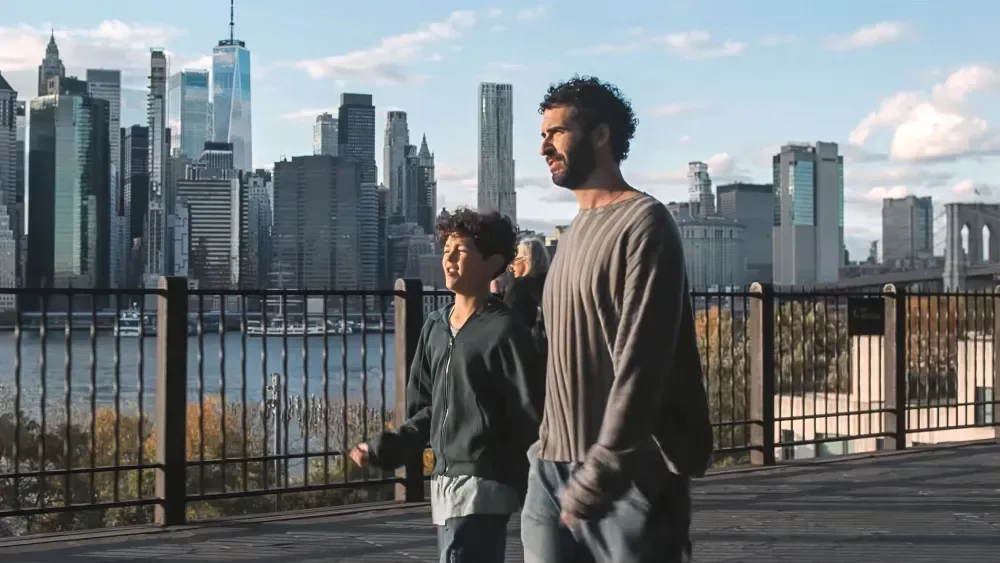
That balance is central to a story about Peter, a queer party promoter who has already moved beyond the scene that once defined him. His routine changes when he meets Arlo, the 10-year-old son he never knew he had. As Peter begins adapting to life with Arlo, Newport-Berra’s images are designed to register the changing distance between them: sometimes immediate and shared, sometimes quiet and observational.
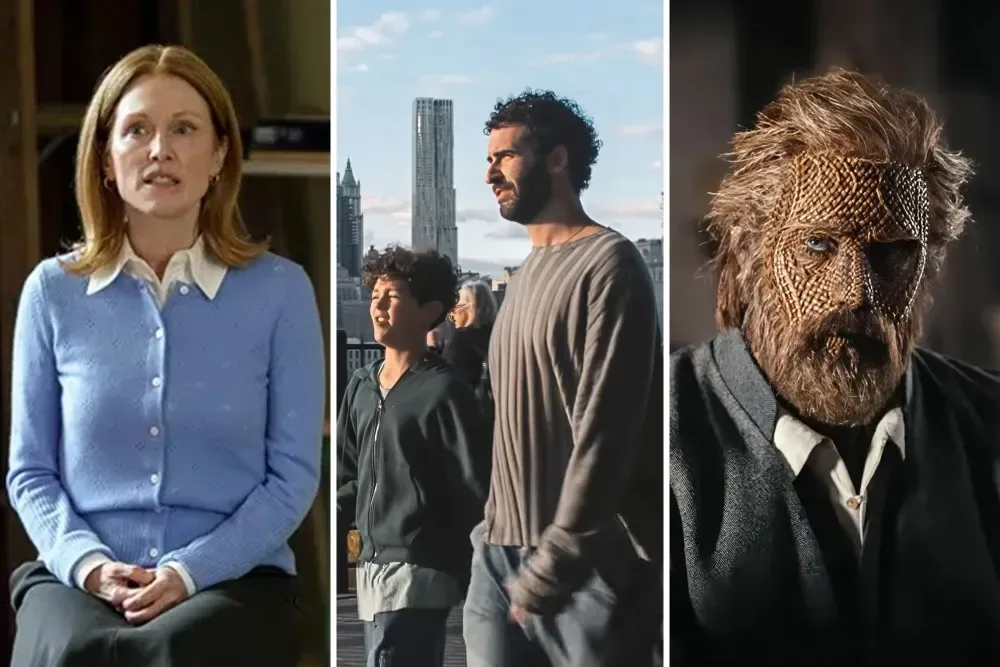
Club Kid co-stars Cara Delevingne, Diego Calva, Kirby Howell-Baptiste and Reggie Absolom, who plays Arlo. Rather than presenting New York merely as a recognizable backdrop, the production’s methods sound inseparable from the city itself: crews carrying equipment up stairs, moving between locations in vans, loading film outside and working around passersby while trying to capture a shot.
An actor-director changes the rhythm on set
Newport-Berra has said he enjoys collaborations with directors who perform in their own films. He also worked with Olivia Wilde on The Invite, a project that required creative work within one location. In Firstman’s case, the unusual creative arrangement came from a filmmaker able to guide the scene while also occupying it as an actor.
For more context, explore AirPods Prices Stayed Surprisingly Flat From 2016 to 2026, Even as the Features Piled Up.
That does not mean a cinematographer simply follows an actor-director’s lead. It creates a particularly active exchange. A director outside a scene can evaluate composition, pacing and performance from an external position. A director acting in the scene has access to a different kind of information: the immediate rhythm of an exchange, the physical proximity of another performer and the emotional temperature of the moment. Newport-Berra’s role is to translate that evolving information into a shot without losing the scene’s spontaneity.
The pair had already shotlisted the entire film. A shotlist is a pre-production plan that identifies the intended camera setups and coverage for each scene. It can help a small production use limited time efficiently, coordinate lighting and equipment, and ensure the edit will have the material it needs. But a shotlist is not necessarily a fixed command. Newport-Berra and Firstman treated theirs as a foundation, then assessed what each scene required once they were in the room.
That distinction matters. Pre-planning supports control; responsiveness protects the scene from feeling mechanical. The crew could arrive with an agreed visual map while still recognizing that a performance, a room or a new angle might call for a different decision.
Handheld closeness versus a locked-off view
Newport-Berra described two main camera modes for Peter and Arlo’s scenes. At times, he used a simple handheld camera and placed himself close to the performers. A handheld shot is filmed with the operator holding or carrying the camera rather than leaving it fixed on a tripod or other stationary support. Its movement can feel immediate because the camera shares the actors’ space and can react to small changes in performance.
In an intimate relationship story, that proximity can do more than add motion. It can make a conversation seem private, place the audience inside a confined apartment with the characters and preserve the small, unpredictable adjustments that occur between two people learning how to be around one another.
Other moments called for the reverse: a camera kept still at a distance, observing the pair. This is often described as a locked-off setup, meaning the camera’s framing remains fixed rather than tracking, panning or moving with the performers. A locked-off image can create room for viewers to notice the characters’ behavior without the camera seeming to participate. It may also emphasize separation, a room’s architecture or the fact that people can be close physically while still working through emotional distance.
Neither approach is inherently more intimate. The significance comes from the contrast. A handheld camera can make viewers feel present with Peter and Arlo; a distant, static frame can give that same relationship space to unfold without visual pressure. Newport-Berra’s account suggests that the film’s nuance came from choosing between those positions in response to the scene, rather than applying one look across every interaction.
The piano scene became a solution, not just a substitute
One of the film’s key images emerged after a broader idea became impractical. The production initially intended to shoot a montage of Peter and Arlo spending a day together, ending at the piano. A montage condenses multiple actions or moments into a shorter sequence, often showing time passing or a relationship developing through a collection of images.
Time, budget and other production priorities meant that material was not shot. The resulting focus shifted to the piano scene itself, including the logistical challenge of getting the piano up a flight of stairs. That constraint eventually helped create a more concentrated cinematic event: Peter and Arlo at the piano while the camera gradually widens its perspective to reveal the evening around them.
After weeks of filming inside the apartment, the crew felt confined by the location. They began considering viewpoints from windows and rooftops. Finding a nearby building that would permit rooftop filming made it possible to construct the scene around two distinct but coordinated camera positions: one indoors and one outside.
The indoor camera was mounted on a dolly, a wheeled platform or track-based support that allows a camera to move smoothly. It pulled backward from the performers. Outside, another camera executed a zoom-out. A zoom changes a lens’s field of view, making subjects appear closer or farther away without necessarily moving the camera’s physical position. In this case, the exterior camera was positioned just off the window and concealed well enough that it would not appear in the interior framing.
The two moves had to be timed together: the indoor dolly pulled out while the exterior camera zoomed out, extending the scene from a close domestic space toward a wider view. The setup was prepared well ahead of the take so lighting would be right, and the performers had time to rehearse and explore the scene. The timing was also built around sunset.
That last factor gives the sequence a practical and emotional purpose. Sunset is a narrow visual window, especially for a shot built around changing natural light. The crew was not simply pointing two cameras at an apartment; it had to align the actors’ performance, the indoor movement, the exterior zoom, the lighting preparation and the available daylight. The final image is therefore an example of technique serving a character moment. What might have been a montage’s endpoint became a single sustained scene carrying the weight of time spent together.
New York as a working method
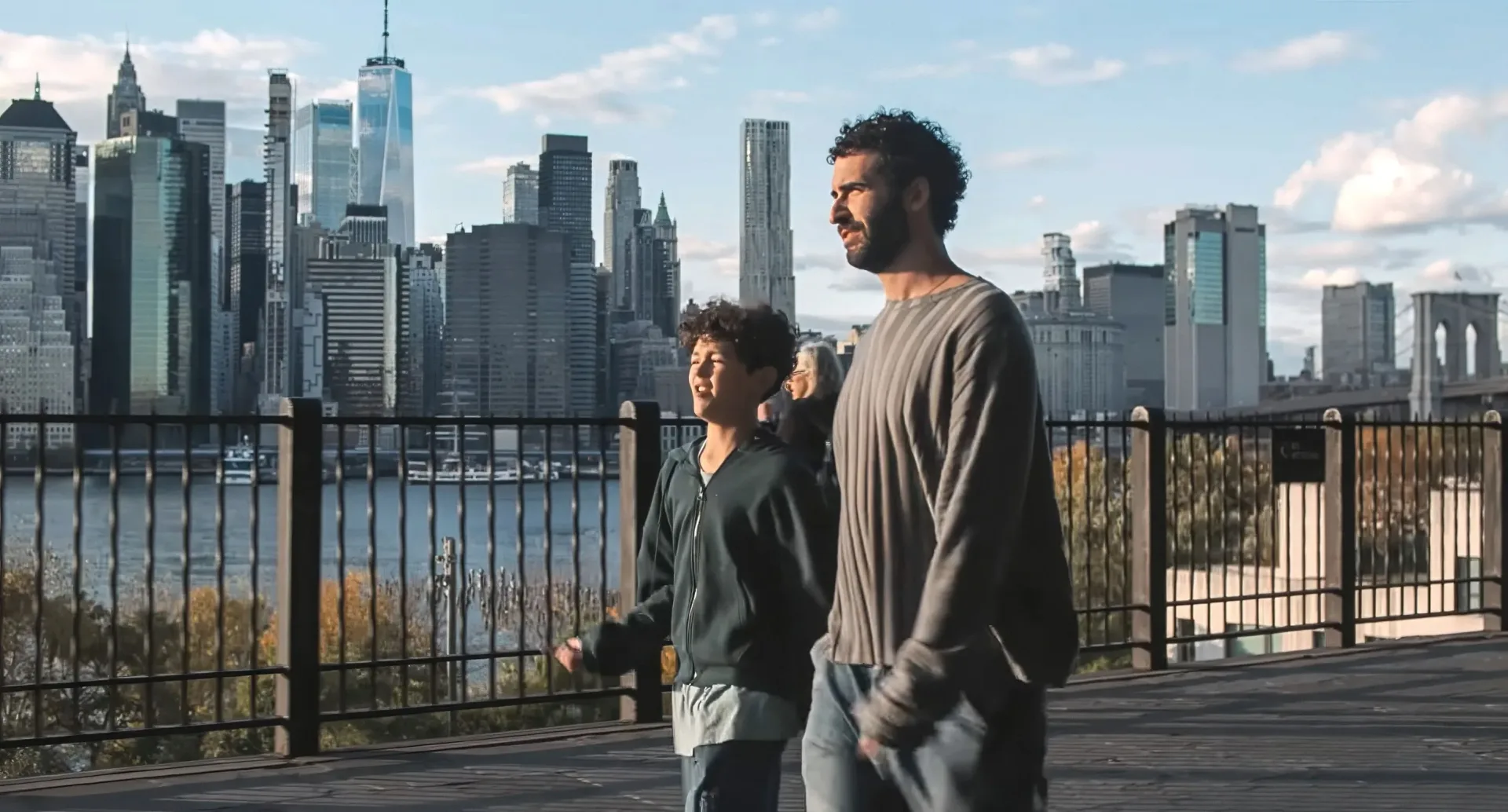
Newport-Berra began his career in New York, making independent films, student projects and music videos, and lived there for more than a decade. He and Firstman wanted Club Kid to evoke an iconic, nostalgic New York film while still approaching the city from a fresh angle. Familiarity with the city and connections to local crew members helped make that goal workable.
Authenticity is often discussed as a matter of locations or visual landmarks. Newport-Berra’s description points to something more material: an authentic city film may also reflect the conditions under which it is made. The crew carried cases upstairs, packed into vans between locations, loaded film on sidewalks and had to courteously request space from people passing by. Those are not glamorous details, but they explain why the film’s New York may feel lived-in rather than overly polished.
Calling the production a small New York independent film is not a claim that scale automatically produces honesty. Instead, it identifies the working reality that shaped the imagery. Compact crews and location constraints can demand quick decisions. An apartment can become visually exhausting after weeks of filming, leading filmmakers to look outward through windows and upward to rooftops. A scene intended as the end of a montage can become a more focused scene because the production needs to prioritize. The constraints do not erase creative intention; they channel it.
Why the approach fits Peter and Arlo
The central relationship in Club Kid begins with an abrupt discovery. Peter must reckon with a son he did not know existed and with the life he wants to lead. That premise makes visual distance especially meaningful. A camera close enough to sit in the room with Peter and Arlo can register tentative connection. A camera held away can acknowledge that adjustment takes time.
The piano scene’s move outward is especially apt in that context. It starts from an interior moment between two people and expands toward the city at sunset. On a technical level, it is a coordinated dolly-and-zoom setup with two cameras. On a storytelling level, it appears to let a private moment exist within a much larger New York frame without interrupting it.
Newport-Berra’s account also makes clear that this was not an effect created in isolation from performance. The actors were allowed to rehearse and play before the sunset-timed take. The camera design had to accommodate them, and the result depended on getting the separate pieces to work together in the same instant.
For a film interested in a party-scene veteran confronting an unexpected new responsibility, the method carries a useful tension: careful planning alongside openness to change. Club Kid was thoroughly shotlisted, yet its filmmakers stayed responsive on set. Its piano sequence grew from a plan that had to be abandoned. And its view of New York arose not only from affection for the city, but from the everyday resourcefulness needed to make a small film there.