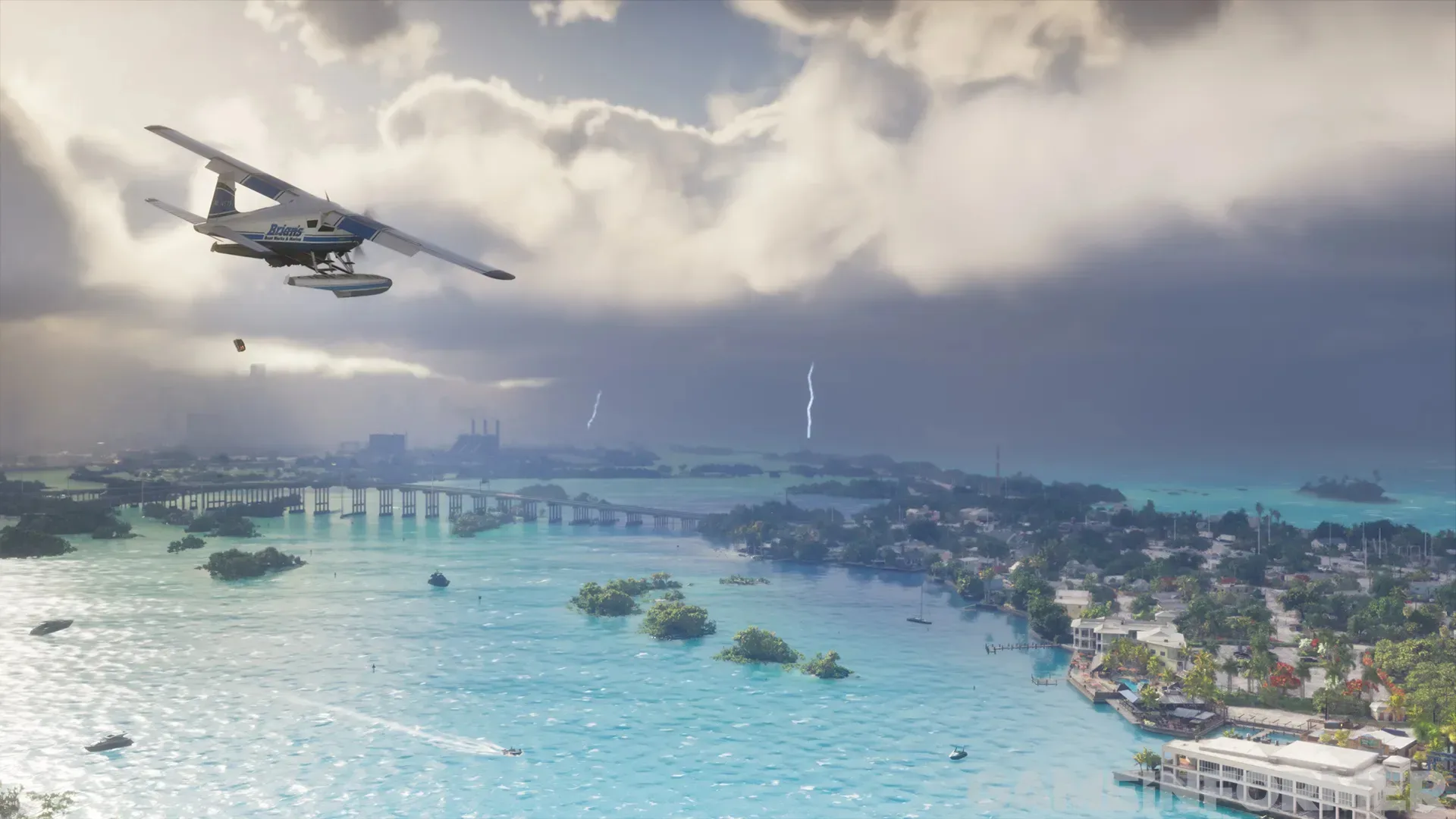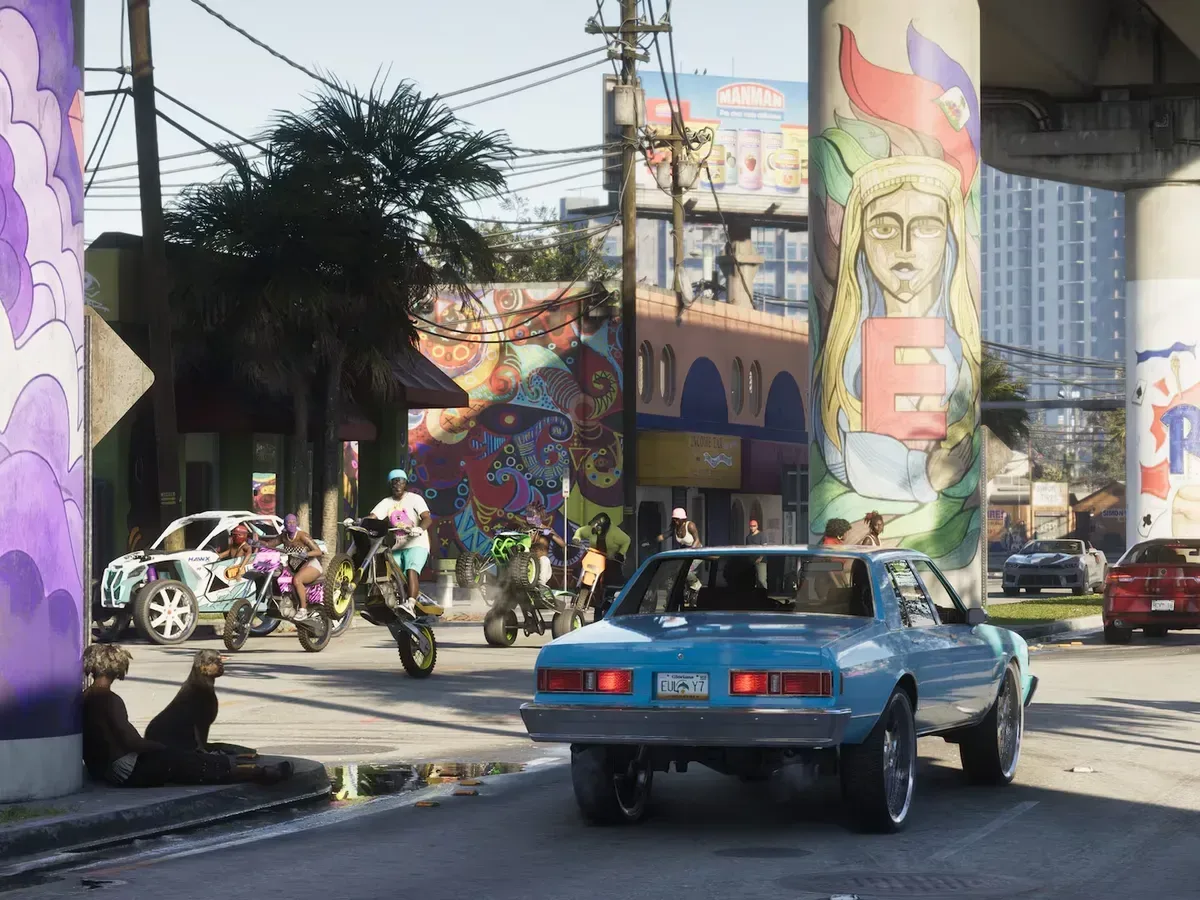
Grand Theft Auto VI’s version of Florida was not assembled solely from sun-bleached postcards, satellite images and the universal developer reference folder marked “misc.” The team behind the game has made numerous trips to the state over the years, using a broad slate of real-world experiences to inform the fictional setting of Leonida and its take on Vice City.
Rupert Humphries, Rockstar’s senior vice president of narrative, described an unusually wide-ranging research process: trips to beaches, the Everglades and the Keys; visits to nightclubs and strip clubs; and nighttime drives through different areas with former police officers. The stated aim was to experience as much of the setting’s range as possible rather than reduce Florida to one postcard-ready image.
That breadth matters because GTA 6’s world is being framed as more than a beach-and-neon destination. Humphries said the game will move its protagonists, Jason and Lucia, through a range of places, cultures and moods. He also pointed to close proximity between wealth and poverty, with crime and corruption serving as connections across that social landscape.
Research is not the same thing as reproduction
Leonida is a fictional game setting, and Vice City is a fictional city within it. The purpose of location research is therefore not necessarily to recreate any one street, venue or person. It is to build a useful reference base: how an area feels after dark, what contrasts emerge between locations, how people move through spaces, and which environmental details can help a setting feel internally consistent.
That distinction is particularly important for a series known for satire. A reference trip can provide observations, but the finished game remains a creative interpretation. The research described by Humphries suggests the developers were looking for texture across Florida-inspired environments, not simply cataloguing tourist landmarks.
It also helps explain why the itinerary encompasses places that can seem wildly different on paper. A beach visit may help establish leisure, heat, crowds and open space. The Everglades and the Keys offer a different physical character. Nighttime drives can reveal how districts change after dark. Clubs and nightlife venues provide another angle on social routines and entertainment economies. Taken together, these are inputs for an imagined place with multiple identities.
Why nighttime observation can matter for a crime story
Humphries specifically mentioned riding around areas at night with ex-cops. That is notable because GTA’s stories frequently intersect with crime, policing and the institutions around them. Observing an area alongside people with relevant professional experience could give a narrative team another lens for understanding how different locations are perceived and navigated after dark.
It should not be read as confirmation of any particular mission, system or gameplay feature. No details about those have been provided here. But it does fit the broader narrative goal Humphries outlined: a world in which crime and corruption link people across very different economic circumstances.
Related coverage includes GTA 6's Florida Research Included Beach Days, Nightlife and Rides With Former Police.
In practical storytelling terms, a setting becomes more convincing when its contrasts are legible. The game does not need to show every place in Leonida for players to understand that one neighborhood, shoreline or nightlife district has a different social atmosphere from another. Humphries acknowledged that the team cannot take players everywhere, but said it wants them to explore enough to get a feel for many of the region’s places, cultures and vibes.
That is an ambition about range, not a promise that every real Florida location has a direct in-game counterpart. It is also a useful way to temper expectations: the research itinerary gives an idea of the references being gathered, while the final game will determine how those references are transformed into playable locations and story beats.
Leonida’s appeal is in the collision of extremes
The clearest creative theme in Humphries’ remarks is proximity. He described a world where rich and poor people are close together, and where criminality and corruption create connective tissue across that divide. For GTA 6, that idea may be as important as geography.
Florida-inspired imagery can immediately suggest beaches, heat and nightlife, but the development team’s travel list indicates an effort to look beyond that shorthand. The Everglades, the Keys, nightlife and urban night drives each imply different kinds of spaces and activities. The game’s setting can use those contrasts to support the story of Jason and Lucia as they move through Leonida.
Analysis: This is a promising narrative foundation because it gives the world a reason to change around the player. If stories take characters across places with sharply different economic and cultural identities, travel is not just distance between objectives; it can communicate who holds power, who is excluded, and where risk is concentrated. That is an interpretation of the creative direction, not a confirmation of specific GTA 6 missions or mechanics.
Likewise, “crime and corruption” does not automatically describe one faction, one plot twist or one gameplay loop. It is a high-level statement about the connective themes the narrative team sees in the setting. Players will need to wait for the game itself for specifics.
A research trip can be work, even when the itinerary sounds absurdly good
There is an obvious comic angle in hearing that game developers went to beaches, nightclubs and strip clubs for work. But the remarks describe a long-running reference-gathering effort rather than a single holiday with suspiciously diligent note-taking. Game environments rely on countless accumulated decisions, and location research can help teams replace vague cultural shorthand with observed details and a stronger sense of contrast.
The travel also reflects the unusual challenge of building a fictionalized version of a place that many players will recognize, or believe they recognize. Real-world associations arrive before the game does. A Florida-inspired setting will invite assumptions about climate, tourism, wealth, wildlife, roads, coastlines, nightlife and public life. A development team must decide which associations belong in its world, which need complication, and which should be discarded.
That makes firsthand observation valuable even when the ultimate objective is stylization. Details gathered through travel can help creators understand not only what a location looks like, but what kinds of contrasts coexist within it. Humphries’ comments suggest this is exactly the dimension Rockstar is pursuing for Leonida.
There is also a broader environmental side to the setting that has been discussed separately, including hurricanes, localized wind and a large animal count. For more on that part of Leonida’s design, see our report on GTA 6’s weather and wildlife ambitions.
What the research tells players—and what it does not
The useful takeaway is that Rockstar has treated Leonida as a varied region rather than a single aesthetic. The team’s Florida visits spanned coastal leisure spaces, nightlife, wilderness-adjacent environments, the Keys and urban areas at night. Humphries’ framing further indicates that Jason and Lucia’s story will use those variations to explore distinct local cultures and social contrasts.
- Supported: Developers made multiple Florida research trips over several years.
- Supported: Their activities included beaches, the Everglades, the Keys, nightlife venues and nighttime rides with former police officers.
- Supported: Rockstar wants exploration to convey a range of locations, cultures and vibes in Leonida.
- Supported: The narrative emphasizes wealth beside poverty, with crime and corruption linking people together.
- Not established by these remarks: Exact mission structures, a list of specific locations, gameplay mechanics, or direct one-to-one recreations of the research sites.
For now, the most revealing part is not the easily memeable nightclub fieldwork. It is the scale of the stated reference hunt. GTA 6’s Florida inspiration appears to include sun, spectacle, wilderness, nighttime movement and unequal neighborhoods in the same frame. That combination gives Leonida the potential to be a place defined less by a single regional cliché than by friction between several of them.