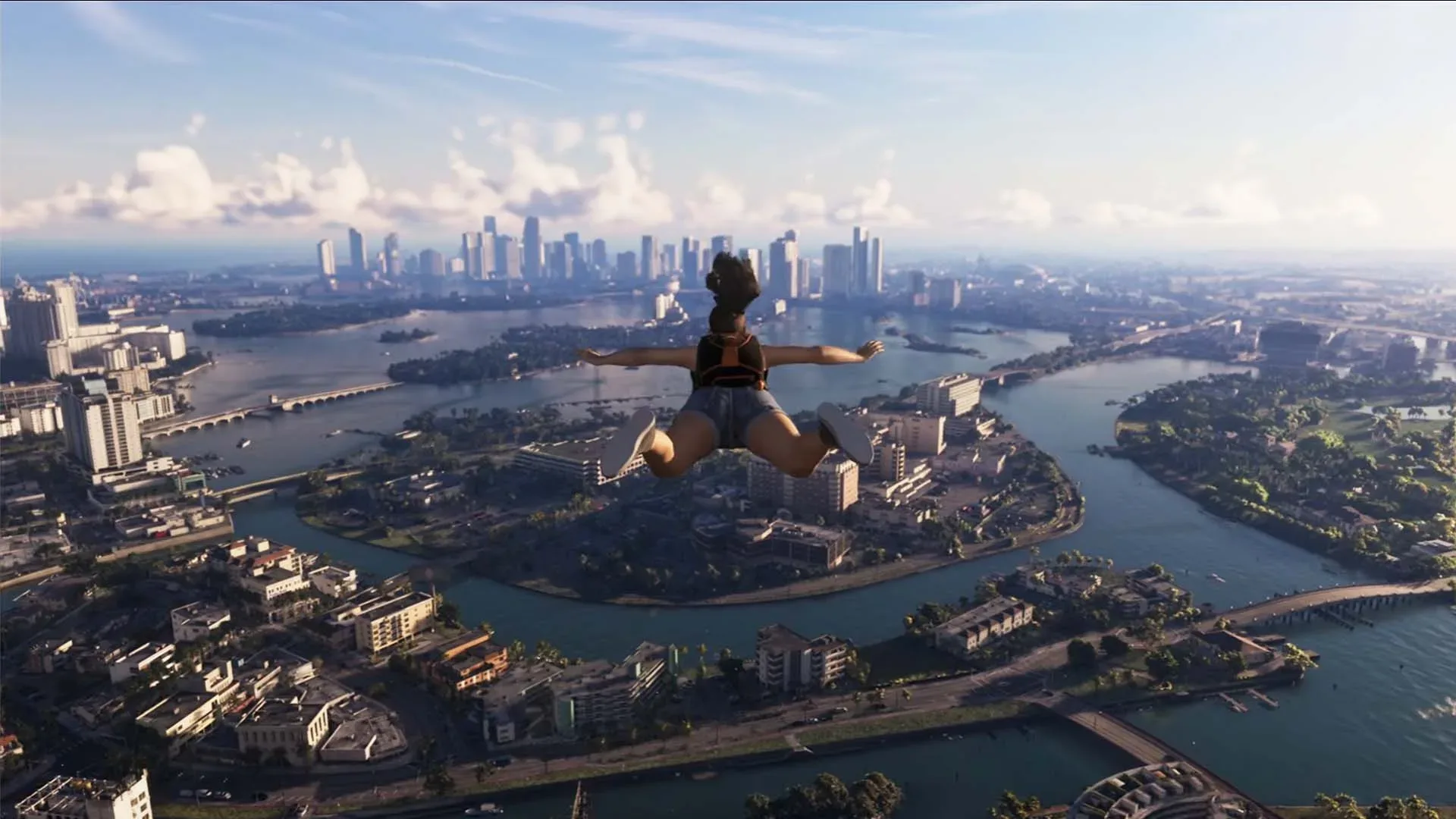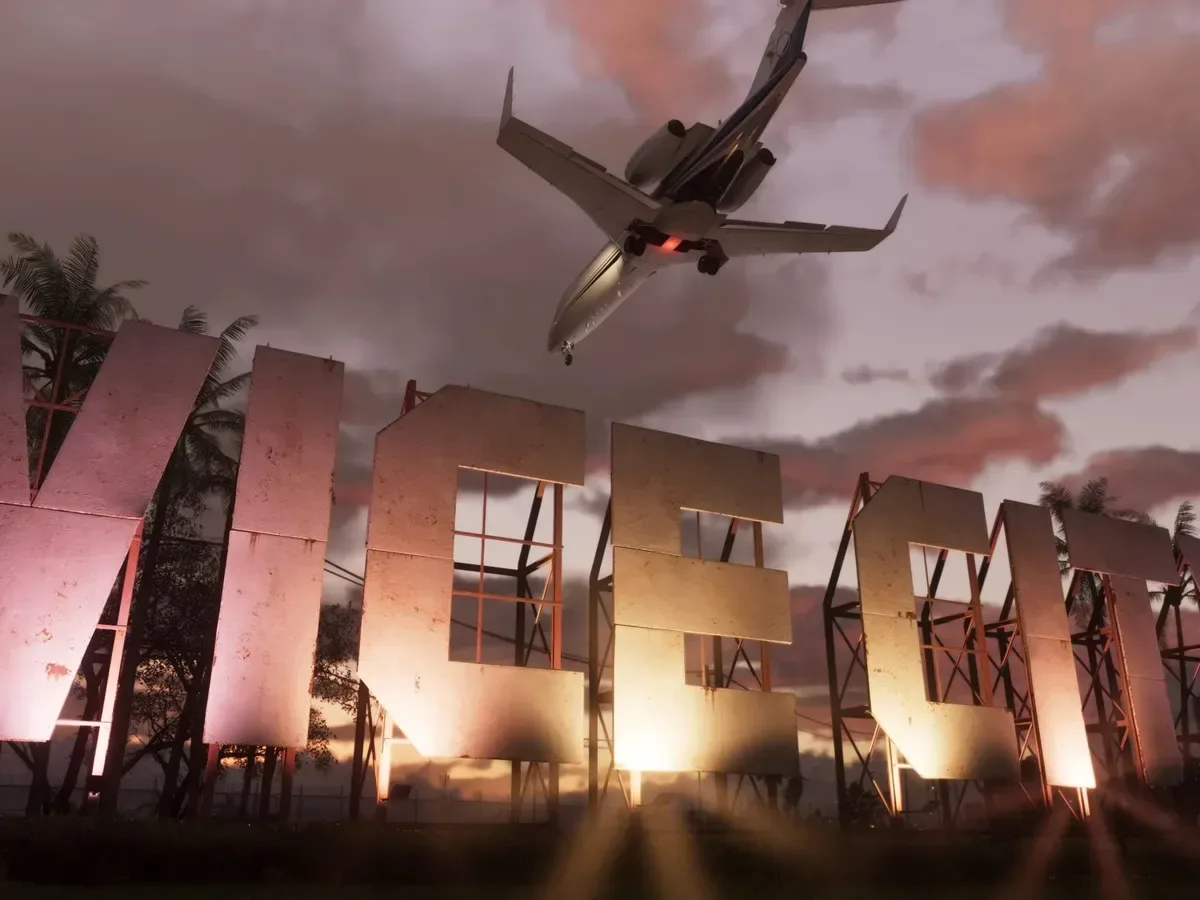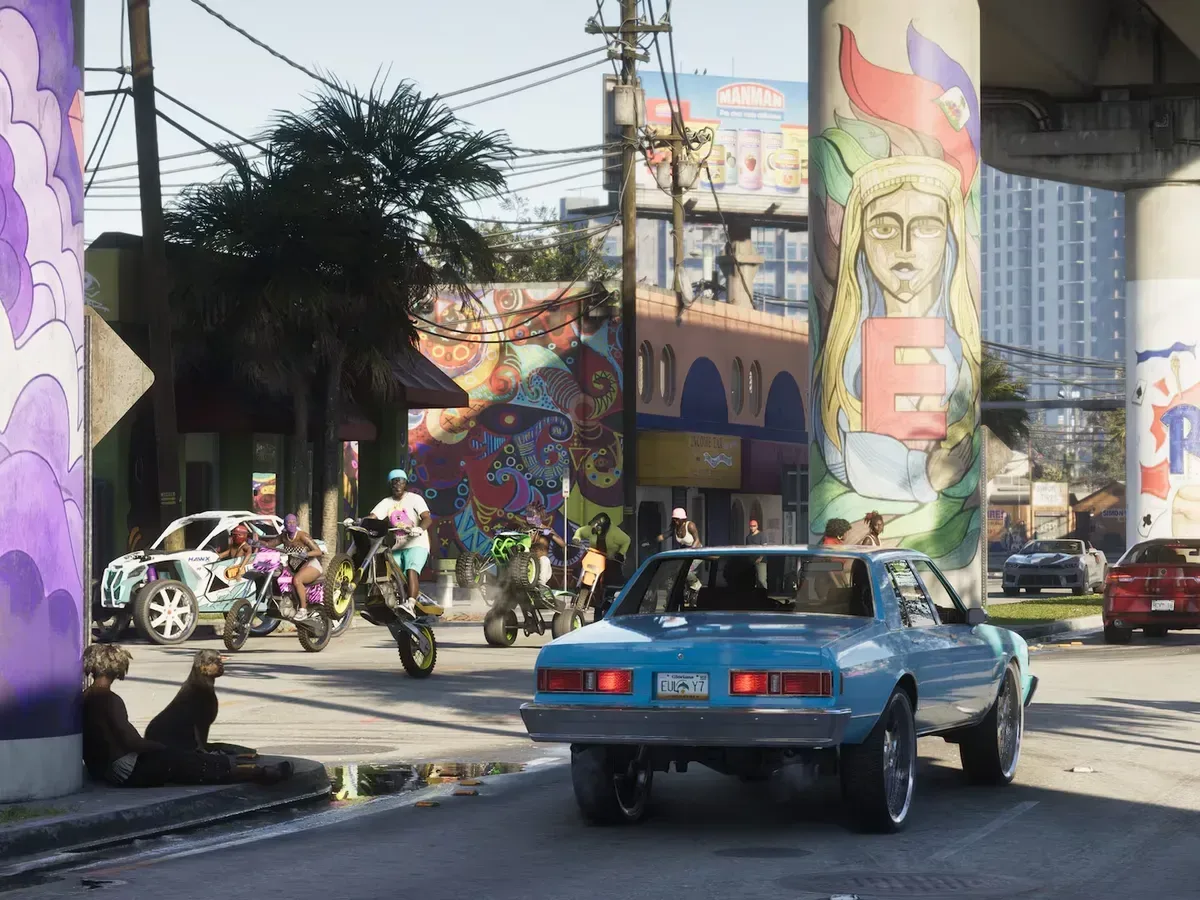
Grand Theft Auto 6 is aiming to make Leonida feel less like a giant backdrop and more like a place with its own unruly climate and wildlife. Rockstar Games has outlined a weather system built around localized, persistent conditions, ranging from soft evening breezes to hurricanes and tropical storms. The studio has also confirmed that the game’s world will contain more than 170 animal species, including rare Legendary animals to discover.
The details point toward an open world where rain, wind, clouds, water, plants and animals are meant to respond visibly to changing conditions. That does not automatically reveal how every system will affect missions or player activity, but it does establish a much more ambitious environmental simulation as a major part of GTA 6’s version of Florida.
Leonida’s weather is designed to be local, persistent and dramatic
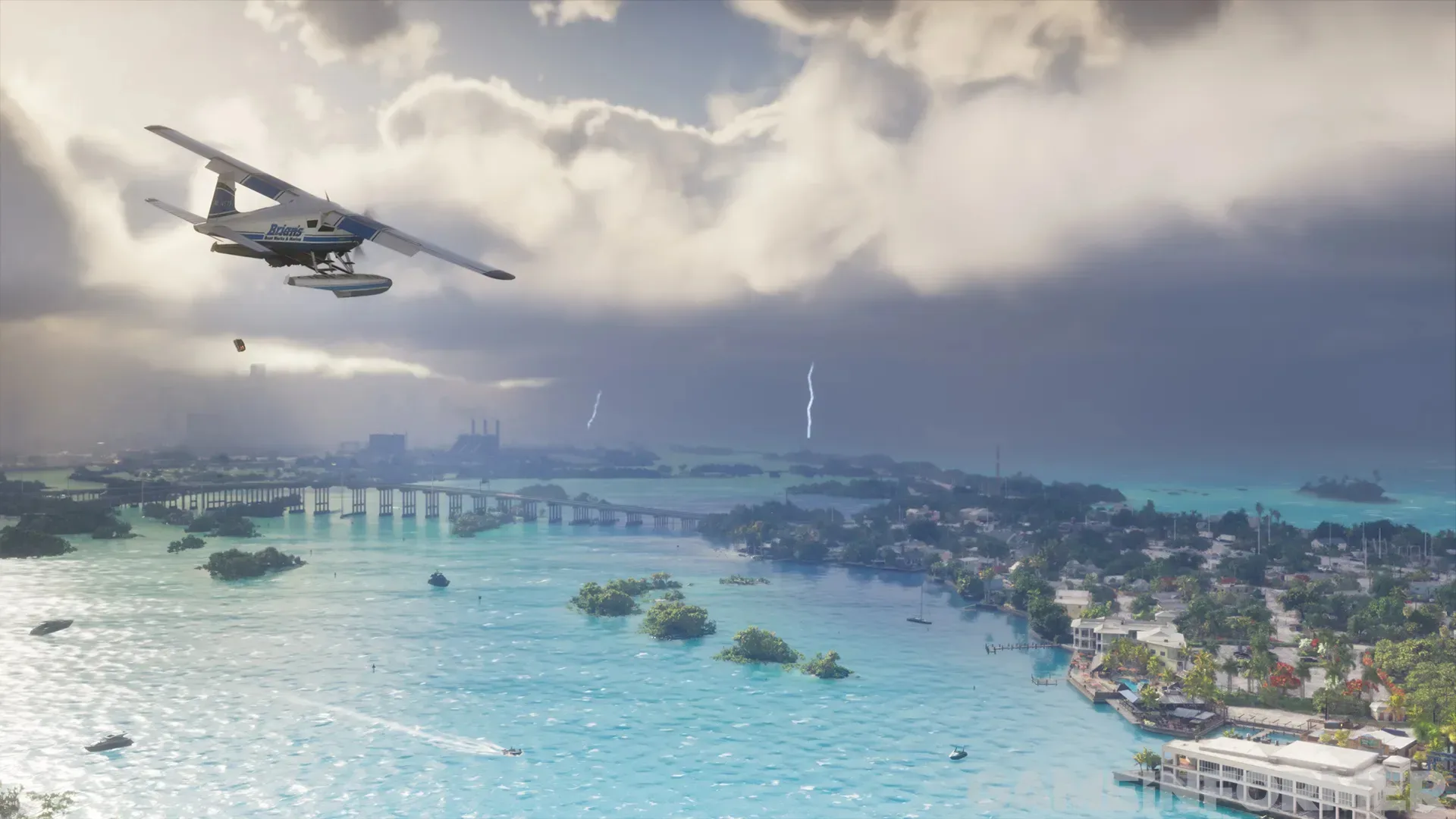
Hurricanes and large tropical storms are confirmed for GTA 6. Rockstar’s description of severe weather includes heavy cloud cover, forceful winds, dense atmospheric effects, substantial rainfall, thunder and lightning. In those conditions, water is expected to run from roof edges and lampposts while the wider environment becomes visibly soaked.
That is a notable distinction from weather serving only as a quick visual swap between sunshine and rain. Rockstar says it has re-engineered the system to make weather more localized and persistent. In plain terms, localized means conditions need not look identical everywhere across the map at the same time, while persistent suggests a weather pattern can maintain a presence rather than immediately passing after a brief effect.
The company says dynamic cloudscapes will move across the map. These are not merely static skyboxes—a sky image fixed around the player—but clouds intended to roll through the game world. Rockstar describes a range from clear winter skies in its Miami-inspired setting to towering cumulonimbus formations and sporadic lightning associated with Florida’s summer and autumn weather.
Cumulonimbus is the technical name for the tall, vertically developed cloud type commonly connected with thunderstorms. Its inclusion matters less as a vocabulary lesson than as an indicator of the atmosphere Rockstar is trying to evoke: skies that visibly build toward unsettled weather instead of acting as a decorative ceiling above the action.
Small gusts may be as important as major storms
The most persuasive part of Rockstar’s weather pitch may be its emphasis on quieter conditions. The studio says players can expect offshore breezes after sunset, convective updrafts, and wind behavior affected by buildings.
An offshore breeze is wind moving away from the shore, while a convective updraft is rising air associated with heat-driven atmospheric movement. Rockstar has not explained a gameplay rule tied to either term. The practical promise is environmental specificity: a coastal evening should not necessarily feel like a still, uniform version of daytime.
Related coverage includes Grand Theft Auto 6 Promises Hurricanes, Dynamic Weather and More Than 170 Animal Species.
Building occlusion is another key concept. In this context, it means structures interrupting or sheltering areas from wind. Instead of a gust behaving as an equal force across every street, the game is intended to account for how its constructed spaces shape the effect. Rockstar says hair and loose debris can swirl on rooftops, ripples can travel across water surfaces, and wind can bend swamp grass.
Those details are largely atmospheric, but open-world atmosphere is not a trivial thing. GTA games ask players to spend long stretches driving, walking, flying and simply looking around. If weather is convincingly communicated in the roads, shorelines, rooftops and wetlands players cross, a journey between activities can feel less like dead travel time. That is an interpretation of the design goal, not confirmation that weather will alter driving physics, mission outcomes, flooding or any other specific mechanic; Rockstar has not detailed those interactions here.
Rockstar’s stated aim is a world that feels dynamic and solid on a larger scale, with weather that can vary across the map rather than arriving as one blanket condition.
More than 170 species will populate the map
Weather is only half of the environmental push. Rockstar says GTA 6 will feature more than 170 animal species across what it calls the largest map in the series’ history. The reported breakdown includes more than 60 bird types and over 30 land mammals, alongside sharks, reptiles, fish and other creatures.
The total is useful context, but it should not be mistaken for a detailed public catalogue. Rockstar has not named all 170-plus species or said exactly where each will be found. Likewise, the figures do not establish how frequently every animal appears, whether they are tied to particular weather patterns, or how each one will behave when encountered. What is clear is that wildlife is being positioned as a broad layer of the Leonida setting rather than a small collection of incidental animals.
The roster is also expected to include non-native invasive animals, with monkeys and armadillos cited as examples. The choice fits the game’s Florida-inspired setting while giving the world a wider ecological mix than the obvious coastal and swamp creatures alone.
For the player, the stated interaction element is important. Rockstar says players will be able to interact with many animals, though it has not set out the full list of available interactions or any associated rewards. Until it does, it is best not to assume a hunting loop, companion system, photography challenge or other specific activity.
Fur, feathers and bioluminescence are part of the simulation pitch
Rockstar is making unusually detailed claims about how animals will be rendered. Feathers and bioluminescent features are expected to be accurately represented, and fur will respond to human-to-animal interaction. The studio also says it is simulating dirt matting and clumping, wetness, color variation and coat variation.
Bioluminescence refers to light produced by living organisms. Rockstar has not identified which creatures or situations will use the effect, so its precise role remains unknown. Still, it is a telling example of the degree of creature-specific visual treatment the team is discussing.
“Matting” and “clumping” describe the way fur can compress or gather when dirty or wet. Combined with the game’s heavy-rain and storm systems, that detail suggests animals are not intended to remain pristine, interchangeable models regardless of their surroundings. It also connects the wildlife and weather announcements: rainfall and environmental grime are being presented as visible forces acting across more than just roads and buildings.
That does not necessarily mean every individual creature will retain a long-term, uniquely simulated history. Rockstar has not explained the scope, duration or technical limits of these effects. The more restrained takeaway is that wetness, dirt and contact are expected to register on animal coats in at least some environmental contexts.
Legendary animals return, but their identities remain secret
Players looking for scarce discoveries will have another familiar system to watch. Rockstar says the animal-rarity model from Red Dead Redemption 2 is returning, including difficult-to-find Legendary creatures.
A rarity system, as described here, separates some animals from the ordinary wildlife population by making them less common to encounter. Legendary creatures are presented as especially hard to find. Rockstar has not revealed the animals involved, their locations, what conditions may govern their appearance, or whether discovering them offers a particular reward.
That uncertainty matters. It would be premature to label these animals collectibles or to suggest there will be a complete checklist, dedicated equipment, trophies or story requirements. What the confirmation does provide is a strong reason for players to look beyond the streets and beaches when Leonida opens up. Swamps, waterways and more remote spaces may hold encounters meant to reward attentive exploration.
In a game already promising a map larger than any previous GTA, rare wildlife could add a different rhythm to exploration. The series is generally associated with cars, cities and criminal satire; a weather-linked world full of birds, mammals, reptiles, fish and elusive animals gives the quieter spaces a clearer purpose. The scale of that purpose will depend on the interactions and discovery tools Rockstar has yet to explain.
What has been confirmed—and what remains open
The confirmed picture is substantial: GTA 6 will have hurricanes and tropical storms; weather will include dynamically moving cloudscapes, localized and persistent conditions, and wind effects on water, grass, debris and hair. Leonida will include more than 170 animal species, with more than 60 bird types and 30-plus land mammals among them. Some animals will be interactive, their presentation will account for elements such as wet fur and dirt, and rare Legendary creatures are returning.
There are equally important gaps. Rockstar has not outlined whether hurricanes can disrupt missions, change traffic, create hazards, limit access to areas or influence wildlife spawns. It has not published the complete animal list, identified the Legendary creatures, or described the mechanics and rewards linked to interacting with them. Those are the details that will determine whether the simulation is primarily spectacular scenery, a foundation for exploration, or both.
GTA 6 is scheduled to arrive on November 19 for PlayStation 5, Xbox and PC. For a look at another game headed to PC, see Moonfrost’s planned Steam Early Access launch.
For now, Rockstar’s new information makes one thing clear: Leonida’s wildlife and weather are being treated as systems with visible texture, not just background noise. Whether players are watching a storm roll across the coast or searching the swamps for an unnamed Legendary animal, the open world appears built to make stopping and looking around part of the experience.