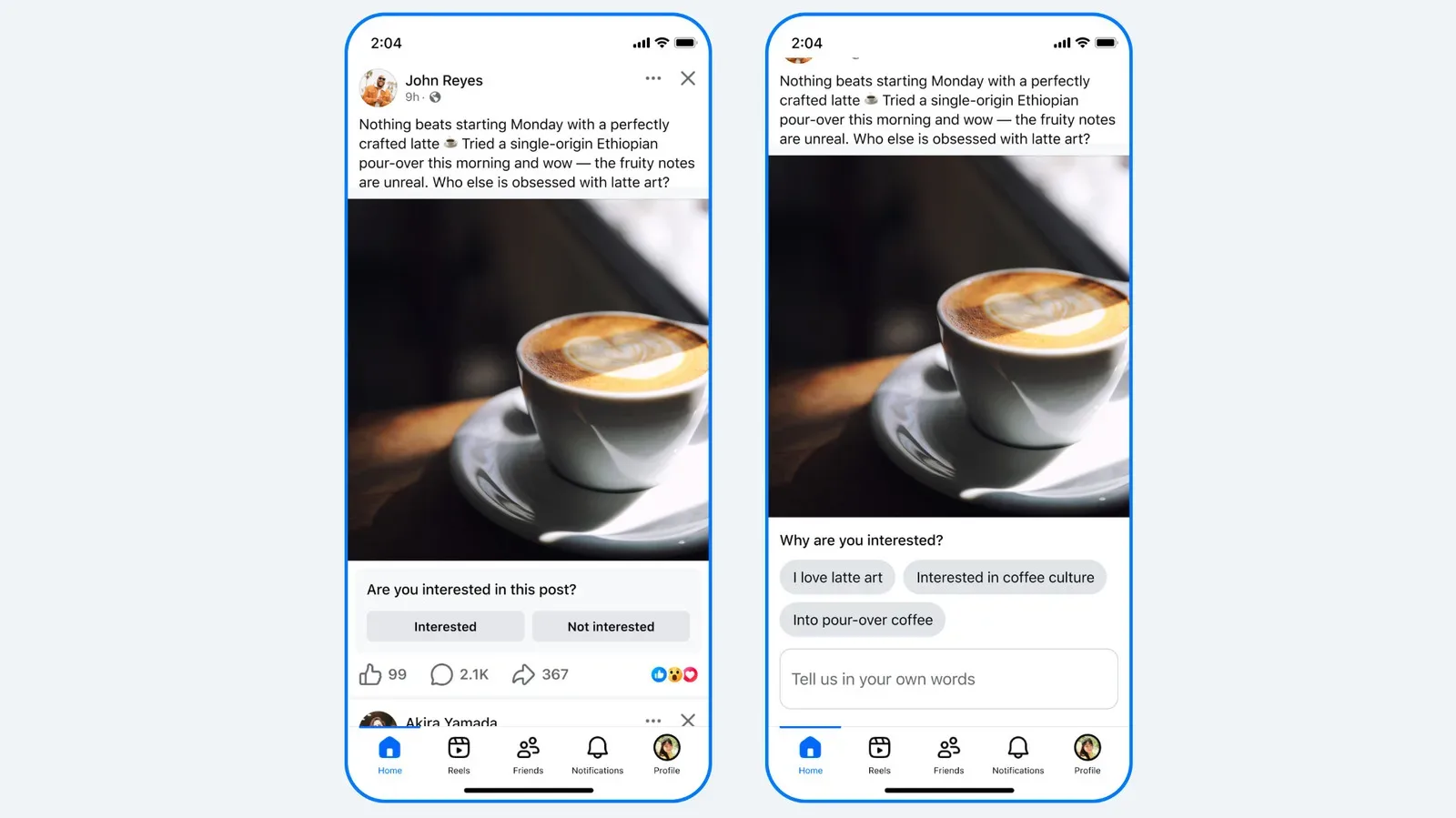
Facebook is preparing a more direct way for people to negotiate with the force that decides what appears between updates from friends, groups and pages: the recommendation algorithm. Meta’s new personalization feature adds a your algorithm menu to individual feed posts and Reels, where users can name topics they want more of, mark subjects they do not want, and type a plain-language description of what they would rather see.
That may sound like a small interface adjustment, but it addresses a familiar frustration. A recommendation feed can turn one accidental pause, curiosity click or brief engagement into an apparent lifelong passion. The result might be a persistent flood of a niche hobby, repetitive viral formats, celebrity bait made with AI, or posts that simply do not match why someone uses Facebook.
The new control is intended to give people an explicit signal rather than making the system rely entirely on behaviour. In theory, that means a user can state a preference without having to train the feed through weeks of carefully chosen likes, skips and dismissals.
What Facebook says the new control does
The feature is accessed from specific posts and Reels. Inside the your algorithm menu, Facebook users can:
- add particular topics to their interests;
- add topics to a “not interested in” list; and
- write, in their own words, what they want their feed to include.
Meta attributes this change to the use of large language models, or LLMs, in its ranking systems. An LLM is an AI model designed to process and generate language. In this context, its role is not necessarily to create the posts in a feed. It is being used to interpret a written preference and incorporate its meaning, context and apparent intent into the recommendation process.
That distinction matters. The key promise is a system users can talk to, rather than one that only watches what they click. A written request such as “more posts about local game events and fewer recycled viral clips” potentially gives the ranking system a much richer instruction than a single tap on “not interested.” Whether that instruction results in a visibly better feed, however, will depend on how faithfully the system applies it across future recommendations.
Why plain-language controls could be useful
Traditional feed controls tend to be narrow. Users may be able to hide one post, unfollow a person, or indicate they are not interested in an item. Those actions can be useful, but they also force people to communicate their preferences one decision at a time. They often do not let someone describe the broader pattern they are trying to escape.
A natural-language box could make the preference more specific. Someone might want less of a topic without wanting it erased completely. They may want fewer low-effort reposts while retaining updates from communities they chose to follow. Or they may be tired of a format rather than the subject itself: gameplay clips could be welcome, for example, while spoiler-heavy clips, engagement bait or synthetic celebrity material are not.
This is also where the feature may be especially relevant to people whose feeds combine hobbies, entertainment and gaming. Recommendation systems frequently compress several different behaviours into a simplistic conclusion: one person watched a trailer, therefore they must want endless trailers; another interacted with a tabletop group, therefore every adjacent hobby is fair game. Letting users spell out what they mean could provide a corrective to that broad inference.
There is a useful parallel in other AI-driven technology: the details of an instruction matter. Our guide to DLSS modes and frame generation explores a different AI application, but the broad lesson is similar: an AI label alone does not tell people what result they will get. The controls, trade-offs and actual implementation matter more than the headline.
Ranking systems, explained
A ranking system is the part of a platform that sorts possible posts into an order for a person’s feed. It must make choices from a very large pool of content, deciding which items to show and in what sequence. Historically, signals such as likes, comments, shares, viewing time and other forms of engagement have helped systems infer what may keep somebody interested.
That model has a limitation: engagement is not a clean statement of preference. People interact with something because they enjoy it, but they can also stop for reasons that have little to do with enjoyment. They may be surprised, annoyed, checking a claim, responding to somebody else, or simply unable to look away from an absurd post. An algorithm that sees only the interaction can mistake any of those reactions for an invitation to deliver more.
Meta’s description of the update suggests the LLM layer is meant to add a direct, written preference alongside those behavioural signals. The practical question is how much weight that direct preference receives. A user may write a clear request, yet other signals and platform objectives can still shape the feed. Meta has not detailed the exact balance in the supplied information, so users should view the tool as a way to influence recommendations rather than a guarantee of total feed control.
What remains uncertain
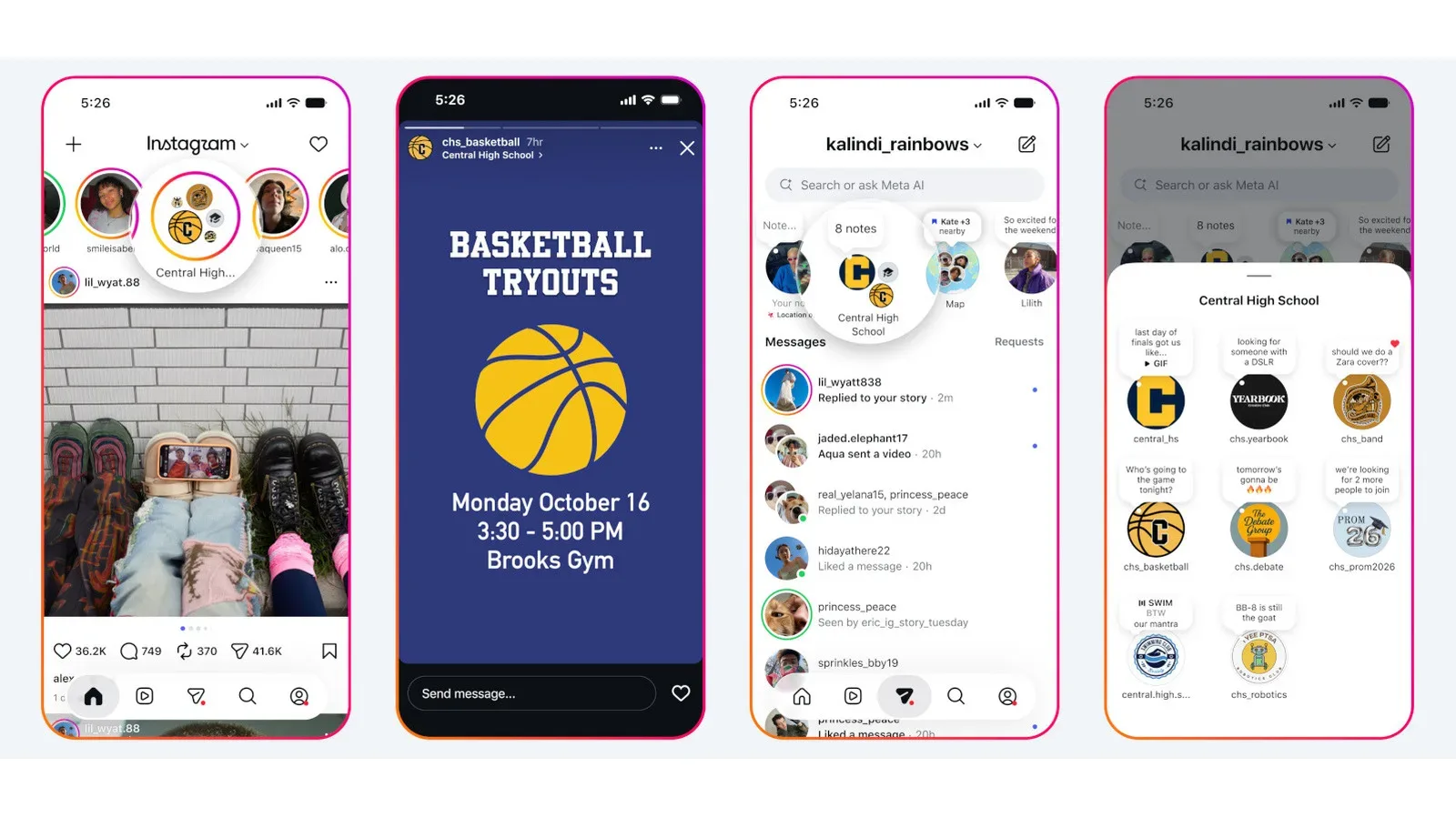
The feature mirrors an Instagram change introduced earlier in the year, but the available details also point to important limitations in that version. It did not allow a user to add “posts from people I follow” as an interest, nor did it offer a way to request fewer ads.
Those examples define the boundary between topic-level personalization and deeper control over a feed. “More retro game preservation” is a topic preference. “Show more posts from accounts I deliberately follow” is a request about the source and structure of the feed. “Fewer ads” concerns advertising volume. They are all understandable requests from a user’s perspective, but they are not necessarily handled by the same recommendation setting.
It is also not yet clear whether Facebook’s version will support wider requests such as less AI-generated content, less spam, fewer engagement-bait posts, or fewer copied posts from elsewhere. Meta has previously worked to reduce spam and engagement bait in Facebook’s feed, making those sensible areas for people to watch as the tool arrives. Still, the ability to type a request does not itself establish that every category of request will be supported or acted on.
Another uncertainty is rollout. The feature is described as rolling out, which means it may not appear in every app immediately. People who do not see the your algorithm option on a post or Reel may simply not have access yet. There is no supplied timetable for universal availability.
How to use it without overpromising to yourself
Once the menu appears, the most useful approach is likely to be specific and outcome-focused. Rather than writing a sweeping request such as “fix my feed,” describe the content pattern you want to change. Name the type of posts, the subject, or the balance you want. This gives a language model clearer material to interpret than a vague complaint.
- State the desired topic: identify the game, hobby, genre or kind of update you would like more often.
- Name the unwanted pattern: if a particular repetitive subject is clogging recommendations, add it to “not interested in” where available.
- Describe the difference: distinguish between wanting less of a format and rejecting an entire subject.
- Keep expectations realistic: the setting concerns recommendations; it has not been presented as a comprehensive control for ads, followed accounts or every class of unwanted content.
The strongest version of this feature would make Facebook’s inferred picture of a person easier to inspect and correct. The initial design is a step in that direction because it replaces some guesswork with an opportunity to speak plainly. But its value will ultimately come down to the replies the feed gives—not as text, but in the posts it chooses to put in front of people next.