Dragon Quest Monsters: The Withered World is shaping up to give creature-collection devotees a lot more than a checklist to clear. Square Enix’s upcoming Dragon Quest spin-off is due on December 3, 2026, and details from an early demonstration point to a game built around recruiting unusual monsters, assembling a personalized party, and combining creatures through the returning synthesis system.
That last part is important. Catching a creature is one kind of satisfying. Looking at two members of a team, feeding them into a magical blender, and receiving a new monster with a name that makes everyone in the room stop and ask questions is a distinctly different sort of satisfying. The Withered World appears ready to serve both urges, with more than 500 monsters available to tame and a synthesis process that can produce unexpected results.
The game is being developed in-house and published by Square Enix. Its announced platforms are PC, PlayStation 5, Xbox Series X, Nintendo Switch 2, and Nintendo Switch. That broad list means the next Monsters adventure is not treating monster management as an exclusive country club. Whether players prefer a controller, a handheld, or a television large enough to properly appreciate a Fat Rat, there should be a path into the Withered World.
A cheerful beginning with an alarming personality result
Early events introduce a companion creature named Fluffy, which is exactly the sort of name that creates immediate trust. Fluffy helps explain the fundamentals of befriending monsters and using them in battle, then leads into a personality quiz that determines the player’s first partner.
One reported result from that quiz was Woebergine. It is an eggplant-shaped creature whose name sounds like a vegetable that has seen too much, felt too much, and possibly maintains a handwritten journal full of rain stains. Still, the larger point is that the opening does not simply hand every player the same starter and move on. A personality-based selection gives the first recruit a little more character, even if that character is apparently melancholy produce.
That sense of charm looks central to The Withered World’s appeal. Dragon Quest has long leaned into expressive monster designs and gleefully silly names, and the Monsters series has a particularly strong reason to foreground them: the entire game asks players to care about the oddballs they recruit. The monsters are not disposable battle effects. They are the team, the collection, the experiment material, and eventually the loyal parade of tiny weirdos trailing behind the player during exploration.
Scouting has limits, so enthusiasm needs strategy
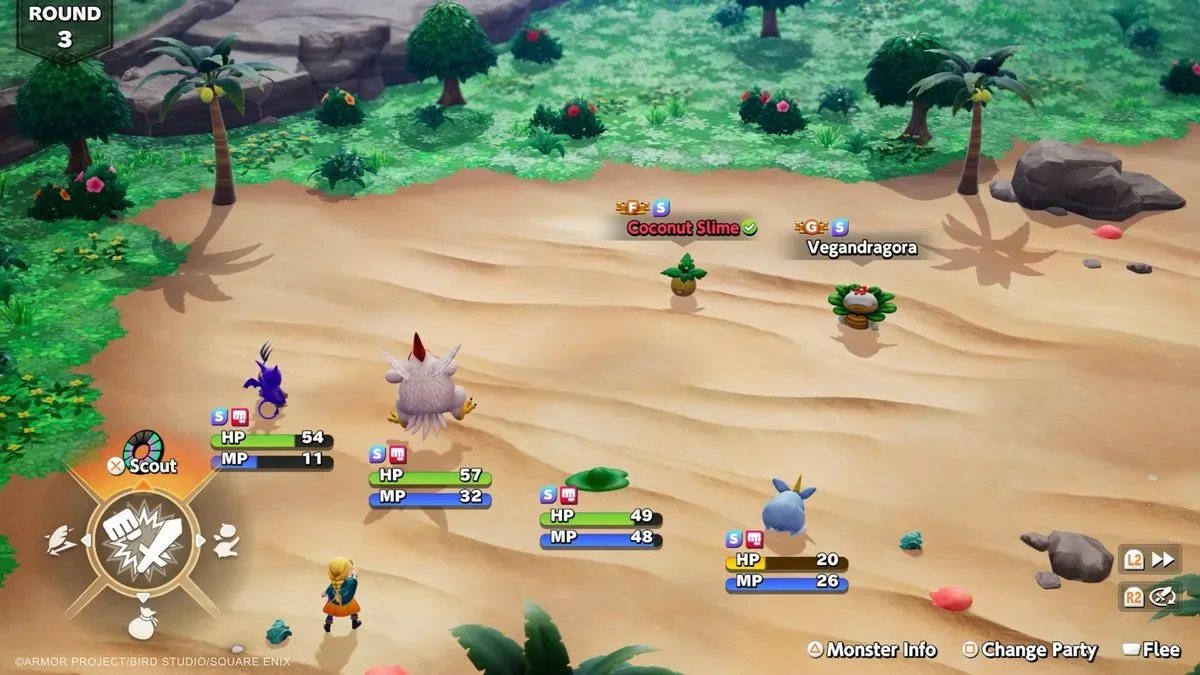
Recruitment in The Withered World is handled during battles through scouting. Players can attempt a “show of force” to persuade a monster to join up. As veteran collectors would expect, a weakened opponent is more likely to be receptive. Apparently, beating a monster until it is reconsidering every decision that led it to this battlefield remains a persuasive negotiating technique in the Dragon Quest universe.
However, the mechanic has an important restriction: failing a scouting attempt can prevent another attempt against that same monster in the current battle. This is not a situation where a player can repeatedly throw recruitment attempts until probability finally gets tired and gives in. It encourages planning, particularly when a rare or useful monster appears.
Related coverage includes Dragon Quest Monsters: The Withered World's Creature Collecting Already Looks Deeply Addictive.
That limitation could make encounters more tense than the usual “press the catch button until success” routine. Players may have to judge when their party has lowered an opponent’s strength enough, whether it is worth using their recruitment chance now, and how much risk they are willing to accept. It also gives ordinary battles a little extra bite. A monster is not merely an enemy blocking the path; it may be a potential teammate who deserves a carefully managed sales pitch.
The opening areas reportedly include plenty of immediately recruitable creatures, providing an early chance to build a roster. Among the highlights is Fat Rat, a rotund rodent whose name has performed the dangerous act of accurately describing its subject. There is a refreshing lack of pretense there. Not every creature needs a celestial title or an eleven-syllable fantasy designation. Sometimes the correct answer is simply: rat, but extra.
Some monsters are for later, not lunch
Players should not expect every creature in sight to be ready for the team immediately. An early encounter with a “super strong enemy” called Drakularge demonstrates that the world contains foes best saved for a return trip. True to its name, Drakularge is a large dragon, and it can wipe out an unprepared party in a single blow.
That kind of obstacle fits naturally in a monster-raising RPG. It gives meaning to expansion and training: the team that gets flattened today can come back later with better levels, new abilities, and perhaps a few freshly synthesized friends. It is also a useful reminder that a collection is not purely decorative. Every strange little ally has the potential to be part of a larger tactical answer.
The approach may resonate with players looking toward Nintendo’s coming lineup as well. For a look at another major adventure planned around the platform, see our coverage of The Legend of Zelda: Ocarina of Time Remake’s November 5 release date.
Synthesis is where the collection becomes a laboratory
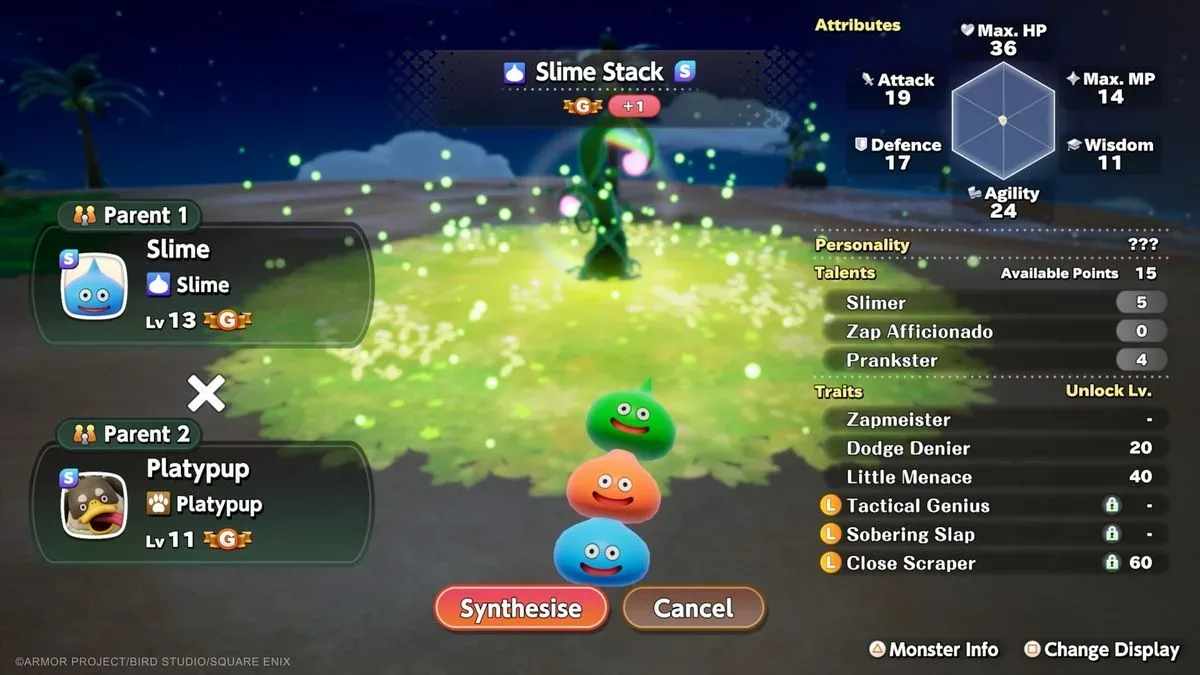
Scouting is only one avenue for expanding the bestiary. The Withered World also brings back synthesis, a system that merges two owned monsters into another creature. The resulting monster can inherit elements such as abilities, making synthesis about more than discovering a new entry in a catalogue. It is a way to shape a stronger, more specialized party.
Players are shown the expected outcome before committing to a synthesis, including whether the combination produces a special monster. That transparency should make experimentation less punishing while preserving the fun of learning which pairings lead somewhere unusual. It also puts the emphasis on deliberate roster-building rather than blind sacrifice.
Examples seen so far underline both the logic and the delightful nonsense of the system. Combining a Slime with Platypunk creates a special Mottle Slime, which is at least reasonably interpretable as an outcome. A Skeleton paired with Platypup, meanwhile, produces a Guaardvark. The extra “a” is doing some heavy lifting there, and the route from bones plus puppy to armored anteater-ish fellow may not survive rigorous peer review. It does, however, sound like precisely the kind of result that will keep collectors checking one more combination before logging off.
Because synthesis can pass abilities forward, the system has room for long-term planning. A player may recruit one creature for its immediate battle value, another for a useful skill, and then decide that the real prize is the monster created when those two bloodlines—or whatever synthetic monstrology calls them—meet. The more than 500 available creatures suggest a substantial space for experimentation, though the eventual depth of builds and the full range of recipes will have to wait for the complete game.
The case for a party full of pun-based heroes
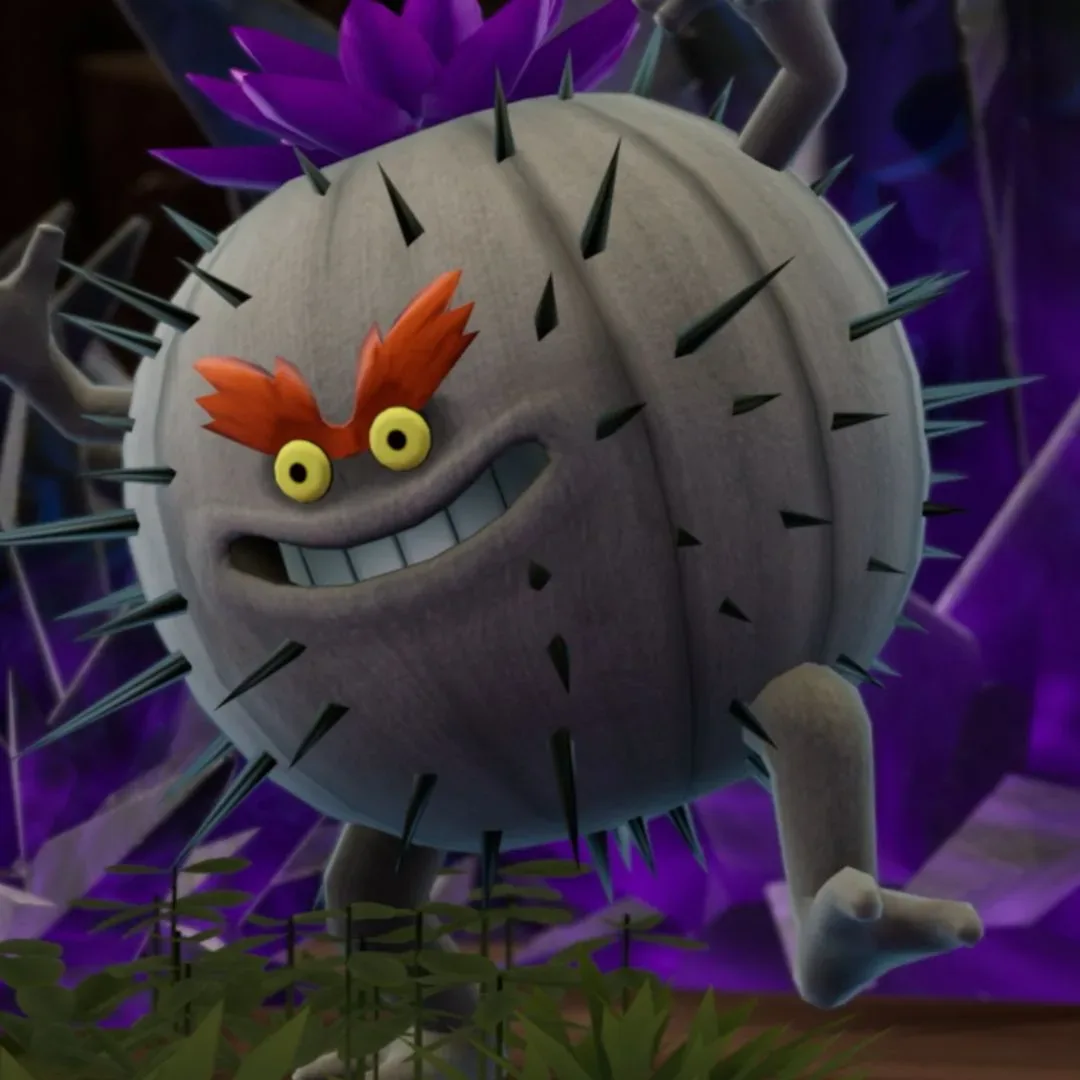
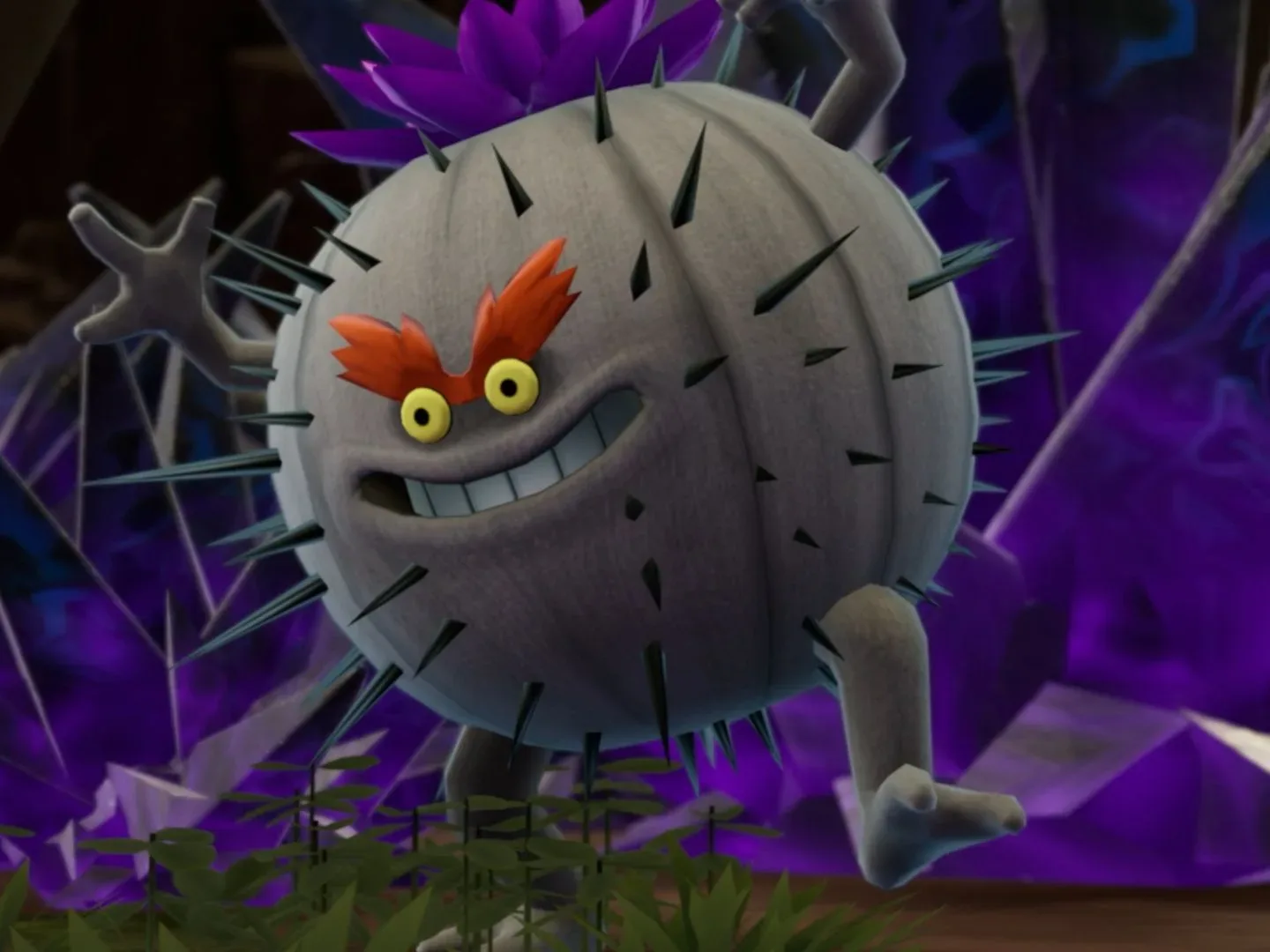
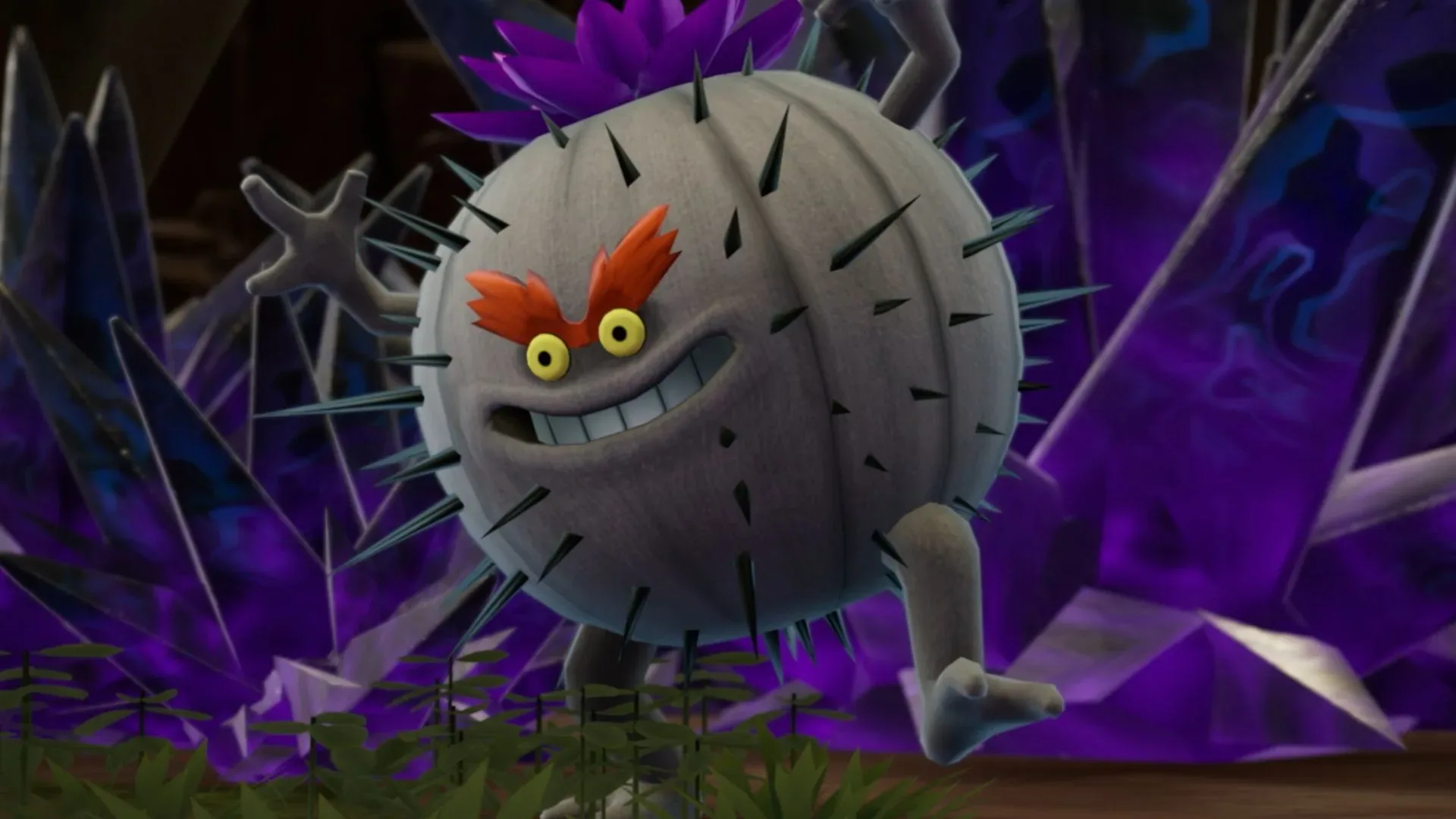
The early material makes a persuasive argument that the personality of a creature-collector matters as much as the number printed in its compendium. Woebergine, Fat Rat, Drakularge, Mottle Slime, Guaardvark, and Cruelcumber are not just names on a list. They establish a world where an intimidating dragon can sit alongside a cucumber with a threatening attitude, and both can conceivably become trusted allies.
That tone could be The Withered World’s greatest strength. The game has tactical ingredients in its scouting restrictions, difficult enemies, ability inheritance, and fusion-based party development. But it presents those systems through creatures designed to be cute, absurd, or instantly memorable. A team following behind the player through the world turns mechanical progress into a visible little procession of personal favorites.
Dragon Quest Monsters: The Withered World will have to show how its story, progression, and endgame hold together once it arrives. For now, its core proposition is clear: recruit odd creatures, make smarter choices than an overconfident early attempt against Drakularge, and see what happens when the synthesis menu turns two perfectly ordinary monsters into something nobody could have predicted. That is a powerful loop for anyone vulnerable to a good monster name—and especially for anyone who has ever seen a Fat Rat and immediately decided it deserved a place on the squad.