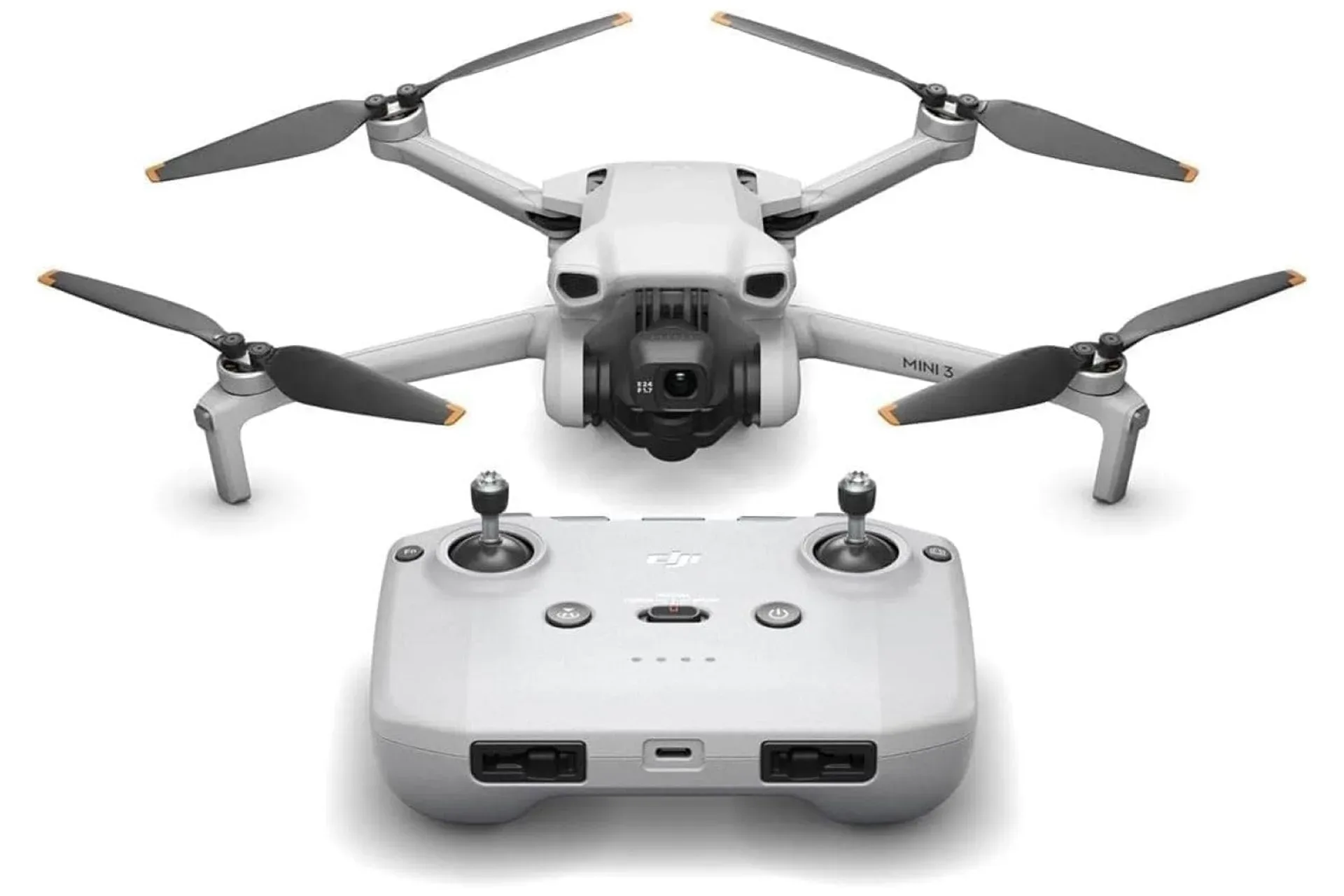
The DJI Mini 3 is listed at $269, down from $419, for a stated saving of $150 or 36%. For shoppers weighing a compact aerial camera against a phone upgrade, console accessory, or conventional camera gear, the appeal is straightforward: this is a sub-249-gram drone with a 4K HDR camera, a mechanical gimbal, and a package described as including three Intelligent Flight Batteries.
It is not merely a smaller flying camera. The Mini 3’s feature set is aimed at reducing several common compromises in lightweight drones: shaky footage, awkward portrait-video cropping, and short sessions caused by battery swaps. At the same time, prospective pilots should treat the low weight as one part of the ownership equation—not a blanket pass from flight rules or local restrictions.
The important numbers behind the Mini 3 offer
- Listed price: $269, reduced from $419.
- Weight: under 249 grams.
- Camera: 1/1.3-inch CMOS sensor, f/1.7 aperture, 4K HDR video and 12MP photos.
- Stabilization: three-axis mechanical gimbal.
- Portrait capture: True Vertical Shooting rotates the camera gimbal for vertical photos and video.
- Battery claim: up to 38 minutes per flight, with three Intelligent Flight Batteries included in the Fly More Combo.
- Transmission claim: roughly 10 kilometers of video transmission.
- Weather-related claim: Level 5 wind resistance.
Those specifications make the price reduction more meaningful than a discount attached solely to a bare drone body. The listed Fly More Combo equipment includes a two-way charging hub, which can charge the three batteries sequentially and also charge a smartphone. For a pilot using a phone as the flight display, that second use is practical: the screen providing the live view is itself part of the power plan.
Why the sub-249g design matters—and what it does not mean
The Mini 3 weighs just below 249 grams, making portability central to its pitch. It folds down to a tablet-case-sized form factor, so it is designed to be easier to pack than a larger drone. That matters for travelers and hobbyists who may otherwise leave a larger aircraft at home simply because it takes up too much bag space.
For recreational pilots in the United States, the stated weight places it below the 250-gram FAA registration threshold. That is a useful distinction, but it should not be misread as permission to fly without limits. Local laws and regulations still apply. A lower registration burden does not erase the pilot’s responsibility to understand where and how a drone may be flown.
There is also a practical distinction between compact and carefree. A folded drone is easy to carry; flying still requires attention to surroundings, rules, battery level, signal, and the planned return route. The Mini 3 includes GPS-assisted Return to Home, which can guide the aircraft back after the pilot taps the command. That is a valuable recovery feature, but it is best understood as navigation assistance rather than a substitute for deliberate flight planning.
Camera hardware: translating the jargon
The Mini 3 uses a 1/1.3-inch CMOS sensor and an f/1.7 aperture. In simple terms, the sensor is the component that records the image, while the aperture describes the opening through which light enters the lens. These specifications sit behind the drone’s 4K HDR video and 12MP photo capabilities.
HDR, or high dynamic range, is intended to preserve more information across bright and dark portions of an image. That is particularly relevant to aerial scenes, where a shot can contain a bright sky, reflective water, shaded trees, and darker ground all at once. The Mini 3 also uses Dual Native ISO, a camera technology cited for its ability to help deliver detail and dynamic range. The practical takeaway is not that every shot will automatically look cinematic; it is that the camera is built with a stronger toolkit for difficult light than a specification sheet limited to resolution alone would suggest.
The f/1.7 lens is paired with a wide-angle view and digital zoom. Digital zoom enlarges part of the captured image rather than changing the lens’s optical magnification, so it is useful to have as a framing option but is not the same thing as a longer optical lens. For someone choosing a first drone, that distinction is worth knowing: the Mini 3’s core strength is capturing a broad aerial perspective, not functioning like a dedicated telephoto camera.
Vertical shooting is a workflow feature, not just a format checkbox
True Vertical Shooting lets the camera gimbal capture vertical stills and video directly. This is significant for creators making content for portrait-oriented viewing. A conventional horizontal clip can be cropped into a vertical one, but cropping removes portions of the original frame and can reduce available resolution. Rotating the camera for vertical capture gives the pilot a portrait composition from the start.
That does not remove the need to compose carefully. A vertical frame is narrower, so the pilot still needs to consider whether the subject has room to move and whether the scene reads clearly from top to bottom. But the feature can make the capture stage more direct, particularly when the intended final format is already vertical.
Stability, signal and automated clips
A three-axis mechanical gimbal is the Mini 3’s key stabilization hardware. A gimbal physically counteracts movement across three axes, helping the camera maintain a steadier view as the aircraft changes position. It is a different job from simply having a high-resolution camera: resolution can reveal detail, while stabilization helps prevent that detail from becoming distracting motion in the finished clip.
The drone is also described as having Level 5 wind resistance. That rating speaks to its ability to fly steadily in windy conditions, although it should not be treated as a reason to ignore conditions or regulations. Wind affects flight time, control, and the route needed to return safely, even with a lightweight aircraft designed for stability.
Its transmission range is listed at about 10 kilometers, delivering a stable live feed from the drone. The DJI Fly app links a smartphone to that feed and provides camera controls, editing tools, and sharing after landing. The app’s beginner-focused interface is meant to help new users learn navigation, while the live view gives them the framing reference needed to position the camera.
QuickShots provide several preset cinematic movement patterns: Dronie, Helix, Rocket, and Circle. These names describe the basic effect rather than a complicated manual flight routine. The useful point for a newcomer is that automated moves can give a repeatable starting point for a short aerial clip. They do not guarantee an appropriate subject, clear airspace, or a compelling edit, but they can reduce the difficulty of producing a controlled motion shot.
Battery capacity changes the shape of a shoot
Each included Intelligent Flight Battery is rated for up to 38 minutes of flight. Actual flight time can vary with conditions and use, but the stated figure establishes the intended ceiling. Three batteries matter because aerial filming rarely fits neatly into one uninterrupted launch: pilots may want an additional take, a new angle, or time to wait for a scene to change.
The sequential charging hub is therefore more than a box-filling accessory. It creates a simpler routine for handling multiple batteries and can recharge a smartphone as well. That is useful because the phone runs the DJI Fly app and displays the live feed during flight. A drone package can look complete on paper yet be awkward in practice if the display device runs low; the hub addresses that practical link in the chain.
Who should look closely at this deal
The Mini 3’s mix of low weight, collapsible construction, stabilized 4K HDR capture, vertical shooting, and three batteries is best aligned with travelers, hobbyists, and creators who want aerial footage without committing to a larger drone. The $269 price makes the proposition easier to evaluate against other consumer technology purchases, especially for someone who values portable camera capability over a larger airframe.
It may be especially attractive to buyers who intend to publish in portrait formats, since the rotating gimbal avoids building the entire workflow around a later crop. It also suits users who want guided capture options rather than relying solely on manual maneuvers, thanks to QuickShots and Return to Home.
As with any sale, the percentage reduction is not the only decision point. Check precisely which bundle is being offered, confirm that the included batteries and charging hub meet the description, and consider the relevant rules before purchase. The same shopping discipline applies broadly to seasonal tech promotions; discount labels are most useful when the package and actual need are evaluated alongside the headline price.
On the supplied details, the Mini 3’s case at $269 is not simply that it is cheaper than before. It is that the price is attached to practical components: a portable under-249-gram build, a stabilized 4K HDR camera, direct vertical capture, app-based live viewing, automated shooting modes, GPS-supported return guidance, and a three-battery charging setup. Buyers still need to fly lawfully and thoughtfully, but the hardware package is designed to make carrying and using an aerial camera less intimidating.
Shop the products
Check current price, model and availability at the retailer.